Acting
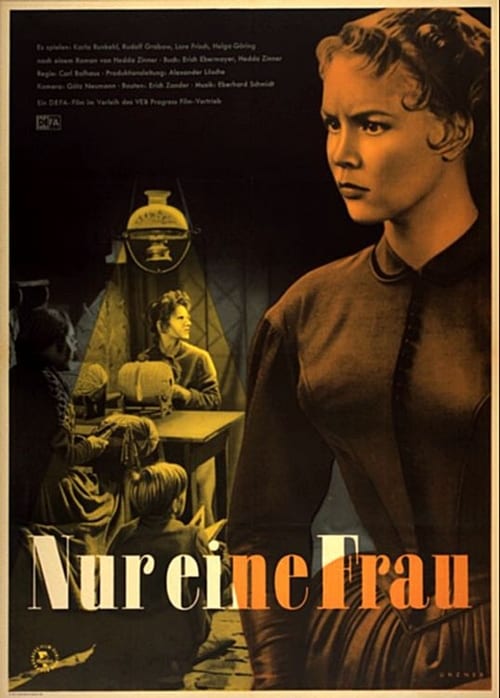
Christine is a young farm worker in a small village in post-war Germany. Her attempts to improve her situation through further education are hampered by frequent pregnancies arising from ill-fated relationships.
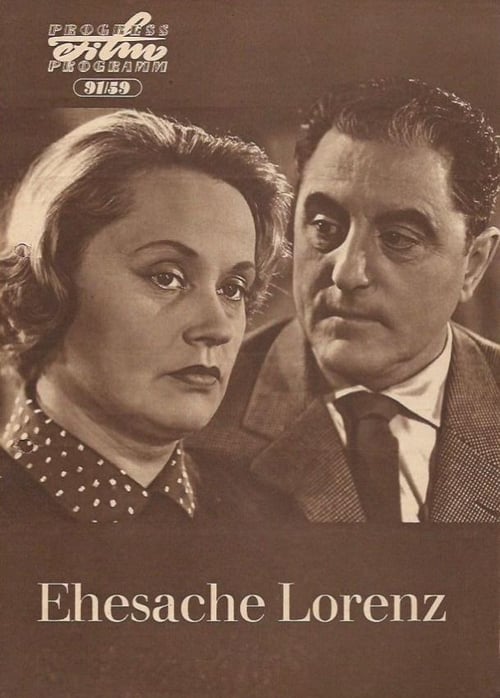
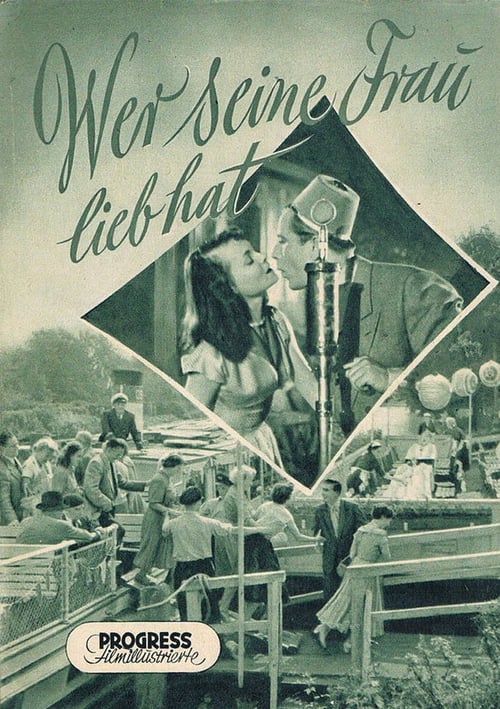
Trude and Willi Lorenz have had an exemplary marriage for 24 years. Their daughter Gitta takes them as a role model for herself and her fiancé Peter. But appearances are deceptive. Willi cheats on his wife with the young secretary Helga. He is a department manager in a heavy engineering company and travels a lot on business. Trude also has a busy working day as a divorce judge. Obviously, family life has been neglected as a result, and now Trude herself is facing a problem that is very familiar to her from her job. An alderwoman has drawn her attention to her husband's infidelity, and a visit from Helga, who demands that she give up her husband, forces her to make a decision. Willi Lorenz has cheated on both women. In a discussion, he finally confesses to Trude and their life together. The fact that it doesn't come to the "Lorenz divorce case" is also thanks to the sincere, compassionate driver Schliffke, who tactfully opens the eyes of his boss Lorenz and the young Helga.
The young lady Lisa Gau probably took her own life at Seilergasse 8 in Rostock, at least that's what it looks like. Captain Schirding, who has been assigned to the case, sees things differently. Together with forensic scientist Kurt Lisowski, he investigates the case and soon discovers that Lisa was poisoned and is shocked when all the evidence points to his...
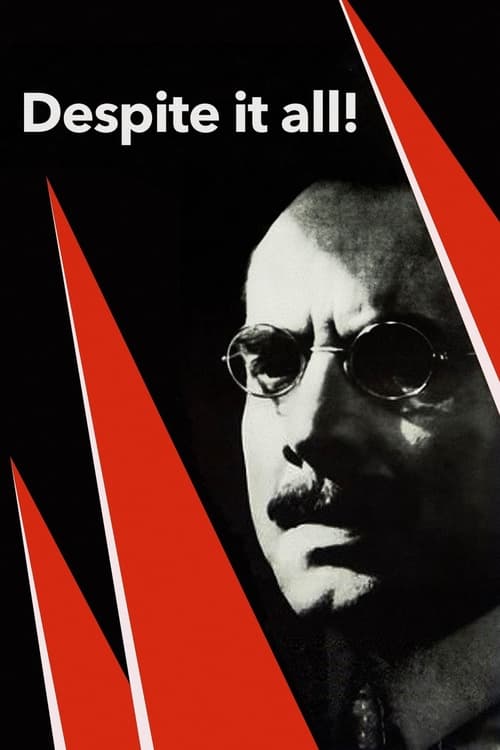
October 1918: Karl Liebknecht is released from prison and Berlin workers celebrate his release. Although WWI is almost over, the German Kaiserreich in vain sends its last reserves to the slaughter. The working class is in a rebellious mood; the uprising of Kiel’s sailors against war and militarism sets off a call for revolution led by Liebknecht. On November 9, Liebknecht declares the Free Socialist Republic of Germany. But pro-Kaiser military and right wing Social Democrats oppose him.
Hamburg, Germany 1934: An executioner is needed. Teetjen makes the biggest mistake of his life. Because his butcher shop is facing bankruptcy, he agrees to execute a group of political prisoners for the Nazis. Once this becomes known, Teetjen’s life falls apart.
The film tells the life story of Louise Otto Peters, who in the middle of the XIX century in Germany for the first time raised a voice of protest against the unfair treatment of women and their labor. She created the first "women's newspaper" in Germany. The daughter of a famous lawyer, Louise could have easily arranged her life by marrying the wealthy Baron Rodern. But she chose a different purpose in life - to fight for equal rights for women. Through her articles and public speeches, she won the authority and respect of ordinary people.
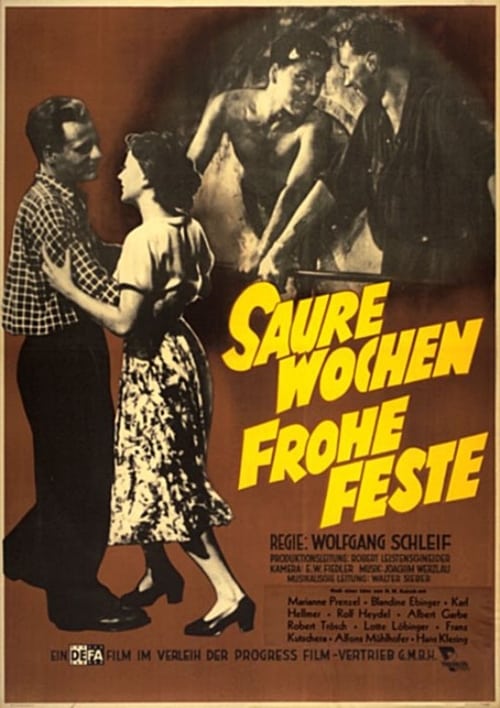
The Berlin Volkseigene Betrieb (VEB) Komet is planning a company outing. Willi Redlich, member of the party committee, votes like the others: The relatives stay at home. But he doesn't dare tell his wife Susanne. So she does the work of renting the "Waldschlösschen" restaurant for him - without his knowledge. When Willi wants to book the seats, everything is fully booked and he switches to the "Sonnenburg" opposite. Meanwhile, word has gotten around among the women that they are excluded. They plan a counter-event. On the day of the excursion, both groups are sitting in their inns and the women make sure that they can still celebrate together.
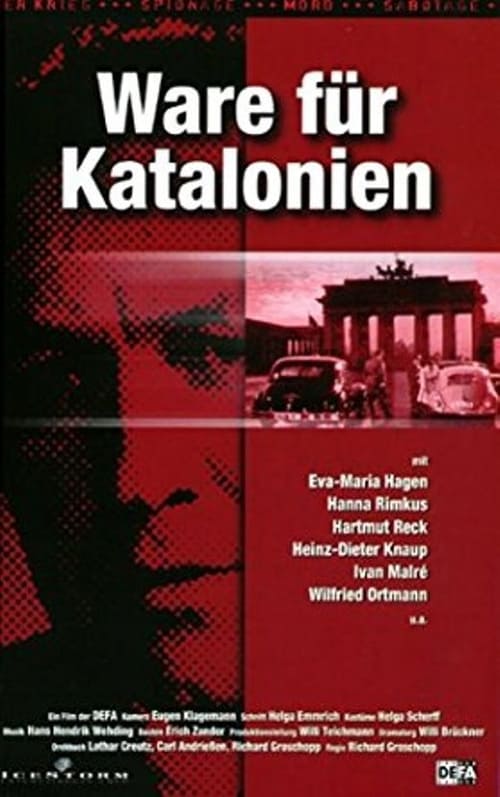
At the end of the 1950s, the production of optics in the German Democratic Republic has reached top quality and instigates interest in the West. When national demand rises strongly and at the same time the export to South America heavily decreases, the Volkspolizei - the GDR police force - starts to look into the case. Two seemingly unrelated cases are the starting point for the investigation by second lieutenant Schellenberg of the department for optics racketeering: An old woman who was arrested in the Berlin city railway for trying to smuggle a pair of binoculars to West Berlin, and a dead person in an area of allotments who was involved in obscure dealings with optical devices.
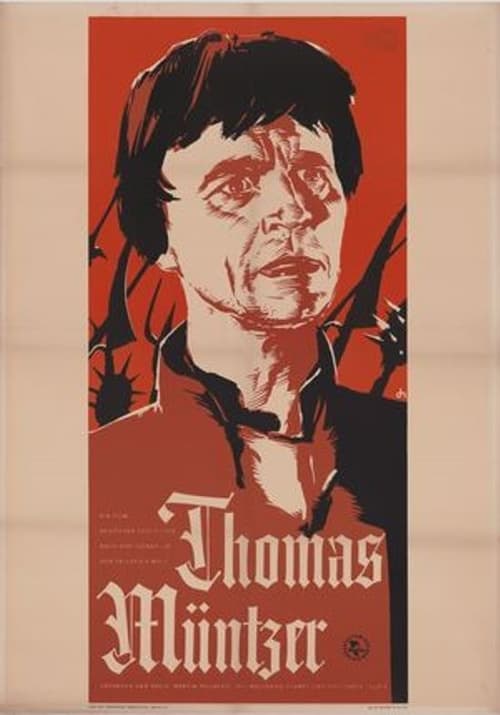
In 1523, young Thomas Müntzer arrives with his wife Ottilie in the Thuringian village Allstedt to assume the rectorate. As a follower of Luther′s teachings, he finds in the Bible not only reasons for clerical, but also for secular reforms. But when Luther turns away from the rural population after a discord with Müntzer, it is Müntzer who becomes the peoples′ spokesman. He is forced to go to Southern Germany, where he convenes with revolting farmers. But his way leads him back to Thuringia. In 1525, he and Heinrich Pfeiffer form the centre of the Thuringian peasant uprising in Mühlhausen, but their success is diminished by the fact that peasants and craftsmen don′t seem to be able to work together. In Frankenhausen, Müntzer becomes the leader of a peasants′ army that is set to fighting the ruler′s army – and sustains a devastating loss. Müntzer is arrested and sentenced to death by decapitation for his insurgency.
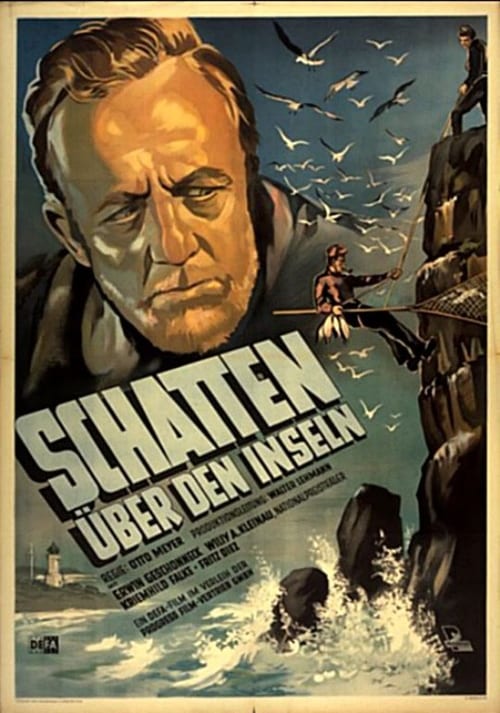
On the Faroe Islands, people eke out a meagre existence by catching birds. Merchant Brause pays them little and does a good business. This comes under threat when Dr. Sten Horn suspects that the dangerous annual plague, which kills dozens of inhabitants, is transmitted by birds. Brause forces the people to work anyway and conceals the telegram from the Copenhagen research institute that confirms Horn's suspicions. Horn, supported by his cousin Arne, enlightens the islanders and the greedy Brause can only flee.
Germany in 1949: The residents of the Thuringian village Hunsdorf are still heavily influenced by archaic superstition and explain unusual events with preternatural powers. The same happens when pigs again and again disappear from different farmyards. The village residents firmly believe that witches are the reason for this mystery. Not even police detective Kühlemann who is sent to Hunsdorf is able to dissuade them from their superstition. Thus, the farmers think his investigation is aimless and they do not support him at all. With a lot of patience and well-made arguments he finally convinces little Peter that there are no witches. Next, Peter’s grandfather and teacher Marianne take Kühlemann’s side. With their support, the police detective eventually finds out the truth and is able to put a stop to the gang of crooks that had been stealing the pigs.
A Saxon village in 1792: While the Prussians go against France, the haymaking takes place in the village and the resolute Marthe catches her daughter Ev with the village blacksmith Ruprecht in the hay.
A theater competition breaks out on the occasion of the four-year anniversary celebrations at the Hennigsberg power plant. The old hands want to perform the kitschy musical comedy "Gärtnerliesl". The youngsters are against it and are planning their own program with which they want to skewer events from the plant in a cabaret style. But first, everyone has to work together on a turbine breakdown. On the day of the festival, the "Gärtnerliesl" fails with timpani and trumpets, while the youth's program is met with great applause, which the rivals join in with.
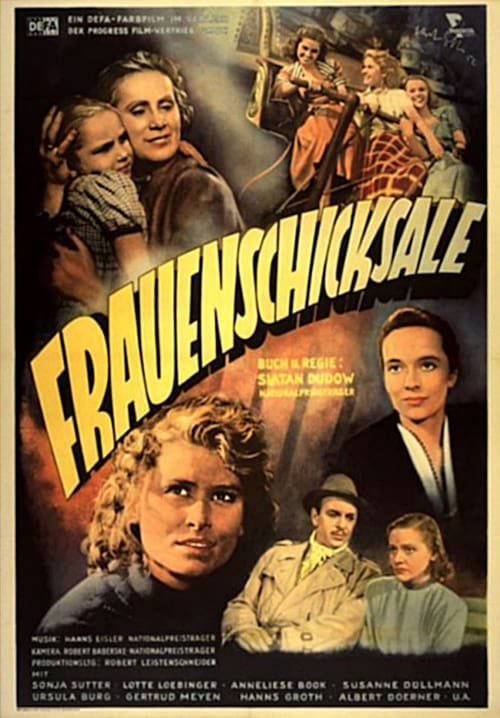
Berlin 1952, seven years after WWII. Four women are looking for a good man and happiness in the divided city. Their destinies are loosely connected through one person: the West Berlin dandy and womanizer, Conny.
This is part one of a two-part biopic about Karl Liebknecht. In 1914, Germany is arming itself for war. Karl Liebknecht, left-wing revolutionary Social Democrat, workers’ leader and a virulent antimilitarist, is one among 110 SPD members of Parliament who vote against approving war loans. From then on, he is considered un-German and a traitor to the fatherland, and his own party’s leadership turns against him. Despite threats, Liebknecht speaks up against the war and writes the manifesto “The Main Enemy Is at Home.” Even when he is arrested and charged with treason, he does not surrender.
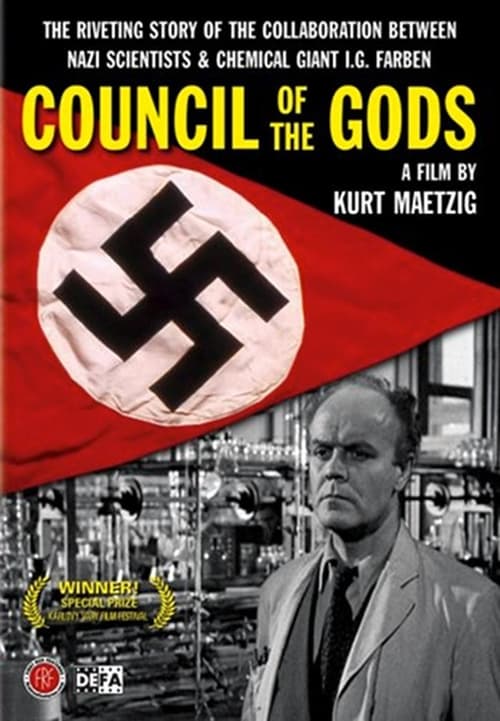
Based on the records of the Nuremberg trial of the chemical giant IG Farben; a story about the collaboration between international corporations and Nazi scientists, whose research contributed to the death of millions. The chemist Dr. Hans Scholz lives through a tortuous political transformation and maturation process. Eventually, he adopts political neutrality and closes his eyes to the fact that the poison being produced in his factory is being used in the extermination camps. Standing before the judges at the Nuremberg trials, he must face the fact that he is implicated in the deaths of millions in the gas chambers of the concentration camps.
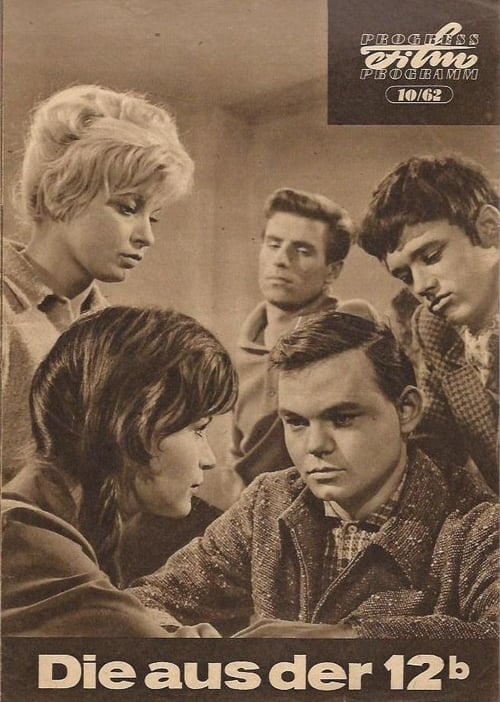
German teacher Miss Platzke starts working in a graduating class. Since she is young and inexperienced, the students soon consider her incapable of doing her job. Their disrespectful and harsh behavior makes Miss Platzke even more insecure, and she reacts with rigidity: On the last day before winter break she orders them to write an unannounced essay, thereby provoking a spontaneous strike.
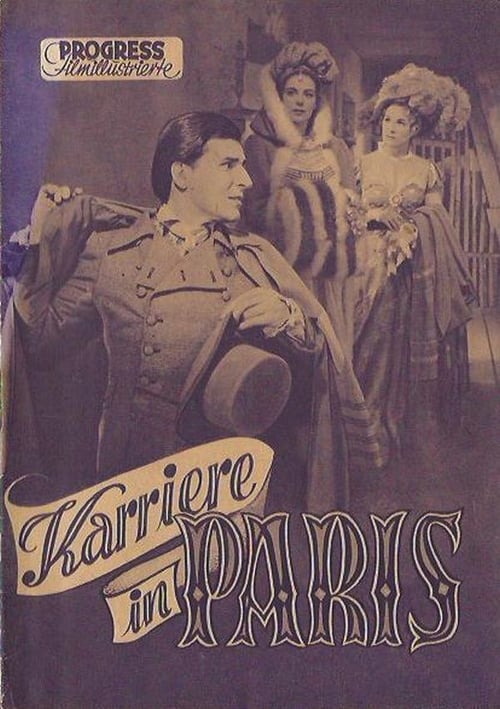
France at the time of the Restoration. The young country gentleman Rastignac comes to Paris to study. He takes up residence in a poor boarding house, where his father Goriot, who has been excluded by his daughters, also lives. The penniless Rastignac is anxious to gain a foothold in Parisian society. His cousin advises him to take the rich banker's wife Delphine, one of Goriot's daughters, as his mistress, which he does. At the same time, however, he falls in love with the laundress Yvette. He is unable to make up his mind when boarding house guest Vautrin suggests a third option: To marry Victorine, the disinherited daughter of a millionaire, and kill her brother in a duel in order to get his inheritance after all. Rastignac agrees. This is his downfall. Instead of high society, he ends up in the gutter.
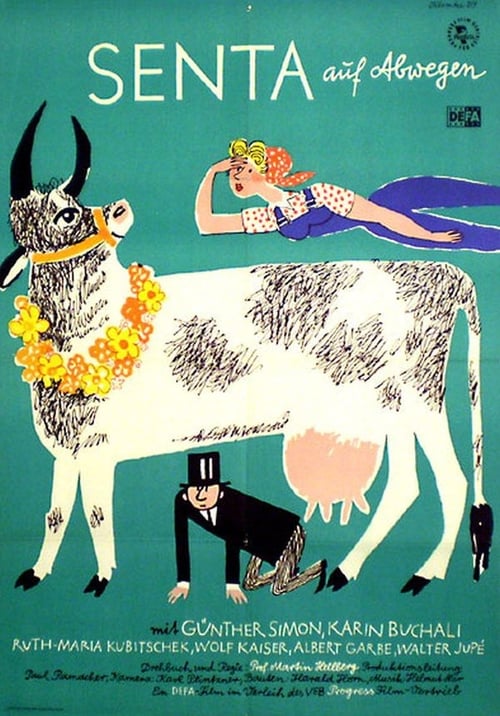
The magnificent cow Senta has escaped from an LPG. Matuschek, a single farmer, joins the search. However, the valuable animal is not found and is believed to have strayed across the border into Poland. Meanwhile, Senta is in Matuschek's barn. His maid Mathilde and neighbor Dattelmann have captured her and brought her there. Matuschek conceals a letter to Poland because of the supposedly border-crossing cow and is embarrassed when the cattle farmer Franze Flohr discovers the cow in his barn. Nevertheless, Matuschek and Franze become a couple who also become closer to the LPG.
No description available.