Acting
Polizeiruf 110 is a long-running German language detective television series. The first episode was broadcast 27 June 1971 in the German Democratic Republic, and after the dissolution of Fernsehen der DDR the series was picked up by ARD. It was originally created as a counterpart to the West German series Tatort, and quickly became a public favorite.
Der Staatsanwalt hat das Wort was an East German television series.
The show was meant to compete with those on West German television. To this end it was fairly successful even attracting a following in parts of West Germany which could receive Eastern TV. Its production values were high. Apart from song and dance numbers and appearances from East German celebrities, almost every broadcast featured well-known stars from the west, often after their popularity had peaked in their home countries.
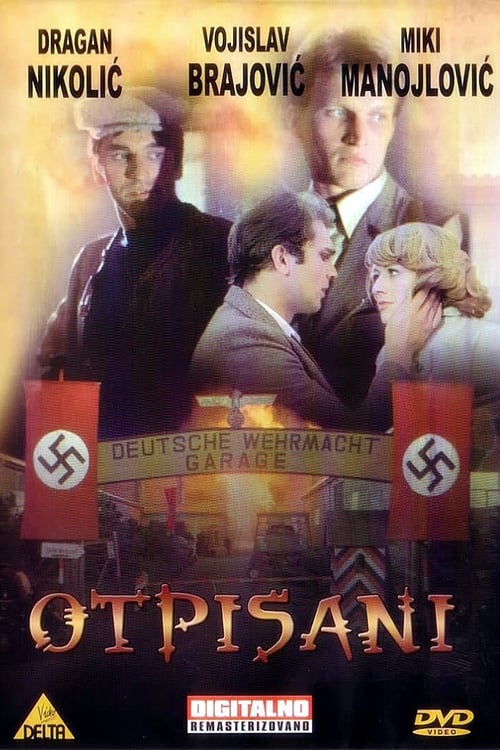
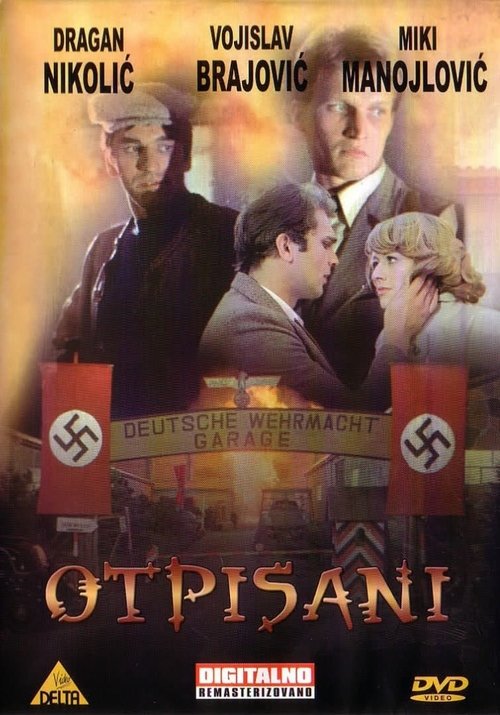
"The Written Off" is a famous Serbian TV miniseries, that was very popular in former Yugoslavia, originally airing in 1974. Due to its popularity, Radio Television of Serbia has shown reruns of the series ten times, the last re-run starting in 2012. The series has achieved something of a cult status among its audience and still attracts an estimated 3 million viewers with its last rerun. Idea of series derives from exploits of freedom fighters in Belgrade during World War II, and all the characters and events are fictitious.
No description available.
After Elmers, the head of the publishing house, is reported missing, his son-in-law Jürgen Brandt is targeted by the Hamburg criminal police. Inspector Graumann and his assistant Weber presume murder. The suspicion against editor-in-chief Brandt is confirmed by the fact that he is incriminated by the testimony of several witnesses. At a press conference, Brandt claims that the Elmers murder case was staged only to exonerate the innocently convicted family man, Parsetti. But to Brandt's horror, Elmer's body is actually found.
Careless lives of few Belgrade youths are shattered when Nazis occupy their town in 1941. Soon they join the resistance movement and their activities bring their names to Gestapo's termination list. This movie inspired the series that would get cult status in former Yugoslavia.
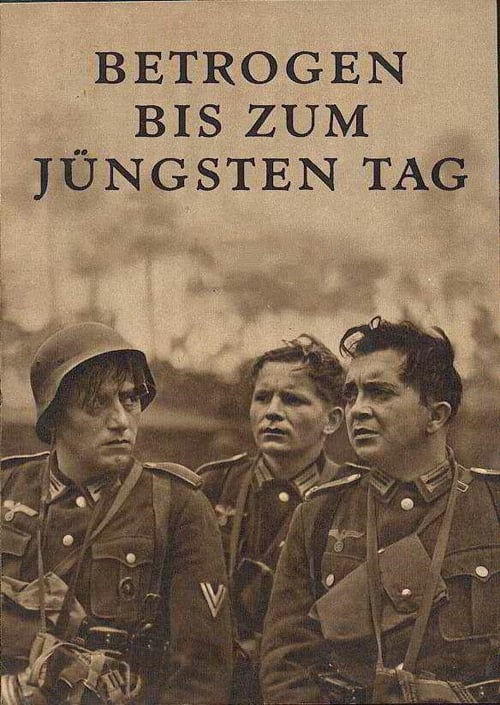
East Germany's contribution to the 1957 Cannes Film Festival was the wartime melodrama Betrogen bis zum Juengsten Tag. Had the film been released in the U.S., the title would probably have translated to Duped Till the Last. The film condemns the Nazi mindset by concentrating on a particularly odious cover-up. When his son is involved in the accidental killing of a girl, a Gestapo general pulls strings to save the boy from prosecution. The general manages to pin the blame for the killing on a group of Russians, whereupon he gives the men under his command carte blanche to round up and execute as many innocent Russians as they wish. This act of brutality is contrasted with the pangs of guilt suffered by the son and his co-conspirators.
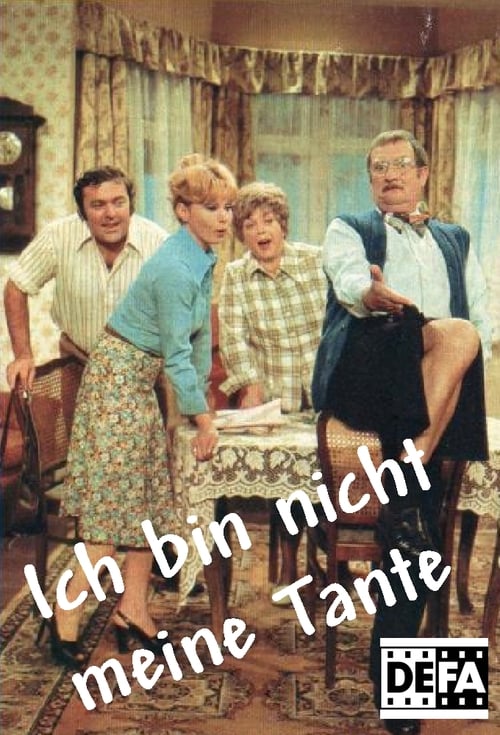
Karla Geisler is a woman with her heart in the right place and a very quick mouth - the tenant on the first floor is practically the good soul of the entire building community. Karla is also the aunt of a 32-year-old single man called Karl, who is not lacking in imagination. Every Wednesday, he invites himself over to Auntie's for coffee and cake so that he can do some geological studies in peace.
The young lady Lisa Gau probably took her own life at Seilergasse 8 in Rostock, at least that's what it looks like. Captain Schirding, who has been assigned to the case, sees things differently. Together with forensic scientist Kurt Lisowski, he investigates the case and soon discovers that Lisa was poisoned and is shocked when all the evidence points to his...
The East German scientist Professor Gerlach has made a significant discovery with his research into how a new, even stronger pesticide can be protected against ineffectiveness through hydrolysis. This fact has not gone unnoticed by other interested nations. At the International Congress of Chemists in Geneva, a power struggle broke out between agents of the BND and the CIA over a preparation that had been smuggled into Switzerland without the knowledge of Dr. Werner, Gerlach's GDR representative and assistant, and which the enemies hoped would shed light on the composition of the invention.
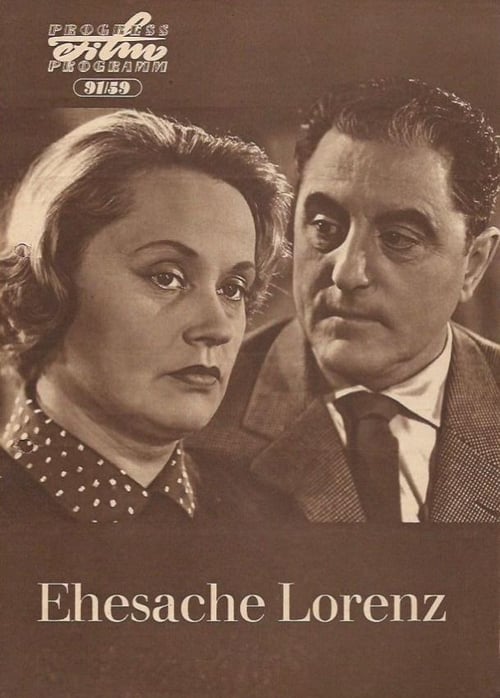
Trude and Willi Lorenz have had an exemplary marriage for 24 years. Their daughter Gitta takes them as a role model for herself and her fiancé Peter. But appearances are deceptive. Willi cheats on his wife with the young secretary Helga. He is a department manager in a heavy engineering company and travels a lot on business. Trude also has a busy working day as a divorce judge. Obviously, family life has been neglected as a result, and now Trude herself is facing a problem that is very familiar to her from her job. An alderwoman has drawn her attention to her husband's infidelity, and a visit from Helga, who demands that she give up her husband, forces her to make a decision. Willi Lorenz has cheated on both women. In a discussion, he finally confesses to Trude and their life together. The fact that it doesn't come to the "Lorenz divorce case" is also thanks to the sincere, compassionate driver Schliffke, who tactfully opens the eyes of his boss Lorenz and the young Helga.
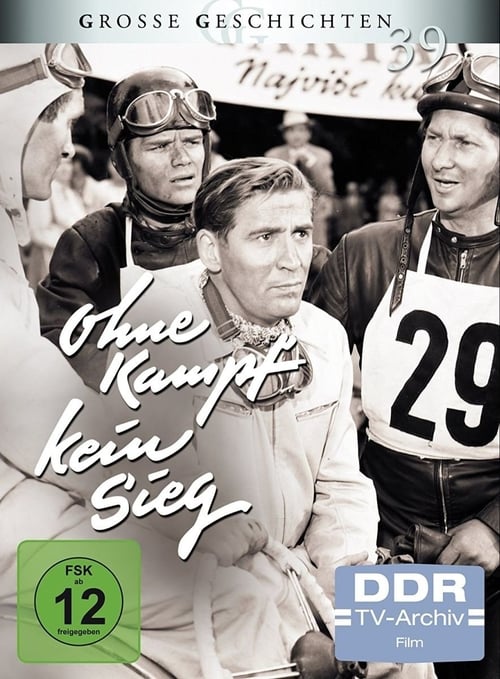
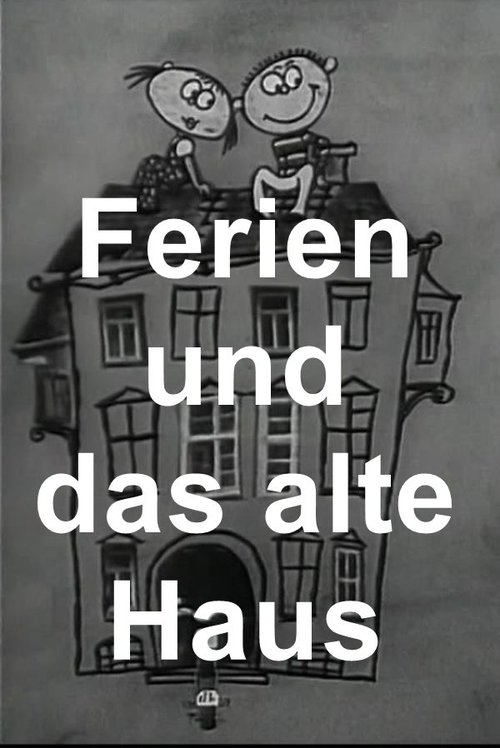
A black-and-white children’s film follows class 6b during their autumn holidays. After a fun test drive with a new electric locomotive, they help Master Sellm build his house. They plan to build a paddling pool but struggle to find pipes. Discovering pipes in an old house, they also find stolen motorcycles. With help from the People’s Police and the godparent brigade, they lay the pipes and learn about foreign property and reporting stolen goods.
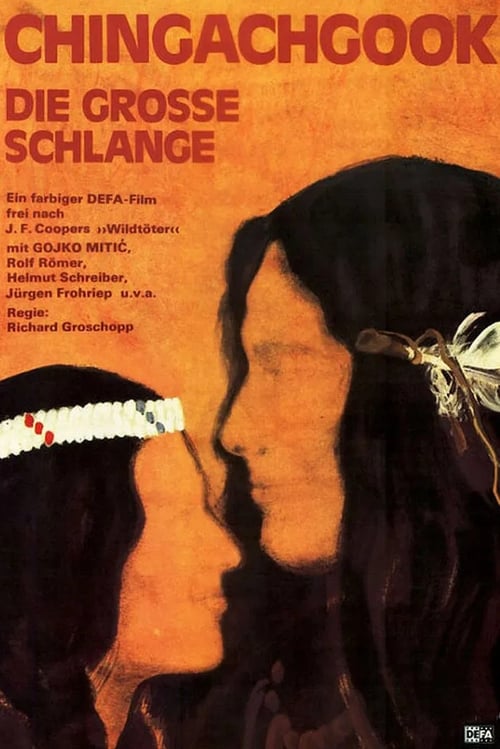
Chingachgook, a Mohawk-born Delaware warrior, strives to rescue his wife Wahtawah from the clutches of an enemy camp of Huron. Joined by his trusted huntsman Deerslayer, the two confront racist pioneers and brutal British soldiers in their quest. Deerslayer catches the desire of Judith and thus the jealousy of her suitor, Harry. The action of the story functions like a seesaw, characters continuously traveling back and forth between a house on the lake and the Huron camp until the violent climax.
Two 17-year-olds, Werner Holt and Gilbert Wolzow, are pulled out of school and into Hitler's army. Gilbert becomes a fanatical soldier; but at the front, Werner begins to understand the senselessness of war.
South America at the beginning of the 1980s. A man is on the run from a group of armed pursuers. He does not manage to escape and is shot down mercilessly. Young Maria witnesses the cruel event and asks her friend, the journalist Oswaldo, to find out about the backgrounds of this case. The police also start to investigate the case and find out that a mysterious German farm is involved in the shooting. But the farm lies in an exterritorial area, thus the police officers cannot investigate any further.
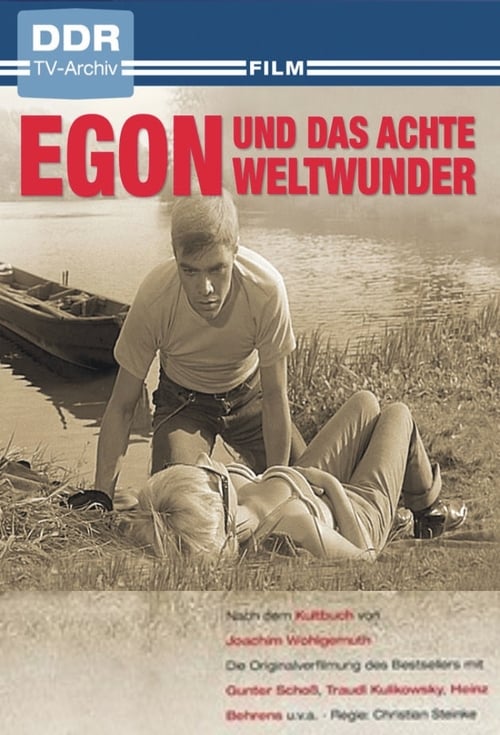
Egon Brümmer and his half-strong "boys" are an integral part of the Borkenheide Musical Club. When the manager of the clubhouse forbids them to rehearse in his rooms, Egon and his friend Paul react by hitting on the visitors to a nearby Christmas party. Both are sentenced to six months in prison without parole for assault. When Egon gets out of prison, he wants to leave his old life behind him. He tries to avoid the boys, but they don't understand his change of heart. He starts working as an unskilled laborer on a building site, just as he did before he went to prison. At a graduation ball, Egon meets Christine Lange, who wants to study medicine. Her friends call her the "eighth wonder of the world" because it would be a miracle if she were to fall in love. Egon pretends to be a construction specialist and the two dance together.
Episodes from the life of German poet and communist Erich Weiner: his stay in Paris, participation in the Spanish Civil War, years of exile in Russia. Moscow, May 1941. Children play in the sun, young people fall in love, make plans for their future. German emigrants, including 50-year-old Erich, are concerned about events in their homeland and sense impending disaster...
Kasper Mai, an export merchant and comrade with a “clean” record, discovers he is the prince of Hohenlohe-Liebenstein. His royal grandmother designates him as the heir to her estate. A private trip to her reveals that she does not want a NATO airbase built on her land. The GDR and his grandmother thus find a common interest, and a clever lawyer from the East works against other family members looking to settle their debts with the estate money.