Monzaemon Chikamatsu
Writing
Known For

When the wife of a 17th-century Kyoto scrollmaker is falsely accused of having an affair with his best employee, the pair flee the city and find themselves truly falling for one another.
Chikamatsu Monogatari
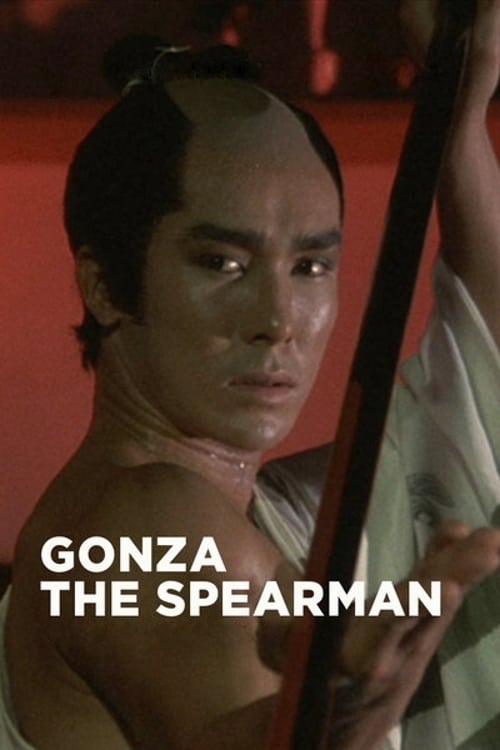
The tragic story of Gonza, a handsome ladies man, set in the Tokugawa Period, a time in which appearances are very important. Gonza competes with Bannojō for the honor to perform the tea ceremony to celebrate the birth of an heir to the lord of their clan. To see the sacred tea scrolls Gonza promises to marry the daughter of the family which possesses them, even though he is unofficially engaged to another. When studying the scrolls with Osai, the mother of the house, Bannojō sneaks into the house and steals their obis and runs through the town proclaiming the two as adulterers.
Gonza the Spearman
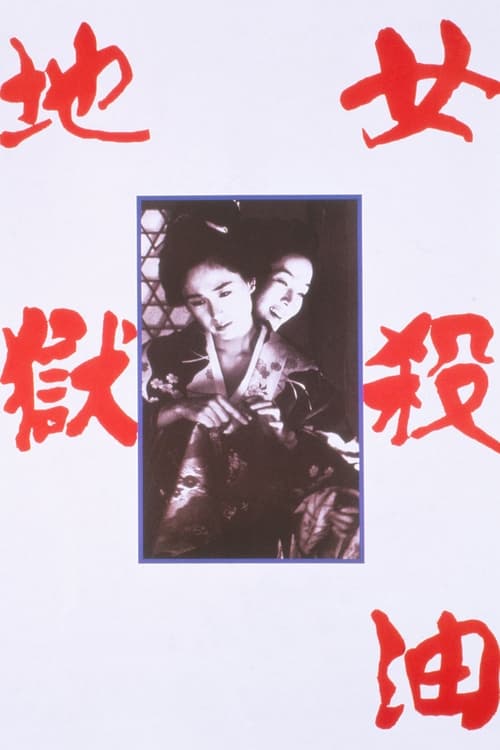
The indolent son of an oil vendor becomes a regular customer of a prostitute, racks up a mountain of debt, and is disowned by his parents.
The Oil-Hell Murder
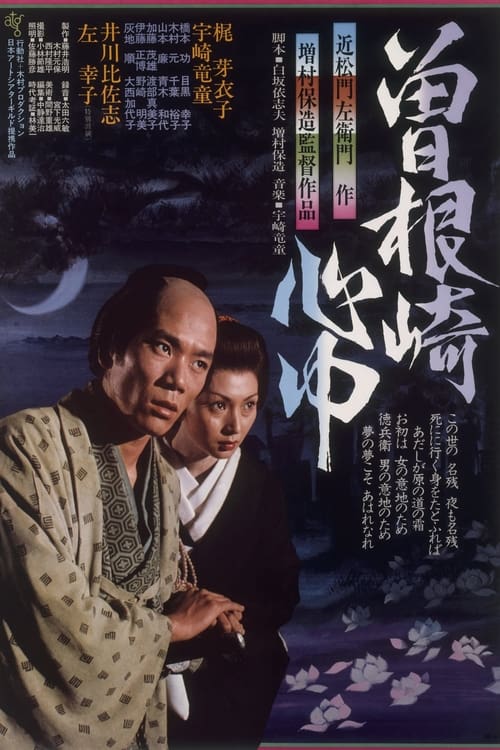
Suicide has long been used as a form of social protest in Japan. In this film, set in 1703, samurai culture is being transformed by the emergence of a new merchant class. Elements of the social contract are beginning to unravel, and some unscrupulous people took undue advantage of these changes before the social order was re-created. In this story, a rich merchant gives his clerk an I.O.U. instead of wages. When the impoverished clerk presents the paper to the merchant at the agreed upon time asking for payment, the man flies into a rage and pretends he never wrote it and claims the clerk is trying to defraud him. Then he sets his henchmen on the clerk to administer a beating.
Double Suicide of Sonezaki
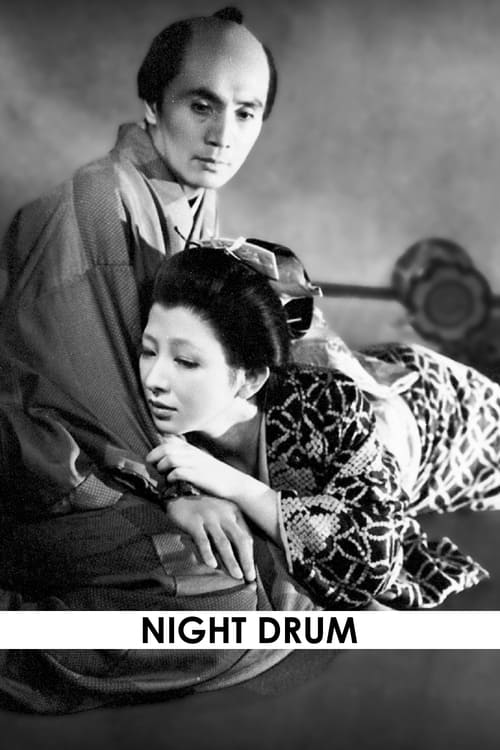
Following a yearlong attendance upon his shogun in Edo, samurai Hikokuro makes a long-awaited return to his home and doting wife, Dane. Initially greeted by the effusive welcome of his family, spiteful whispers also reach his ear about an adulterous affair carried on, in his long absence, between his wife and a famous drummer. With Hikokuro’s honor imperiled by rumor, his family insists on a formal investigation into the veracity of the gossip. Through the combined testimony of many witnesses, a tale unwinds around the visits of a traveling musician hired to tutor the family heir, the spurned attentions of the man who started the rumor, and the ultimate truth behind the accusations. The conclusion of events prove as much an indictment of bushidō as it is of the reluctant parties involved. Adapted from a 1706 play by Chikamatsu Monzaemon and based on a true case.
Night Drum
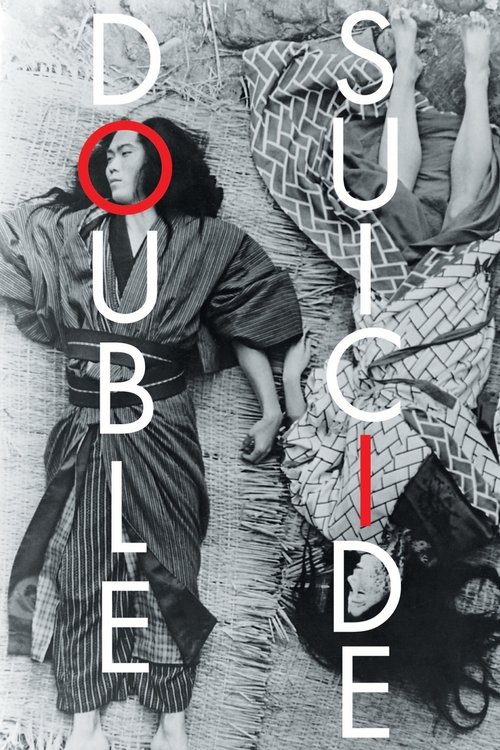
Successful and married with children, paper-mill owner Jihei knows better than to contradict the strict social and moral codes of 18th-century Japan. But when he meets the lovely courtesan Koharu, he becomes a man obsessed. Koharu returns his love, even foregoing other customers while Jihei schemes to somehow buy her freedom. His efforts yield ruinous consequences for his business and his family life, and Koharu is meanwhile purchased by another client.
Double Suicide
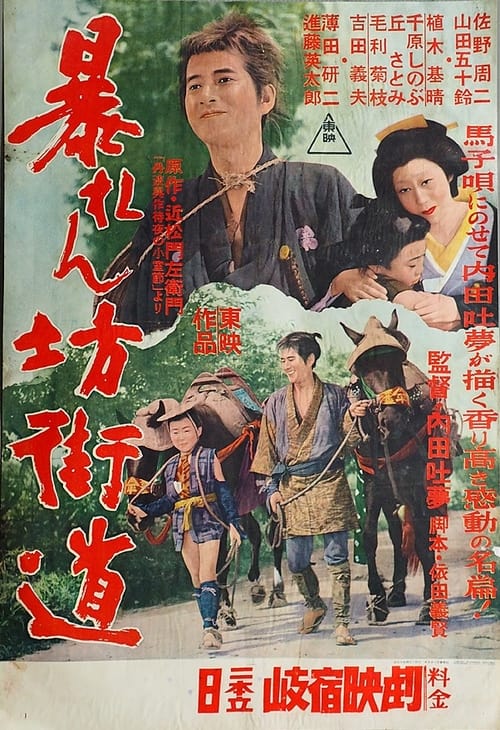
A humble page fathers a child by the daughter of a clan official and is banished. Years later, the child, now a stable boy, is reunited with his father, but feudal codes threaten their happiness. Uchida’s poignant masterpiece condemns the inflexible class system and launches an indictment of values that favor symbolic objects over human life. The film’s focus is on character rather than swordplay, and charged performances - especially child actor Motoharu Ueki - add to the emotional power.
The Horse Boy
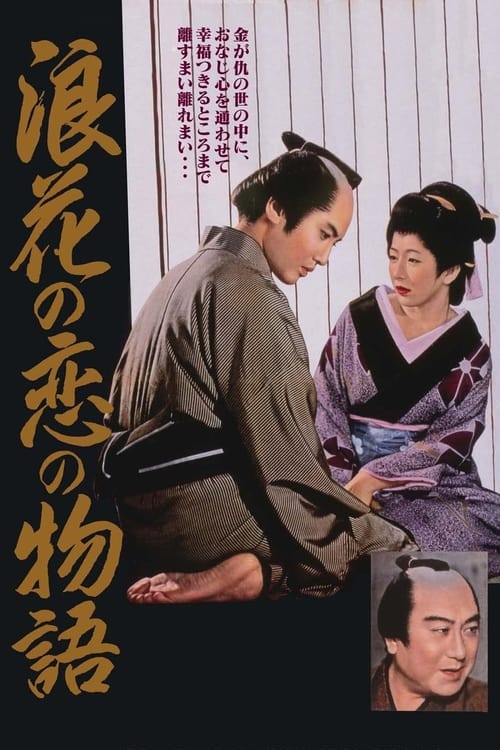
Chubei, the adopted son of an Osaka courier, falls desperately in love with the courtesan Umegawa. To prevent a wealthy client from purchasing her, he steals money from his employer to buy her freedom himself. Now hunted criminals, the lovers flee toward Yamato, pursued by the law.
Chikamatsu's Love in Osaka
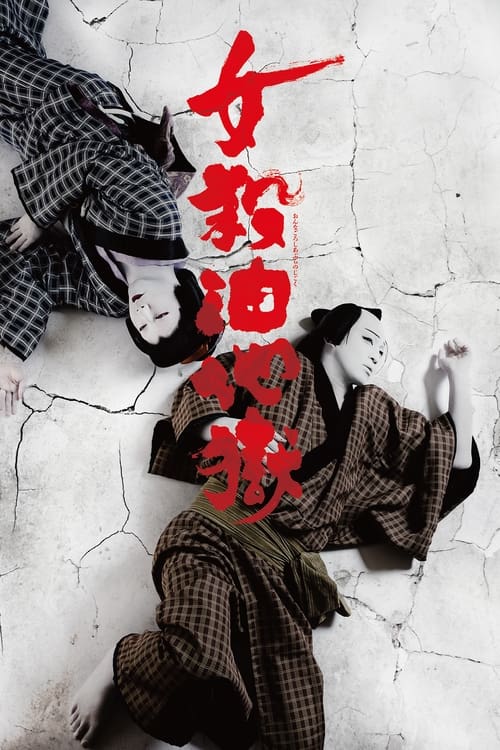
Based on a true incident, this is a timeless story of a hot-headed young man who rebels against his parents and is forced into desperate straits, eventually losing himself in madness.
Murder in a Hell of Oil
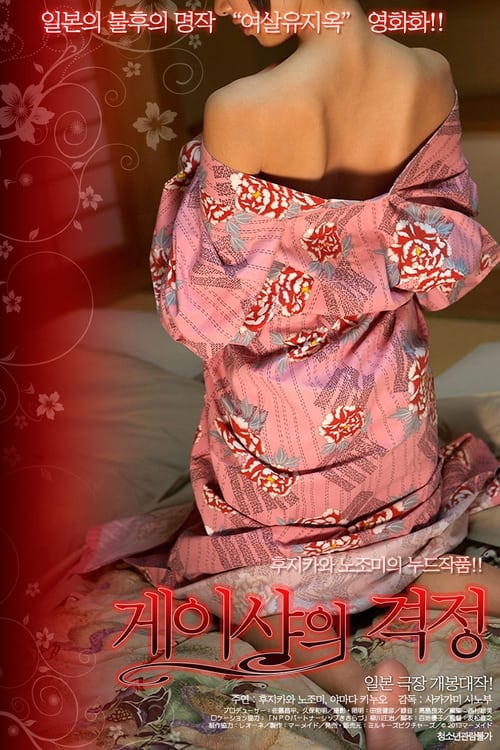
Starting with director Gosha Hideo's version in 1992, the puppet theater of Chikamatsu Monzaemon has been made into a film on countless occasions. The actor Sakagami Shinobu wrote and directed this version. This new interpretation focuses on a woman who played a minor role in the original version, and features a bold performance from former pin-up model Fujikawa Nozomi. Yohee (Yasuda Shingo), son and heir of the store Kawachiya, runs up huge debts due to his obsession with the prostitute Okiku (Fujikawa). Told by her husband Chizaemon, Okichi (Yamada Kinuwo) goes to condemn Yohee. On her way back home, Okiku laughs and mocks her, which Okichi finds sexually exciting.
The Oil Merchant's Wife
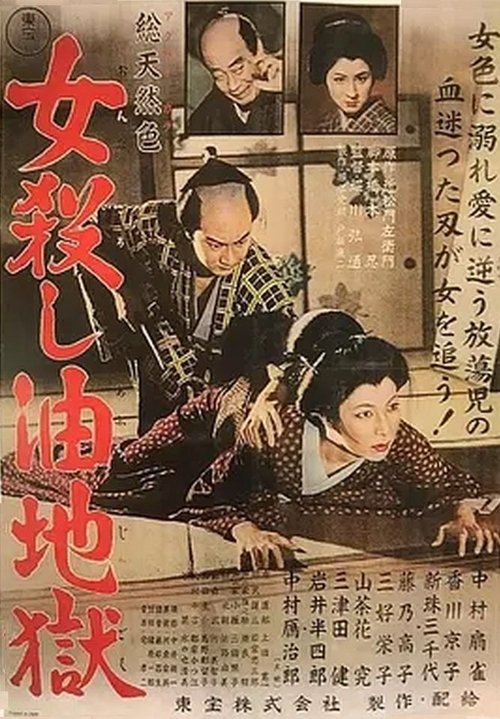
A privileged son betrays his family for the favors of a geisha in 18th century Osaka.
The Oil-Hell Murder
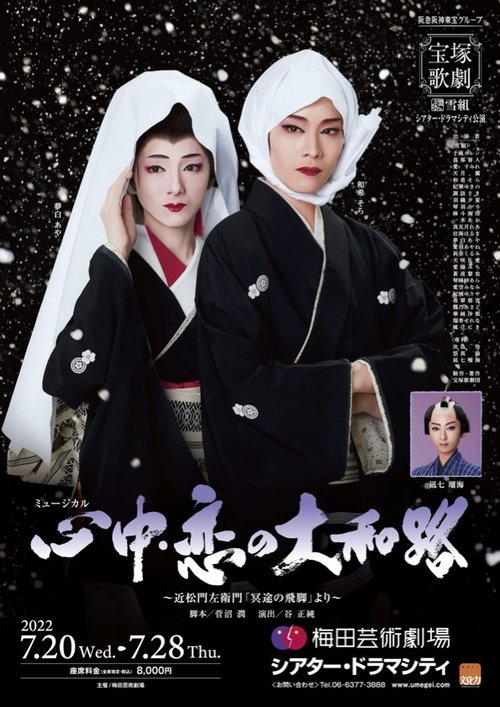
No description available.
心中・恋の大和路
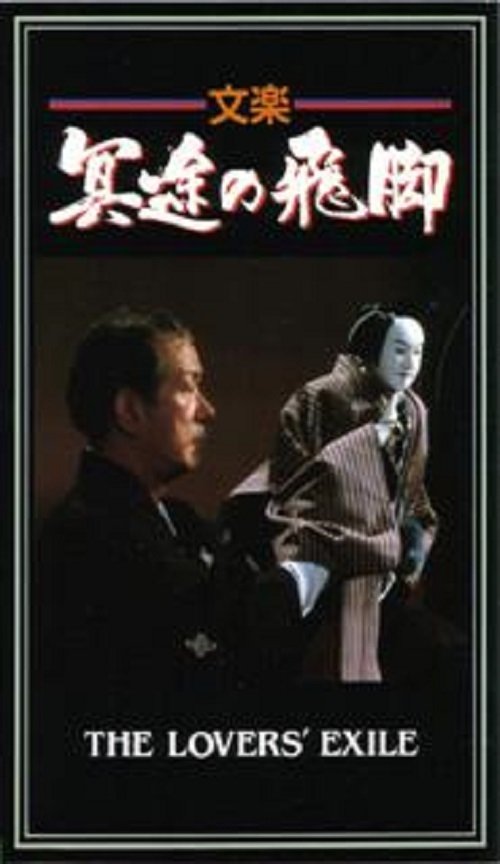
An adaptation of “The Courier for Hell” (“Meido no Hikyaku”) by Chikamatsu Monzaemon (1653-1725).
The Lovers' Exile
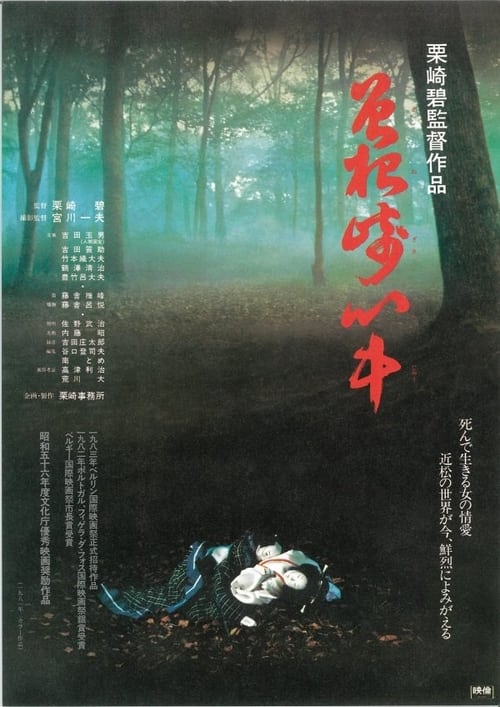
A bunraku puppet drama of the courtesan Ohatsu and her lover, Tokubei, a soy-sauce merchant whose fortunes have gone awry through the perfidy of a trusted associate. For Tokubei, suicide is the only honorable act left; for Ohatsu, it is the only emotionally viable one.
The Love Suicides at Sonezaki
A Japanese adaption of the story of the Prodigal Son.