
Roger Peyrefitte
Writing
Biography
Roger Peyrefitte (17 August 1907 – 5 November 2000) was a French diplomat, writer of bestseller novels and non-fiction, and a defender of gay rights and pederasty. Born in Castres, Tarn, to a middle class bourgeois family, Peyrefitte went to Jesuit and Lazarist boarding schools and then studied language and literature in the University of Toulouse. After graduating first of his year from Institut d'Études Politiques de Paris in 1930, he worked as an embassy secretary in Athens between 1933 and 1938. Back in Paris, he had to resign in 1940 for personal reasons before being reintegrated in 1943 and finally ending his diplomatic career in 1945. In his novels, he often treated controversial themes and his work put him at odds with the Roman Catholic church. He wrote openly about his homoerotic experiences in boarding school in his 1943 first novel Les amitiés particulières which won the coveted prix Renaudot in 1944. The book was made into a film of the same name which was released in 1964. On the set, Peyrefitte met the 12-year-old Alain-Philippe Malagnac d'Argens de Villèle; and both fell in love. Peyrefitte tells the story of their relationship in Notre amour ("Our Love" – 1967) and L'Enfant de cœur ("Child of the Heart" – 1978). Malagnac later married performer Amanda Lear. A cultivator of scandal, Peyrefitte attacked the Vatican and Pope Pius XII in his book Les Clés de saint Pierre (1953), which earned him the nickname of "Pope of the Homosexuals". The publication of the book started a bitter quarrel with François Mauriac. Mauriac threatened to resign from the paper he was working with at the time, L'Express, if it did not stop carrying advertisements for the book. The quarrel was exacerbated by Mauriac's articles attacking the memory of Jean Cocteau because of his homosexuality and the release of the film adaptation of Les amitiés particulières. This culminated in a virulent open letter by Peyrefitte in which he accused Mauriac of being a hypocrite, a fake heterosexual who maligned his own children and a closeted homosexual with a past. It is said Mauriac was badly shaken by this letter, unable to get out of bed for a whole week. In April 1976, after Pope Paul VI had condemned pre-marital sex, masturbation and homosexuality in the encyclical Persona Humana: Declaration on Certain Questions Concerning Sexual Ethics, in a series of interviews Peyrefitte accused him of being a closet homosexual that chose his papal name after his lover's first name. Although his statements were published in a few discreet magazines, Peyrefitte was surprised and overjoyed when one day he watched in television the Pope addressing the issue in the heart of St. Peter's Square, complaining about the "horrible and slanderous insinuations" that were being said about the Holy Father and appealing for prayers on his behalf. In Les Ambassades (1951), he revealed the ins and outs of diplomacy. Peyrefitte also wrote a book full of gossip about Baron Jacques d'Adelswärd-Fersen's exile in Capri (L'Exilé de Capri, 1959) and translated Greek gay love poetry (La Muse garçonnière (The Boyish Muse), Flammarion, 1973). ... Source: Article "Roger Peyrefitte" from Wikipedia in English, licensed under CC-BY-SA 3.0.
Known For
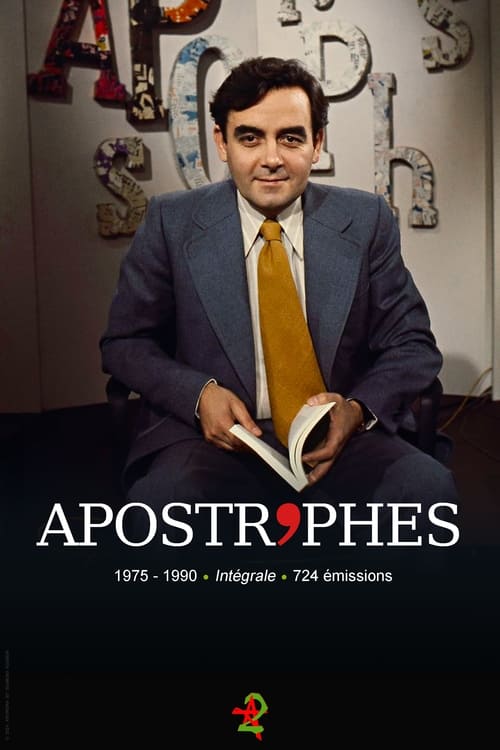
Apostrophes was a live, weekly, literary, prime-time, talk show on French television created and hosted by Bernard Pivot. It ran for fifteen years (724 episodes) from January 10, 1975, to June 22, 1990, and was one of the most watched shows on French television (around 6 million regular viewers). It was broadcast on Friday nights on the channel France 2 (which was called "Antenne 2" from 1975 to 1992). The hourlong show was devoted to books, authors and literature. The format varied between one-on-one interviews with a single author and open discussions between four or five authors.
Apostrophes
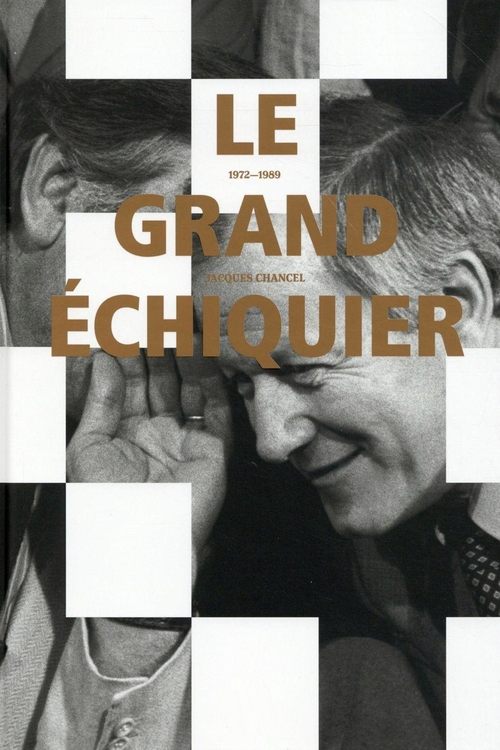
Le Grand Échiquier is a French variety television program created and presented by Jacques Chancel. It aired at 8:30 pm on the first channel of the ORTF from January 12, 1972 to July 12, 1972, then on the second color channel of the ORTF from September 1972 to December 1974, and finally on Antenne 2 from January 1975 to December 21, 1989. The program returned to France 2 on December 20, 2018 and is hosted by Anne-Sophie Lapix.
Le Grand Échiquier
No description available.
Samedi soir

A tale of the tender relationship between a twelve-year-old boy and the fourteen-year-old upperclassman who is the object of his desire, all set within the rigid atmosphere of a Jesuit-run school.
This Special Friendship
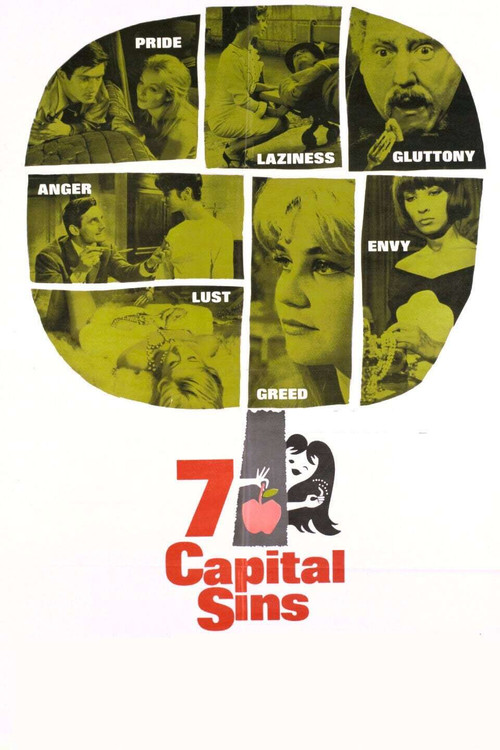
Seven directors each dramatize one of the seven deadly sins in a short film. In "Anger," a domestic argument over a fly in the Sunday soup escalates into nuclear war. In "Sloth," a movie star would rather pay someone to tie his shoe than bend over to do it himself, and he can't be bothered to accept a starlet's sexual favors. In "Gluttony," a peasant family on its way to the funeral of a relative who died from indigestion stops regularly to eat and drink en route, arriving in time to eat some more. In "Greed," a high-class prostitute refunds the price of a cadet's lottery ticket. In "Pride," an unfaithful wife finds reason to reform. And so on through lust and envy.
The Seven Deadly Sins
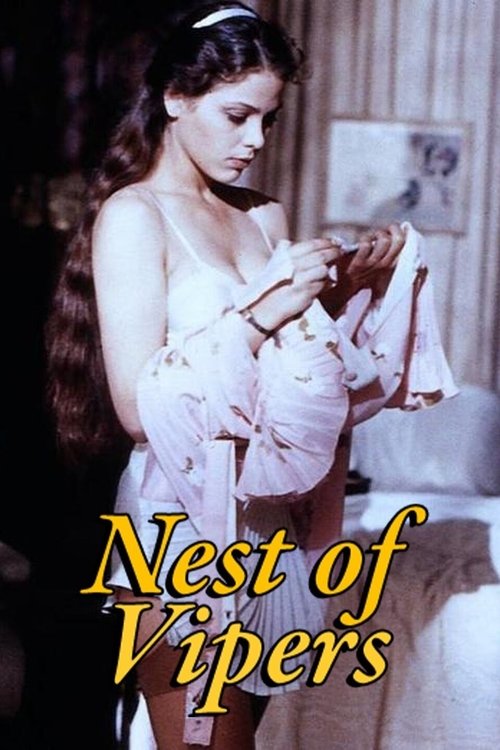
A background of rising fascism in Venice in 1930s. A music-student, Matthias, mixes with the town's bourgeoisie and falls in love with a mature teacher, Carla, the mother of his friend Renato, and then with his young colleague, Elena.
Nest of Vipers

This short film by Jacques Demy was based on his memories of growing up in Nantes, France. While it was initially made for the omnibus film THE SEVEN DEADLY SINS (as the segment on "Lust"), it has also been distributed and exhibited separately.
Lust

Roger Blanchard has a busy life. On the family side, he is married and has two children, aged ten and fifteen. On the work side, he holds an important position at the Ministry of Culture. To bolster his social status, he has a mistress to liven up his Saturdays. But nothing is going right. His wife Marion exasperates him, his children irritate him, his job gives him no real satisfaction, his mistress neglects him and his superior, Monsieur Gambaud, gets on his nerves. But when he meets a beautiful young secretary, his life and habits are turned upside down: Blanchard amuses him and gets his way. In revenge, Gambaud warns Blanchard's wife.