Roger Frison-Roche
Acting
Biography
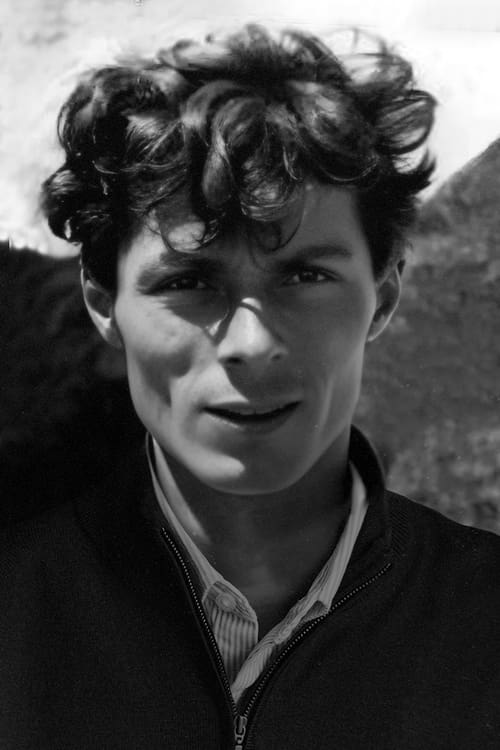
Roger Joseph Fernand Frison-Roche, born February 10, 1906 in Paris 8th comes from a Savoyard family living in Paris. He studied at the Chaptal high school in Paris, then left school and worked as a courier in the Thomas Cook travel agency at the age of 14. During the war, he made several trips to Beaufort which awakened his love of the mountains. In 1924, he was the secretary of the first Winter Olympics in Chamonix. He writes in the newspaper Le Savoyard de Paris. Between 1926 and 1927, he did his military service in Grenoble with the 93rd mountain artillery regiment. In 1923, at the age of 17, he moved to Chamonix and became secretary of the tourist office and the Olympic Committee, he made several climbs such as the Aiguille du Grépon or the Aiguille du Moine. In 1928, he made the winter premiere of the Aiguille de Bionnassay with Armand Charlet. In 1928, Frison-Roche met Marguerite Landot with whom he had three children. Between 1927 and 1930, he was director of the Syndicat d'initiatives de Chamonix. In 1930, he was admitted to the Compagnie des Guides de Chamonix. In 1935, he made his first expedition to Algeria in the south in the Sahara with Captain Raymond Coche, where he was a guide for the French Alpine expedition to Hoggar. The expedition makes the first ascent of Garet El Djenoun (the Mountain of Geniuses). He published his first book in 1936: The Call of the Hoggar. In 1937, he crossed the Grand Erg Occidental on camel with Albert Plossu. Between 1938 and 1941, he was a journalist at La Dépêche in Algiers where he settled with his family in 1938. Between January and February 1941, Premier de Cordée appeared as a serial in La Dépêche Algérien. He sent the manuscript to the publisher Arthaud in September 1941 and it was in 1943 that the film Premier de Cordée was made. In 1948, he published the second of his two most popular novels: La Grande Crevasse. In 1942, he was a war correspondent alongside the Allies on the Tunisian front and was taken prisoner by the Germans in Kairouan and then released. In 1943, German troops arrived in Chamonix, Frison went underground in Beaufortain. In 1944, he was a liaison officer with the FFI and then on the staff of the 5th Alpine Hunter Demi-Brigade. This passage in his life inspired him in particular in Les Montagnards de la Nuit (1968). He returned to Algeria at the end of the war. In 1950, he rode a thousand kilometers on the back of a camel in the Sahara with Georges Tairraz. After his film The Great Desert, he began his career as a speaker. In 1955, he moved to Nice where he reported for Nice-Matin, and undertook the crossing of the desert in a 2 CV, from Algiers to Niamey. In 1956, he made his first trip to the Far North, to Lapland with Jacques Arthaud for the filming of the film Ces Hommes de 30,000 ans. Between 1966 and 1969, he undertook several expeditions in the Canadian Far North as well as in North America. In 1965, he participated in the founding of the International Union of Mountain Guide Associations (UIAGM). In 1981, he published his autobiography: Le Versant du Soleil. He was elected in 1974 to the Academy of Sciences, Belles-Lettres et Arts de Savoie. In 1960, Roger Frison-Roche moved to Chamonix where he died on December 17, 1999 and where he is buried.
Known For

Midi Première is a French variety show presented by Danièle Gilbert, directed by Jacques Pierre and broadcast from January 6, 1975 until January 1, 1982 on TF1. The program was generally broadcast between 12:15 p.m. and 12:55 p.m., then giving way to the 1:00 p.m. TV news. However, the broadcast schedule could change, depending on the guests, and the setting where the recording of the program was shot. Certain performances by artists who have become cult like the one where Ringo jostles with a demonstrator in interpretation (1977), that of Dalida with the title There is always a song with the soundtrack that does not start, twice, at the right speed (1978), Claude François and his Clodettes, who, in the provinces, are unable to join "the set" in order to interpret his song, the latter being taken by the crowd of delirious fans (summer 1977) . The group Supertramp performed there with the title "Dreamer" on March 8, 1975.
Midi Première

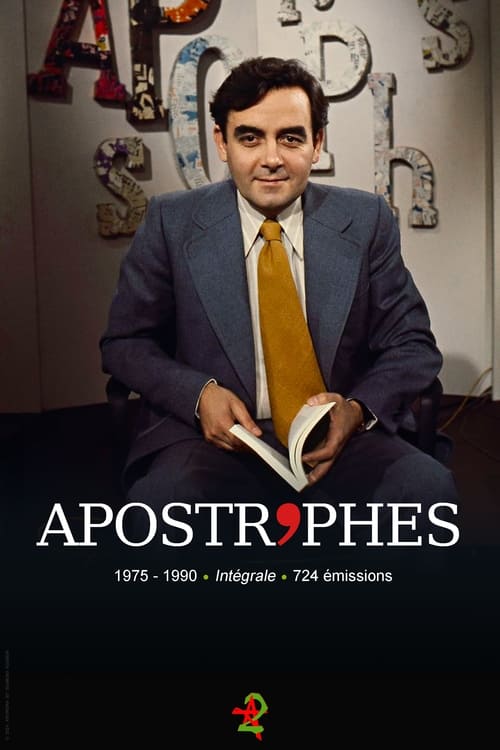
Apostrophes was a live, weekly, literary, prime-time, talk show on French television created and hosted by Bernard Pivot. It ran for fifteen years (724 episodes) from January 10, 1975, to June 22, 1990, and was one of the most watched shows on French television (around 6 million regular viewers). It was broadcast on Friday nights on the channel France 2 (which was called "Antenne 2" from 1975 to 1992). The hourlong show was devoted to books, authors and literature. The format varied between one-on-one interviews with a single author and open discussions between four or five authors.
Apostrophes

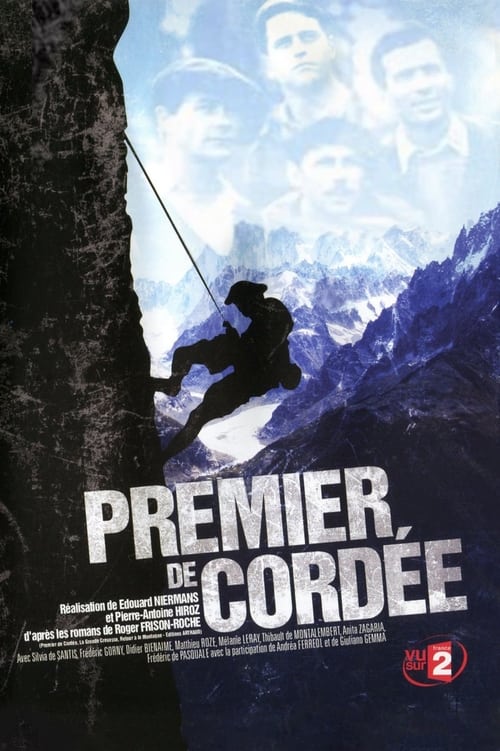
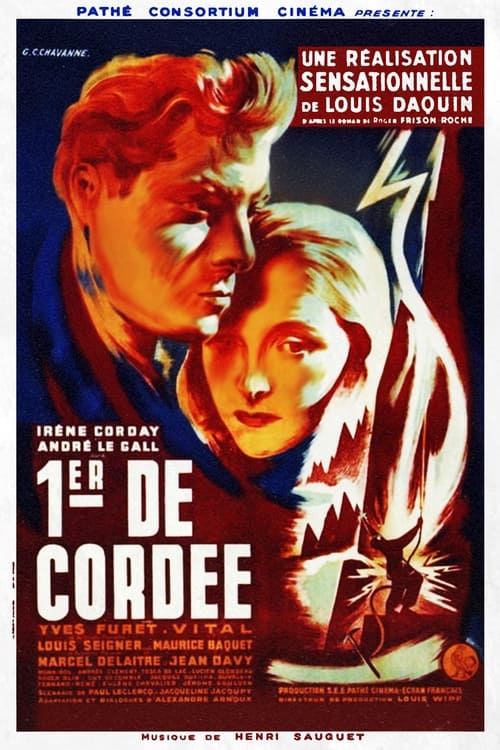
Chamonix in the 1930s was a resort where a cosmopolitan, fashionable and sporting society thronged, in search of novelties and thrills found in mountaineering. These people rub shoulders with the Chamoniards but do not meet except on the trails of Mont-Blanc. The accident of Joseph, the patriarch of Servettaz, guides from generation to generation, marked the spirits. It is his son Zian who decides to take up the torch. Married to Bianca, the daughter of the wealthy Milanese industrialist who was partly responsible for her father's death, Zian lives out her great love story - a threesome - with the mountain always remaining the most demanding mistress. Tired of the agonizing expectations and loneliness during her husband's ascents, Bianca returns to Italy, Zian joins her, but society life is not his world, he returns to Chamonix. During an outing in the mountains, Zian falls into a crevasse. Bianca, alerted by a presentiment, returns to the one she loves above all...
First On The Rope

A screen adaptation of the well-known novel by Roger Frison-Roche about the harsh lives of mountain guides and their families in the French Alps, near Chamonix and the French/Swiss/Italian borders... Like his father, Zian Servettaz is a dedicated mountain man. His Italian-born wife Bianca does not adjust well to his mountain village in France, and to the ever life-threatening dangers presented by his mountain guiding and climbing. She briefly returns to Italy and to her family. However, after Zian's insistence and trip to Italy, she returns to mountain life in the French Alps. Once back there, events will unfold, changing their lives as well as those of other mountain people forever.
First in Line

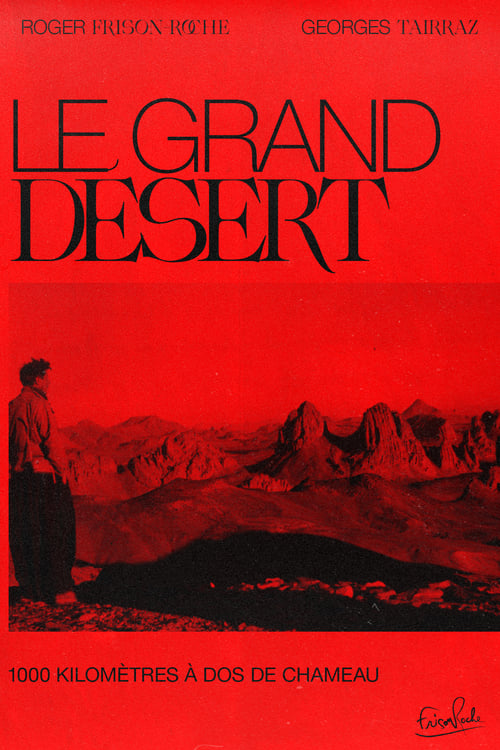
In 1950, the explorer Roger Frison-Roche made a crossing of more than a thousand kilometers on the back of a camel with the photographer Georges Tairraz II, in the heart of the Sahara, from Hoggar then Djanet in Algeria to Ghat in Libya. From their journey they brought back a large number of color films and documents. Among thousands of photos, they selected 47 images which reflect the various aspects of these immense spaces which occupy a third of Africa in the book "The Great Desert". “The Great Desert, 1000 kilometers on camelback” is the eponymous 85-minute documentary of this epic, released in 1950.
Le Grand Désert

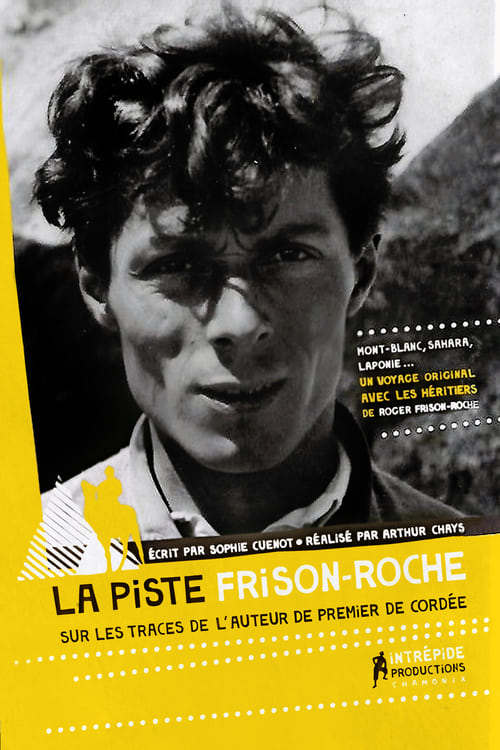
Roger Frison-Roche born in Paris in 1906 and moved to Chamonix at the age of 17. He was quickly adopted by local mountaineers and became the first guide in the Company not to have been born in the valley. He is also an insatiable explorer, in love with landscapes and peoples, having traveled from the Hoggar to the Sami camps in Lapland. And the author, among others, of the famous adventure novel Premier de Cordée! This documentary, made up of archive images and interviews, exposes the prolific life of a man who communicated his passion for the mountains by all possible means. A young journalist from Chamonix follows in the footsteps of Roger Frison-Roche. She meets people who knew him and others who followed in his footsteps: guides, filmmaker and author Philippe Claudel, a director, his family; on a trip to Lapland, Algeria, Chamonix.
The Frison-Roche Track

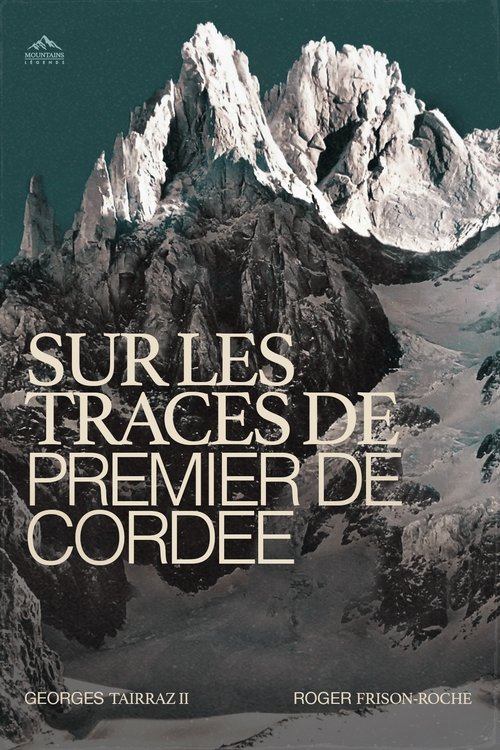
"Sur Les Traces De Premier De Cordée", a color documentary from 1952 which will be released the same year as the eponymous photo book published by Arthaud, features Roger Frison-Roche and his sidekick Georges Tairraz II on the Aiguille du Grépon (3482 m) in the Aiguilles massif which overlooks the Chamonix valley. Together they co-produce the images of the ascent. The young Pierre Tairraz, who completed his training in Paris, at the school in the rue de Vaugirard (Cinema promotion in 1953), also took part in this very technical aerial filming as assistant to his father Georges Tairraz II and cameraman.
Sur Les Traces De Premier De Cordée

No description available.
Chamonix - Mont Blanc, Une histoire de conquêtes

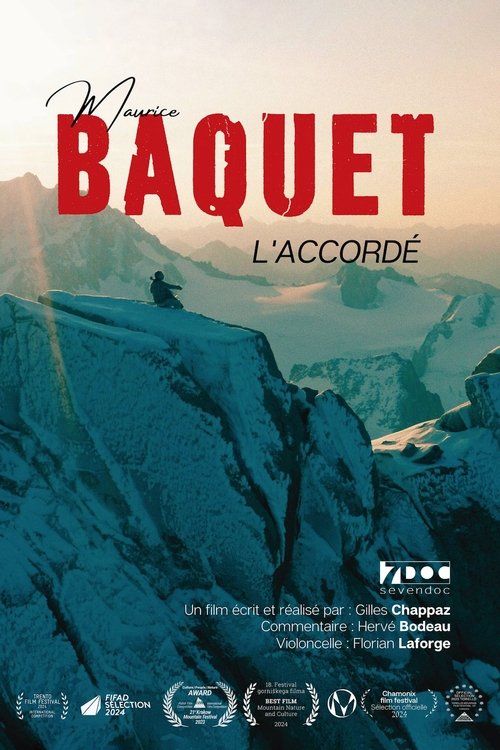
At once a high-level musician, member of the October Group, entertainer, theater artist, film actor, mountaineer, and skier, Maurice Baquet, always on the move, structured his life around two common threads: the cello and the mountains. He once defined himself as a "cellist-skier," "all alone" in this category, which prompted James Couttet, world ski champion, to say: "Of all the skiers I know, he's the best cellist." Echoing this, Professor at the Conservatoire National Supérieur, André Navarra, added: "Of all the cellists I know, he's the best skier." Throughout his varied yet coherent career, Baquet helped to project a joyful and artistic image of the mountains. Who better to talk about Maurice and all his adventures than his alter-ego: Cérébos, the faithful cello that never left his side? From Paris to Chamonix, from the stage to the granite slabs and snowy slopes, this film follows Cérébos, crossing the century and above all... smiling!
Maurice Baquet, The Accorded

Documentary on the French Alpine expedition to Hoggar in Algeria, starring Roger Frison-Roche, Raymond Coche, Pierre Lewden, and François de Chasseloup-Laubat. The 1935 French Alpine Expedition to Hoggar was conceived and prepared by Lieutenant Raymond Coche, the ideal leader for an expedition that would combine alpine and Saharan terrain in Algeria. Among his goals, he set himself the task of leading a French rope team to the still-untouched summits of Atakor and Tefedest and planting the French flag there. His old friend, Pierre Lewden, an athlete and journalist, was soon on the team, and to complete their project and complete the trio, they called on Roger Frison-Roche, a guide from Chamonix and one of the best climbers of this generation. A few days before their departure from Paris, filmmaker Pierre Ichac joined them.