Mária Markovičová
Acting
Known For
No description available.
Bakaláři
No description available.
Vivat Beňovský!
No description available.
Jedenáste prikázanie
A comedy about three flirtatious woodcutters realistically capturing Slovak village life and criticizing insincerity, hypocrisy and male pride.
Infidelity, Slovak Style
No description available.
Zaprášené histórie Ema Bohúňa
No description available.
Traja z 9. poschodia
No description available.
Eugen Onegin
A dramatic tale of a man's life marked by two world wars. The story is divided into two parts. The first part focuses on the life of the Dobrik couple after the outbreak of World War I, the second part develops the life events of their son Peter, who fought in the Red Army during World War II.
Stretnutie
The detective case of Captain Jakubec and his colleague Lieutenant Michalek takes place in a small town where the auditor Burian dies after drinking a health syrup. The doctor concludes that it was a heart attack. However, the exhumation of the corpse confirms the suspicion that Burian was poisoned. The auditor's young wife and her lover are the primary suspects. Other candidates for the role of the perpetrator include the manager of the café Orlovský, who asked Burian to destroy the falsified statements in exchange for a bribe, and the managers of two stores where the shortage was discovered. However, the network of suspects continues to expand...
Murderer from Beyond the Grave
No description available.
Jeden deň pre starú paniu
A girl is transformed into a maple tree by her impulsive and angry mother. Three poor wandering musicians come by the tree and create instruments from it. Walking around the country instead of happiness they bring death everywhere with their cursed instruments. However they cannot get rid of them, unless they bury the wooden instruments at the place of the tree. The three are anything but harmonious, each taking in their disputes various stances.
Maple and Juliana

The sweet story of the Bratislava architect Andrej and the beautiful Vanda, with whom Andrej, who has been cynical about women, falls in love for the first time.
Nylon Moon
On Christmas Eve, 1944, in Nazi-occupied Slovakia, the Kubiš family grapples with survival amidst brutal reprisals. Marián collaborates as a fascist guard leader, while his sister Angela has an affair with their Nazi lodger, Major Brecker. The situation escalates when their younger son, Juraj, a former partisan fighter, returns home wounded. As Germans search homes for escapees, Juraj hides in the attic, while an unsettling Christmas dinner unfolds below with Major Brecker present.
Midnight Mass

The drama of a young Slovak army officer who gradually realises the horrors of fascism during the fighting in Ukraine. On his return to Slovakia, he joins the SNP. However, he cannot overcome his loner attitude or his doubts about the meaning of partisan activity.
Kapitán Dabač
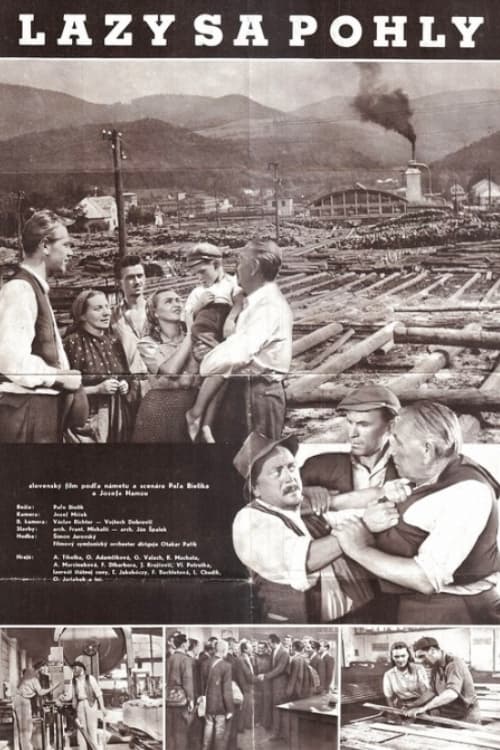
The life on the poor Slovak hills, the lazy hills, where agriculture is at a primitive stage and where the shelves give a small harvest. Meanwhile, socialist industrialization is reaching an amazing boom in the valleys. Therefore, it is necessary to solve the problem of small farmers on poor farms and the lack of labor in ever-growing industrial enterprises. The film, based on the fate of Matěj Rendek, who returns to Slovakia after 18 years from America, and on the fate of his family, who have toiled for years on poor fields and slaved for a rich farmer, shows how this problem must be solved: an agricultural cooperative is established on the lazy hills, which, with the help of machines, can handle agricultural work better and with a significantly smaller number of laborers, and most of the lazy villagers leave to work at a large sawmill.
Lazy sa pohly
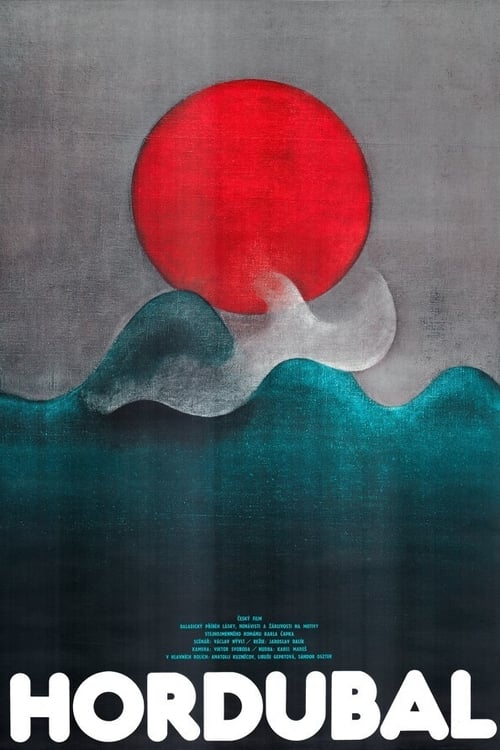
After five years of hard work in America Juraj Hordubal (Anatoliy Kuznetsov) returns back home. He is looking forward to his wife Polana (Libuse Geprtová) and his little daughter Hafie. The family and the village welcome him with hesitation. Everybody believed that Juraj died in America because Polana stopped receiving money from him already two years ago. Polana's farm was prospering first of all thanks to the young stable boy Stepán (Sándor Oszter). Men in the pub first indicate and then say to Juraj directly that Polana has been unfaithful to him with Stepán.
Hordubal
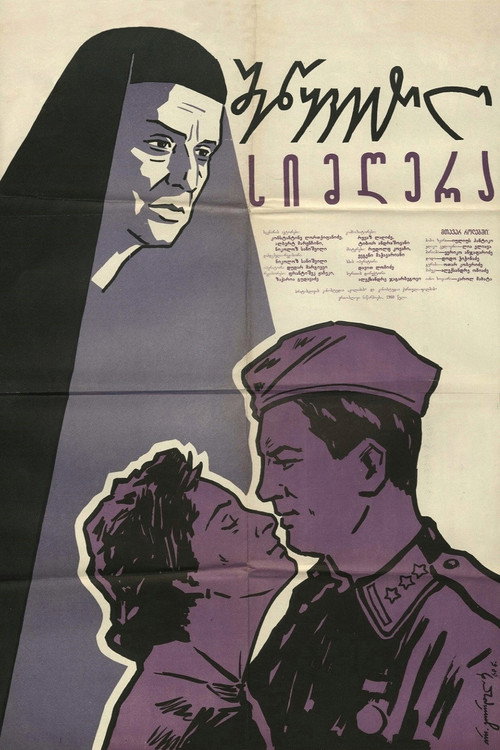
Young couple separated by World War 2, dream of being reunited years later.
Interrupted Song
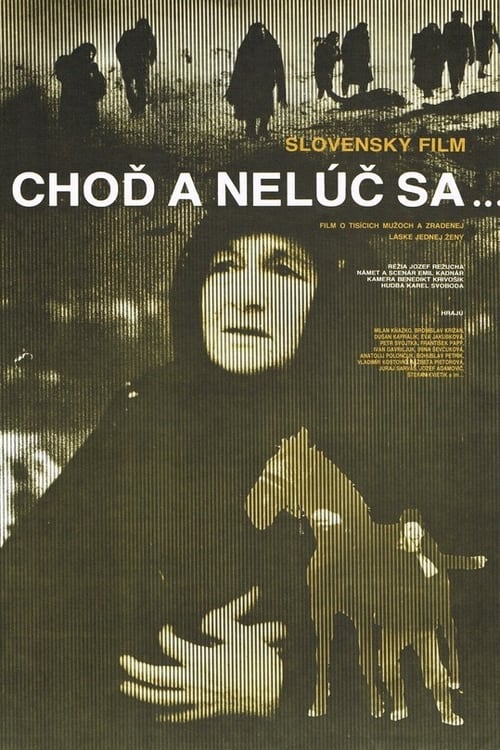
The dramatic story captures the hard and dangerous life of the partisan group "Čapajev" led by Ľudovít Kukorelli during World War II. It retrospectively presents the course of the Slovak National Uprising in eastern Slovakia.
Choď a nelúč sa
A television film from the period of World War II, whose hero is Ondrej, living alone in his widow's house. The war has not yet touched him, he has only heard about it from people. One day, however, he learns that the Slovak National Uprising has broken out. Old Ondrej also begins to think about how to help the partisans in their difficult fight. He sets off on a journey to Prašiva with his only horse and a long-hidden rifle to give them to the partisans. The journey is long and Ondrej meets various people on it. By the time he reaches Prašiva, the destination of his journey, he realizes where his place is. And although he is not only at the end of his journey following the partisans, but also at the end of his life, his last words become the confession of a simple man who has realized on whose side truth and justice are.
Slnko vychádza nad Prašivou
No description available.