Directing
Bjørn Melhus is a German-Norwegian media artist.
Although photographer Horn has been back from Scotland for a while, he still has to think about his irritating and fleeting encounter with a stranger on his journey. Due to a mix-up, some of the stranger's valuables are sent to him.
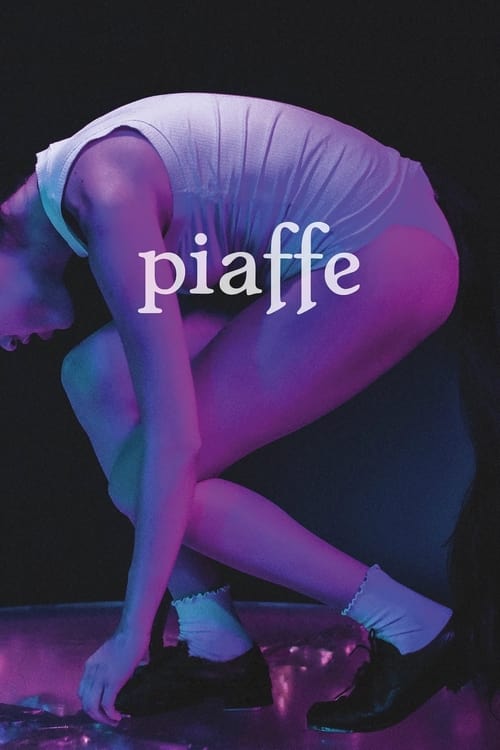
When her sibling Zara suffers a nervous breakdown, the introvert Eva is forced to take on Zara’s job as a Foley artist. She struggles to create sounds for a commercial featuring a horse, and then a horsetail starts growing out of her body. Empowered by her tail, she lures a botanist into an affair, through a game of submission. Piaffe is a visceral journey into control, gender, and artifice.
A short story about new bodies, the power of denial, and a state of no sunshine. Two infantile bodies float in a cyberspace ball, connected by two subconscious bodies in the background. The attempt at unification and metamorphosis is interrupted by one part as the other is liberated. A glance over the shoulder means destruction.
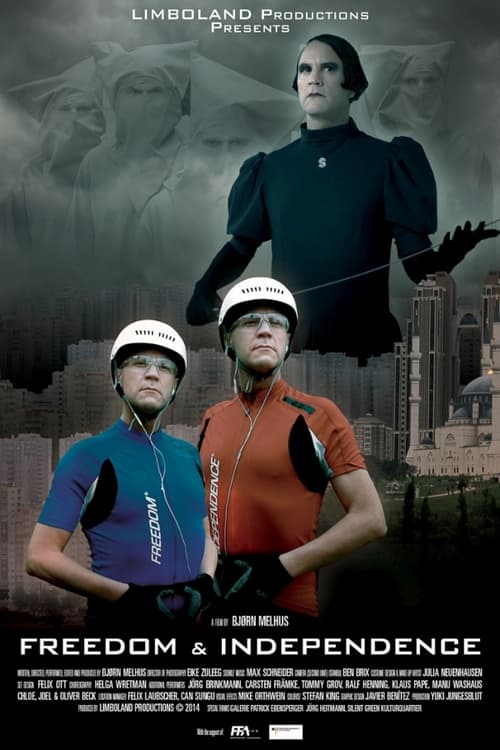
Against the backdrop of an unfathomable megalopolis, in a story that follows the associative qualities of a dream logic, the protagonists quote from concepts of neo-liberal elitism, and a mix of religious delusions and hallucinations of the apocalypse. The film begins in a sacral space, where Randi, a figure that references Ayn Rand, transforms a parapsychological medium into two digital clouds and sends them on a journey through a megalopolis in full growth. There they materialize as two bodies, which go by the names of Mr. Freedom and Ms. Independence.
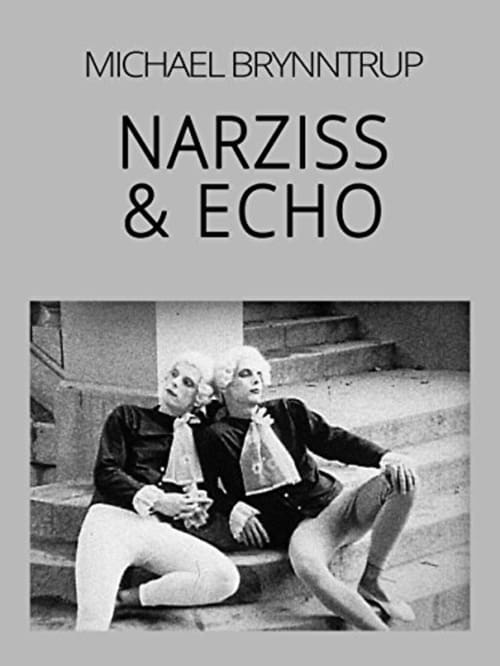
Brynntrup creates his own rococo version of the classical myth of Narcissus and Echo, a story of longing, love, and self-love. Brynntrup comments "A film in the form of a riddle is a special kind of entertainment film whereby the film’s content must be deduced from the film’s formal structure."
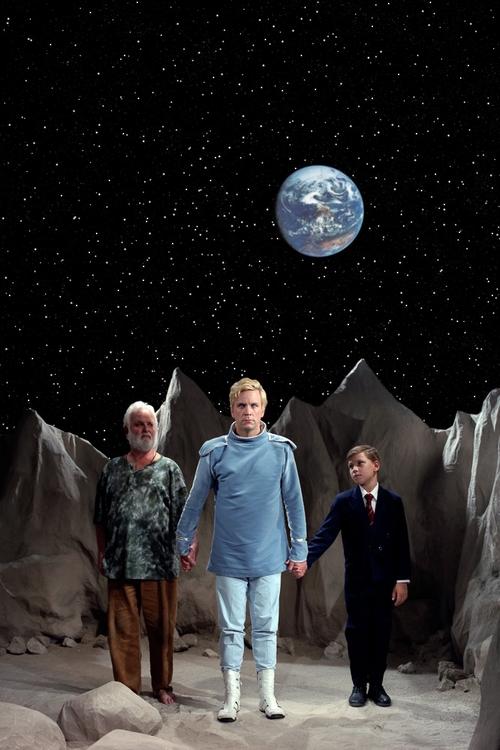
Melhus slips into the role of the captain of a space ship, accompanied by a bold man and a boy in his communion suit. Threatened by a dark power and while stars are exploding in the background, all three perambulate in dialogues, cut from different science-fiction films.
No description available.
An exorcist ritual in a hotel room at night falling on Which a spasm-ridden medium predicts "sudden destruction".
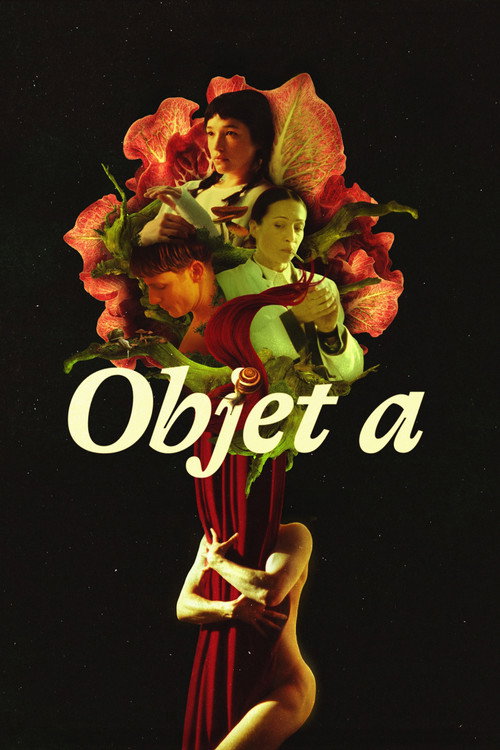
Ingeborg and Adam are visionary hand surgeons bound by love, control, and irresistible fixations. She is compelled to steal objects; he longs to become one. When an accident brings the enigmatic Gaia into their lives, unexpected desires begin to take shape, unsettling the careful balance that has long defined their relationship.
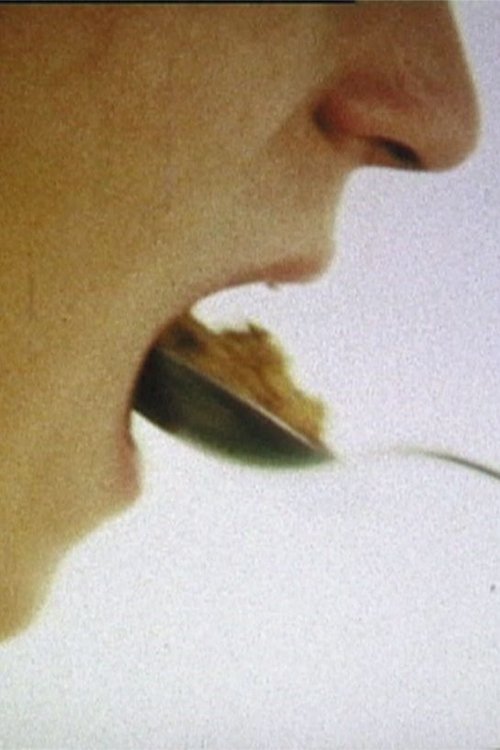
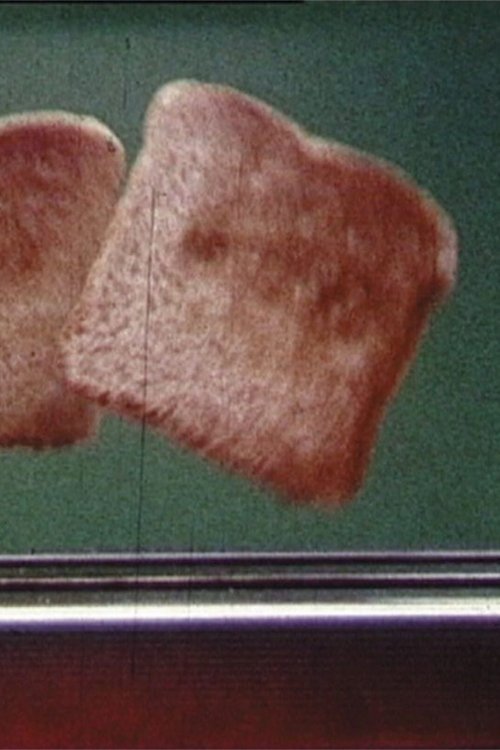
Toast, buttered or not, is an example of commodification of food. Symbolic of a society where time is money, the toaster allows for instant gratification. Just be careful not to burn it.
In reference to the trailer of Psycho (USA 1960), narrated in German by Alfred Hitchcock himself, a gardener with a chainsaw guides us through the premises of the Herbert Gerisch Foundation in Schleswig-Holstein 51 years later. The visit ends, just like in the original trailer…, in a bathroom.
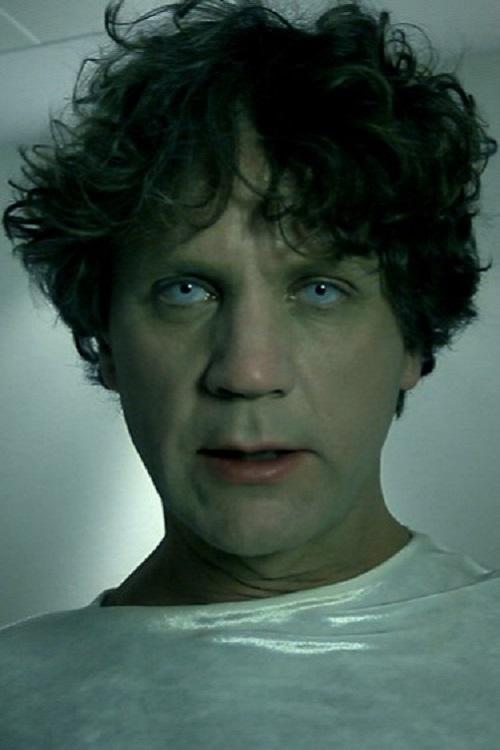
Referencingthe death scene of Sol Roth, played by Edward G. Robinson, in the 1973 movie Soylent Green, and old man on a hospital bed moves through an endless hallway and reflects in a monologue on the 11years of his life and how husmands were able to avoid their own extinciton.
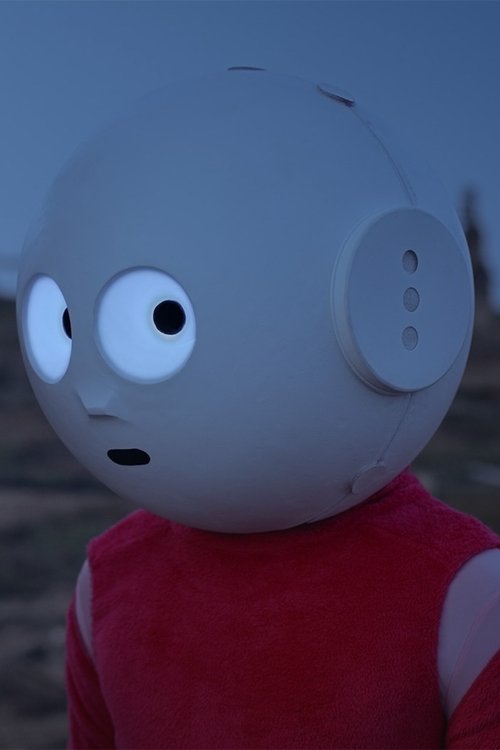
In a post-apocalyptic world not dissimilar to the present, SUGAR, a humanoid robot that can feel, think and dance, is sent out to bring a human touch back to humanity. SUGAR finally encounters a HON (Human Organism Normal), a post-influencer who, in an underground techno cell, poses in a sort of eternal commercial. SUGAR tries to free HON from his prison of routines, speech and movement loops and seeks to build a true encounter – an interaction, a dialogue.
In the video installation “Again & Again” Melhus tells—not without humor—the story of a person engaged in an inner dialogue on the subject of reproduction, only to be rejected by the clone whose qualities are superior to his own. The possibility of multiplying oneself ends in a loss of subjectivity. While in this case Melhus questions the identity of the self set before a genetically-altered living situation, in his preceding works he exposed the self as being the projection surface of medial images. Curiously on the theme of cloning a single channel video is multiplied on 8 screens.
The film [dramatic music continues], which uses subtitles of audio descriptions from various war films, is a reflection on our current media consumption and the increasing normalization of war.
Doors of Reception is a collage of door sounds from various science fiction films, creating an abstract sound painting of opening and closing colour fields. A recurring theme of the genre is passing through doors and being locked in or locked out on one side or the other, a condition that became the painful reality for many in times of the pandemic.
“The End Time” was developed for the exhibition Spectral Afterlives at Sprengel Museum Hannover on occasion of the publication of “Spectral Afterlives – Bjørn Melhus and his Media Doubles” with an essay by Elisabeth Bronfen. The focus of the 4-channel video installation is a fictional “Dorothy”. In dreamlike episodes,she recites quotations from the film “The Wizard of Oz” (1939) and the television series “China Beach” (1988-1991) against the background of the Central Vietnamese jungle and in opposition to an overbearing moon. Melhus refers to two events, the 1969 moon landing and the Vietnam War (1955-1975),which received worldwide media attention.
With her green bow in her hair, a naïve Dorothy from the Wizard of Oz embodies an aspect of the artist’s own personal context. She is dreaming about going beyond the confines of her urban surroundings, amongst thousands of flickering windows in apartment blocks, to travel somewhere over the rainbow. As she stumbles upon her yellow brick road, a bedside telephone, her communications take her far far away, becoming entangled in her obsession with connecting to this far away place. Swept into a cyclone of dizzying imagery, she becomes somewhat more realized, sceptical about who she is and her dreams. Much like the ubiquity of television, her dreams are nothing more than commodified imagination that has nonetheless shaped her life. In this fairy-tale land, she desperately tries to find her way back home.