Directing
No description available.
A documentary portrait of the experiences at some of Portugal's street fairs.
"O Regresso" is a documentary featuring renowned Portuguese actor Ruy de Carvalho as he returns to Macau after a 10-year absence. Directed to mark the 10th anniversary of his visit, the film captures Ruy de Carvalho revisiting key locations across the city, reflecting on the cultural and social transformations that Macau underwent in the lead-up to its handover from Portuguese to Chinese administration in 1999. Blending personal memories with the evolving landscape, the documentary offers a nostalgic look at Macau's unique blend of Portuguese and Chinese heritage, seen through the eyes of one of Portugal’s most beloved actors.
The suffocation of Portuguese society through the lens of a young woman, directed in the context of Faria de Almeida's time at the London School of Film Technique.
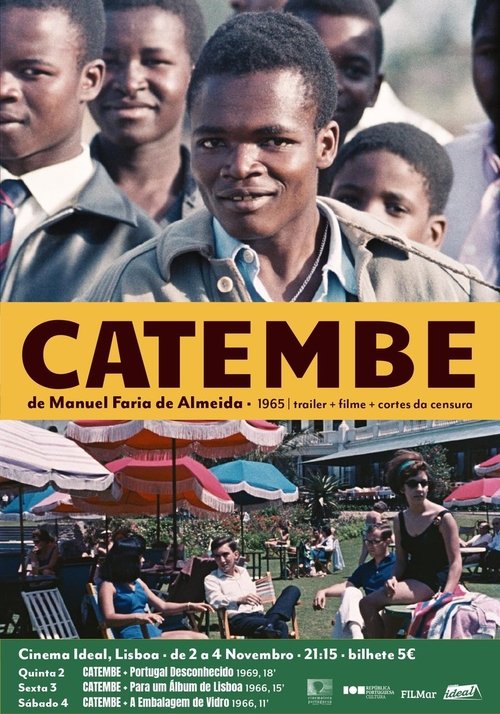
This documentary shows a typical Sunday in Mozambique's capital, tourist main attractions, an inquest in Lisbon about the perception of the people in the street about what life was like in that African colony (or, as the Government had it then, "province"), and then interviews and scenes of Lourenço Marques fishermen and a bar waitresses. African folk music and dance were used as documents and background for the text narration.
A series that brings together ten television films that sketch out as many portraits of our daily lives, fictional stories that touch on various aspects of Portuguese life, experiences marked by destiny.
Documentary about the portuguese writer and journalist José Maria Ferreira de Castro.
Documentary about the Portuguese pharmaceutical specialty industry.
A fictional film influenced by the Free Cinema movement, in which a young black man, a political exile, wanders the streets of London while reliving traumatic memories of a massacre in South Africa. Winner of the 1st Cinestud Prize in Amsterdam.
The intriguing world of cinema, explored as both industry and technical art: production in a flash; the studio as ritual; location shooting; editing; sound; the laboratory; animation; fascination — all unfolding at 24 frames per second.
With music by Manuel Jorge Veloso, Faria de Almeida made this film in 1970 in the offices of Philips Portugal, about the triumph of technology and its behind-the-scenes aspects.
Set to the music of Manuel Jorge Veloso, Faria de Almeida's short film attempts a gesture of visual attention to colors, motifs, and movements, focusing especially on the energy of the work expended by the laborers involved in the manufacture of glass bottles.
Luanda, the capital of Angola. The city, its people, and everyday life. Traditional aspects and the challenges of the future, presented in a brief yet dynamic overview.