Fritz Marquardt
Acting
Known For

Polizeiruf 110 is a long-running German language detective television series. The first episode was broadcast 27 June 1971 in the German Democratic Republic, and after the dissolution of Fernsehen der DDR the series was picked up by ARD. It was originally created as a counterpart to the West German series Tatort, and quickly became a public favorite.
Polizeiruf 110

Der Staatsanwalt hat das Wort was an East German television series.
Der Staatsanwalt hat das Wort
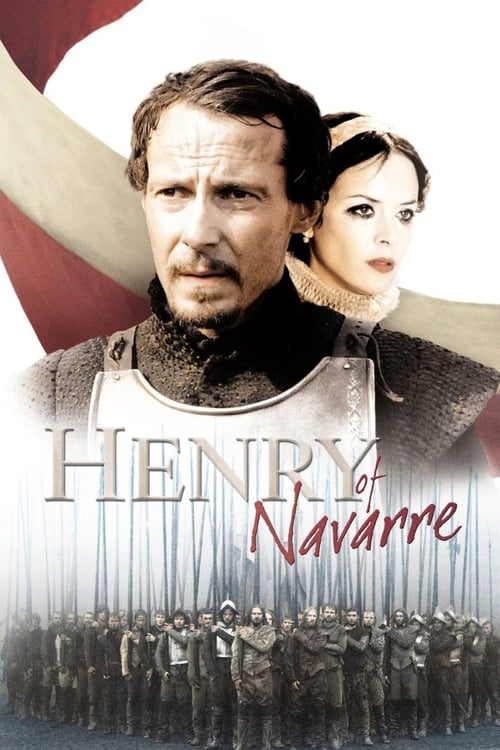
A wide-ranging, energetic period piece tracing the rise of the Protestant Henry of Navarre as he goes from battlefield warrior to France's beloved King Henri IV. Director Jo Baier's epic is a classically entertaining adventure, albeit one with more than a little bloodshed and frequent bawdy sexual interludes. In late 16th-century France, Catholics and Protestant Huguenots were at war. Seemingly seeking peace, the French dowager queen, Catherine de Medici summons Henry to her court to have him marry her daughter, uniting the two warring factions. However, the Catholics slaughter the Protestant wedding guests in what became known as the St. Bartholomew's Day massacre and Henry-now married-must use all his guile to both stay alive and maneuver for the throne. [Written by Palm Springs International Film Festival]
Henri 4
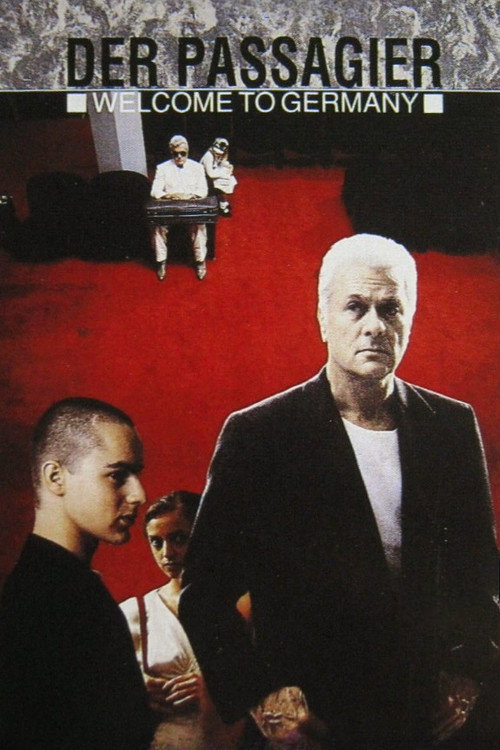
An American filmmaker travels to modern day Berlin to make a film based on a real-life incident from 1942 in which 13 Jewish prisoners from a concentration camp were promised freedom if they appeared in a German propaganda film. Unfortunately, the Germans lied. The psychological process undergone by the modern filmmaker while shooting the story provides the basis of this arty and challenging film.
The Passenger – Welcome to Germany
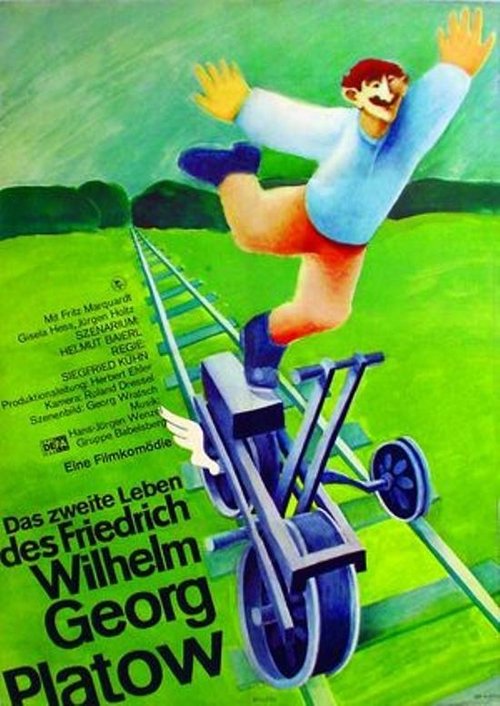
Friedrich Wilhelm Georg Platow worked for the railways his entire working life. He took up service at the small station of Luege 34 years ago. Now, the line is to be electrified and Platow, who cannot cope with the new technology, has to work on a secondary local line. Georg, his son, a railway worker as well, is to attend a training course, but Georg refuses to go. Then his father comes to a surprising and highly unusual decision. He pretends to be Georg Platow, making himself twenty years younger than he really is and registers for the course.
The Second Life of F.W.G. Platow
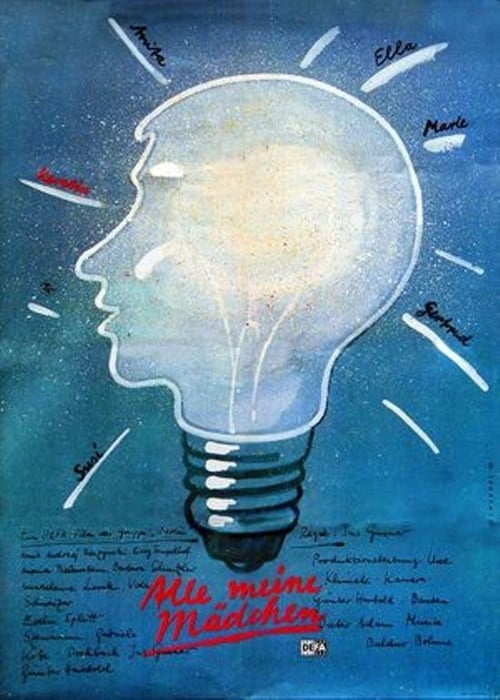
Ralf Paeschke is a film student who has to make a documentary film about a group of women working in a lamp factory. There is brazen Susie, mischievous Kerstin, lonely Anita, single Ella, withdrawn Gertrud and the imposing forewoman. When Kerstin is suspected of stealing, tension among the women mounts. Ralf demands that things be clarified, and his film plays an unexpected role in the matter.
All My Girls
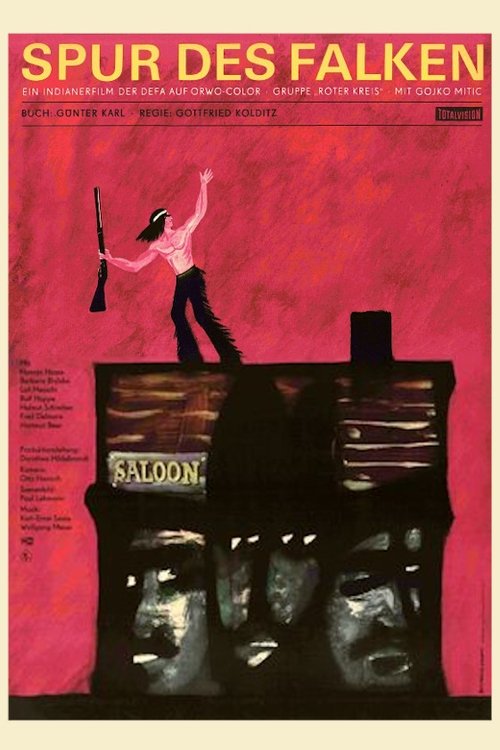
In the latter half of the 19th century, gold is discovered in the Black Hills, sacred land of the Lakota people. Gold diggers, profiteers and adventurers flock to the region. Among them is the hard-hearted land speculator Bludgeon, who tries to expel the Lakota using brutal methods. Lakota warriors retaliate, and soon the gold diggers' town becomes a battlefield.
Trail of the Falcon
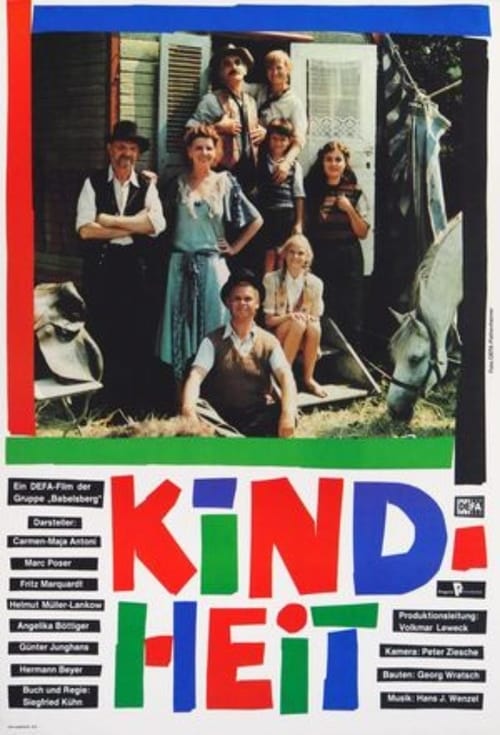
Alfons lives with his grandparents on a Silesian village farm at the end of WWII. He adores his grandmother, who runs everything after her husband dies. But everything changes after the appearance of a traveling showman in the xenophobic village.
Childhood

A renowned actor named Otto is the epitome of the problematic but beloved ladies man. Even when drunk he still knows more about filmmaking than does the amateur who is directing him in his latest movie. But what should the unreliable star do when a local actor joins the crew as his understudy? Comic situations arise not only because of the well-known environment, but also from an inclination to authentically capture the various relationships.
Whiskey with Vodka
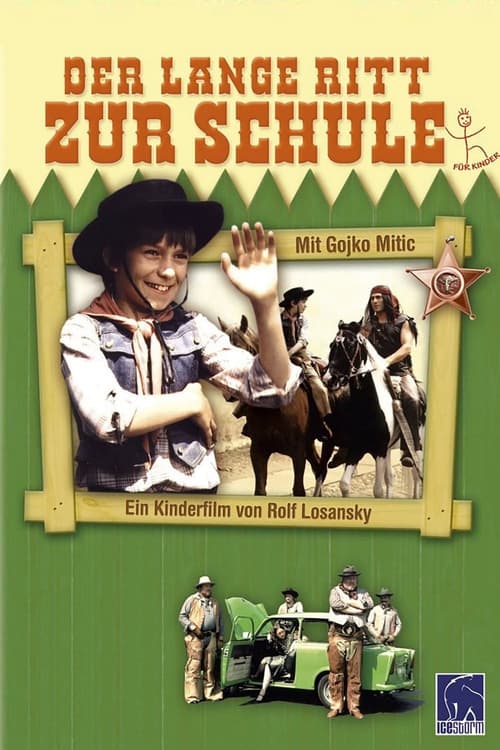
A young boy fantasizes his way to school into a battle between cowboys and Indians, where the bad guys want to steal some gold medals. Real events and fantasy interacts in his mind.
A Long Way to School
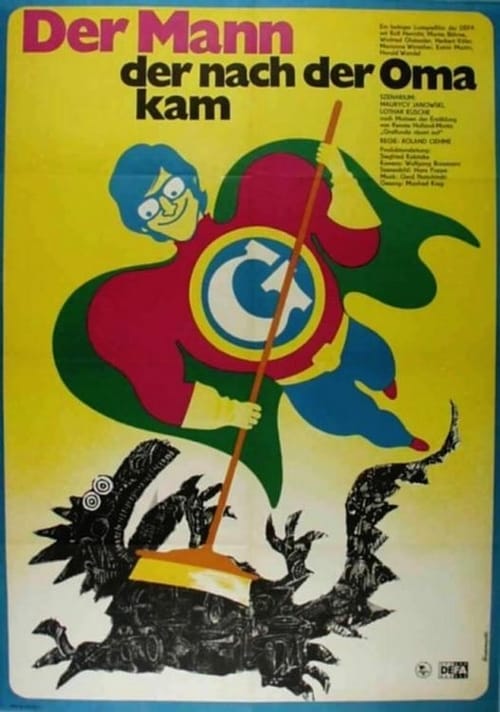
Günter and Gudrun Piesold are very busy with their careers as a TV comedian and an actress, so Grandma takes care of household chores and childcare. But when Grandma remarries, the Piesolds are faced with chaos at home and a burning question: Who will take care of the household?
Der Mann, der nach der Oma kam
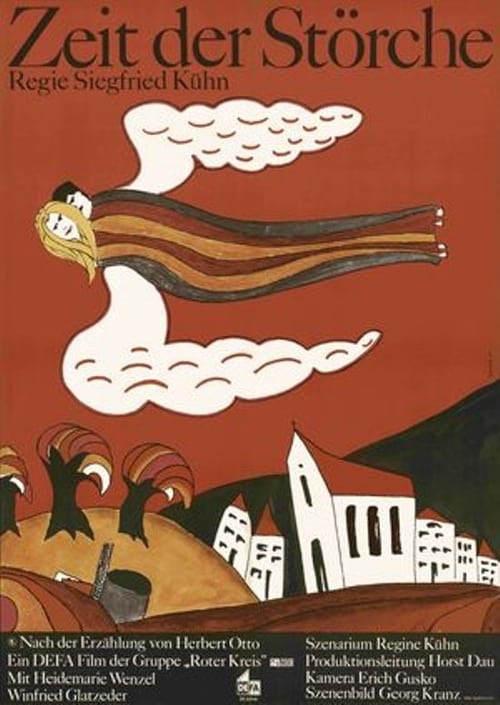
Susanne and Christian get to know each other during a wonderful week in summer - and fall in love. This, however, leads to conflicts: up to now, Susanne has been living with Wolfgang, a biologist. This shared life was harmonious and based on mutual trust. Wolfgang is not only resolute and in full command of social situations; he has also always been the stabilizing force in the relationship. This is precisely why Susanne now feels drawn to the unsettled, unsteady and frivolous Christian, the complete opposite of the calm, well-balanced Wolfgang. And Christian, working as a shift boss on a natural gas derrick, has become more aware of his personal and social responsibilities as a result of loving Susanne.
Zeit der Störche
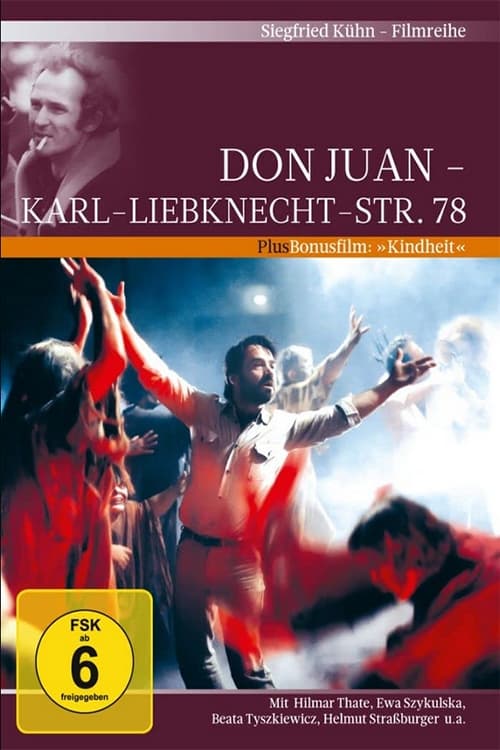
In a backwater town, opera director Andrej Wischnewsky is supposed to put on a production of Mozart's "Don Giovanni".
Don Juan, Karl-Liebknecht-Str. 78
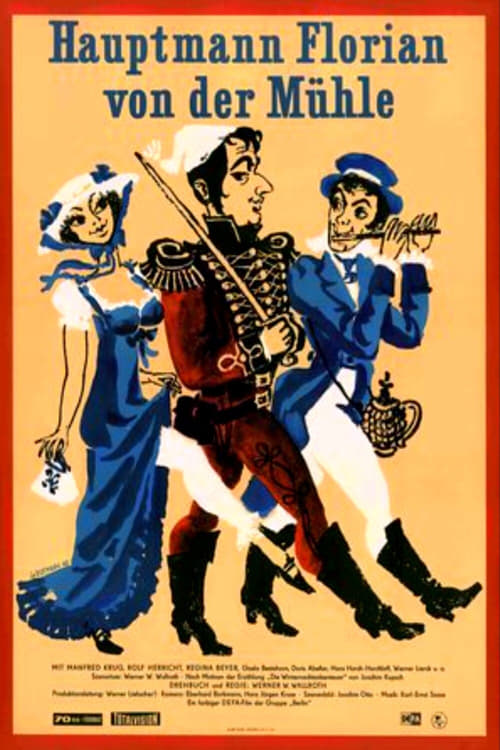
This story of the miller Florian, who gave all his money to the war against Napoleon, is loosely based on a true story. After the war, Florian's reimbursement is challenged, and he must also pay taxes on his destroyed mill. He resists the tax collectors and takes off to Vienna, where he intends to defend his rights. On the way, he rescues the Duchess of Guastalla from assault. She also wants to go to Vienna, as His Majesty Franz II is trying to contest an heir in her favor. With cunning, luck, and dagger, Florian fights his way through a slew of nobility and their secret police.
Hauptmann Florian von der Mühle

The 18-year-old Katharina Jens is a high diving champion and succeeds in everything she does. When she enters an international contest in place of her team colleague Claudia, expectations are accordingly high. However, when she misses the one-and-a-half somersault with a double twist her team fails to gain victory. Suddenly, the question arises if she is in fact good enough.
The Girl on the Diving Board
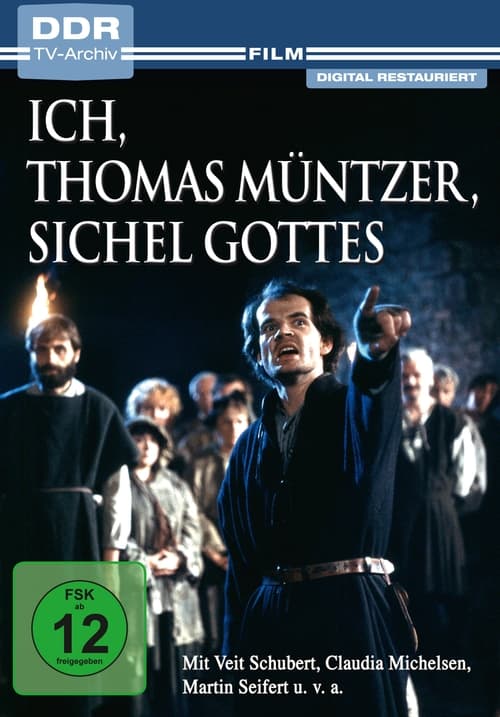
1523. The Protestant theologian Thomas Müntzer is entrusted with the pastorate by the 'Allstedt Council'. On the one hand, he is to open people's minds and hearts to more freedom, and on the other, he is to serve as an ally against the count.
Ich, Thomas Müntzer, Sichel Gottes
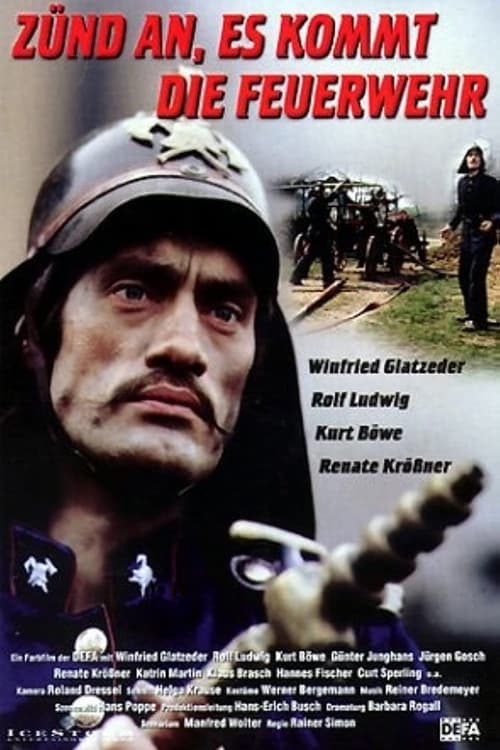
A morality tale from the time of the Saxon Kingdom. The von Siebenthal volunteer fire department has nothing to do. When their local pub is in a very dilapidated state, but the landlord has no money to renovate it, the fire department tries to help out by setting fire to it themselves, but it doesn't quite work. They look for a new object to set fire to, the supposedly empty prison. But there is only one prisoner, who is heroically rescued by Captain Kaden.
Zünd an, es kommt die Feuerwehr

"Pictures from the late eighties in the GDR on up to the immediate present in the year 2008 in Germany. What has been left over besieges my mind. All these pictures keep reassembling themselves to make up something which they were originally not made for. They are still in motion. They are becoming history." (Thomas Heise)
Material

The film is set in 1989/1990 at a time when the "socialist" ideology underwent another major revolutionary collapse and the supposedly only progressive German "socialist", but walled-in GDR, joined the free West German society of the Federal Republic of Germany. In those days, the son of an East German teacher turns his back on the GDR because he is fed up with the eternal talk of the alleged superiority of "socialist" society and this "socialist" old day is nothing but dreariness and eternal gray everyday life for him. His mother, the convinced teacher and communist Christine Rautmann, suddenly realizes that her eternal propaganda of a golden socialist future is not falling on fertile ground with either her son or her pupils. She is suddenly faced with the ruins of her life as a teacher and mother. She herself becomes a seeker on a tremendously shaky social ground.
Heimsuchung
The time is World War II, and Juergen Siebusch and his mother are retreating along with the German army, just ahead of the invading Russian forces. Both mother and son hole up in the town of Hohengoerse, where Juergen finds some work watching over sheep - and learns a bit about the facts of sheep life that he extrapolates to some advantage when he meets the appealing Amelie, daughter of the landowner. He first helps Amelie out and later applies his new-found knowledge in a barn, appropriately enough. As the Red Army draws near, Juergen deserts a hastily put-together "people's force," as he prefers the barn to the gun. Russian soldiers are shown sleeping and snoring next to their tanks, and the local fascist executed - the war is over. When the new Communist government sets up a land reform package, Amelie's mother's land gets divided up into small plots for small farmers.