Directing
Peter Voigt was a German director, screenwriter and actor.
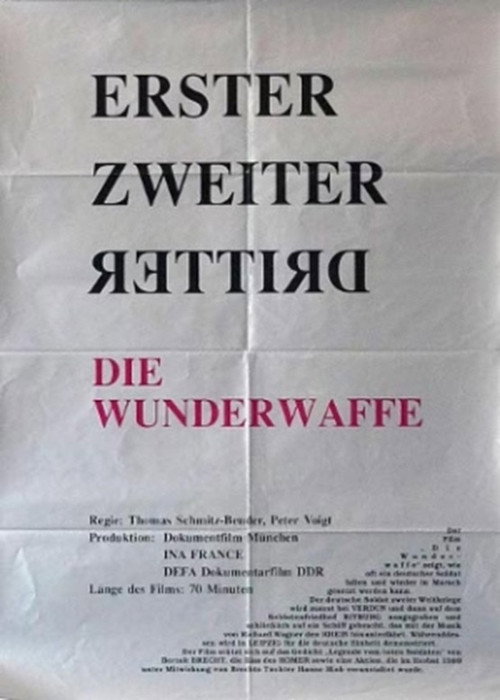
No description available.
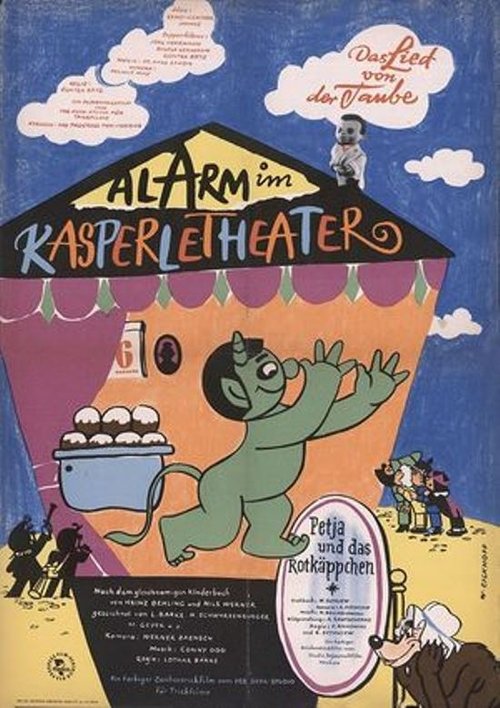
Kasperle and a group of his puppet friends prepare for his grandmother's birthday-but a little green devil threatens to intervene. He steals the donuts for Kasperle's grandmother, and the other puppets chase him to get them back...
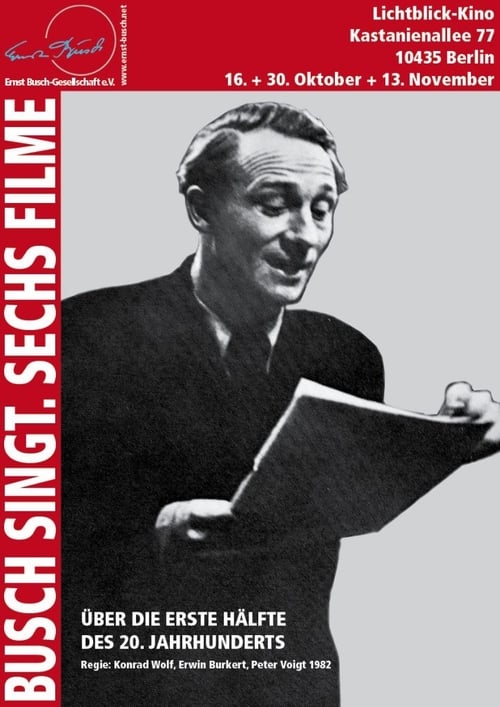
Ernst Busch, singer and actor, was a political artist. For the 20th anniversary of his death on June 8, 2000, Peter Voigt embarked on an unusual search for clues. The focus of his film about the idiosyncratic artist is not biographical details, but the central conflicts in the field of tension between politics and culture that determined Busch's life.
Two narrators read the letters of unknown people and tell about the fate of individuals, their work, love and life.
The epilogue to the film "The Laughing Man" (1966), which alternates between objectivity and anger, exposes the involvement of the West German mercenary Siegfried Müller in the war against the Congolese government Lumumba. In the sequel, new witnesses against Major Müller have their say, including a former school friend and a French paratrooper colonel. GDR lawyer Kaul reports on the status of the criminal proceedings against Müller, while the final images show the war criminal feeding the ducks in South Africa.
The poem "Der Anachronistische Zug oder Freiheit und Democracy" (The Anachronistic Train, or Freedom and Democracy), written by Berthold Brecht in 1947, forms the basis for the campaign launched on the occasion of the 1980 federal elections under the slogan "Brecht statt Strauß" (Brecht instead of Strauß): a journey across the entire Federal Republic.
A review of 25 years of theatre work by the Berliner Ensemble, dedicated mostly to plays by Bertolt Brecht. Interviews with stage hands and lighting technicians provide an interesting view behind the scenes.
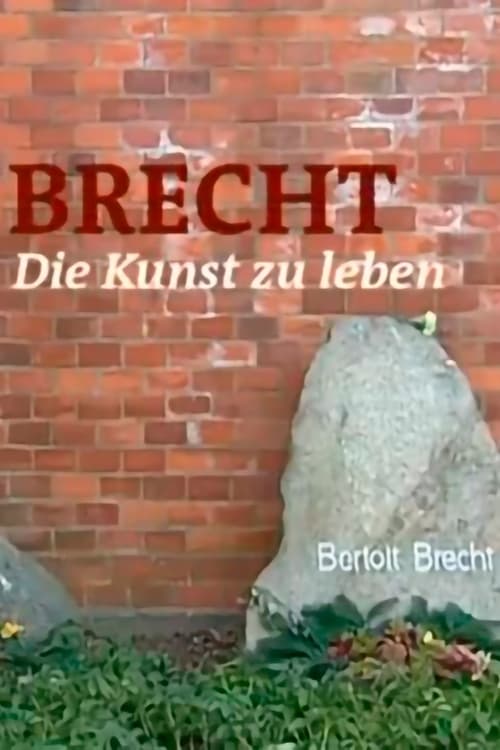
He wanted to revolutionize theater practice and at the same time social awareness: Today Brecht, who was born in Augsburg in 1898 and died in East Berlin in 1956, is one of the most important playwrights of the 20th century.
At a Bach concert, a letter is read aloud in which the legation council of the Federal Republic of Germany tries to poach the musicians of the Gewandhaus Orchestra in Nicosia.
Four men from different professions, all around 50 years old (including a pastor and a stage designer), are interviewed about their childhood in fascist Germany. In individual conversations, they recall childhood experiences and reflect on them from today's perspective.
Here meet personal memory, working knowledge, research interests and anecdotes together to vivid memory about the most important German dramatist of the 20th century. When the director Peter Voigt, former assistant director of Brecht at the Berliner Ensemble in 2004, finds a wallet with pictures and captions from the American exile, he pursued this track and discovered that Brecht has always worked with photography and film. Peter Voigt puts together an exciting collage of this film and photo material. A conversation with Erdmut Wizisla, the head of Bertolt Brecht Archives, moderated by Harald Müller, forms the dramatic bond of the film.
A documentary and film essay about the artist scene in East Berlin during the 1950s.
"Busch singt" consists of 6 films "About the first part of our century" and does not present Ernst Busch only as a singer but is a film with and about Busch as a chronicler and fighter for communist ideals of his time. Konrad Wolf died during the production, he directed part 3 "1935 oder Das Faß der Pandora" and part 5 "Ein Toter auf Urlaub".
Documentary film.
In 1972 the funeral service is held for the deceased tycoon Friedrich Flick. It marks the beginning of the dismantling of a legend.