Sound
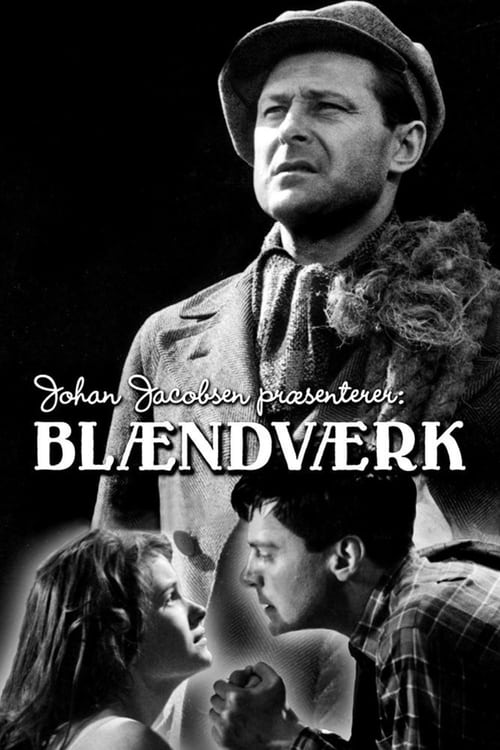
The young mechanic Borge Rasmussen works in Salling Harbour and lives with the slightly older Marinus Frederiksen, who chairs the city's port workers. Marinus sees in Borge, who has lost his parents, his only friend and is easily influenced by his extremist views.
The film presents Mr. Larsen, who without wanting to and without knowing it, is ruthless when he rides a bicycle and spreads fear and arouses anger around him. Also at home, he acts ruthlessly until his son reminds him of §2. The film ends with an invitation to people to become §2 people. §2 requires people to exercise caution and consideration.
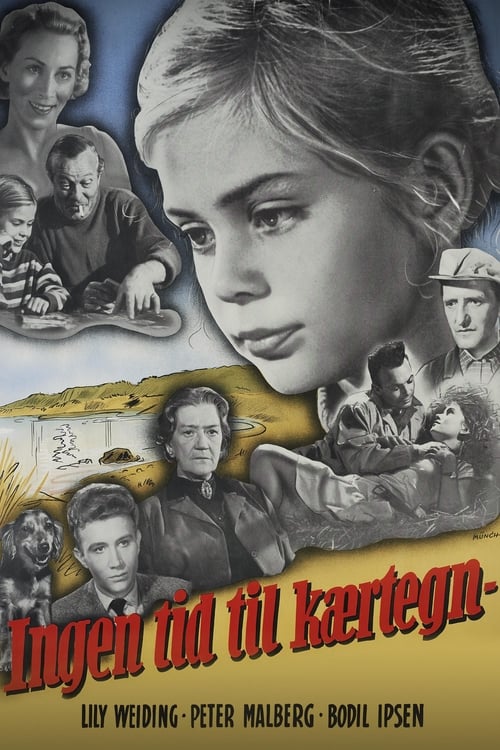
The Danish Ingen tid til Kaertegn (Be Dear to Me) is heavily reliant on the appeal of its star, 8-year-old Eva Cohn. Our heroine is the neglected child of a businessman father and actress mother. Feeling that happiness lies well outside her own backyard, Eva goes on a search for that happiness. The longer she stays away, the more her parents realize that they've unfairly ignored her. The plot is nothing new: it's what is done with it that pleases the eye and ear. Ingen tid til Kaertegn was one of the more popular entries in the 1957 Berlin Film Festival.
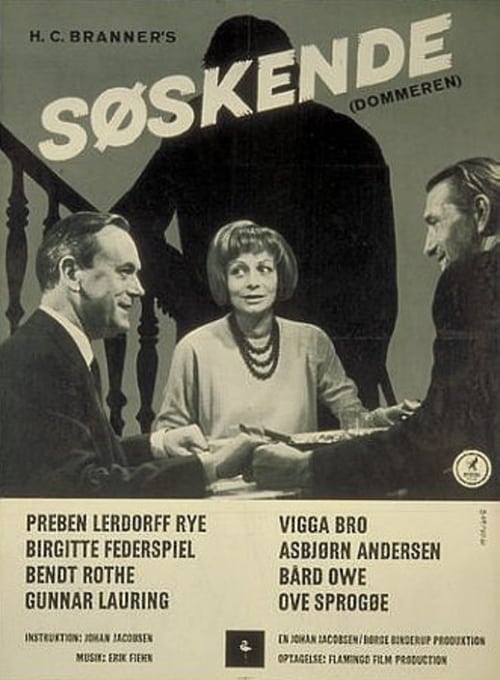
Three siblings see each other again after many years at their father's deathbed. The eldest, Arthur, a lawyer, has everything under control – or so it seems, as the middle child, Irene, is struggling with her abusive husband, while little brother Michael is the outsider, living a sleepless life of booze and prostitutes. When their father is close to death, the three are called together, and a major family drama unfolds in their father's living room. Gradually, they agree that they should stand together instead of arguing about old affairs. But when their sick father suddenly falls down the stairs, it is as if all good intentions fall to the floor again.
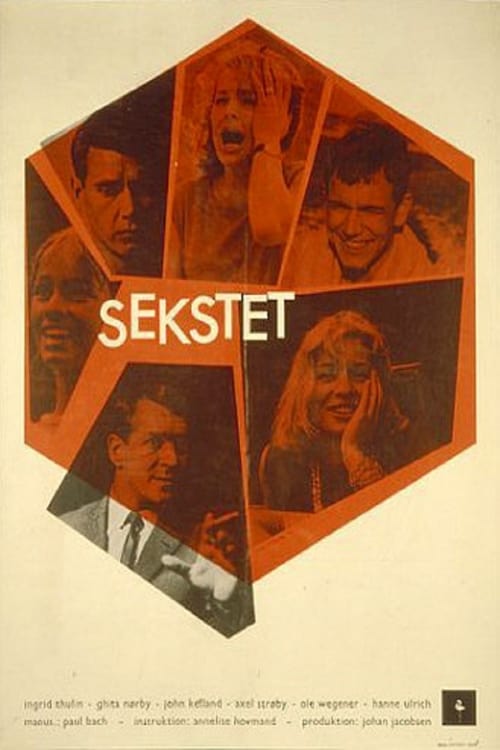
Six people of different ages and with varying mental health problems are forced to spend the night together by bad weather and react upon each other.
No description available.
A satire and fun farce with songs and various sounds and voices, which attempts to give a picture of good and ordinary people as well as journalists, barbers, countable ghosts, aut. gas and water masters, nannies, a single middle court judge, a robot and not forgetting a professional sweat thief and several others, who together live in the small Danish town of Elleskovsleje.
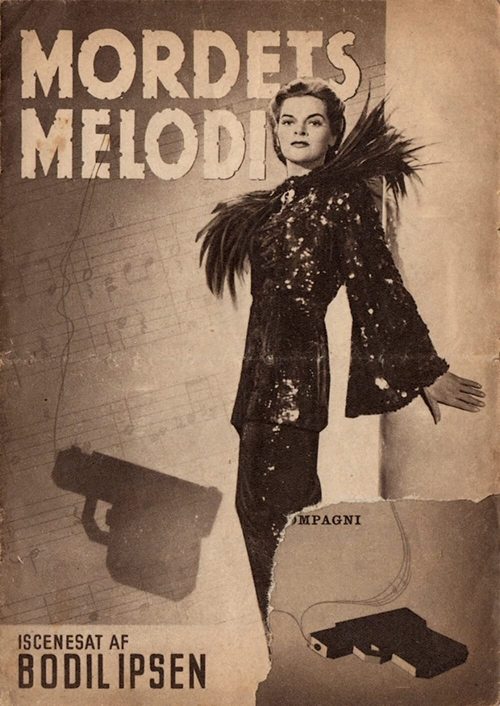
A woman is found strangled in her shop. Shortly after, another murder is committed. Perhaps the most terrifying is that the both girls' name is Sonja. The police is convinced it's the same killer and at each scene is heard a woman singing the same song. A song which is soon dubbed the 'murder melody.'
Copenhagen in the 1890s. A pleasant city for those who experienced it at the time. This is the story of how Therese Schrøder came to live with Professor Jacobsen and became the children's nanny, which led to her meeting her sailor. This caused quite a stir in bourgeois circles at the time.
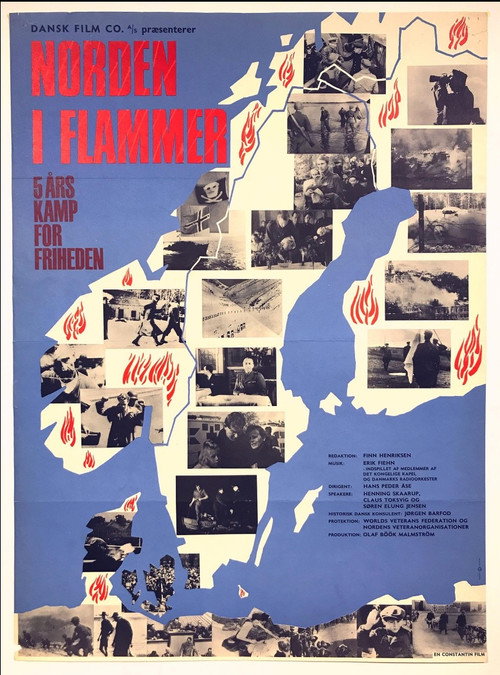
The young sailor Morten returns home from his travels in the midst of the general strike of 1944, where he is confronted with the occupation. He joins a resistance group and actively participates in the struggle. There is no time for relaxation. He must always be on guard. Only with the sweet and charming young Lise can he relax a little and be himself. During a factory sabotage, the group is captured by the Germans.
We are in New York. A young Danish girl has a conversation with the Danish-American Mr. Lang. It is understood that she loves his son and that he has sent the young man to London because he thinks they are both too young. Furthermore, it is clear from the conversation that he is about to file for divorce. The young girl is worried about how his little daughter will fare - despite her youth, she has had bitter experiences herself, and she tells Mr. Lang her story.
A humorous traffic film in which the sinners of traffic are marked with large white crosses. Mr Statistics, in the form of a mysterious man, crosses out the most common traffic offenses by designating the pedestrians, cyclists or motorists in question. The film was shot in Aarhus.
The film gives a strong view of the everyday life of Icelanders when the film is shot, but that year was a record year for the export of herring products and herring fishing and herring salting therefore cover a large part of the film.
Anna Louise is tired of her life as a housewife in the country. So she seizes the opportunity when the vagabond Nick randomly rings the doorbell. She invites him in, and together they do all the work in the summer villa after the maid is sent on vacation. Anna Louise starts raising Nick, but soon the roles are reversed, so that Nick is raising Anna Louise. Then Anna Louise's husband arrives and he has difficulty handling the situation. Anna Louise and Nick leave the summer house together, with Anna Louise staying in the house maid's room without her husband's knowledge.
We meet the young violinist Erik Smith in the lap of his family with his wife Lise and his little daughter Lone. Erik is a young, aspiring musician who dreams of one day making a career as an interpreter of the great masters of music. At a concert where a well-known solo violinist has to interrupt, Erik Smith suddenly jumps in and gets his big breakthrough.