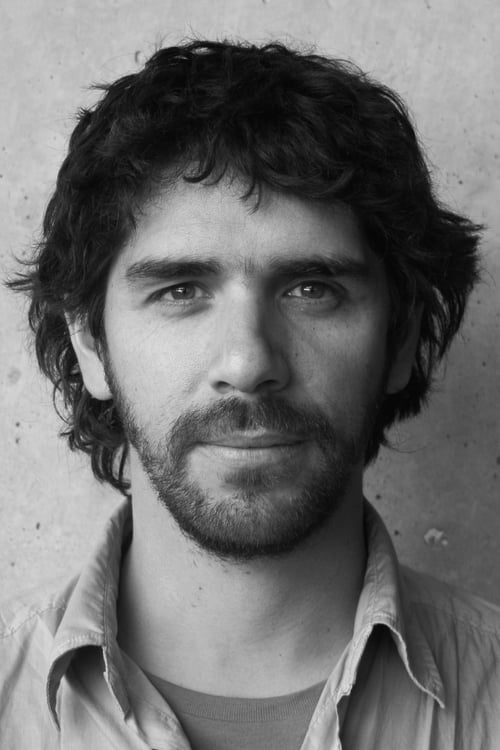
Fernando Lavanderos
Directing
Biography
Fernando Lavanderos is a Chilean director, screenwriter, producer, cinematographer and editor. He was born in Santiago de Chile on November 15th (1974) . He has done fiction's and documentary's movies, which experienced and exceeds the line of their genre. His first huge success begin with his movie Y las vacas vuelan (2003), which its considerate as a real innovation in the Chilean Cinema. His second large-movie, Las Cosas como Son (2012) won 14 national's and international's first prices, in festivals like The Independent Camera Award of Karlovy Vary or The Festival de Cine de Mar del Plata.
Known For

Eterno traces the history of Colo-Colo, the most influential sports club in Chilean history. It is the living memory of a country, the epic of a club that has endured tragedies and thrived with every triumph to become a symbol of national identity.
Eterno: 100 años de Colo-Colo

A father and his two daughters are sailing in a lake when they encounter a pair of shipwrecked men. They say to be looking for someone they lost and ask for help to find him. This begins a tense search in which the father suspects he is held hostage.
Immersion
Two young men travel the city of Santiago during a working day in order to carry out a bureaucratic process. In their journey, they run into different urban characters as they talk about time and other "important" issues.
El cielo y la tierra son tan viejos como yo y las 10 mil cosas son una
A man comes down from a train to find his girlfriend on the platform, but as she's not there he decides to wait for her while eating sandwiches of cheese and bell pepper that a girl at the train station makes for him.
Queso-Pimentón

Kai is a young Danish who walks the streets of Santiago to make a short film and as in a game of mirrors, it is recorded at the same time, leading him to participate in a film that also can be understood as a documentary.
Y las vacas vuelan

Javier must reintegrate into society after spending 14 years in prison. His family and friends reject him, so he takes refuge in a house where he rents a room. There he meets Amanda, who helps him find a way to reunite with his teenage daughter that he barely knows.
Anónimo

Jerónimo is an antisocial local man who rents rooms in his home to expats so he can snoop around their belongings. One day Sanna arrives, a girl who will change Jerónimo’s life. They start getting closer until Jerónimo discovers that Sanna is hiding something in his house.
Las cosas como son

Lucía (16) reunites with her sister Ema (17) after years apart. A journey through their rural birthplace brings present and past together, leading them to a difficult truth.
A Desired Day

Old man Eladio is dying. Throughout the last decades, he has lived alone, working in his old liquor factory. Modernity threatens his spirits business, but he refuses to abandon it. A visit by his oldest grandson will be the ideal moment to save the factory, while at the same time, reconnect with his family.
The Devil's Liquor
Chris, an exceptional student, is expelled from the school and suffers the neglect of the ones he loves after he commits a crime. Chris meets two lonely and dangerous new young friends that will lead him to explore the dark sides of his personality and to exploit his physical and emotional limits. The friends will experience a world without hope, living in a violent sociological environment that will create the conditions for the three of them to star looking for dead as the only one way of escape of their frustrated lives.
Instrucciones para mi funeral

A young swimmer with sleep disorder deals with the sudden disappearance of her mother and the arrival of Rebeca, a mysterious girl who rents a room in her home. Unaided from the police and confused by paranoia, she finds herself engulfed in a struggle to maintain her sanity and get her life back.
Sumerged

Cristina has spent her life taking care of her mother Carmen. Single and without a trade or friends, she grows older, year after year in her hometown. A few days from her birth- day, Cristina reconnects with Sandra, a former schoolmate who will show her other ways to live, freely and without prejudice.
The Mother of the Lamb
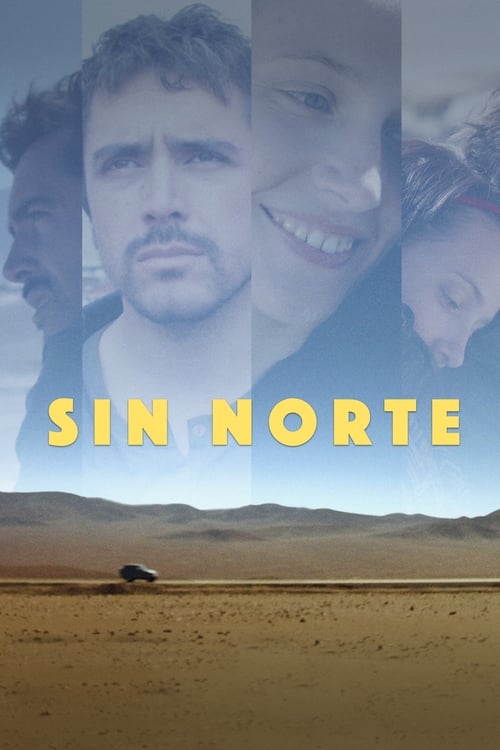
Esteban travels northern Chile in search of Isabel. His journey takes him across the desolate towns and colorful characters she came across and becomes his own odyssey of self-discovery.
Lost North
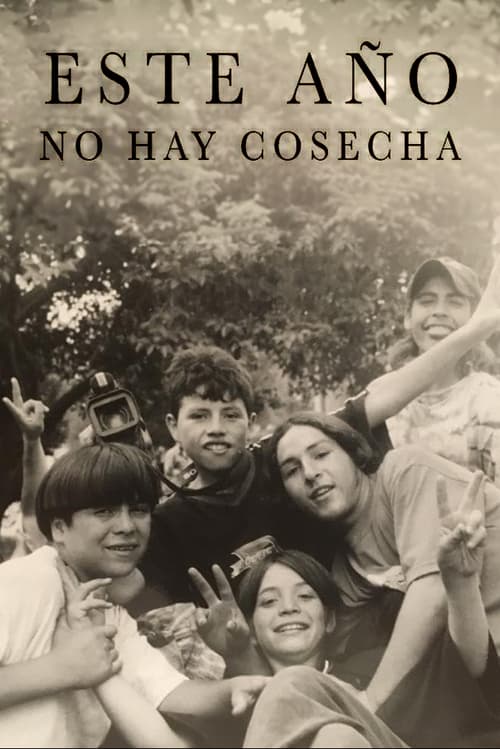
This documentary introduces us on the daily life of a group of kids who live on the street. Through the narrative and experiences of the protagonists, we discover the Latin American marginality hidden beneath a contemporary city like Santiago de Chile. The camera turns into another one of the group, eventually becoming part of this type of family life born from the tight friendship with which these kids survive.
Este año no hay cosecha

Santiago 1984. Carmen, former JJCC, after being tortured by the CNI, works as an undercover agent. Francisco, an agent obsessed with her, infiltrates her in an advertising production company, meets Gastón, creative director. He discovers that he is planning a commercial in the mountains as part of an escape operation for a political prisoner. Carmen manipulates both of them, lying to Francisco and approaching Gastón, in order to join the operation and thus achieve her own escape.
La última frontera
Summer of 1990. Chile and the world are going through great changes. In a small beach town off the Chilean coast, an eclectic group of teenagers, from very diverse social upbringings, are living their own transition to adulthood. These kids are actually guided by a director, who is trying to make a movie, and above all, to recreate an era that affected him, in a country where these kinds of social encounters are not possible anymore.
The Weeds on the Road
At a bus stop, a boy has a brief moment with a girl.