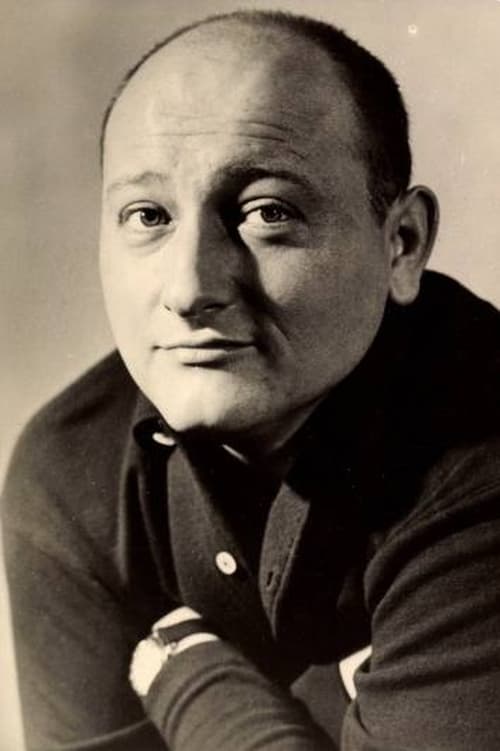
Hans-Joachim Hanisch
Acting
Known For
Polizeiruf 110 is a long-running German language detective television series. The first episode was broadcast 27 June 1971 in the German Democratic Republic, and after the dissolution of Fernsehen der DDR the series was picked up by ARD. It was originally created as a counterpart to the West German series Tatort, and quickly became a public favorite.
Polizeiruf 110

Der Staatsanwalt hat das Wort was an East German television series.
Der Staatsanwalt hat das Wort

No description available.
Tele-Lotto Kurzkrimi – Schmidchen klärt auf

No description available.
Ich-Axel Cäsar Springer
Otakar Vávra dedicated his latest film to events accompanying the devastation of the first World War. It takes place in representative centers of power, in the courts of Vienna, Berlin and Moscow. In parallel, it develops the fate of the Czech archivist, who will take part in the Serbian anti-Austrian branch.
Evropa tančila valčík
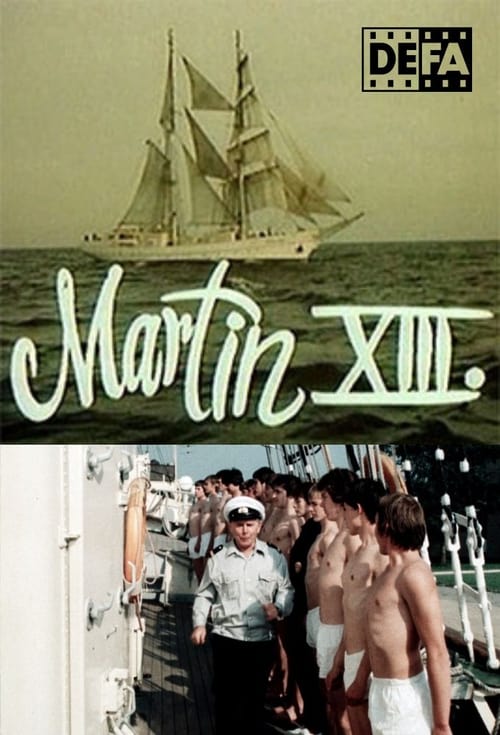
The oceans seem to be the Nehls' second home. But there is one exception that Grandpa Nehl, alias Martin XI, captain of a training sailing ship, is not at all happy with. His son Martin XII is the first of the family to work ashore. A scandal, really, but Grandpa Nehl doesn't give up. He hopes that his grandson Martin XIII will carry on the maritime tradition. But behind his grandfather's back, he also goes his own way. And so a huge row is brewing, if it weren't for twin sister Martina.
Martin XIII.

Lavish adaptation of Wilhelm Hauff′s fairy tale: Young charburner Peter Munk dreams of joining the upper class. He makes a deal with the sinister Holländer-Michel, who offers to trade Peter′s human heart for one made of stone. Once he has the "cold heart" in his body, Peter eventually strikes a fortune and enjoys great wealth, but at the same time, he becomes a bitter and emotionless man – and, having lost all traces of humanity, even murders his wife Lisbeth. Only then does Peter Munk finally realize what has become of him, and he decides to regain his real heart from Holländer-Michel.
Heart of Stone
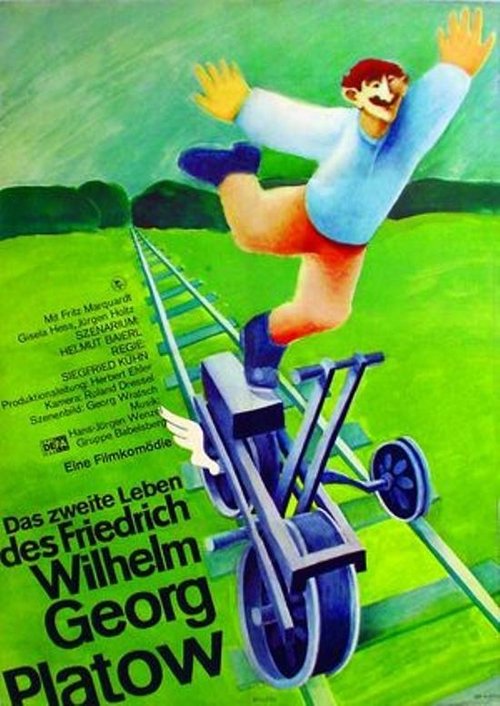
Friedrich Wilhelm Georg Platow worked for the railways his entire working life. He took up service at the small station of Luege 34 years ago. Now, the line is to be electrified and Platow, who cannot cope with the new technology, has to work on a secondary local line. Georg, his son, a railway worker as well, is to attend a training course, but Georg refuses to go. Then his father comes to a surprising and highly unusual decision. He pretends to be Georg Platow, making himself twenty years younger than he really is and registers for the course.
The Second Life of F.W.G. Platow

After a fierce argument Steffi Zinn′s husband leaves the joint flat and stays away from home over night. The next morning, his wife Steffi has disappeared and is reported as a missing person. Captain Lohm takes over the case and at first looks for signs of a murder, but to no avail. Then, Steffi′s body is found in a lake. After her funeral, a stranger who had attended Steffi′s funeral for a short time is also found dead in a lake, and the connection between the two cases becomes apparent.
Für Mord kein Beweis
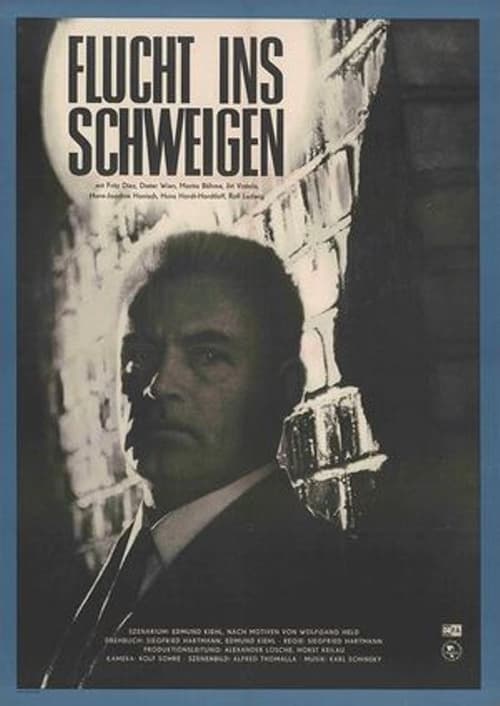
During construction work in a small town in Thuringia, the burial of an unidentified man in an SS uniform with gunshot wounds is discovered. Taking into account that there were no military operations in this place and an ancient gold coin was found near the body, two police inspectors, Captain Stetter and Lieutenant Hoffmann, arrive to investigate the unusual incident. Soon they manage to get on the trail of a mysterious crime that took place twenty years ago, but it is cut short with the murder of the owner of the plot of land where the corpse was found. Realizing that the new crime is closely connected to the death of an unknown SS man, the police search for clues in the memories of old residents and archival documents.
Flucht ins Schweigen

Two 17-year-olds, Werner Holt and Gilbert Wolzow, are pulled out of school and into Hitler's army. Gilbert becomes a fanatical soldier; but at the front, Werner begins to understand the senselessness of war.
The Adventures of Werner Holt

A commercial artist with a lisp chooses silence, unexpectedly propelling his career. His perceived innovation leads to rapid advancement in an ad agency. Mueller-Stahl shines in this biting critique of East German workplace culture.
Carnations in Aspic
Götz von Bredow's elk-leather trousers have their own special meaning: whoever wears them cannot come to any harm. Only they must not be washed. The meticulous Mrs. Brigitte cleans them anyway - but they get lost because the squire Hans-Jürgen, who is guarding them, has to save the life of Eva von Bredow, who is floating in a wash barrel. Meanwhile, Privy Councillor Lindenberg has arrived at the Bredows' house and loses a large sum of money in the game that does not belong to him. He wants to make up for the loss with a robbery. Suspicion first falls on Bredow because his trousers were involved, but Lindenberg is convicted and sentenced to death. This throws the cavalry into turmoil, as robberies are an important source of income for them. The four of them march against the Elector, who is hunting in the Köpenicker Heide. But Bredow, who has his protective trousers back, comes to his aid.
Die Hosen des Ritters von Bredow

A train travels through the vastness of Russia, a train with German prisoners of war returning home, and Viktor Kleist, a young German communist from an intellectual home in Munich, travels back home with them. During the journey, the stations on his way to Lenin wake up again.
On the Way to Lenin
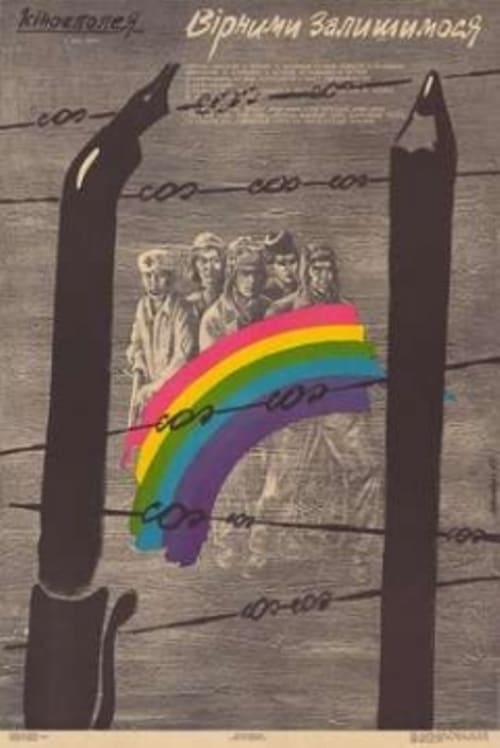
Story of Sergio Rodriguez, commissar of an International Battalion in the Spanish Civil War
Faithfulness We Pledge

Detlev, a single insurance clerk in his 30s, is kept dependent by his loving and caring mother and loses his girlfriend Karin as a result. Grief and an alcoholic chance acquaintance prompt him to place an ad for marriage. Detlev gets caught up in a whirlwind of friendships and love affairs: with the caring widow Karin; the well-to-do hair salon owner Ute Schöbel; the cultural editor Norma Goldbach, the photo reporter Kerstin and the student Andrea Binz. Detlev, who initially proves himself as a friend and advisor, but also as a lover, becomes increasingly self-confident. He is also successful in his work and finally emancipates himself from his mother. Although he loses "his" women in a turbulent odyssey, Detlev has transformed himself from a mama's boy into a thoroughly acceptable man.
Ach du meine Liebe

After Elmers, the head of the publishing house, is reported missing, his son-in-law Jürgen Brandt is targeted by the Hamburg criminal police. Inspector Graumann and his assistant Weber presume murder. The suspicion against editor-in-chief Brandt is confirmed by the fact that he is incriminated by the testimony of several witnesses. At a press conference, Brandt claims that the Elmers murder case was staged only to exonerate the innocently convicted family man, Parsetti. But to Brandt's horror, Elmer's body is actually found.
Tote reden nicht

After a breakdown, Rita returns to her childhood village in 1961. As she recovers, she remembers the past two years: her love for the chemist Manfred, ten years her senior; how his enthusiasm about his new chemical process turned to bitter disappointment in the face of official rejection; how he escaped to West Berlin a few weeks before the Wall was built and hoped that she would follow him …
Divided Heaven
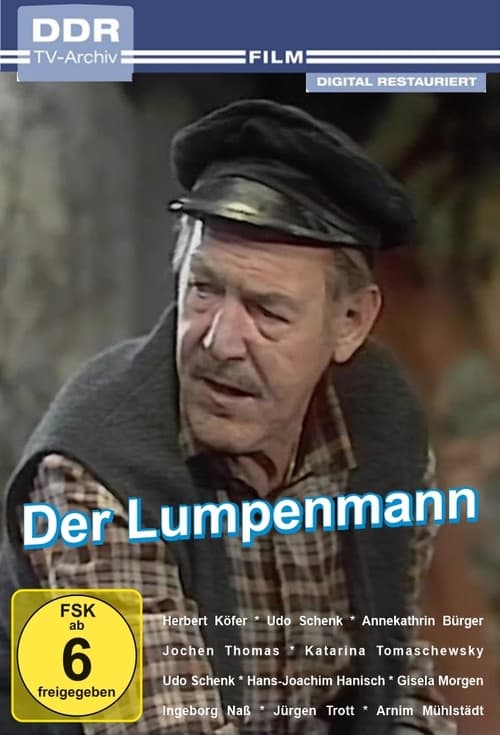
Peter, medical student and son of old materials dealer Richard Müller, wants to get engaged to the daughter of the director of a local construction company. The profession of his father has so far only vaguely hinted out of shame. And so his future in-laws think Richard is working in ministry. When he learns about it, he is initially offended. After all, he lives his profession with body and soul. But then Richard takes advantage of the misunderstanding and pays the bride parents a visit.
Der Lumpenmann

The 17-year-old commercial student Doris, a young, blameless girl, lives with her relatives without parents. It is the nerve-wracking circumstances that make her very unhappy - the dream and longing for a fulfilled life seems far away. Then she meets a young man who recognizes her situation, takes advantage of it and puts her up as a prostitute in a bar. However, Doris escapes this milieu and works as a nanny in Austria. When the stepson of the house falls in love with her and her past comes to light, disaster strikes.