
Werner Senftleben
Acting
Known For

Polizeiruf 110 is a long-running German language detective television series. The first episode was broadcast 27 June 1971 in the German Democratic Republic, and after the dissolution of Fernsehen der DDR the series was picked up by ARD. It was originally created as a counterpart to the West German series Tatort, and quickly became a public favorite.
Polizeiruf 110

Der Staatsanwalt hat das Wort was an East German television series.
Der Staatsanwalt hat das Wort
No description available.
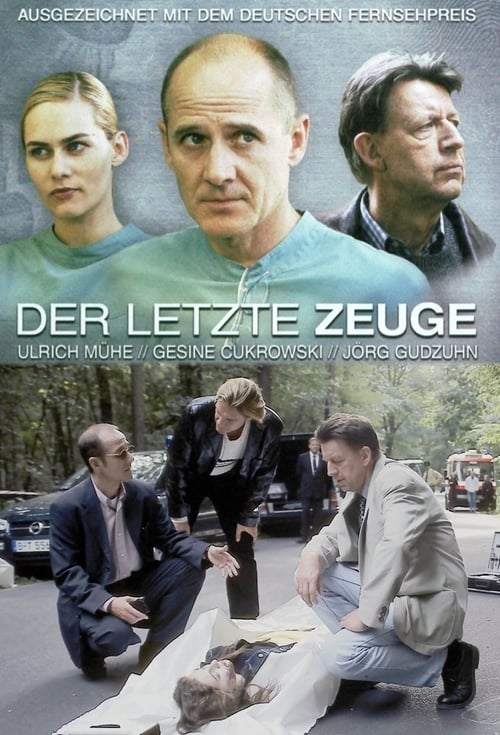
Der letzte Zeuge

Blaulicht is a German crime television drama series, whose 29 episodes were based on crime case files.
Blaulicht

No description available.
Das Wunschkind

No description available.
Ferienheim Bergkristall

A film about the historical uprising of the seamen in Kiel: During the Russian October Revolution of 1917, German and Russian soldiers start to solidarize with each other. By disarming the officers, machinist Henne Lonke and stoker Jens Kasten prevent the attack on a Russian freighter. When German admiralty gives out orders for operation "Nibelungen", which would lead the German fleet into a suicidal attack against England and quell the revolutionary spirit, seamen and soldiers from different political backgrounds unite in protest.
The Sailor's Song
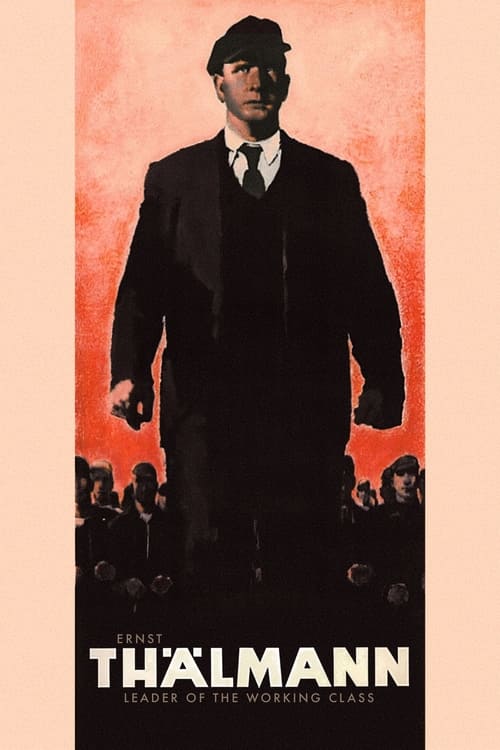
This film is the second of a two-part historical and biographical portrait of the communist politician and anti-fascist Ernst Thälmann. Autumn, 1918: Somewhere on Germany’s western front, Ernst Thälmann, age twenty-four, is calling on his fellow soldiers to put down their guns and join him in the communist struggle at home. When Hamburg’s Police Commissioner blocks a much-needed food shipment to the workers of Petrograd, Ernst battles to see it allowed through. Until his murder on August 18, 1944, Ernst remained true to his political convictions in the face of many setbacks.
Ernst Thälmann – Leader of the Working Class
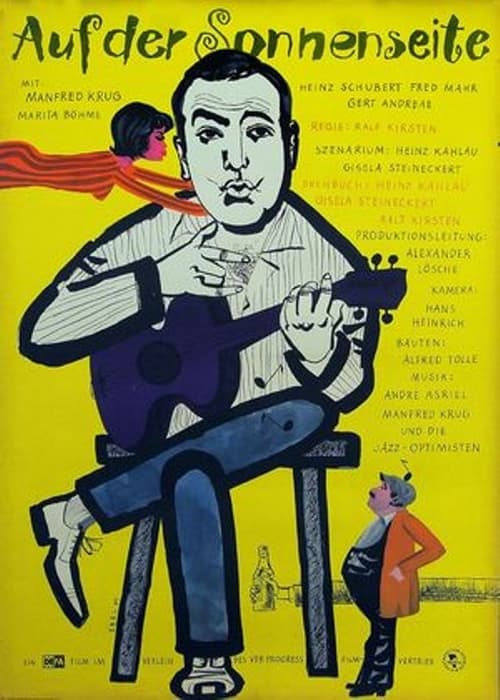
The story of the steel melter Martin Hoff, whose factory delegates him to a drama school, corresponds to the real life of the actor Manfred Krug. Like his (film) hero, Krug works as a steel melter, does artwork, sings and acts, and is sent to drama school. Like his hero, who behaves anarchically and conspicuously, Krug is soon expelled from school.
On the Sunny Side

Fritz Weineck, a worker′s son from Halle, loves music – and dreams to make a living out of it one day. When his friend Alfons, a World War I veteran, gives him a trumpet as a gift, Fritz seems to come closer to fulfil his dream. But then, Fritz realizes that after the end of the German empire workers still have to desperately fight for their rights, and decides to use his instrument for political means: At a meeting of militant workers, he uses his trumpet as a signal horn. But Fritz suffers a severe setback when a comrade dies in the fight for an arms depot because of his fault.
The Song of the Trumpeter

A mysterious magnetic spool found during a construction project is discovered to have originated from Venus. A rocket expedition to Venus is launched to discover the origin of the spool and the race that created it.
The Silent Star

Willi Zubrodt is delegated by his department to a parachuting course at the GST. As he is not very disciplined, has no respect for the instructors and does not fit into the collective, the instructors try to show him up and force his expulsion from the course. However, the attempts to prove that he had gaps in his theory and physical condition were a complete failure. Zubrodt manages to turn the tables each time.
Oben geblieben ist noch keiner
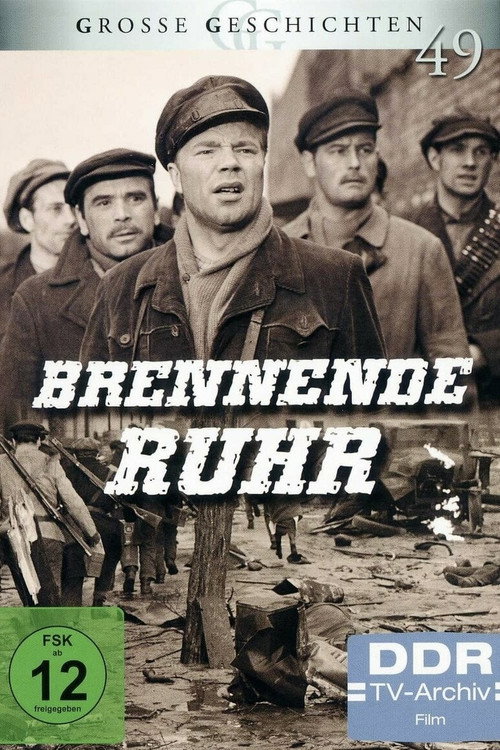
The events during the Kapp-Putsch 1920 in a small German town in the Ruhr district. The main protagonist is Ernst Sukrow, a student who sympathises first with the bourgeois forces but finally decided to join the communists in their fight.
Brennende Ruhr

Germany 1932, constant fights between Communists and Nazis tear the country apart. When a Communist is found dead, the police accuses another Communist being his murderer. But the Communist youth group follows another trail - the murderer left a characteristic boot print at the scene of the crime.
The Hunt for the Boot
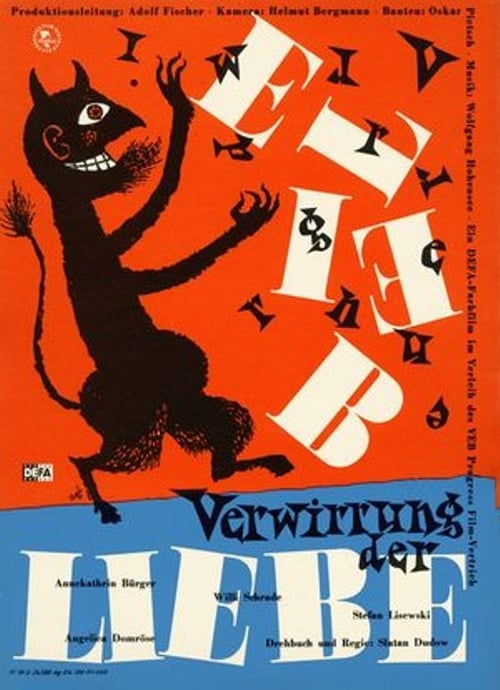
The film tells the love story of two young couples. According to their social ranks, construction worker Edy is dating employee Siegi, while medical student Dieter is dating art school student Sonja. Rather unintentionally, they exchange partners. During a carnival ball, Dieter makes out with Siegi because he falls for her her fresh and happy girlish manner. Sonja coolly observes this game and sees this intermezzo as a test for their relationship. While Siegi and Dieter vacation at the sea, Sonja falls in love with Edy. Now the die seems to be cast for new constellations. But when both couples stand in front of the registrar’s office, they finally come to their senses.
Love's Confusion
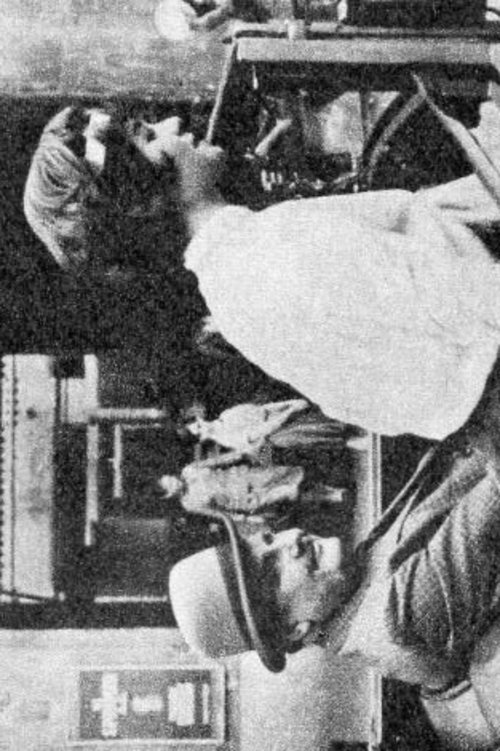
In 1928 Berlin, 19-year-old stenotypist Erna Halbe lands a prized typing job at Orga Privat. Thrust into the soul-killing monotony of a sprawling corporate office, she rallies her fellow typists to challenge unjust working conditions. Amid economic tremors foreshadowing the 1929 crash, Erna fights for workplace justice, and discovers first love in the city’s heady mix of hope and hardship.
Das Mädchen an der Orga Privat

It is the 65th birthday of Wilhelm Lehmann, foreman of a chemical company. All members of the large family are expected. Preparations are also being made in the company: Wilhelm is to be awarded the »Labor banner« and, as every year, the sons are responsible for the may bowl. But instead of family members, telegrams with rejections flutter into the house.
The Punch Bowl
No description available.
Blümchen gießen
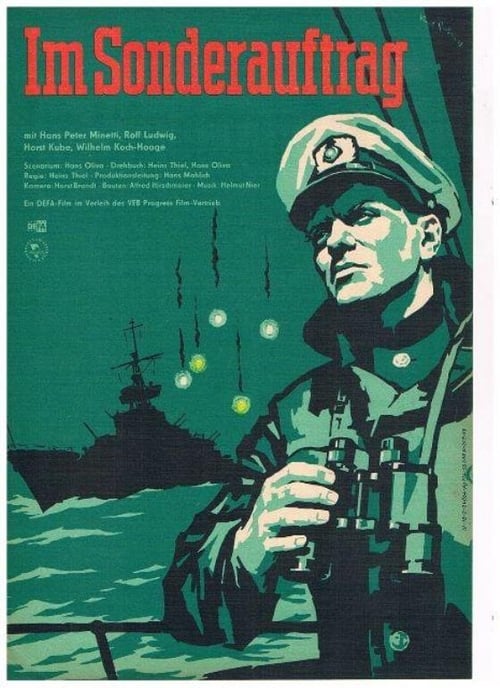
A warship returning from a training exercise was tasked with apprehending an unknown schooner that had violated GDR territorial waters. Although nothing illegal was found during the search of the ship, the ship's commander Fischer was suspicious of the owner of the schooner, Arendt, a former lieutenant of a Nazi coastal battery. Fischer's doubts were confirmed when a diver came aboard the schooner and photographed a military object underwater. The investigation showed that the detained schooner was on a sabotage mission, and the "activities" of Arendt, a former Gestapo Obersturmführer, were also revealed.
Im Sonderauftrag
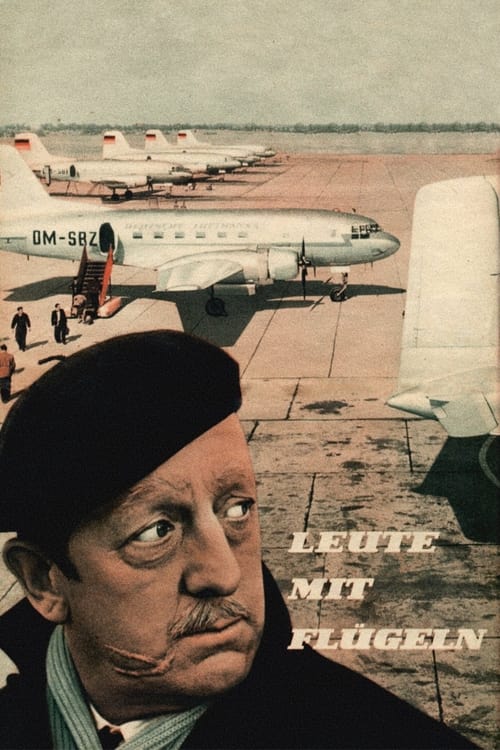
This film continues the story of radio operator Ludwig Bartuschek from “The Sailor’s Song”. Near the end of the Weimar Republic, Bartuschek (Erwin Geschonneck) is working as a mechanic in the Sperber airplane plant. Director Dehringer offers him the opportunity to train as an airplane constructor if he is willing to give up his communist beliefs under oath. Bartuschek will not allow himself to be bought and instead joins the underground resistance movement.