Production
The Putin era in Russian politics began on 31 December 1999, shortly before the millennium celebrations. The children born on that day and at the turn of the millennium have now come of age. They have only ever known ex-KGB man Vladimir Putin at the pinnacle of power. What do this generation think and feel? Some are ardent Putin opponents, for others he is an idol. Some want to leave the country others want to fight for change. From the perspective of these millennium children, torn between private dreams and political aspirations, a nuanced portrait of the ‚Putin generation‘ emerges.
Woyzeck takes psychotropic drugs and punishes himself physically. He has no choice. It's his living. With what he earns selling his body and by working in a restaurant and in subway tunnels, he just about makes ends meet. Coming home to his wife Marie and his infant child, he’s an impotent wreck -- and definitely unable to afford the earrings he sees Marie wearing one day. She’s frustrated and the jewelry is a gift from the local pimp. Woyzeck wasn't supposed to find out. But he has. Plagued by voices, he loses his already weak grip on reality. He retreats into the tunnels with Marie and the baby. There Woyzeck is the master of life and death.
Everyone is addicted to Lulu. As a symbol of the seductress, she drags everyone around her into the abyss: the elderly Dr. Goll, the mediocre painter Schwarz, her foster father Dr. Schön and the lesbian Countess Geschwitz - all succumb to her beauty and pay with their lives.
With the final shift at the Prosper Haniel coal mine in Bottrop in December, an era comes to an end: the age of Western European coal mining. *DIE STEINKOHLE* brings to life the challenges people have had to overcome over the past 250 years in extracting “black gold.” And it shows, in an emotional and surprising way, how German and European history are reflected in coal mining.
The whole world is confident that bears walk the streets in Russia, and the entire population from young to old is drinking vodka from morning to evening. In fairness, we note that Russian people themselves recognize the reputation of inveterate drunkards and are proud of it somewhere. Russian Russian documentarian Alexey Khanyutin made an attempt to analyze the role of vodka in the life of a Russian person.
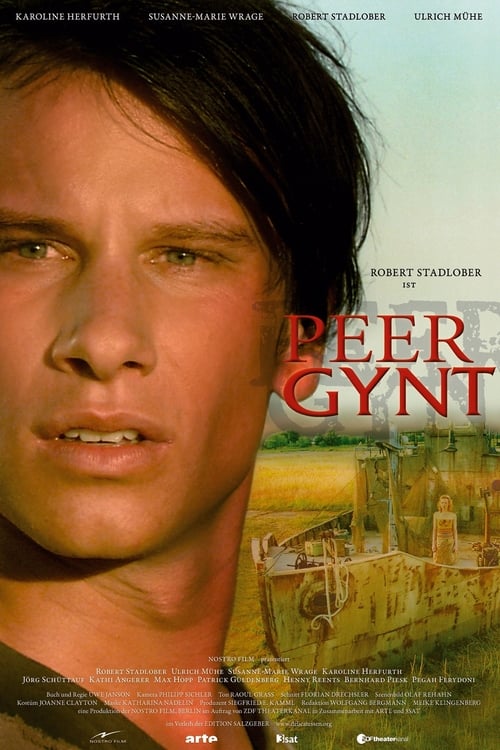
Young Peer Gynt returns home once again after unsuccessfully looking for work. His mother already goes to meet him and he describes his alleged adventures to her. In his imagination, he sees himself as a king and escapes reality with his stories. His mother would have liked him to marry Ingrid, with whose dowry they would be well provided for, but Ingrid is promised to Mats and will marry him the very next day. While Peer once again escapes into his world of thoughts while lying in the grass, he is laughed at by the others of the village. They warn him to come to Ingrid's wedding feast, where the whole village is celebrating. But he does not care and there he meets Solvejg, whom he likes very much, but she initially turns away from him. So he kidnaps the bride Ingrid, incurring the wrath of the groom and the rest of the village youth.
"Cause of Death Unknown" - Carola Neher (1900-1942) actress, singer and feminist. Brecht wrote the role Polly Peachum for her. She practiced boxing with Marlene Dietrich. After Hitler seized power, thousands of German communists and anti-fascists fled to the Soviet Union, the "fatherland of the working people". The tragedy of German communism is that the vast majority of them perished or were lost during Stalin's "cleansing". Carola Neher is one of the fate figures of that time. In the 20s, she belonged to the narrow circle of Brecht actresses. The film accompanies her son Georg Becker in search of his mother's traces in the sinking Soviet Union.
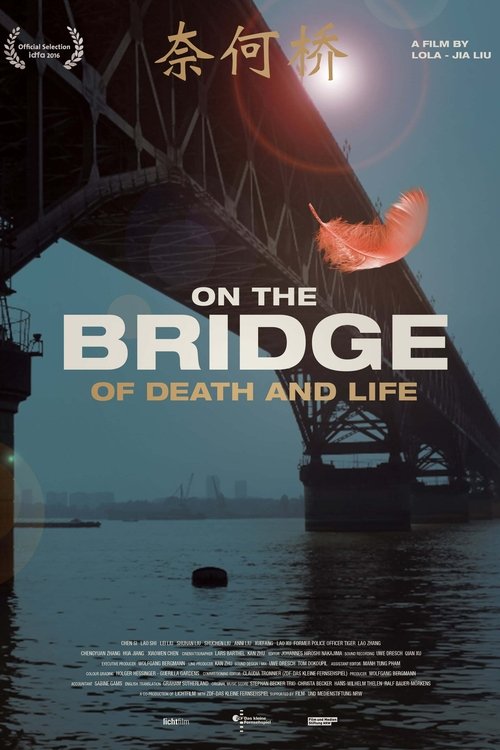
Every year many thousands of people visit the mighty Nanjing Yangtze Bridge. Every year dozens of them have no intention of leaving the bridge alive. But there is one person determined not to see them plummet to their deaths: Chen Si. For some 13 years now he has sacrificed every free weekend to patrol back and forth across the bridge on his motorcycle.
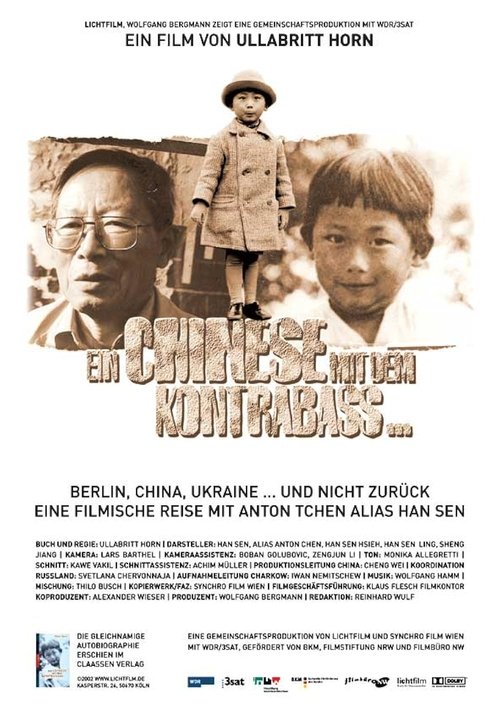
He was born as Anton Chen in Berlin in 1925. When the Nazis came to power in 1933, he first emigrated to Switzerland, then to China and finally to the Siberian part of the Soviet Union. At 75, Anton resides as Han Sen in Kharkiv/Ukraine. When asked about his identity, his answer comes fast and clear: "Berliner!" From his special perspective, Han Sen offers a highly personal perspective on the history of the 20th century and what it means to be a wanderer between wildly different worlds.
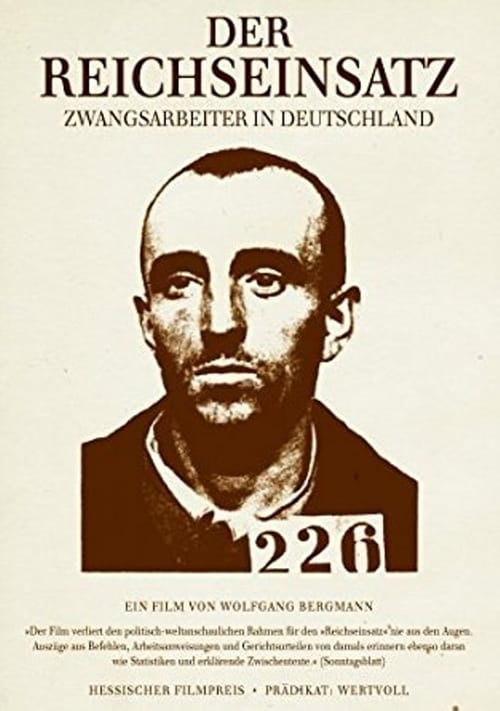
During World War II, 8 million people from abroad were forced to work in Germany, making up 30% of the workforce. By 1993, when a film on this topic was completed, there was little public awareness in Germany of this massive mobilisation of slave labour. The film explores the victims’ perspectives and the perpetrators’ motivations and methods, detailing how the system evolved from recruiting Italian volunteers to deportation, racist oppression, and slave labour. Director Wolfgang Bergmann used archive material from 10 countries and eyewitness accounts from 8 European states. Forced labourers were a visible part of German society, yet their legality and the guilt of those responsible were rarely questioned, even after Germany’s surrender. This chapter of history was largely repressed and forgotten. The film was made after the 1989 changes, during a time when xenophobic crimes were rising, with West German right-wing extremists gaining followers in East Germany.
Munich Film Festival 1985.
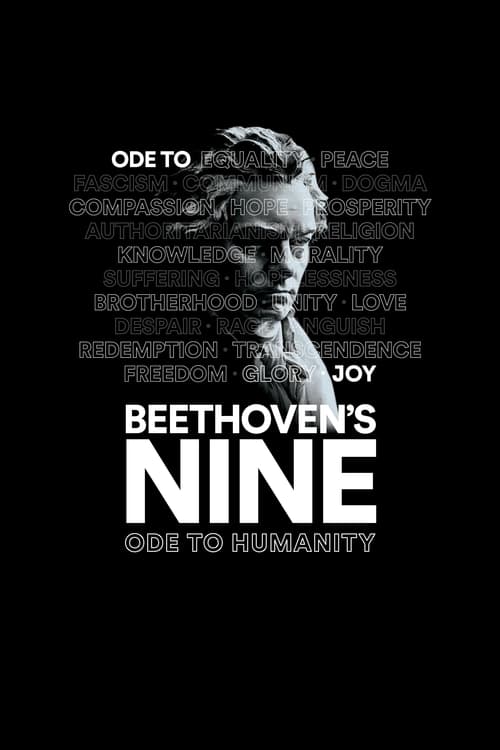
Can a work of art remain relevant 200 years after its creation? Ludwig van Beethoven’s last completed symphony proves it’s possible.