Acting
A woman marries the wrong man and tries to get out of the marriage.
a silent movie by Robert Wiene
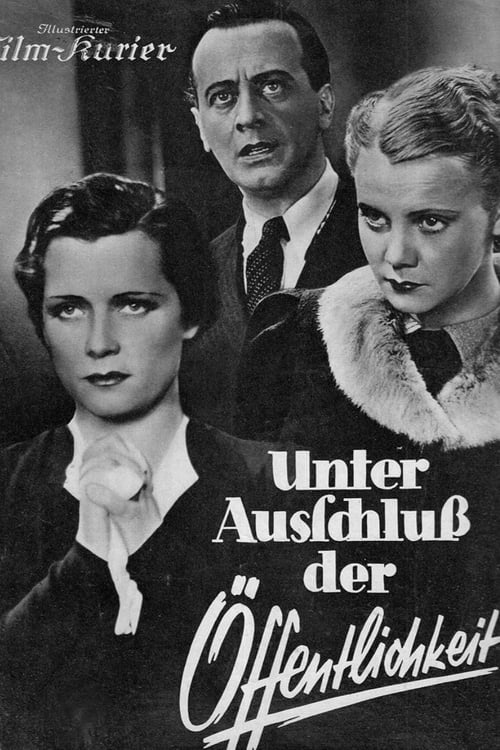
A small banking family is put to the test: Brigitte, the wife of the banker Sparrenberg, has a secret: she was once the lover of the fraudster Baron Gaffris, who once used her to get close to well-off businessmen. Now Gaffris is trying to use her to trick her husband. After a fight between Brigitte and Gaffris, Brigitte’s daughter Ina seeks out the baron in an attempt to help her mother. Afterwards, the baron’s suddenly found dead on the floor. Brigitte takes all the blame, goes to the cops and admits to having stabbed Gaffris.
No description available.
The traveling salesman for a bathing suit company has trouble getting business until he meets a girl willing to take off her clothes and act as a model.Misunderstandings and complications ensue.
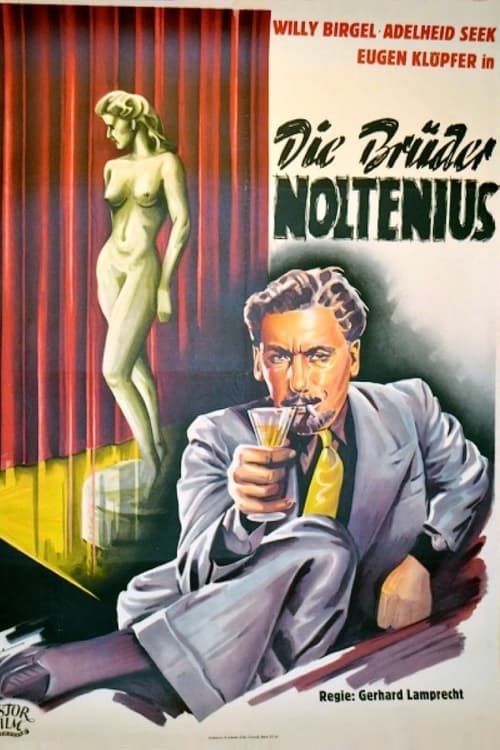
Wolf Noltenius is a real globetrotter. Early on, this talented young man travelled far and wide, where he earned fame as a construction planner. He moved to Brazil; but one day, homesickness got the best of him. He spontaneously travelled back to his hometown to visit his brother Werner and his family. Wolf and Werner, who both went into the same profession, couldn't be any more different: the one is worldly and an experienced man-about-town; the other a small bourgeois.
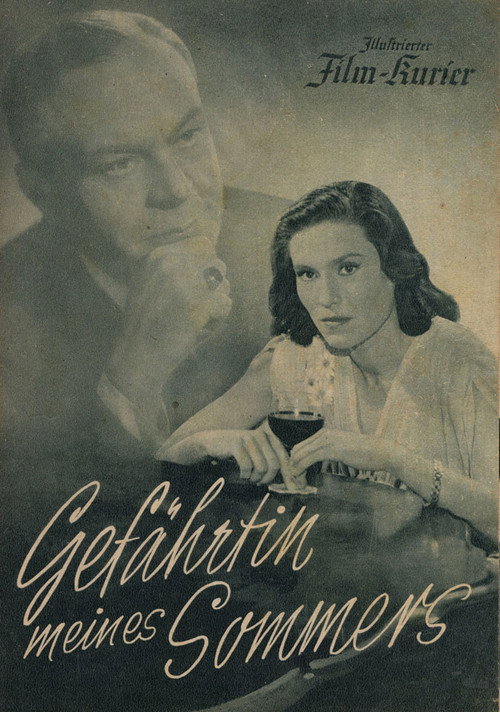
Dr. Ivar Andersson, introduced by his colleague, Sigrid Mall, is the new German teacher for the underclassmen in a girl’s high school. As is to be expected, there’s soon a whole swarm of girls vying for his attention, but none as much as Kerstin Dahlberg, who lives with her Aunt Betty. Andersson is more than aware of the girl’s feelings for him and it pains his conscience to discover, he’s as hot for her as she is for him. He tells Sigrid about the situation, who strongly recommends separation, but Andersson rejects this as desertion.
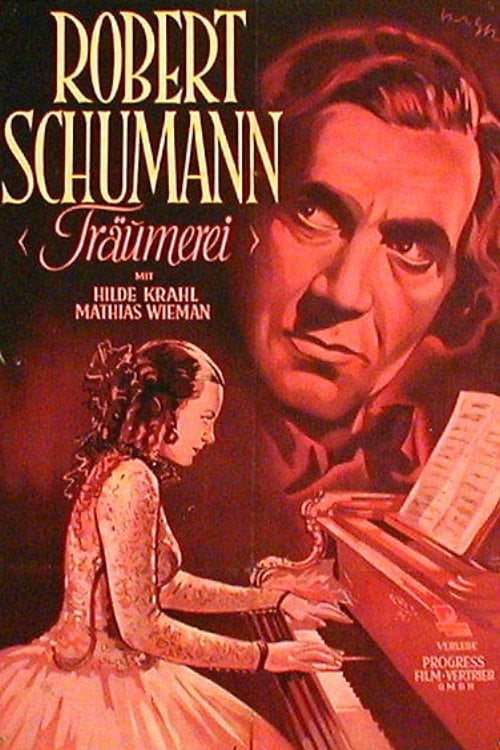
A musical film based on biographical facts about Clara Wieck's love for composer Robert Schumann (1810-1856), her marriage against her will, Schumann's triumph, and his tragic end due to mental illness. The film is beautiful and entertaining, full of noble spirit and beautiful words about art and love, which only conflict in a theoretical context; not least thanks to its solid cast, this film is quite serious and far from kitsch. Completed in 1944, during World War II, the film was rejected by the Nazi leadership, but was eventually released and enjoyed success with an audience already weary of war.
German silent film operetta (Filmoperette)
Inge Peters has a guilty conscience. She told her mother, that she’d be going to the weekend house at the lake with her friend Barbara, but in reality, the horny girl is taking Peter with her. She’s afraid, that if mom finds out, she’s gonna lecture her again, starting with the slogan, “In your time as it once was in mine …” So Inge spends her nights in bed dreaming dreams of young ladies breaking moral taboos … just like she did and about which she now has to deceive her mother. The next morning, she runs to the shore of the lake to spend time with her Peter, only to see mom standing before the two young teens.
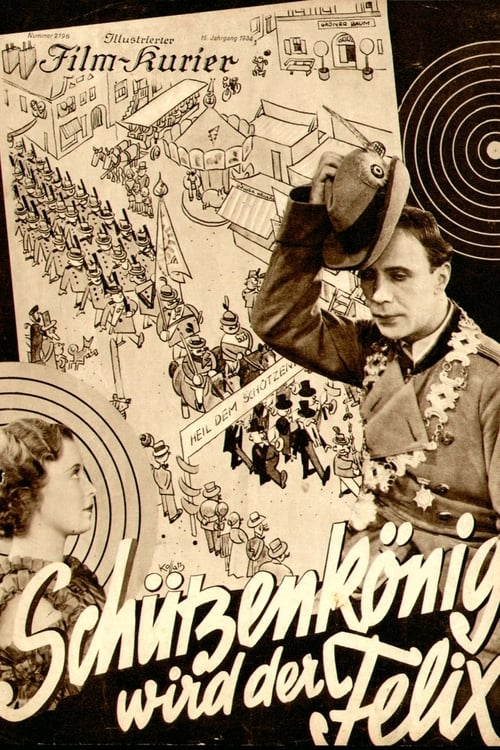
It's bowling night again in Dingelfingen am Rhein. Hotel owner Kiesewitz has set a new record in bowling and is crowned the winner. Now he is to represent the club at the Oktoberfest in Munich. But at home he makes life difficult for everyone, especially his wife and his two daughters.
a movie by Heinz Paul
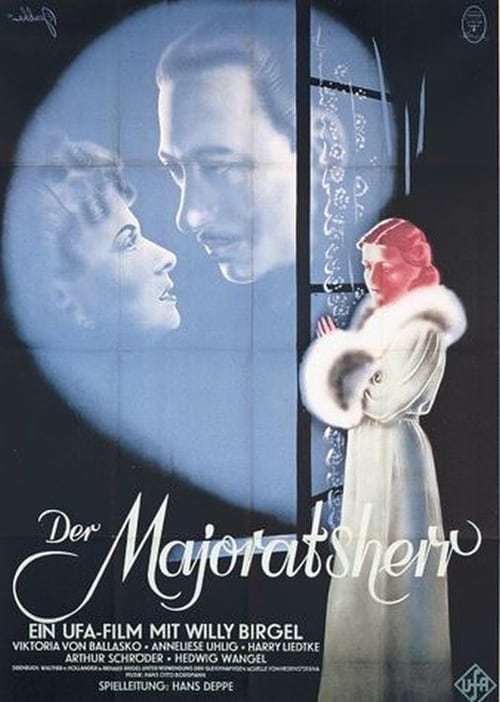
A few days before the planned wedding of the chief inheritor von Halleborg, he experiences a terrible blow: his beloved bride Julia has a riding accident and dies of her injuries. Von Halleborg becomes a broken man and chooses not to waste another moment thinking of love -- his heart belongs to Julia ... forever. In doing so, von Halleborg runs the risk of losing his entire estate, for the conditions of inheritance make all to clear that if he does not marry by his 45th birthday, the estate is to be turned over to someone else. Von Halleborg had already made peace with this fact until he discovers that the future lord of the manor will be his nephew Oskar, a selfish and ruthless scoundrel, concerned only with money.
A 1920 German costume drama from the days of Napoleon Bonaparte directed by Arthur Teuber and starring Carl Auen as Johann Baptiste Lingg.
A finicky old bachelor falls head over heels for an attractive young woman he meets.
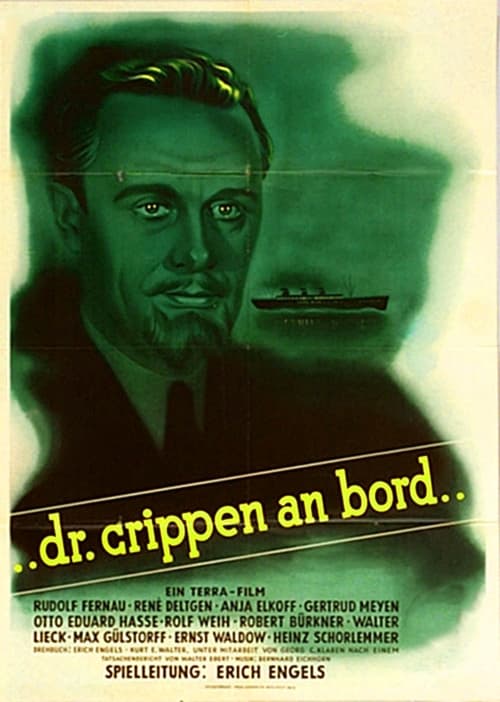
The popular trapeze artist Cora is married to the respected doctor Frank Crippen. After a party at the Crippens' house, Cora suddenly disappears. Apparently, she traveled to Brazil alone overnight. However, a friend of the couple is skeptical and calls the police. While excavating the garden, Inspector Düwell makes a gruesome discovery: body parts. Meanwhile, the prime suspect, Dr. Crippen, has already gone into hiding...
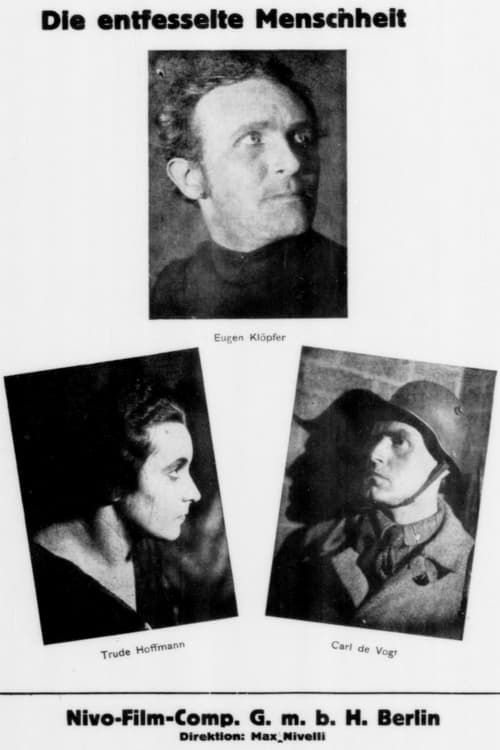
A Bolshevik agitator is enticing workers into a violent rebellion in post-WWI Berlin, in order to create anarchy. He charms the wife of a factory director into helping him, but the forces of law and order are fighting back.
The pianist Angelika Rink is exhausted from her chasing after success and is looking for peace and quiet in her hometown. Here, she sees her childhood friend Dr. Manfred Claudius again, who is running a country clinic with a lot of idealism. They both still love one another, but neither is prepared to give up his/her career for the other.
1900: Much to the chagrin of Baron Uhlendorff in Schoneberg, the city of Berlin is expanding. But what is much worse is that his son George is in love with Traute, the daughter of the master carpenter Schradecke. So the son must leave for South America as a diplomat and Father Schradecke has to intercept his letters to his daughter. Traute is inconsolable; 1913: The early days of the small artisans have now given way to them becoming big businessmen. Traute continues to wait for George in spite of the stubborn proposing by the carpenter Paul Buttner.
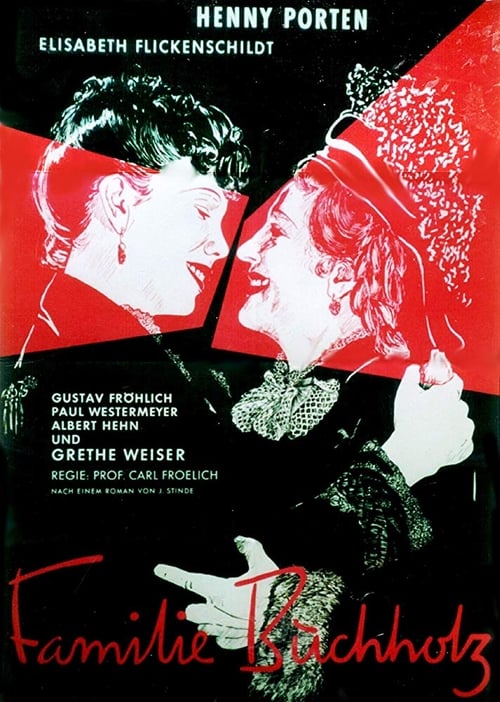
Based on an 1884 novel by Julius Stinde, it is a family chronicle set in late nineteenth century Berlin.