Acting
The Woman at the Crossroads (German: Kreuzigt sie!) is a 1919 German silent film directed by Georg Jacoby and starring Pola Negri, Harry Liedtke and Albert Patry.[1] It is now believed to be a lost film.
No description available.
In Cairo, a quest for a coveted antiquity draws the heroine into a clandestine cult devoted to Osiris. What begins as intrigue turns perilous—abductions, conspiracies, and night-time chases through temples and tombs—until she fights to escape the sect’s grip.
German propaganda film by Carl Boese.
A 1920 German costume drama from the days of Napoleon Bonaparte directed by Arthur Teuber and starring Carl Auen as Johann Baptiste Lingg.
Lorenz Ferleitner has worked his way up from a poor but gifted farm boy to a recognized master builder. When a new cathedral is to be built, he is given the honor of carrying out the task. He would like to commission the unknown young painter Fritz Rasmussen to decorate the dome. The director of the art academy, Professor Marquardt, however, wants to employ his untalented nephew for the painting work. A bitter conflict unfolds.
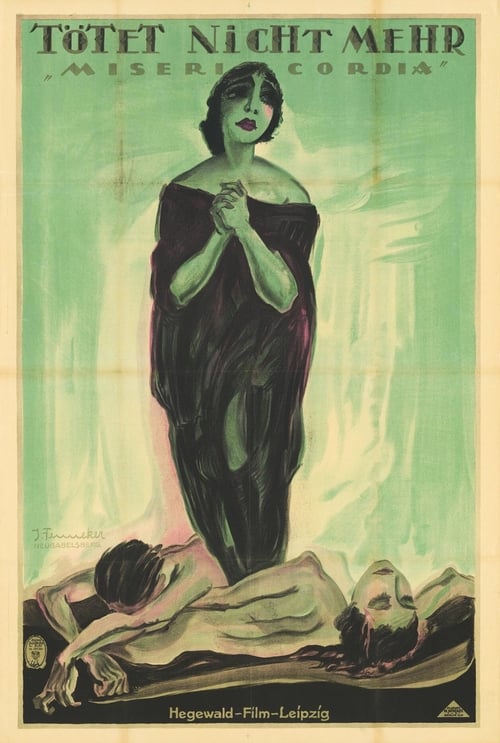
The director and co-writer Lupu Pick plays musician Erik Paulsson, who loses his beloved son after a peaceful yet critical poetry reading is raided by the tsarist forces. Paulsson, beside himself with grief, kills the officer responsible and is sentenced to life, which will mean 18 years in prison before he is free again. While he is inside, by a strange quirk of fate, his daughter Karin falls in love with writer Sebald Brückner, the son of the state prosecutor, who indicted Paulsson and is a staunch advocate of the death penalty. The conflict between the fathers does not impair the relationship of the young couple. However, when Sebald’s long-desired success on the stage is threatened by a vengeful theatre director who had sexually harassed Karin, he is enraged and kills the other man in a fight. The prosecutor now must face the blow of losing his own son to the death penalty.
An enslaved girl, Leila, is bought by Vaco Juan Riberda as a gift for his friend, Dr. Jan van Zuylen. van Zuylen is outraged, and refuses. Years later, van Zuylen meets Riberda and Leila again, and finds that they have married. Leila and van Zylen acquaint themselves and fall in love.
A beautiful woman of the Latin Quarter, marries a rich cattle owner Pedro Maurez from South America to live in peace and happiness. The arrival of young Parisian Paul Durand wets her interest again in the old haunts of Paris. When her husband is slain in an uprising of laborers, she is again thrown on her own resources.
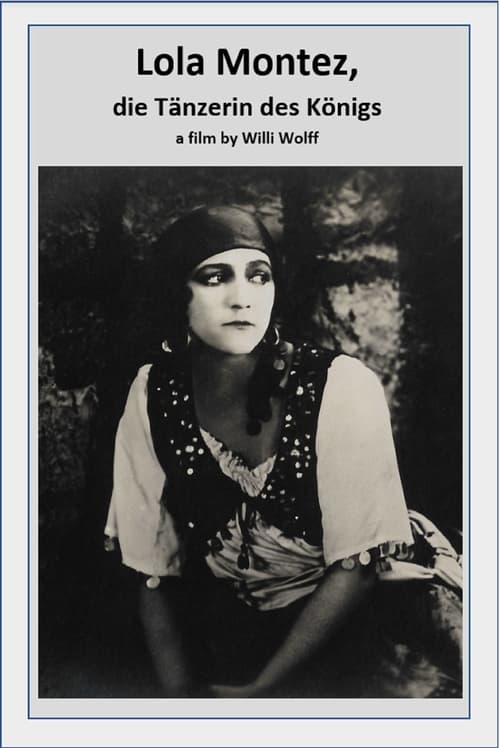
Deviating from the historical facts, Lola is introduced as a young Spanish “Gypsy” who becomes involuntarily embroiled in an attempt to poison the Infante of Spain (a short but splendid cameo by Heinrich George). As a result, she has to flee the country, arriving first in Italy, where she is taught how to act like a lady. Later, in Paris, she is invited to dance at the city’s prestigious opera house, becoming a worldwide sensation. She then becomes secretly involved in a revolutionary plot by Louis Napoléon, the future emperor of France. When the plot fails, Lola is once again forced to flee, this time to Munich, where she captures the attention of Ludwig I. Their ensuing affair arouses a great deal of hatred among the people and the establishment, however. In the end, Lola has no choice but to leave again, and vanishes into the night mist.
Based on the play of the same name by Frank Wedekind.
Film by Carl Boese.