Acting
Tatort is a long-running German/Austrian/Swiss crime television series set in various parts of these countries. The show is broadcast on the channels of ARD in Germany, ORF in Austria and SF1 in Switzerland.
Polizeiruf 110 is a long-running German language detective television series. The first episode was broadcast 27 June 1971 in the German Democratic Republic, and after the dissolution of Fernsehen der DDR the series was picked up by ARD. It was originally created as a counterpart to the West German series Tatort, and quickly became a public favorite.
Bella Block is a long-running German detective television series starring Hannelore Hoger, first broadcast in 1994 on ZDF. In 2010 the 30th series was produced.
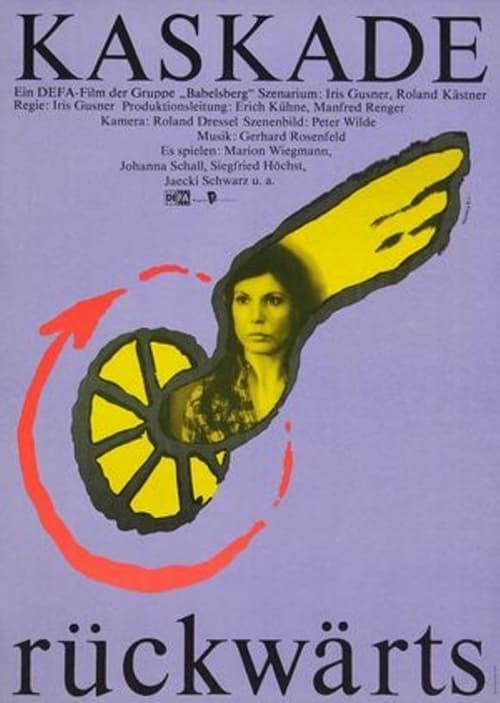
Maja Wegner is in her late thirties and a single mother of a teenage daughter. To give her stale life a new direction, she decides to start all over again in the big city. She sells her house in the countryside, quits her job, and moves with her daughter to Berlin. There, she finds a job as a conductor for the railroad company. Although Maja soon finds new friends in her apartment building, the search for a new life partner does not come off so easily.
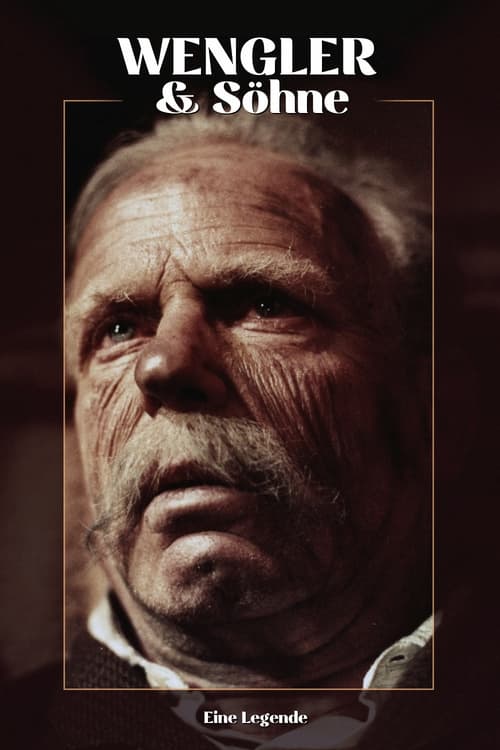
A story spanning three generations, from 1871 to 1945. When Gustav Wengler, a farmer’s son, returns from the Franco-German war in 1871, he goes to work for a precision mechanics and optical company, where he soon becomes a master craftsman. Wengler loyally promises the owner on his deathbed that his sons and grandsons will also stand by the company.
When East Germany ceases to be separate from its western half, one would think that things would be better for the couple in this movie who have been plagued by sexual and political harassment of the most virulent kind, but , they are completely unprepared to cope with the swift changes that are transforming their familiar yet desperately unhappy world. In the story, Heinz is a laborer in the cooperative apple orchards of an East German village and has married his sweetheart Lena. She works to take care of the sickly wife of the co-op's manager and also must cope with the sexual attentions of the perfidious man. One day, after discovering this state of affairs, Heinz blows up and assaults his wife's harasser, which only serves to land him in jail. While in prison, the state secret police (the Stasi) get him to help them entrap the co-op manager, whom they believe is going to try to defect.
Berlin in the 1930s - Adolf Hitler comes to power, communists and social democrats are persecuted, books are burned and Jewish citizens are ostracized. The outwardly shiny façade of Berlin, the capital of the Reich, reveals nothing of the unequal struggle of young people against the increasing oppression...
Sunny is the singer of a band trying to establish itself in the East Berlin music scene. They play regular gigs in small towns, but Sunny feels out of touch with the audience and with her life as a whole. She begins a relationship with Ralph, an amateur saxophonist and philosophy student, who writes her a very personal song—but his obsession with death and unfaithful lifestyle are not for her. After getting into a quarrel with a band member who harasses her and telling off a show host, she is thrown out of the band. Abandoned, she struggles to regain control over her life.
No description available.
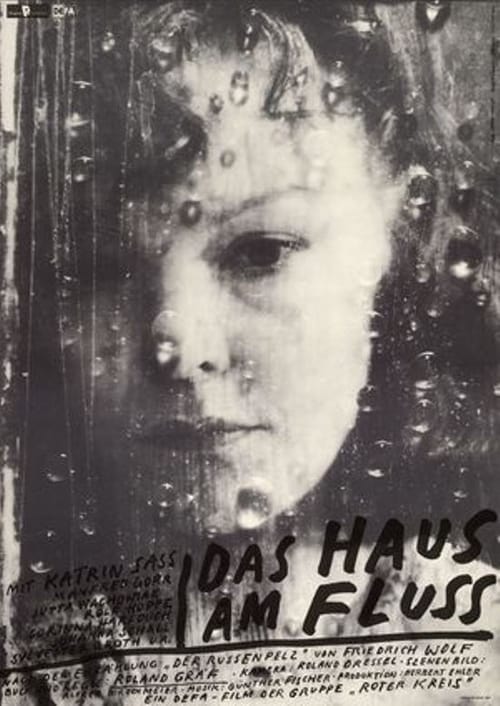
1942. The members of the Voß family, mother, two daughters, a daughter-in-law, and a son-in-law, are living in a house at the river. A fellow soldier of son Paul, who fights at the eastern front, delivers his greetings and an embroidered Russian blouse for Emmi, Paul′s wife. Daughter Agnes, whose husband is also fighting in the war, receives a fur vest from the junior partner who is stalking her. Obviously, the vest is also loot from the eastern front. When the family receives news that Emmi′s husband has been killed in action, the war finally enters the house at the river. Emmi commits suicide while Agnes′s husband returns as a cripple from the war front. At home, he has to learn what a price his wife had to pay for the "Russian fur".
A railway line is to be laid through remote Lusatian farmland. Surveyors herald the “new era” with their work. The events also leave their mark on the people. Stylistically idiosyncratic first feature film by a director who comes from documentary film. The story is told as a parable about the relationship between humans and progress, with the actors making extremely clever use of their freedom.
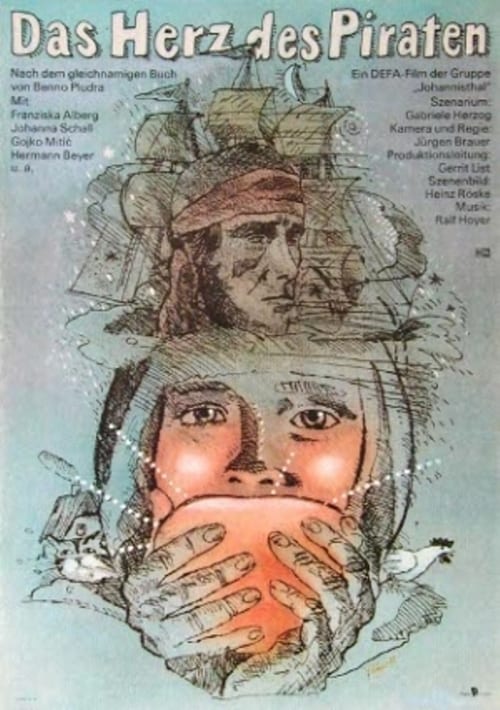
Jessi finds the petrified talking heart of a pirate who died centuries ago. The pirate's dream image increasingly becomes a substitute for her father. When her father turns up one day, she has to decide between her childish hopes and her burgeoning adulthood...
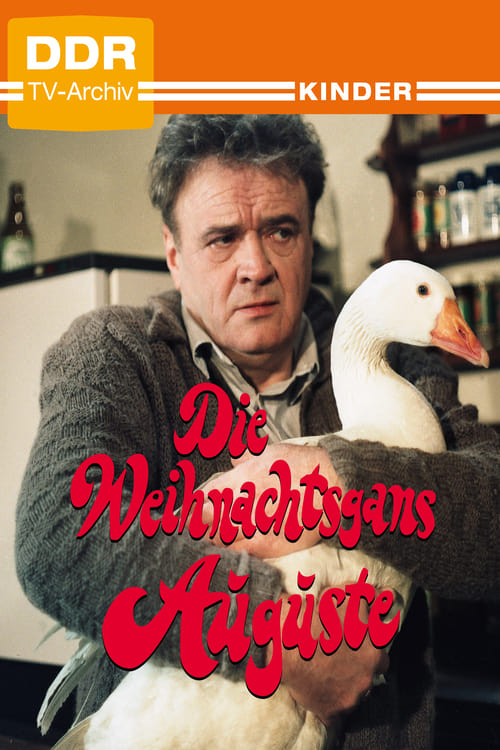
The opera singer Ludwig Löwenhaupt wants a proper festive roast for Christmas, so he buys a goose in advance to feed the whole family. What he doesn't realize, however, is that the children, Elli, Gerda and Peterle, will grow fond of the animal, which is christened Gustje, and will no longer want to eat it. After the "liberation", the "five kilos of meat", which were initially locked up in the cellar, become a pet that the children take to bed with them and communicate with. But shortly before Christmas, father Löwenhaupt still wants to slaughter them. However, as his family protests and his conscience gets in the way, he can't slaughter the goose after all. So Gustje only has to leave a few feathers as proof that she has been plucked, and the opera singer is given another goose that has already been cut up.
Shortly after the fall of the Berlin Wall, former Stasi agents settle scores with former East German citizens who had resisted the regime.
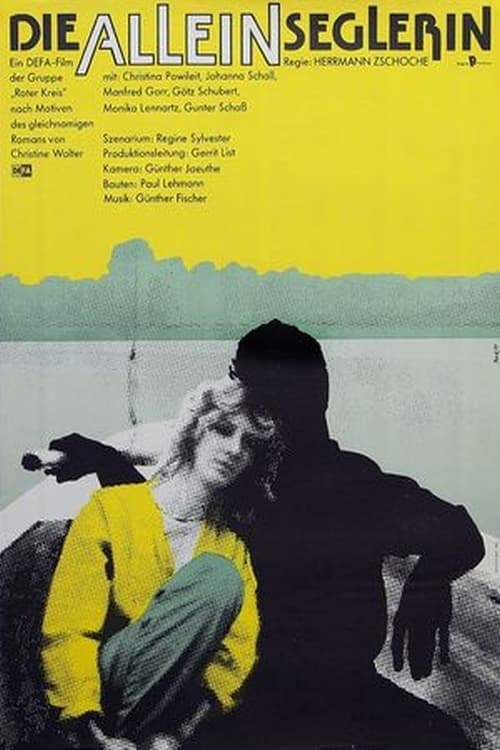
Christine inherits a sailboat from her father, whom she barely knew. Christine is a divorced single mother and her job at a research insitute leaves her with too much work and too little time to sail. She can't find anyone to buy the boat at full value, so she tries to repair it over the winter in the hopes of being able to get a better price in the spring. Working on the boat become something of an obsession to the detriment of Christine's relationships with her son, boyfriend and collegues. When the boat is finally ready to sell, she isn't sure that she is willing to part with it after all.
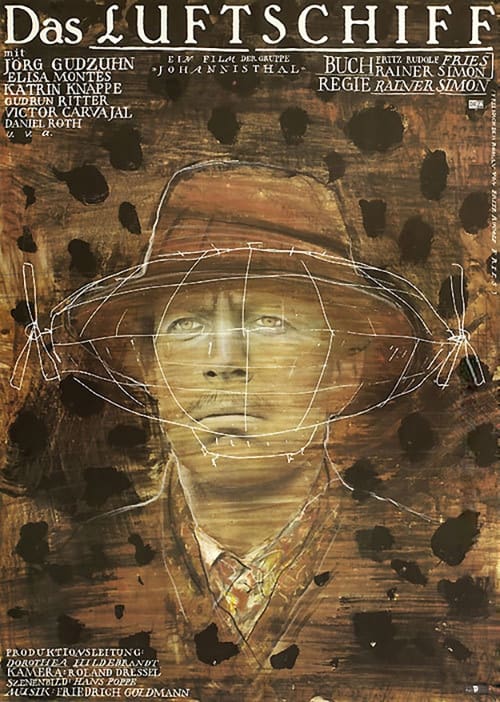
Franz Xavier Stannebein, a young boy at the turn of the 20th century, wants to do nothing more than fly. He carries this dream through his years at an orphanage and into adulthood as a merchant in Spain. He eventually invests everything he has into building his own version of an airship. He later meets some industrialists in Germany who want to support his idea, and they ask him to build an airfield in Spain. When he sees the Nazis use the field during the Spanish Civil War, however, he feels betrayed and goes to Germany to protest. There he is thrown into an insane asylum in Leipzig. After WWII, his grandson and other survivors of the family searches for him, only to find the empty asylum... Based on the novel Das Luft-Schiff. Biografische Nachlasse zu den Fantasien meines Grossvaters (1974) by Fritz Rudolf Fries. The non-camera animation in the film was created by internationally known director Lutz Dammbeck.