Acting
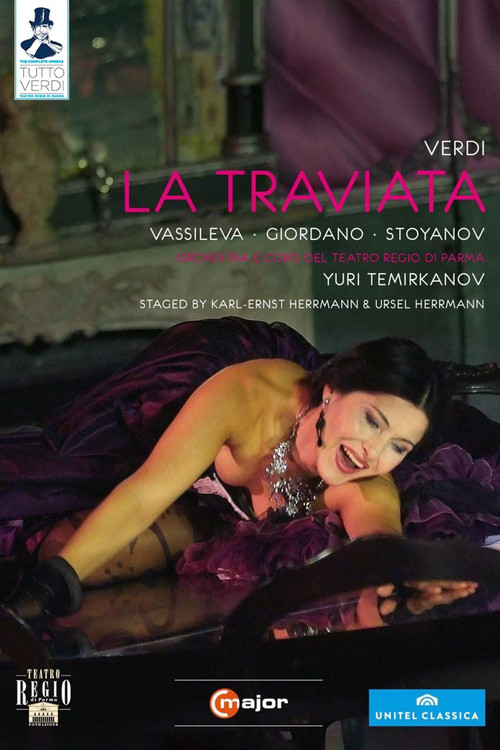
Around 1850, in Paris. At a soirée, Alfredo Germont, a young man from a respectable Provençal family, falls in love with Violetta Valéry, a courtesan. Deeply in love, Violetta gives up her profession and devotes herself entirely to Alfredo. However, Mr Germont senior, in the name of bourgeois respectability, persuades her to break up with his son. Violetta then writes a letter of separation to Alfredo without revealing the real reason for her decision. The fatal illness from which she was already suffering then flares up once more. A month later, Alfredo learns from his father that Violetta never stopped loving him... ‘La traviata’ is a 3 act opera by Giuseppe Verdi, with a libretto by Francesco Maria Piave based on the novel ‘The Lady of the Camellias’ by Alexandre Dumas, fils (1848) and its stage adaptation (1852). Premiered on 6 March 1853 at La Fenice in Venice. From the 27-opera Verdi box set “Tutto Verdi”. Recorded live at the Teatro Regio in Parma on 4 April 2012.
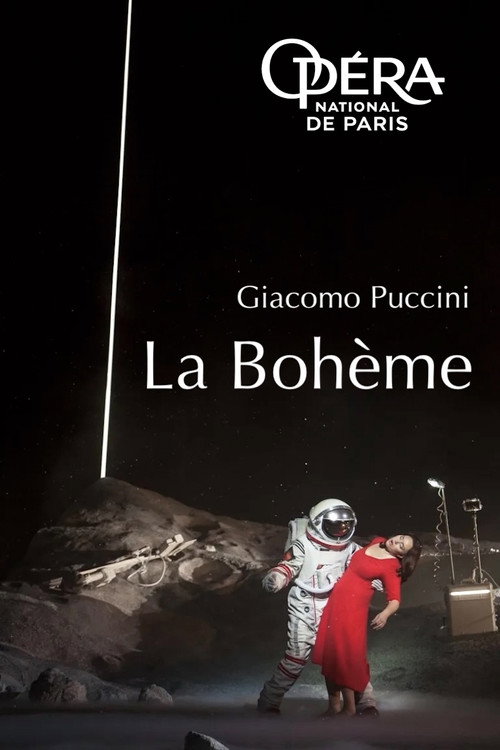
No one better described the half-starved, struggling artists than Murger in his Scènes de la Vie de Bohème: artists ready to burn a manuscript to try to keep warm yet,in an era of triumphant bourgeois materialism, dreaming of another existence. Taking up these scenes of Bohemian life, Puccini offers us a heart-breaking love story and some of the most beautiful music in the history of opera in the story of the poet Rodolfo and fragile Mimi. The staging of this new production has been entrusted to Claus Guth who sets the drama in a future devoid of hope in which love and art become the sole means of transcendence.
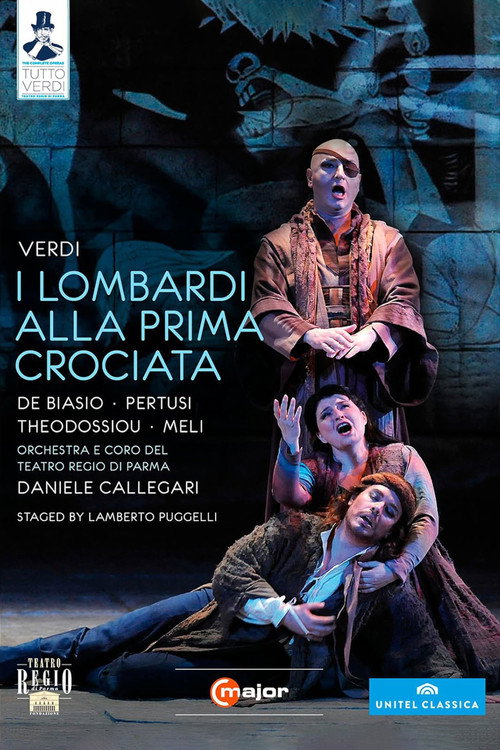
I Lombardi alla prima crociata (The Lombards on the First Crusade) was Verdi’s fourth opera and received its first performance at La Scala, Milan, in February 1843. The grandiloquent subject matter is fleshed-out with broad-brushed musical and dramatic effects and lavish choral scenes created a correspondingly impressive impact. A great success in Milan, it spread to the rest of Europe within a matter of only a few years.
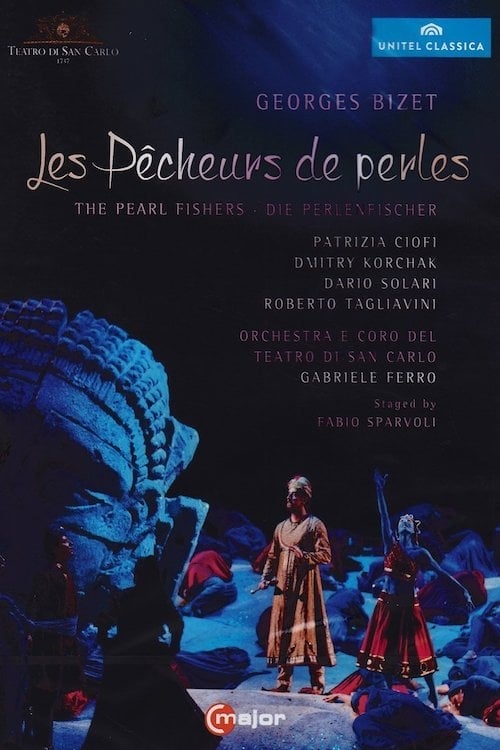
The Pearl Fishers from 1863 concerns an opera in three acts. It's a work about friendship, love, faithfulness and betrayal. The story takes place in Sri Lanka. The pearl fishers Nadir and Zurga are both in love with the girl Leïla. In order to maintain their friendship, the swear not to court the girl. They promise never let go of their friendship end over the love for th a girl. Then they lose sight of the girl. Years later, Leïla returns as a priestess back to the fishermen's village. Nadir recognizes her and courts her. The two are caught and the sentence is the pillar. Zurga, now the fisherman's captain, avoids this and lets them escape. The angry villagers grabbed him and threw him on the pile of fire that was intended for the two lovers.
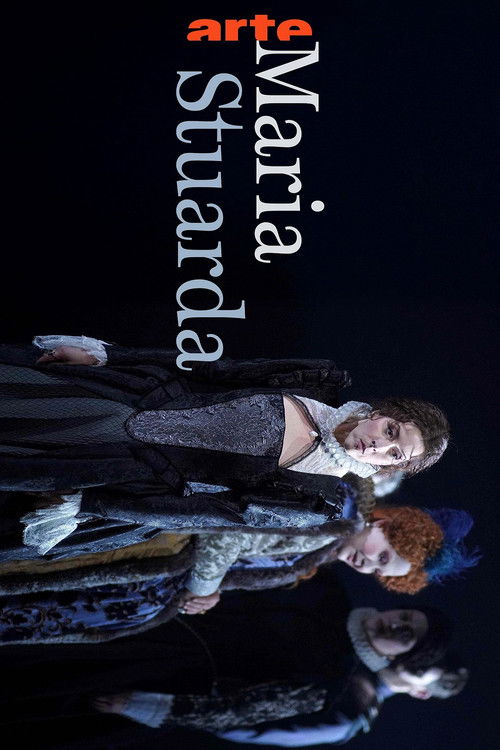
A masterpiece of bel canto at the Teatro Real in Madrid: conductor José Miguel Pérez-Sierra and director David McVicar take on Donizetti’s Maria Stuarda, with Lisette Oropesa in the title role.
No description available.
Jacopo, son of Doge Francesco Foscari, was accused of murder and banished from Venice. Longing for his homeland, he writes to the Duke of Milan asking him to intercede with the city council. The letter is intercepted, and Jacopo is brought back to Venice to face further questioning. An opera in three acts by Giuseppe Verdi, with an Italian libretto by Francesco Maria Piave, based on a historical play by George Byron. Premiered on 3 November 1844. From the box set of 27 Verdi operas, ‘Tutto Verdi’. Recorded live at the Teatro Regio in Parma on 3, 6, 8, 11 and 19 May 2005.
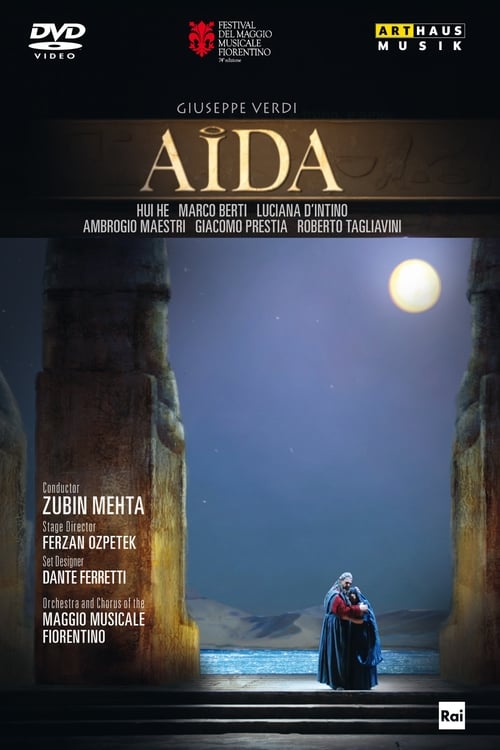
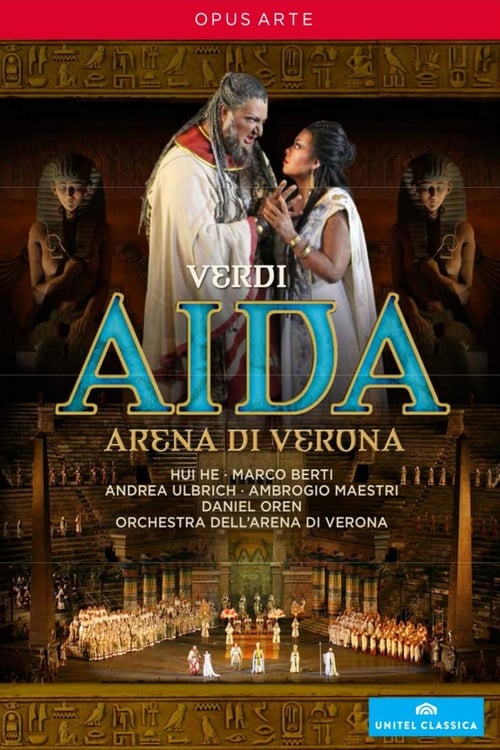
The grand scale and magnificent acoustics of the Roman arena in Verona are ideally suited to the pageantry of Verdi's Egyptian opera, presented here in a staging that is true to the original 1913 production, framed by obelisks and sphinxes and filled with chorus and dancers. Chinese soprano Hui He has won international acclaim for her portrayal of the eponymous slave girl whose forbidden love for the war hero Radamés (Marco Berti, the experienced Verdi tenor) brings death to them both.
Guiseppe Verdi's Lusia Miller returns to the Wiener Staatsoper after an absence of 36 years. This production is conducted by Michele Mariotti and stars Nadine Sierra and Freddie DeTommaso. Stage direction by Philipp Grigorian.
This production of Lucia was the work of Stefano Mazzonis di Pralafera who is the General Director of the company. In his detailed program note he wrote about how he had clearly thought about the setting and the relationship between the libretto and the original novel. This was a very classic staging – one where the gentlemen wore tartan kilts and the ladies long, flowing dresses. There was a lot of standing and delivering and a fair bit of falling to the floor with Enrico in particular seeming to have a thing for pushing other characters to the floor.
To celebrate the 100 years of the festival Arena di Verona and the 200th birthday of Giuseppe Verdi, two separate productions of Aida were staged. This modern version was staged by La Fura dels Baus.
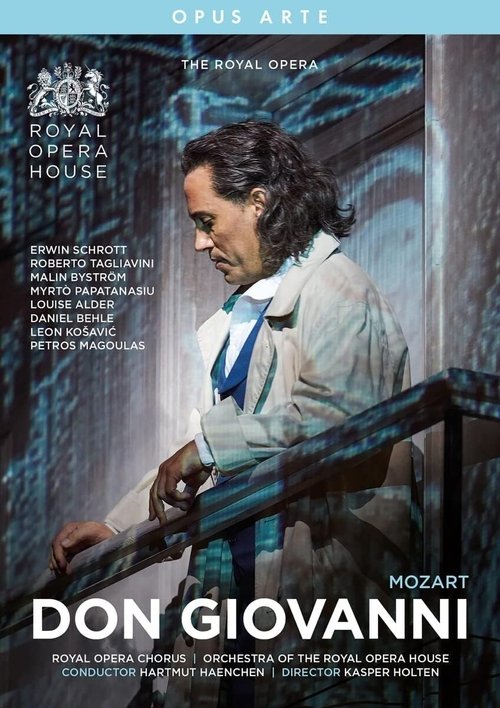
New 2019 version of the Kasper Holten’s 2014 production of Don Giovanni for the Royal Opera offers a glimpse inside the mind of one of opera’s most notorious seducers. With a spectacular revolving set by award winning designer Es Devlin, ingenious video projections by Luke Halls, and an ‘ideal cast on world beating form’ (The Independent), this staging brings Mozart’s dazzling score to life, in all its wit, glamour, and darkness.
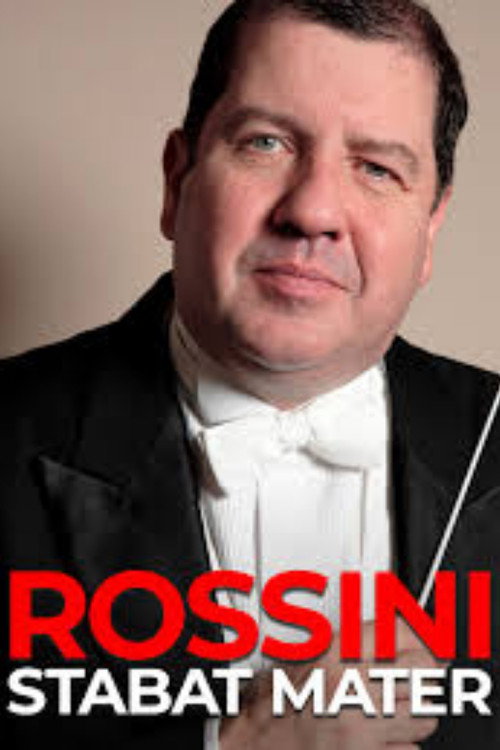
At the Auditorium Parco della Musica, Mozart’s Symphony No. 39, K. 543, and Rossini’s *Stabat Mater* will be performed to mark the 150th anniversary of the composer’s death.
As Aragon descends into unrest, a count jealously fights for a noble lady's heart. But she has already given it to a passionate troubadour whose mother holds a terrible secret. This Verdi masterpiece overflows with dramatic tension and musical geniality, resulting in a story that increases in intensity throughout. Maria Agresta plays the unfortunate Leonora alongside Ludovic Tézier and Francesco Meli as her rival admirers in this new production at the Teatro Real.
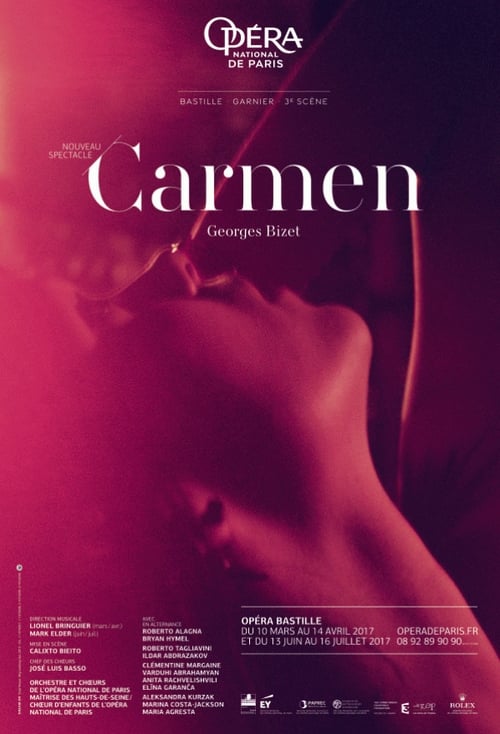
With a devilish sway of the hips and a hint of Andalusian flair, Carmen, the beautiful cigar-maker sets her sights on a soldier: Don José. Fate will do the rest. Composed to a libretto by Meilhac and Halévy based on Prosper Mérimée’s novella, the opera exploded the boundaries between tragedy and comedy with a modernity that caused a scandal at the time. Can we kill the one we love with love? The fiery beauty of Bizet’s music, where one unforgettable aria follows another, has worked year in, year out to make it the world’s most performed opera.
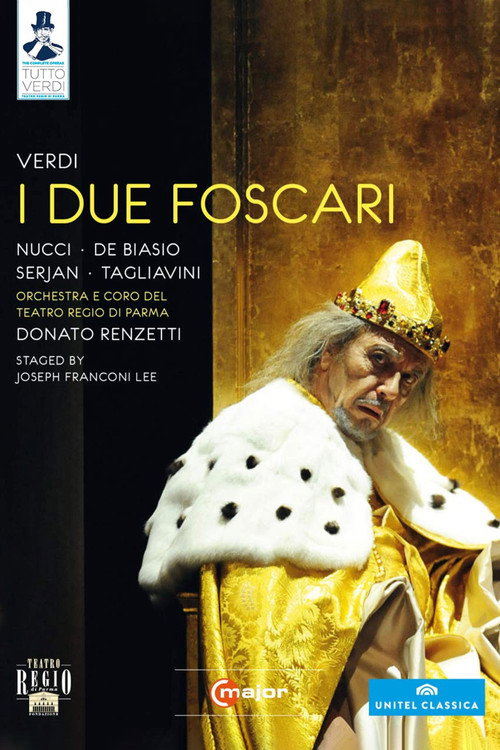
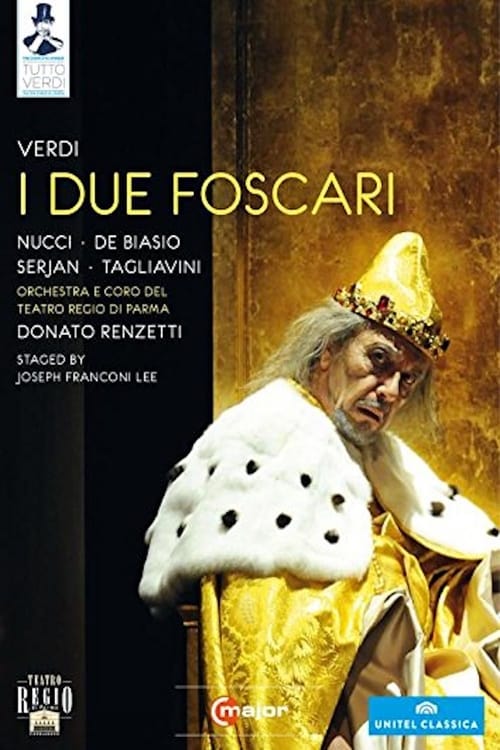
I due Foscari was Verdi's sixth opera and based on Lord Byron's play The Two Foscari. Rich in intrigue, the plot tells of the final days of the famous Venetian doge, Francesco Foscari, and his illegal overthrow in 1457.
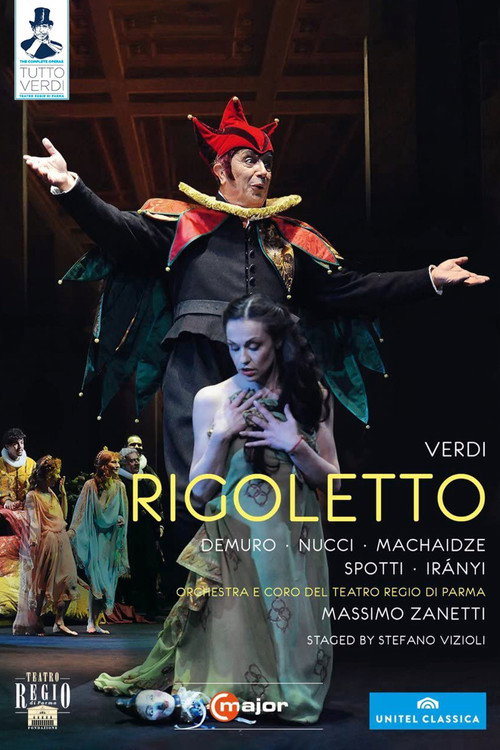
In Italy, in Mantua and its surroundings, in the 16th century. Although newly in love, the Duke of Mantua extols infidelity. His court jester, Rigoletto, mocks the elderly Monterone, who has come to demand the return of his daughter, whom the Duke has seduced. Monterone casts a curse on Rigoletto. The hitman Sparafucile offers his services to the jester, as a man is lurking around the young woman he is protecting. Rigoletto reflects on his dual role as jester and tormented father, for this young woman—whom the courtiers believe he is hiding a romantic affair with—is in fact his own daughter, Gilda. “Rigoletto” is an Italian opera in three acts and four scenes by Giuseppe Verdi, with a libretto by Francesco Maria Piave, based on Victor Hugo’s 1832 play “Le roi s’amuse.” It premiered on March 11, 1851, at the Teatro La Fenice in Venice. From the “Tutto Verdi” box set of 27 Verdi operas. Recorded live at the Teatro Regio in Parma on October 16, 20, and 22, 2008.
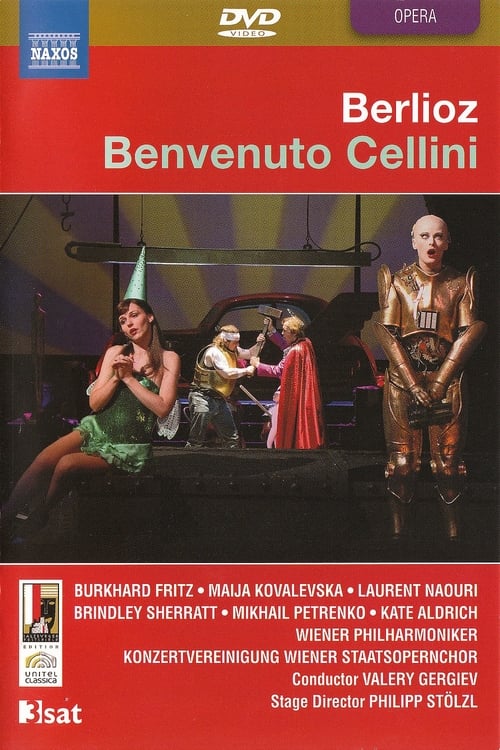
Live performance from Salzburg Festival Opera, August 2007. The story tells of Cellini's love for Teresa, daughter of the Papal Treasurer Balducci. His rival, the Papal Sculptor Fieramosca, overhears Cellini plotting to run away with Teresa during the carnival.
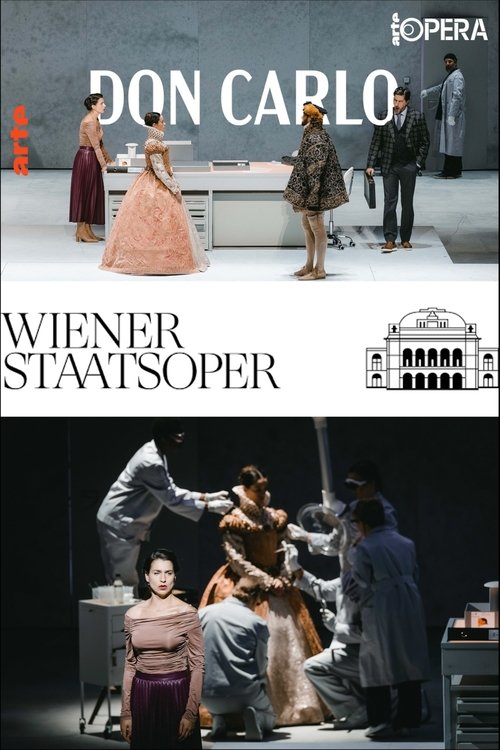
Production of the Vienna State Opera, October 2024. Inspired by a visit to the Kyoto Costume Institute in Japan, director Kirill Serebrennikov brings the plot of Don Carlo into a contemporary context. He was also inspired by this institute for his stage design - after all, original objects from all eras and cultures are kept there and prepared and stored accordingly to protect them from decay.