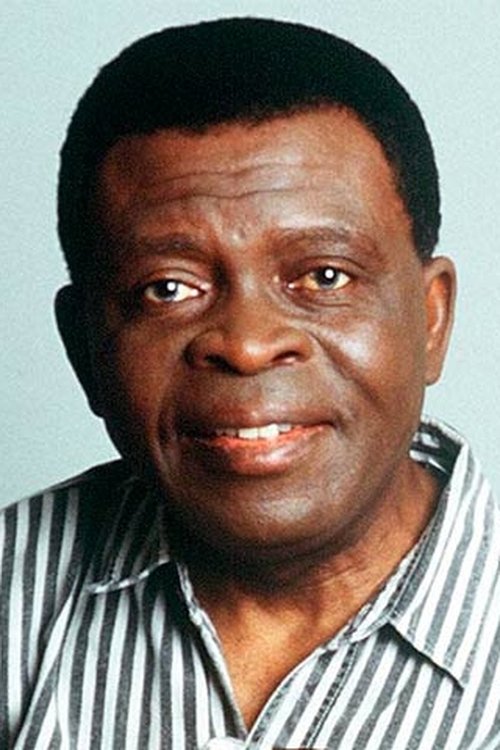
Francis Bebey
Sound
Biography
Francis Bebey (15 July 1929 in Douala, Cameroon – 28 May 2001 in Paris, France) was a Cameroonian writer and composer. Francis Bebey was born in Douala, Cameroon, on 15 July 1929. Bebey attended college in Douala, where he studied mathematics, before going to study broadcasting at the University of Paris. Moving to the United States, he continued to study broadcasting at New York University. In 1957, Bebey moved to Ghana at the invitation of Kwame Nkrumah, and took a job as a broadcaster. In the early 1960s, Bebey moved to France and started work in the arts, establishing himself as a musician, sculptor, and writer. His most popular novel was Agatha Moudio's Son. While working at UNESCO from 1961-74, he was able to become the head of the music department in Paris. This job allowed him to research and document traditional African music. Bebey released his first album in 1969. His music was primarily guitar-based, but he integrated traditional African instruments and synthesizers as well. Though Bebey is currently praised for his music, his musical taste created controversy with his native music when he first started off. His style merged Cameroonian makossa with classical guitar, jazz, and pop, and was considered by critics to be groundbreaking, "intellectual, humorous, and profoundly sensual". He sang in Duala, English, and French. Bebey helped launch the career of Manu Dibango. Bebey released more than 20 albums over his career, and was also known for his poetry, including Black tears (1963), a poem dedicated to the March on Washington for Jobs and Freedom. Bebey wrote novels, poetry, plays, tales, short stories, and nonfiction works. He began his literary career as a journalist in the 1950s and at one time worked as a journalist in Ghana and other African countries for the French radio network, Société de radiodiffusion de la France d'outre-mer (SORAFOM). Bebey's first novel, Le Fils d'Agatha Moudio (Agatha Moudio's Son), was published in 1967 and awarded the Grand prix littéraire d'Afrique noire in 1968; it remains his best-known work. His novel, L'Enfant pluie (The Child of Rain), published in 1994, was awarded the Prize Saint Exupéry. In addition to exploring childhood and adult experiences in his works, Bebey also wrote tales drawn from the African oral tradition. Bebey died in Paris, France, on 28 May 2001. His survivors include his children Patrick, Toups, and Kidi Bebey, and his wife. John Williams' piece "Hello Francis" is written as a tribute to Bebey: "The piece is based on the Makossa, a popular dance rhythm from Cameroon often used by Francis, and includes a quote from his piece The Magic Box and a hidden bit of J.S. Bach." Arcade Fire's song, "Everything Now," features a flute part from "The Coffee Cola Song" by Francis Bebey. The flute part was played by Patrick Bebey, Francis Bebey's son. ... Source: Article "Francis Bebey" from Wikipedia in English, licensed under CC-BY-SA 3.0.