Directing
The filmmaker intersects the flow of traffic on narrow streets and on the canals of a European city.
I saw people flee in fright before the force of Chromaticité I, during which I remained fastened to my seat, in the clutches of fear. The last image, the screen turns white: I glance at my neighbour, immobilised just as myself. (Bernard Weidmann, Rhizome Hérétique, 1980)
The first part of the Carolyn Carlson cycle. Between her and herself. Three images of the dance are repeated, come up against opacities that do not let themselves be crossed, are lost in transparencies from which there is no reflection. The sound describes their inevitable journey: this motionless movement.
No description available.
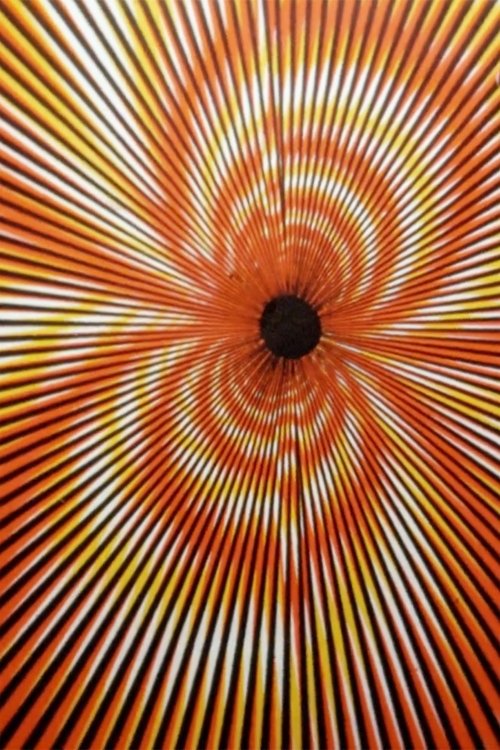
Large visual elaborations of Kirchhofer means most simple devices and childish in cinema archeology, Thaumatrope the Praxinoscope, all optical toys. This fundamental investigation of the batch becomes particularly clear in Sensitométrie III (Sensitometry III), where work on the range is very pure because it is accentuated by the open opposition between positive and negative. But the difference is that, where other devices seeking forms of regularity and stability to swallow motionless in the mobile, film Kirchhofer rather explore all possible rhythms, so to enhance the irregularity, difference, discontinuous. The parade always comes up against the still image, continuity serves monumentalize Meanwhile, the optical illusion is stripped and the beauties of the irregular explode. Nicole Brenez - Portrait Arte - May 2006
Anarchism, Castroism, Maoism, while mingled. But what survives is Nihilism ! Alain Peyrefitte in the National Assembly, May 9, 1968
Rail Ditch and Fence. - Auteuil racetrack, Paris France
"In this work in progress, which will never be completed, even though he has screened it in public several times, the filmmaker discusses with the writer France Huser the difficulty of filming / women / of letters / and of making a frontal portrait, which will inevitably have to be reworked." - Gisèle Rapp-Meichler
I had the sudden urge to run through the forest while watching ATARAXIE I. Upon returning home, I went straight to my dictionary to look up the meaning of the title: “Tranquility of the soul. For the Stoics, a state of mind that nothing can disrupt: the ideal of the sage.” (Bernard WEIDMANN - RHIZOME HERETIQUE - March 3rd, 1980.)
Roland Barthes evokes a pastry named Jesuit.
Found footage, edited from international news footage.
A film driven by the musical universe of Patrice Kirchhofer.
Second part of the trilogy on language, on the non-representation of man in Paleolithic art.
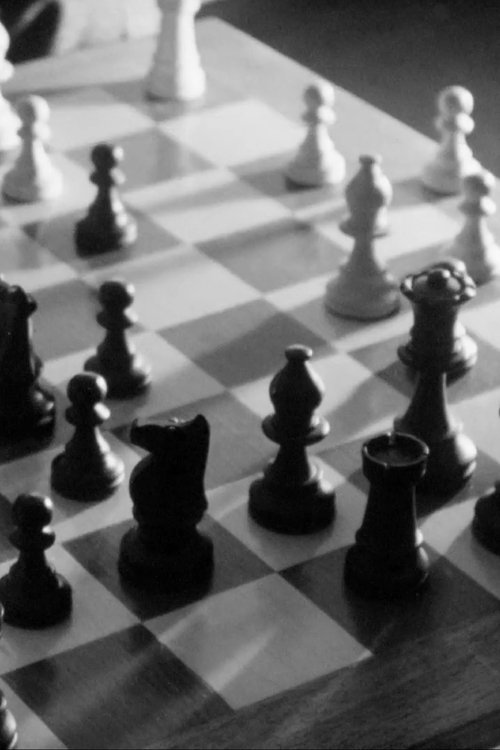
“Breaking in. Patrice Kirchhofer’s Anorexie 4 continues on the path of the narrated narrative (a short story by Chandler) and Décembre 79 on the path of photography. At the end of these two journeys, the film becomes the subject and the trace of the same act of breaking in. In Anorexie 4 the voice shapes the images (the play of chess and of light) and in Décembre 79, shot in the same abandoned mining region, the photos shape the film: chemical deposits, fossils instantaneously striped and imprinted by signs of life and haunted by their ghostly presence. A space of dreary grey, of desolation, which is in a never-ending process of dying because the place, even before being filmed, already went through a vampire-like depletion. In accepting the invitation of these tracking shots of abandoned factories, the spectator is summoned to riverbanks similar to those of Dreyer’s Vampyr and Murnau’s Nosferatu.” Charles TESSON. Festival de Digne. Cahiers du Cinéma n° 314 – Juillet–Août 1980.
A cinema encyclopedia. Yet another history of film.
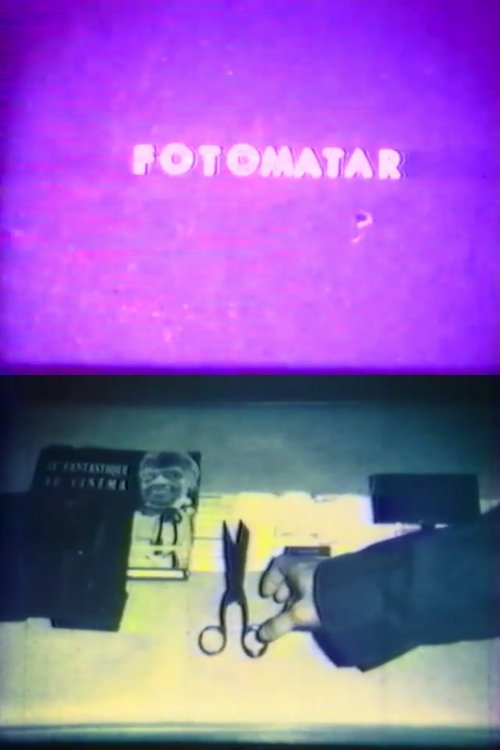
Fotomatar is a french-spanish word more or less made up, which makes us think of a "phot-booth" (photomaton) and hesitate between "mater" ("mater" is a french slang word for "to look at") and matar (which means "to kill" in spanish). This film plays with narrativity. It's also a film about duration, about appearance of color (rather creepy), about suspense - a concerto for polaroïd triggers and horror scream. An experimental thriller.
First film made outside of pure animation, with all that it is possible to put and omit in a first film essay, which contains authoritatively - and without knowing it at the beginning - images made by others long before and not the least, with trifles that make a whole.
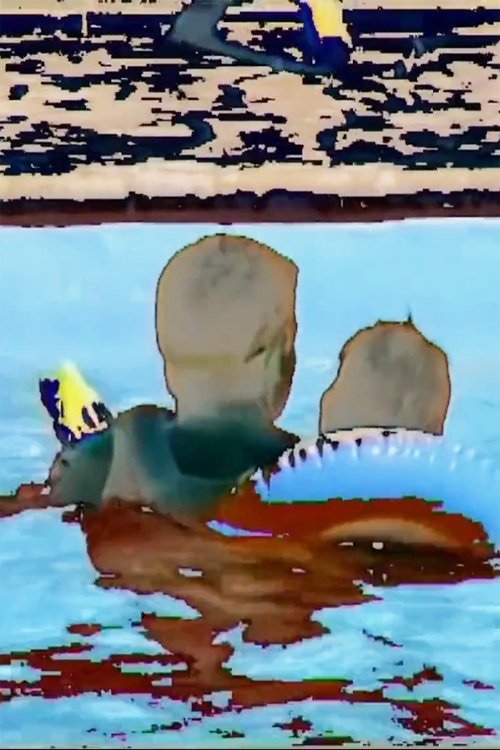
During a vacation, Gilles Deleuze questions the concept of "knowing how to swim" and the relationship with the wave.