Camera
True Law is a Polish legal drama television series directed by Maciej Migas and featuring Agnieszka Dygant as the title character, Agata Przybysz. It premiered on TVN on 4 March 2012. The plot is set in Warsaw.
An online community of amateur sleuths use technology to solve crimes -- and make quirky friends -- in their quest for justice.
An astronaut's return after a 30-year disappearance rekindles a lost love and sparks interest from a corporation determined to learn why he hasn't aged.
No description available.
A group of students of the last year of the local motor technical school is slowly entering adult life. An atmosphere of emptiness and hopelessness reigns around them. Young people have no idea for their future, but they do not want to duplicate the pattern of a poor existence according to which their parents live. One of them, Arek, had a chance to break out of this vicious circle for a moment. The possibility of a brilliant career, fame and a lot of money was opening up to him, the Polish Junior Champion in Kickboxing. Serious heart disease shattered these plans. Arek dreams of renting a flat and freeing himself from his alcoholic father. Together with Lalka, Panicz, Mucha and Renata - his closest friends, he often visits the Kosmos pub, owned by the local mafioso Marsel. One day Marsel offers Arek and Mucha a jump: they are to break into the apartment on the top floor of a skyscraper.
A young married couple, Iza and Slawek, stray from the forest road, with a moment of privacy in mind. In addition, their car breaks down. Slawek stays behind, while Iza decides to go to the bus stop. After a while, 4 men get out of the off-road car. It turns out that they are gangsters who are celebrating the release of one of them from prison. Iza becomes their "plaything". Meanwhile, a concerned Slawek tries to interest the police in his wife's disappearance. The gangsters, along with Iza, go to a summer house located in the so-called "quiet zone" and there they have an alcoholic libation, and Iza has to fight for survival.
A slice of life type movie. A main plot goes around showing common behavior and psychological portraits of inhabitants of a typical little town in Poland.
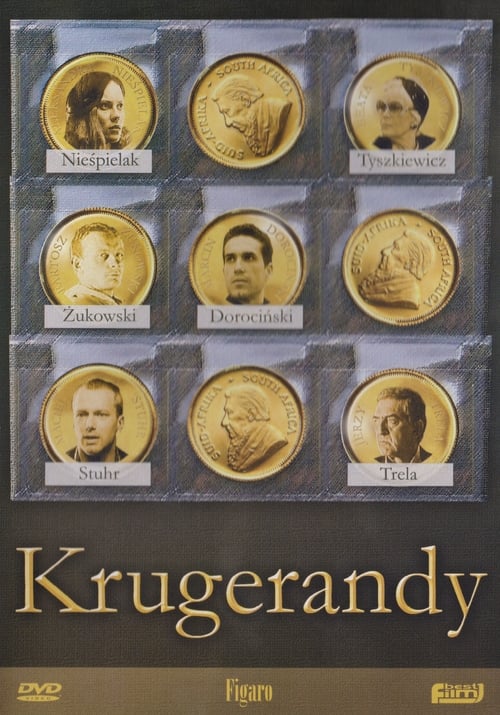
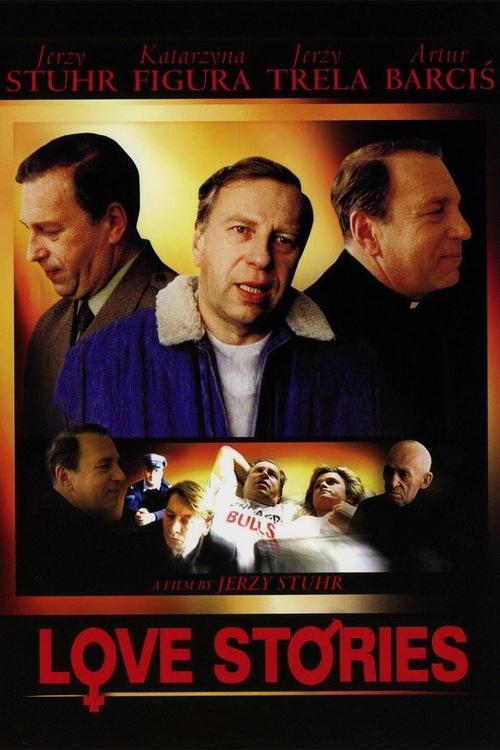
Jerzy Stuhr scripted, directed and plays four roles in this Polish comedy about four men -- an army officer, a college instructor, a priest, and a drug dealer -- and their relationships with four females. An attractive student puts the teacher in an awkward spot when she reveals her love for him. An 11-year-old informs the priest that she's his daughter. The army officer is pleased when confronted by a past lover. The drug dealer, taken prisoner, must decide whether or not to trust his wife with his hidden loot. In the wrap-up, the elderly accountant passes judgment on all four men. Stuhr acted in films by the late Krzysztof Kieslowski, who had some input here by offering advice to Stuhr on this screenplay.
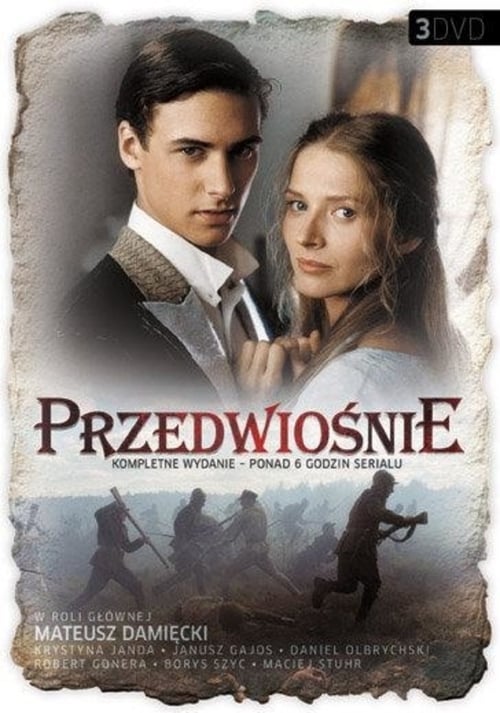
Polish-born Russian subject Cezary Baryka comes of age during a tumultous period of ten years from 1914 to 1924, during which he witnesses revolution, rebirth of Poland, war with the Soviets and communist plots.
Thirty year old Benek experiences a crisis mainly manifested by compulsive suicidal thoughts and dreams about death. Accidentally he meets a beautiful, magnetic and mouthy Lena. He is dazzled from the first moment and his admiration grows when Lena not only understands his suicidal preoccupation but shares a similar one. They embark on a crazy journey during which Benek realizes he is not the only man in Lena's life - in addition, the girl has cancer, and she is not attempting to treat it. Admiration mixes with fear - finally Benek promises to accompany her to the end...
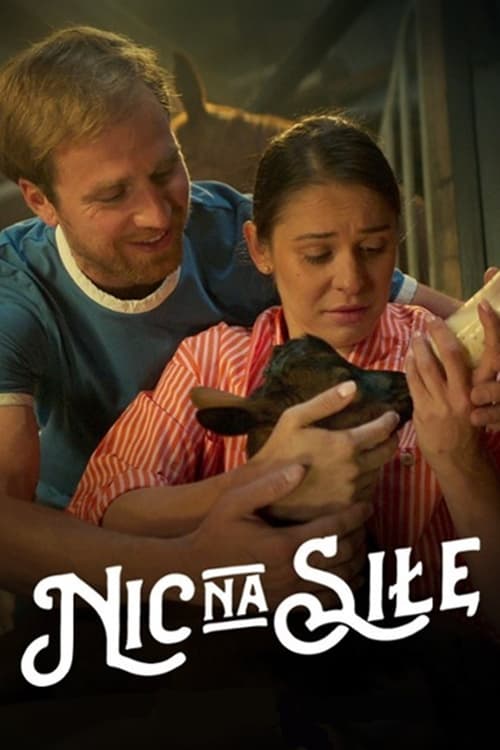
After being tricked into dropping everything to save her grandmother's farm, big-city chef Oliwia falls for a handsome farmer who's hiding a secret.
Using the backdrop of the banality and ordinariness of everyday life in a small provincial town, the film analyses the relationship between two women friends, who struggle to find their way in post-communist Poland. The small events of their lives represent universal feelings of being trapped and lost in a new world, in contrast to the successes of the dark side of democracy - drug dealing, crime and pornography. By its very nature, the film creates a picture of provincial Poland after democracy, but its charm is in the understated relationship between the two friends and the people around them and in the mosaic structure that builds up the film piece by piece.
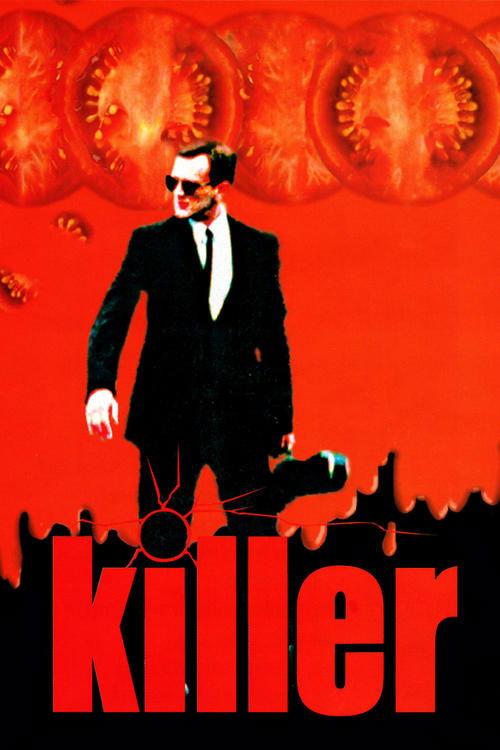
An innocent cab driver is mistaken for a contract killer and imprisoned. Soon, he is sprung by a mob boss who needs a "killer" for a few more jobs.
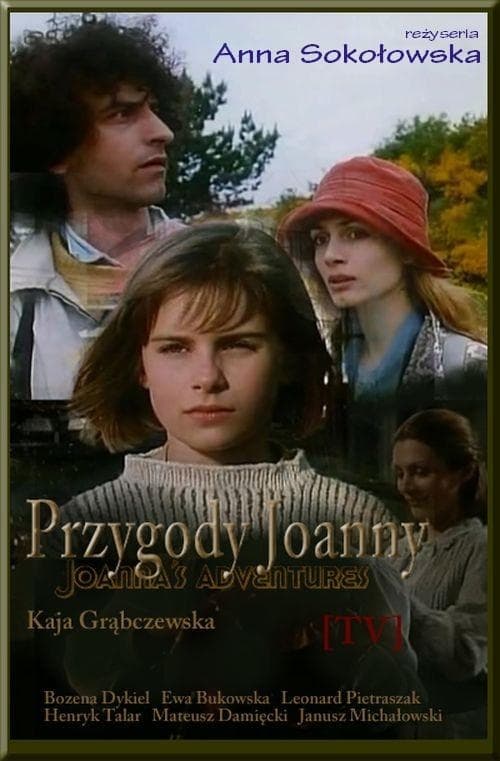
Christmas is coming. Little Ania dreams of a doll she saw in a shop window.
During the German occupation of a small Polish town, Franciszek Kłos, a lowly local policeman, will stop at nothing to become a Volksdeutsche. Eager to prove his loyalty, he zealously carries out the occupiers' orders. What begins as administrative compliance soon escalates when he commits his first murder of a fellow Pole. Condemned to death by the Polish underground, Kłos outwardly shrugs off the sentence while quietly drowning his growing fear in alcohol. As his inhibitions crumble, he descends deeper into violence—participating in the roundup and execution of hidden Jews, and earning a reputation for brutality even among the SS.