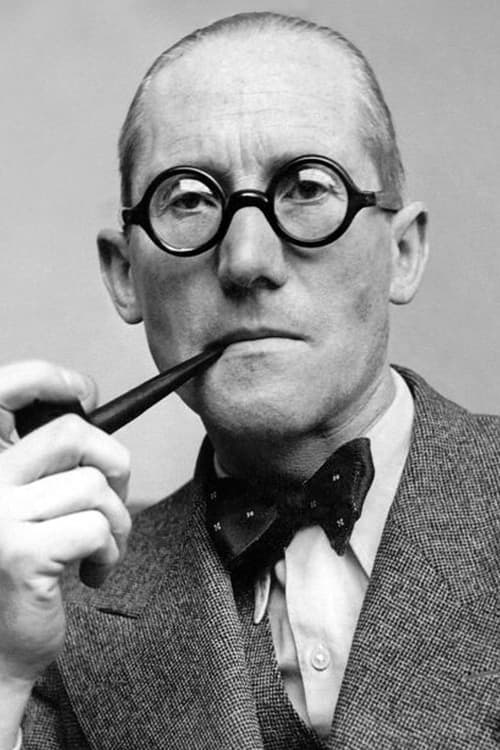
Charles-Édouard Jeanneret-Gris
Acting
Biography
Charles-Édouard Jeanneret-Gris, known as Le Corbusier, is a Swiss architect, town planner, decorator, painter, sculptor, author, naturalized French, born October 6, 1887 in La Chaux-de-Fonds (Switzerland) and died August 27, 1965 in Roquebrune-Cap-Martin (France). He is one of the main representatives of the modern architectural movement. Living in Paris since 1917, he participated in the creation of Esprit Nouveau, an art and architecture magazine in which he took the pseudonym Le Corbusier. Subsequently, Le Corbusier became known through works describing his techniques and his vision of his art: Vers Une Architecture (1923), Urbanisme (1924). He implements his theories in several projects, always combining aesthetics with functionality. From 1928, Le Corbusier took part in the International Congresses of Modern Architecture. In the Charter of Athens, he presents his conceptions of architecture linked to social and daily urban life. Le Corbusier also worked in town planning and design. He is known for being the inventor of the "Habitation Unit", a concept on which he began to work in the 1920s, an expression of theoretical reflection on collective housing. 'The housing unit of conforming size' (name given by Le Corbusier) will only be built during the reconstruction after the Second World War, in five examples, all different, in Marseille, Briey-en-Forêt, Rezé , Firminy and Berlin. Its design envisages in the same building all the collective facilities necessary for life — daycare, laundry, swimming pool, school, shops, library, meeting places. At the beginning of the thirties, he came to Algeria several times. His lectures enthuse and stimulate young architects. His project for Algiers (unfinished) "Project Obus" consisted of winding a building of more than ten kilometers, the roof of which was a highway. Thousands of people would thus face the Mediterranean along the coast, from Bologhine to El-Harrach. In 1933, he discovered the organic architecture of the fortified Ibadi villages of the M’Zab valley in the Algerian Sahara. Le Corbusier will be marked for life "a miracle of sagacity, of learned and beneficial order, a brilliant anatomy". We will find the influence of M'Zab in his work the chapel of Ronchamp (1955), inspired by the mosque of Sidi Brahim in El Atteuf. After the war, he developed his “housing units” and created the Cité Radieuse in Marseille. He integrates Charlotte Perriand and Pierre Jeanneret into his team. A great theoretician, he continued his publications with Modulor (1950), a presentation of modern architecture. The following year, Le Corbusier went to India to create numerous establishments in Chandigarh (the Capitol, the Palace of Justice, the Secretariat and the Palace of Assembly). The work and thoughts of Le Corbusier were particularly influential on post-war generations of architects, profoundly impacting contemporary architecture. The architectural work of Le Corbusier brings together 17 sites (including 10 in France, the others being spread over three continents) was classified as a UNESCO world heritage site on July 17, 2016. A European cultural itinerary entitled “Le Corbusier Destinations: architectural walks » was created in early May 2019.
Known For
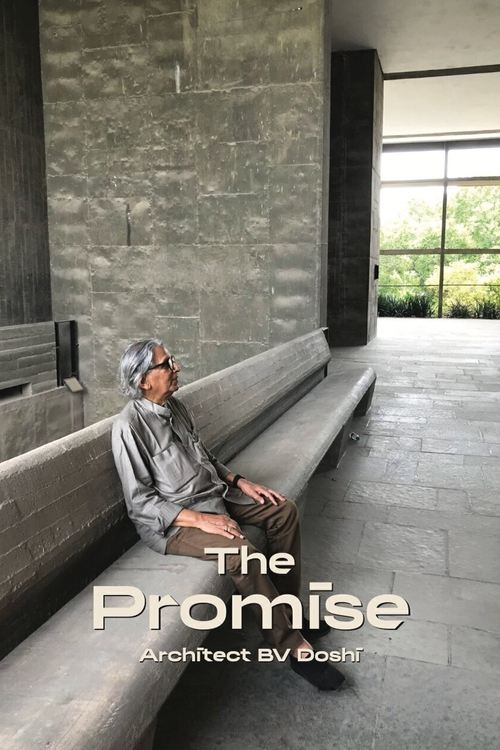
Balkrishna Doshi (1927-2023) is one of India's most influential 20th century architects and recipient of the Pritzker Architecture Prize. Doshi and his practice Vastu-Shilpa has a portfolio spanning over 70 years, including collaborations with both Le Corbusier and Louis Kahn. The film introduces viewers to his famous buildings and offers an exclusive look into his work process. Doshi shares his sources of inspiration and motivation and is also a brilliant storyteller. His presence of mind, his humor and his wisdom create the image of a man from whom we can not only learn to build humanly, but from whom we can learn – to be human.
The Promise, Architect BV Doshi
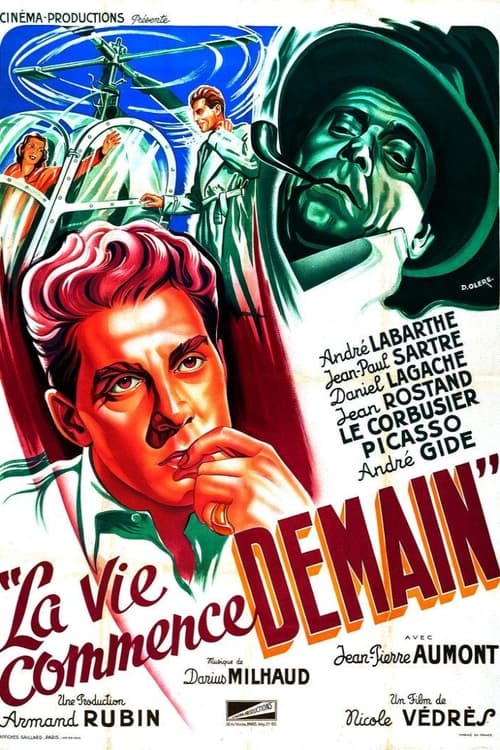
Documentary filmmaker Védrès' first semi-fictional feature was released in France in 1949 as La Vie Commence Demain. The film made it to the U.S. in 1952 as Life Begins Tomorrow. Made in cooperation with UNESCO, the film speculates on the future of mankind after the advent of Atomic Energy. Many prominent French artists and intellects contribute to the narration: Jean-Pierre Aumont plays The Man of Today, Andre Labarthe is the Man of Tomorrow, and Jean-Paul Sartre, Daniel Agache, Jean Rostand, Le Corbusier, Pablo Picasso and Andre Gide are respectively seen as "The Existentialist," "The Psychiatrist,' "The Biologist," "The Architect," "The Artist" and "The Author". Film clips of hospitals, schoolrooms, scientific laboratories, and even nightclubs are woven into Védrès' fascinating tapestry.
Life Begins Tomorrow
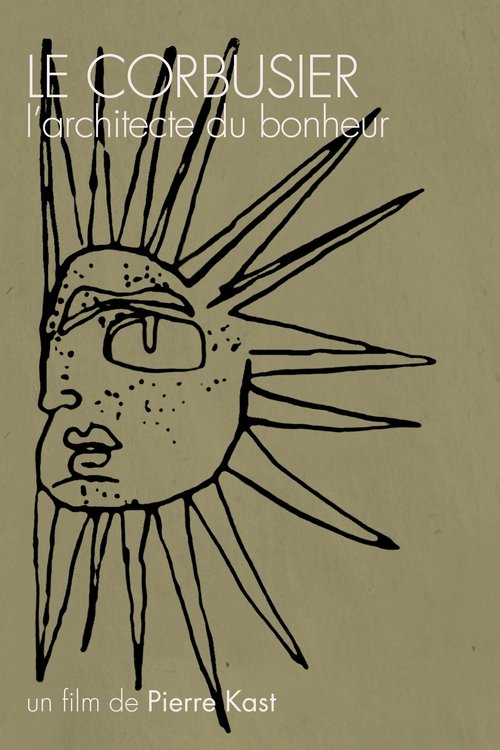
Documentary devoted to the architectural and urban planning designs of Le Corbusier. The architect supports his in-depth reflection on the city and its necessary adaptation to modern life with plans, drawings and images, particularly Paris, whose revolutionary development dreamed of by Le Corbusier is exhibited here. Its first projects will remain at the stage of a model: the modernization plan for the city of Algiers. Some will be created by other architects: Ministry of Education in Rio de Janeiro, UN Palace in New York. From the post-war period in less than 10 years, Le Corbusier created large housing units in Marseille, Nantes, a chapel in Ronchamps, a factory in Saint-Dié, a town in Chandigarh in India. Through diagrams, the architect presents his theory of the "radiant city", the mathematical key modulor of his work as well as his project for reorganizing the countryside, industrial and urban cities into a grouping around a cooperative system.
Le Corbusier, l'architecte du bonheur
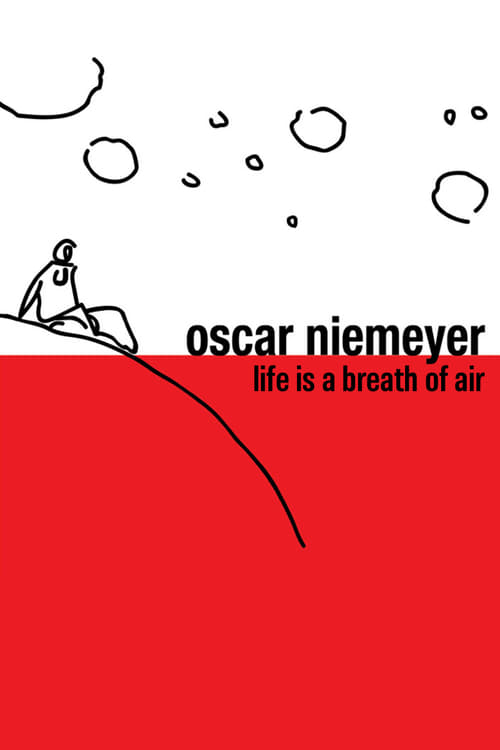
A documentary made to coincide with Niemeyer's 100th birthday. The renowned architect talks about his long life, his inspirations, and his aspirations towards a just Brazil, and the ways he tried to help that along in his spectacular and beautiful buildings.
Oscar Niemeyer: Life is a Breath of Air
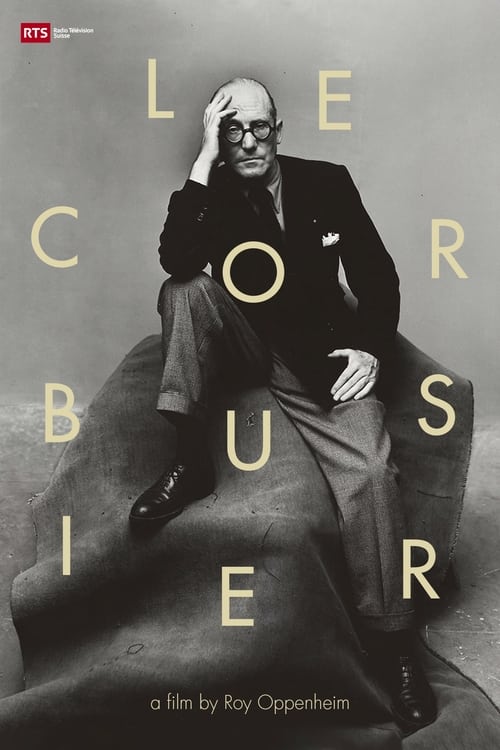
Making a documentary on Le Corbusier is not easy, because he is undoubtedly the architect most familiar to the general public but also the most unknown. If most people know his great achievements, such as the Cité radieuse of Marseille, the pavilions of the Cité universitaire de Paris or the Tourettes convent, many are unaware of his works in Moscow, Rio de Janeiro or Chandigarh. Roy Oppenheim pays a vibrant tribute to Corbusier, dismissing the criticisms and darker facets of the character. It presents the career of this pioneering architect, as well as his thinking, the essential principle of which was aimed at the development of human beings and the balance of society. Light, space and greenery are integrated into his large futuristic cities, because according to him the eyes of the inhabitants should be drawn into the distance and not into their neighbor's bathroom.
Le Corbusier
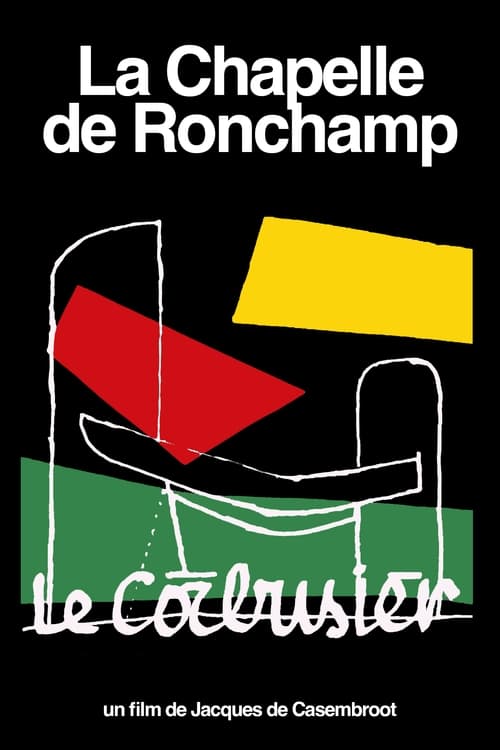
Harmonious, inspired by nature, moving, luminous... there is no shortage of words to describe La Chapelle Notre-Dame du Haut in Rochamp (France) and its curves. To create this Catholic place, at the beginning of the 1950s, Le Corbusier was inspired by the mosque of the Algerian Sahara of Sidi Brahim, by a crab shell for the shapes of the roof, and by the nearby Vosges valleys. .. Multiple influences for a building full of contradictions, a mixture of round and square lines, slender or squat depending on the angle of view, apparently vast from the outside, but small and intimate from the threshold crossed. Both a place of contemplation and major architectural innovation, the Chapelle de Ronchamp has been listed as a Historic Monument since 1965. Labeled “Heritage of the 20th century” in 1999, it entered the UNESCO World Heritage list in 2016 with 16 others works of Le Corbusier.
La Chapelle de Ronchamp
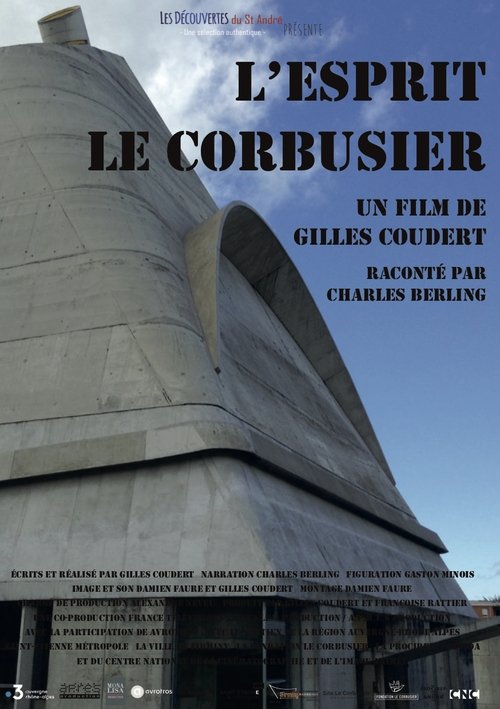
No description available.
L'Esprit Le Corbusier

Produced for the National Federation of Building Workers Ciné-Liberté, a Popular Front organization intended to counteract capitalist interests in the film industry, Epstein’s union documentary examines building policy from the perspective of ordinary workers and notable architects. In addition to touring the Cathedral of Chartres and the Paris Exposition of 1937, the film features rare interviews with Le Corbusier (at his drawing board, no less) and Auguste Perret.
The Builders
Poème Électronique is an 8-minute piece of electronic music by composer Edgard Varèse, written for the Philips Pavilion at the 1958 Brussels World’s Fair. The Philips corporation commissioned Le Corbusier to design the pavilion, which was intended as a showcase of their engineering progress. The pavilion was shaped like a stomach, with a narrow entrance and exit on either side of a large central space. As the audience entered and exited the pavilion, the electronic composition Concret PH by Iannis Xenakis (who also acted as Le Corbusier's architectural assistant for the pavilion's design) was heard. Poème électronique was synchronized to a film of black and white photographs selected by Le Corbusier which touched on vague themes of human existence.
Electronic Poem
After filming the construction site of the Berlitz Palace (2nd), Pierre Chenal shows us in contrast other contemporary architectural achievements which, using the same technical processes, do not sacrifice the structure of iron and concrete for decoration. A documentary to the glory of the modern designs of Mallet-Stevens and Le Corbusier.
Bâtir
Regarding Le Corbusier: the man and his architecture
L'Architecture d'Aujourd'hui
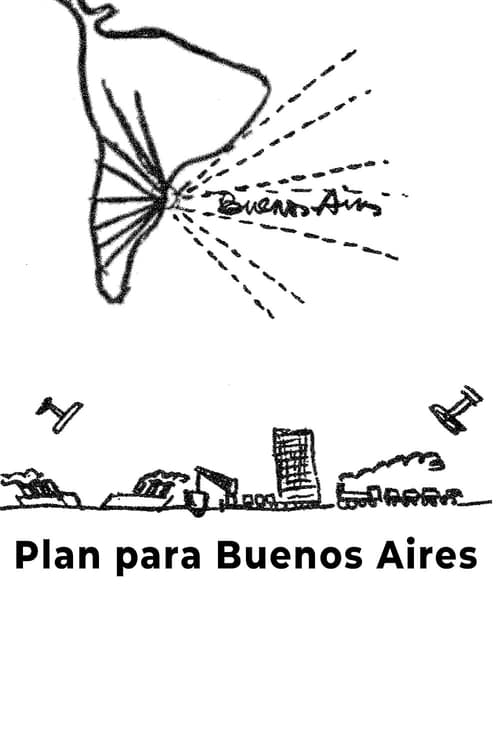
In 1929, Le Corbusier travels to Buenos Aires to give a series of lectures on Modern Architecture. During his visit, he proposed an urban plan for the city. Since his trip and for more than twenty years, he would obsessively develop his proposal, trying by all possible means to make the plan for Buenos Aires a reality.
Plan for Buenos Aires
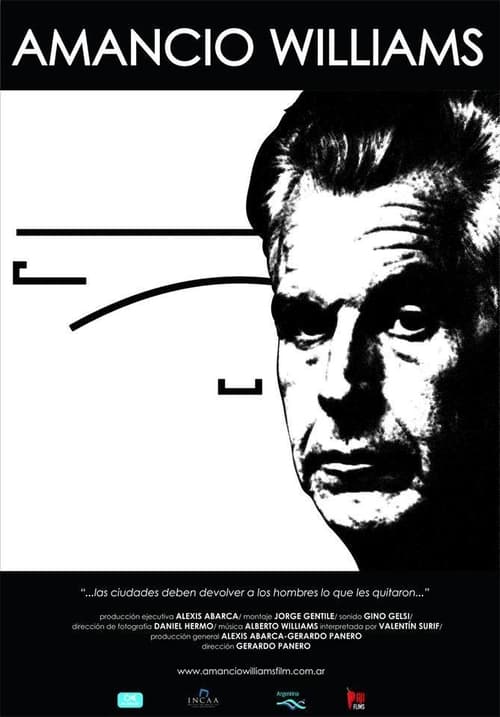
A biography documentary of the Argentine modernist architect Amancio Williams.
Amancio Williams
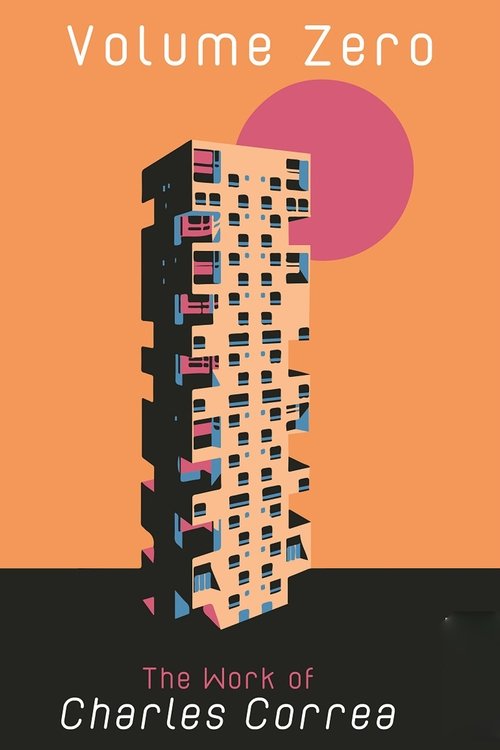
VOLUME ZERO is an hour-long documentary on the work and the ideas of Charles Correa, one of the world’s most important architects. It deals with his childhood, architectural training, formative years and the paradigm underlying his large and complex oeuvre spanning over five decades – as well as his pivotal role in addressing issues of urbanization in the Developing World. It uses first person narration by the filmmaker, combined with extended excerpts of interviews with Correa, live action, stills, diagrams, animation and archival footage to open up the thought processes that generate architectural space and form.
The Volume Zero: The Work of Charles Correa
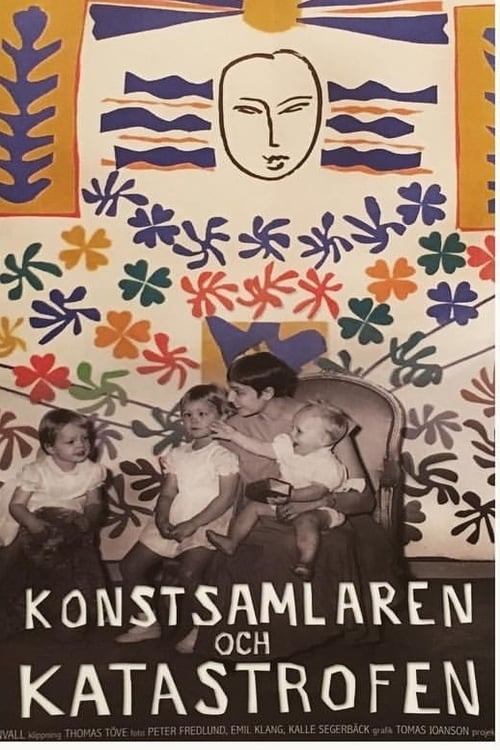
"The Art-collector and the catastrophe" - The untold story of how Sweden lost a world class art collection. Private art collector Theodor "Teto" Ahrenberg obtained art directly by artists like Picasso, Chagall and Matisse. He became friends with the international artists elite. And therefore developed a conflict with the Swedish art establishment. The Director of the Modern museum Pontus Hultén became his nemesis. Revenge to Theodor Ahrenberg would be creating his own art museum of Stockholm. Designed by world-famous architect Le Corbusier.
Konstsamlaren och katastrofen

This documentary explores Perriand's development from her own perspective, from the 1930s, when she made common cause with Le Corbusier and avant-garde art, to her discovery of Japan, where she was inspired to incorporate aspects of Japanese tradition into her practice of Modernism.