Acting
Tatort is a long-running German/Austrian/Swiss crime television series set in various parts of these countries. The show is broadcast on the channels of ARD in Germany, ORF in Austria and SF1 in Switzerland.
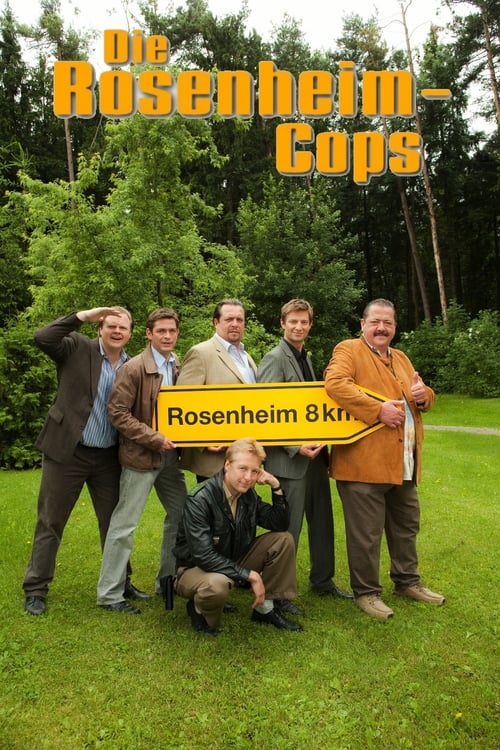
A team of inspectors investigates murders in and around the small Upper Bavarian town of Rosenheim, and they still have plenty of time to see idyllic landscapes and luxurious pre-alpine villas and enjoy sumptuous Bavarian fare with beer.
A police department, lead by an older, experienced detective solve crimes together.
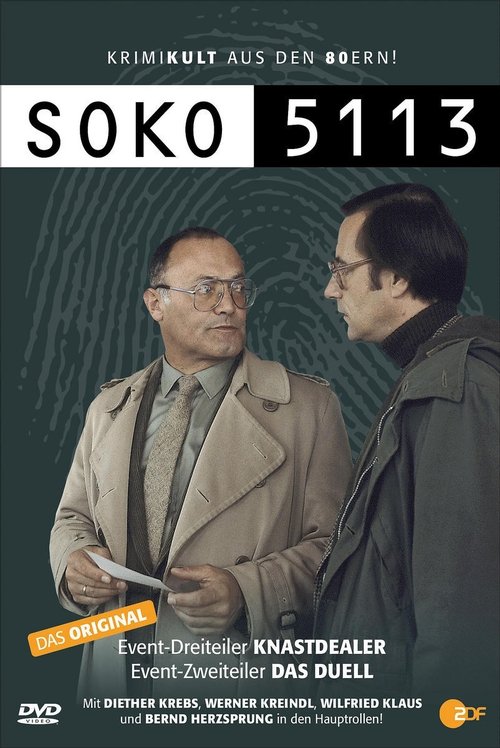
SOKO 5113 is a long-running German police procedural television series. It was first aired in 1978 on 2 January. SOKO is an abbreviation of the term "Sonderkommission" in German.
Polizeiruf 110 is a long-running German language detective television series. The first episode was broadcast 27 June 1971 in the German Democratic Republic, and after the dissolution of Fernsehen der DDR the series was picked up by ARD. It was originally created as a counterpart to the West German series Tatort, and quickly became a public favorite.
Tigerenten Club is a German children's television programme. The programme involves a mix of games, quizzes, cartoons and outside reports from the presenters and children, with the aim to educate and entertain. It is produced by SWR in co-operation with other regional broadcasters, and is broadcast on ARD and KiKa. The logo and the name of the programme is based upon the Tigerente or 'Tigerduck', created by German cartoonist Janosch.
Marienhof is a German soap opera, first shown on October 1, 1992 on German TV channel, Das Erste. It started as a weekly series, before becoming a daily program on January 2, 1995. The show was canceled in February 2011 and aired its last episode on June 15, 2011. In the 90s, the Marienhof became a huge success in Finland and remained a fan favorite until it was canceled to license problems. Over the years, the show became known for tackling several social issues, such as homosexuality, homelessness, private bankruptcy, rape, drug abuse, AIDS, child abuse, suicide, cancer, adultery and murder. The show focuses on the everyday life of the residents of the Marienhof, a fictional suburb in Cologne.
No description available.
München 7 is a German police drama series from Franz Xaver Bogner. The show is set in Munich, Germany and features the fictive police station "München 7" or "Munich 7". The main characters are the "Sheriff from Marienplatz" Xaver Bartl and his new colleague Felix Kandler. München 7 is part of a series of commonly branded shows with similar themes called "Heiter bis tödlich".
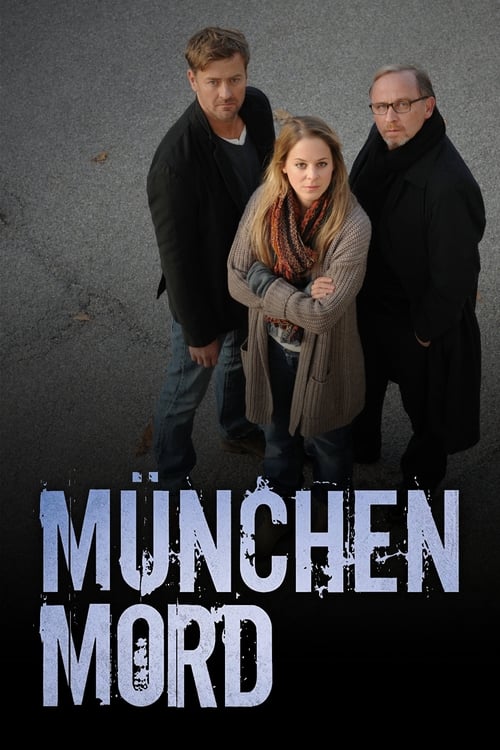
Chief Inspector Schaller and his team solve the most unusual cases in beautiful Munich with wit and charm.
Andreas Kaiser returns to his Bavarian hometown of Schexing after around 15 years. The mayoral elections are coming up, but there is no one who wants to take over the office. Municipal treasurer Nelz and town hall manager Rosi Specht see Andreas as the ideal candidate. Inexperienced as he is, they believe they have an easy game with him. A mistake, as it soon turns out. No less stubborn than his father, farmer Ludwig Kaiser, Andreas throws himself into his work, develops unusual ideas and slowly but surely begins to turn the idyllic village upside down. Which doesn't meet with everyone's approval.
After his wife is murdered on their Inca Trail honeymoon, a man returns to Munich seeking justice but becomes the prime suspect in a motive-less investigation.
What if nobody wants to believe you? Hanni, a farmer's wife and mother of three, is worried about her daughter Magdalena. The girl is smaller than the others, more sensitive, vomits more often and has increasingly poor eyesight. The doctors, the teacher and the family all say it must be her psyche. Glasses with normal lenses will certainly help. But as a mother, Hanni senses that a new pair of glasses won't change anything and that there is more at stake. Even plagued by an unheard-of memory from her youth, she begins to fight unwaveringly and unstoppably for her daughter's suffering, not only putting her family's happiness and her livelihood at risk, but also not shying away from the Bavarian justice system in the end.
Full-time mom Marie has everything under control and always gives a thousand percent: raising the children, running the household, scheduling appointments with her husband - not really a problem for the woman in her late thirties if it weren't for her excessive demands on herself. Advertising executive Nela, on the other hand, is trying to reconcile the needs of her son Leo with her own career restart, while her husband wants a second child. And single woman Tine is trying to reclaim her life as a young twenty-something, despite having a young daughter. Something is slowly brewing on the playground, the battlefield of the mothers, where they try to outdo each other with home-baked spelt cookies. How far will the mothers go to hold on to their own idea of happiness? Or does life have surprising solutions in store...?
Charlotte Kler has enjoyed a privileged life alongside her husband, star conductor Walter Kler, but has also jetted restlessly around the world with him. She is delighted that this is now to come to an end and the family will be reunited in Munich. But things turn out differently than she thinks: her husband secretly makes plans to take a job in New York, her daughter reproaches her and her granddaughter is not interested in her. Not a good start for Charlotte. But a chance acquaintance with a former lifeguard brings her back to what really matters in life.
Niedernussdorf is a small, tranquil village in Lower Bavaria, not far from Straubing. There has never been a murder here, not as long as the people of Niedernussdorf and their police chief Gisela Wegmeyer can remember. Suddenly, a severed male finger appears in the middle of the idyll. Florian Lederer, an ambitious young chief inspector from the Straubing police department, arrives on the scene. Lederer proves that the finger, which was carried through the village by a rough-haired dachshund, was originally bitten off by a pig. He assumes that an old man in Niedernussdorf was fed to pigs. Lederer is determined to solve the murder, while Gisela firmly believes it was an accident...
The subject of male prostitution gets a distinctly zany and offbeat twist in Stellungswechsel (AKA Special Escort), Maggie Peren's tale of five male underdogs who promulgate themselves as female escorts in the city of Munich. Of that group, we meet policeman Gy, in hot water with his insurance company and enduring the vicissitudes of an on-again, off-again romance with comely Daphne; twentysomething Lasse, who lives with his mom and is pathetically henpecked by her; Giselher, a chronically unemployed former manager; Frank, a philologist who spends his days as a house husband; and Olli, a deli proprietor whose business is rapidly going under. These five conjure up the wild idea of charging for liaisons with emotionally needy women, but the scheme doesn't exactly go as planned - as none can even begin to anticipate the eccentricities or oddities of the female clients who turn up in response to their offer.