Writing
No description available.
János Kovácsi's film is an ironic portrayal of a day in the life of a beautiful German woman in her prime who arrives at Lake Balaton to take charge of her inheritance, a small house with a garden full of childhood memories.
In this somewhat uneven political satire, good revolutionaries have overthrown a totalitarian state riddled with corruption on all levels when a truly naive bureaucrat (Boguslaw Linda) is placed on a jury that will judge the results of a history competition. Once on the jury, the young bureaucrat starts looking into the past himself and gets embroiled in a labyrinth. The past may well be unclear because recent leaders have certain facts that need to be kept buried. Filmmaker Janos Kovacsi borrows characteristics from revolutions in the Eastern European block (1950s-1980s) to create this post-revolutionary society with an idealist commander (Ferenc Zenthe) meant to lead them. A clue as to what happens next lies in the opening scene -- the funeral of the commander who has given his life for his cause. Ironically, Kovacsi undoubtedly faced censorship on this film. That would not only account for some uneven narration, but it adds a dimension of reality to the topic at hand.
Gruber is a normal 16-year-old growing up in Budapest in 1962, but he has a problem -- how does he get to know the opposite sex? At the Sunday afternoon dance classes the young "ladies and gentlemen" hold each other while dancing, and that makes the lessons worth something. Otherwise, the pianist's attention wanders and the orchestra does not exactly play with a single-minded dedication. In fact, everybody seems to have other things on their minds, except for the enthusiastic dance instructor and his ever-smiling assistant.
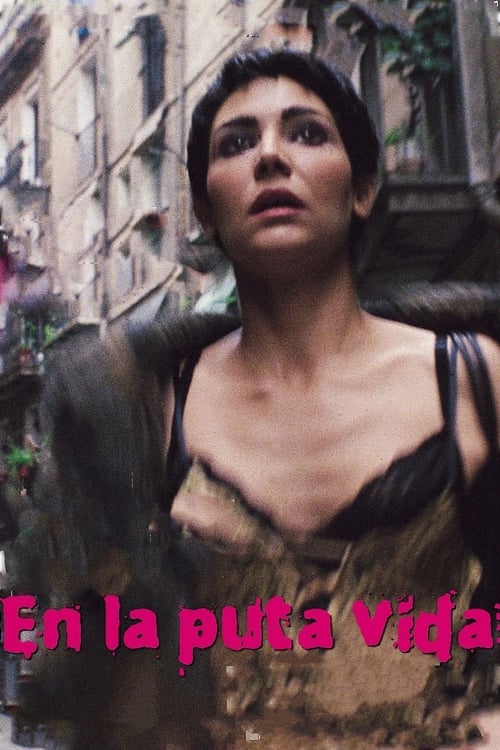
Montevideo, Uruguay. In this comedic drama, Elisa, 27, dreams of opening her own hairdressing salon in one of the rich districts of the Uruguayan capital. A bit of a rebel, one day Elisa moves out of her mother's house with her two children and breaks up with Garcia, her boss and lover who has infuriated her by not wanting to get married. So, in the space of twenty-four hours, Elisa finds herself without a roof over her head, without a man, without a job and without money. Her best friend Loulou finds her a job - in the brothel run by Dona Jacqueline. And without really being aware of it, Elisa slides into prostitution, which leads her to Barcelona. She falls in love, she is exploited, she gets involved in transvestite gang wars, and meanwhile just dreams of earning enough money for her little beauty salon back home.
Aurelio Saravia is a powerful politician who holds office in Uruguay in the mid-1960's. When Aurelio's mistress kills herself, he adopts their illegitimate daughter Masangeles despite the stern objections of his wife Aurora. Masangeles finds herself growing up in a home ruled by a corrupt and self-centered tyrant and his manic colleagues while Uruguay teeters on the brink of civil war as bands of revolutionaries battle government militias. When she turns fourteen, Masangeles discovers a secret passageway in their home that leads to sanctuary in a nearby church which also serves as a storehouse for guns and ill-gotten cash. Teenage Masangeles falls in love with Santiago, her stepbrother who has joined the rebels fighting against the state, and she persuades him to take her virginity.
A mother struggles to raise her daughter all by herself, and due to the economic difficulties decides to rob multiple finance houses, fooling her victims with the handle of her umbrella that she make them think is a real revolver.