Emmanuel Lefrant
Directing
Known For
No description available.
Paroles d'artistes
A film of non-Euclidean and symbolically authentic adventures
I Don't Think I Can See an Island

Performance for 4 mobile 16mm projectors, a triple screen, and a spatialized sound diffusion. Parallax – an effect by which the position of an object seems to change when it is looked at from different positions. Working on the concept of geometry and space in the cinema, from the planar space of the photogram to the stage of its representation, this project reveals a multi-faceted object. The different surfaces that circumscribe the screen, the movement of projectors on rails, the changes in projection angles and the simultaneous visions. Parallaxe emphasizes the transport of images and their ability to modify the perception that we have on a same reality. Associated with Michalis Moschoutis' direct sounding device, Nominoë's graphic images are deconstructed and their virtualities increased tenfold. Spatial sound diffusion immerses the audience in this multidimensional device, at once a movie set, movie theater and film.
Parallaxe
Through a series of painstaking material interventions, Lefrant constructs a landscape where human dominance over the environment - defined as the age of the Anthropocene - is starkly visualised.
The Devastated Land
«Whilst the greater number of our nocturnal visions are perhaps no more than faint and fantastic reflections of our waking experiences, there are still a certain remainder whose immundane and ethereal character permit of no ordinary interpretation, and whose vaguely exciting and disquieting effect suggests possible minute glimpses into a sphere of mental existence no less important than physical life, yet separated from that life by an all but impassable barrier.» H.P. Lovecraft, Beyond the Wall of Sleep OVERALL continues the project which began as ALL OVER. The creative process has become inversed since the primary material is now oil paint. The original film was painted with J. Pollock's dripping technique on a transparent film strip and then all colors were inversed in lab with a contact printer. The soundtrack was made using a signal processing environment called «Pure Data», calculating in real time the color density of the image.
Overall
The revelation of an image, which progresses towards the heart of matter, captured in an incoercible movement: that of a dystopia in motion. A primitive entity on the brink of cataclysm, an infinite headlong rush, until all forms and figures are completely dissolved. What dark forest have we wandered into?
Per una selva oscura
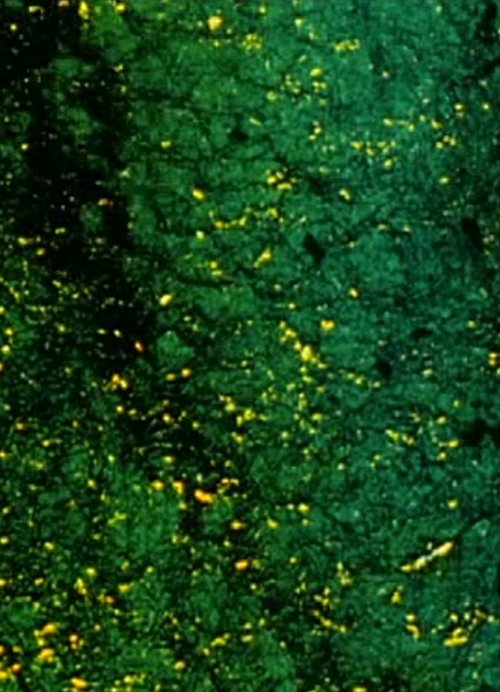
Super 8mm / color / sound
Underground
This is a deserted black space that one tries to fill in. To the point of becoming totally submerged in color. One explores the chromatic circle, by turning around it meticulously. And by vertical unreeling, a process specific to cinema.
Blitz
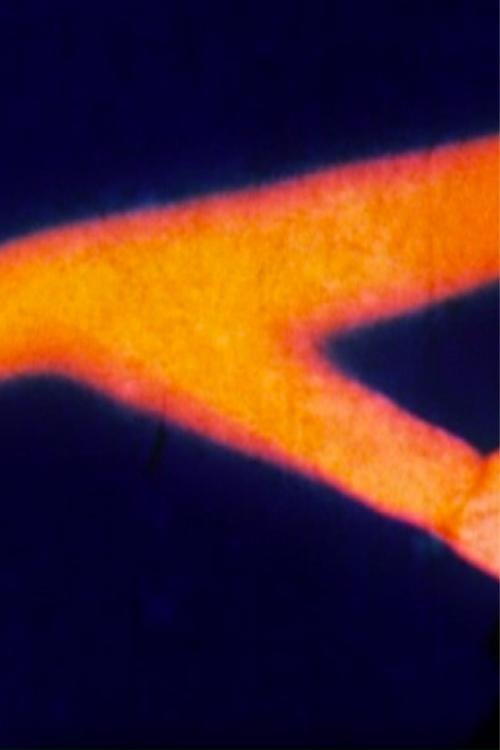
STILL FRAMES is a laboratory film, conceived while I was finishing SARABAN. Indeed the two films were produced from the same images. The aim was not only to prove that the same source of image can generate two different films but also to highlight the incidence of light on color.
Still Frames
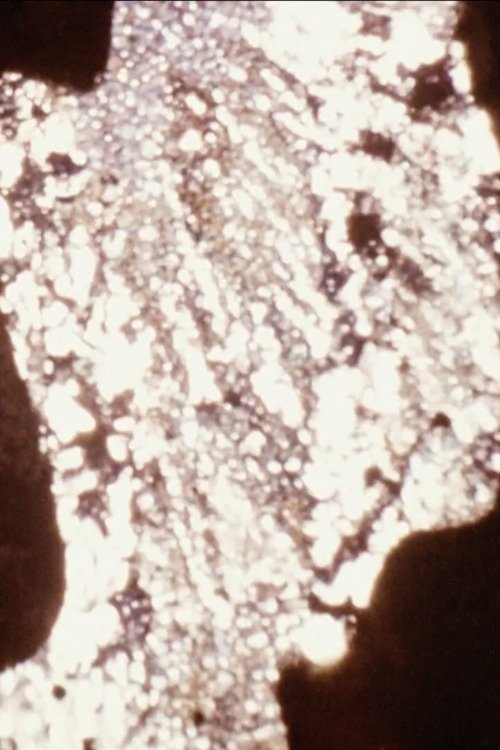
Director Emmanuel Lefrant explores the mechanisms of memory by entangling the image of a landscape in Africa with a film strip that had been buried and subjected to erosion in the same place the sequence was shot. With these landscapes in fusion, invisible takes shape with the visible, where the first dissolves itself into the second and vice versa.
The Visible and Invisible of a Body Under Tension
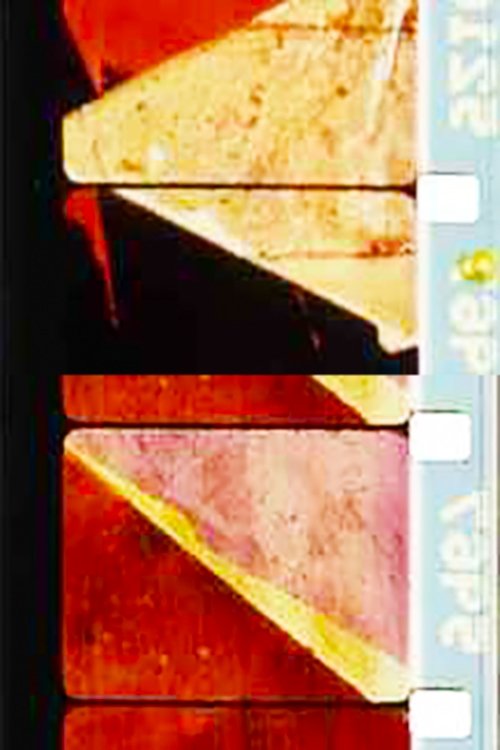
Work on speed, rhythms, flickers and color, whose «main tendency should be to serve Expression as fully as possible». The idea for this film was born during experiments on the film strip, with the Nominoë collective.
Saraban
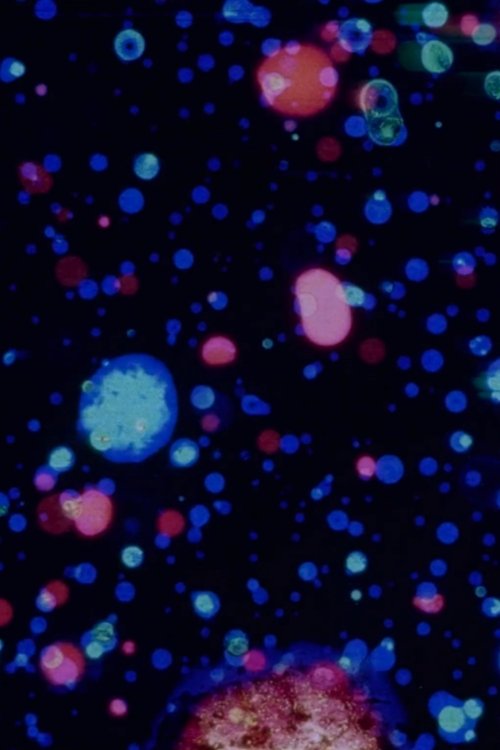
Prior to any other treatment, the emulsion is covered with layers of chemical products, resulting in a black filmstrip. "The black leader can be anticipated as Malevitch's white painting: a space in which everything is possible, the space of absolute potentiality and virtuality." This is because cinema, contrary to painting, gives light to its own image, via the lamp projector. This is not about covering a blank surface with forms and colors since they already exist on the black film. Whilst ALL OVER is a film made without "instrumentation" (like a camera), it also differs from direct films in that the film remains untouched by any tool (not even the hand). As in dripping, materials and color are spontaneously laid down on the film in semi-controlled gestures, which create a shower of colored dots. The soundtrack functions according to the same principle: the sound, in all its expressions, is formed using one single formal element.