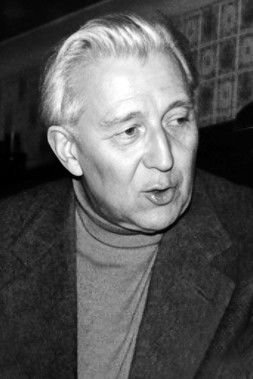
Georges Régnier
Directing
Biography
Georges Régnier, born April 17, 1913, in the 14th arrondissement of Paris, where he died on January 17, 1992, was a French film director, screenwriter, and cinematographer. A discreet yet committed figure, he belonged to that generation of post-war filmmakers for whom cinema was both an art form and a tool for social intervention. Originally from the Paris region, Georges Régnier trained in the visual arts before specializing in directing and screenwriting. This dual expertise as a screenwriter and cinematographer profoundly influenced his style, characterized by meticulous attention to framing and lighting, often serving subjects rooted in the social realities of his time. His career truly took off in the late 1940s with an emblematic short film, *Les Paysans Noirs* (1948), which denounced the abuses and injustices suffered by colonized populations in Ivory Coast. This film, often cited as his initial breakthrough, revealed a filmmaker sensitive to political and social issues, ready to use the documentary or semi-documentary form to offer a critical perspective on the world. At the same time, Georges Régnier directed other short fiction films, such as *Monsieur Badin* (1947), which demonstrate his ability to move seamlessly between genres, from a polemical tone to a more narrative and literary style. He nevertheless remains associated with politically engaged cinema, strongly influenced by the post-war period and the debates surrounding colonization, justice, and human dignity. While he may not have the renown of the great names in French cinema, his filmography and autobiography bear witness to the journey of a filmmaker conscious of his time, who sought to reconcile formal rigor with intellectual responsibility. The Nightingale of Kabylia (1962) is a perfect example. Among Georges Régnier's most significant films, made as a continuation of his interest in colonial and post-colonial realities in North Africa, the film portrays Kabylia through a story that blends documentary observation with a humanist perspective, focusing on the daily life, culture, and dignity of its inhabitants rather than simply offering an exotic narrative. Régnier conceived this project to give voice and cinematic visibility to a region often caricatured, and to implicitly examine the complex relationship between France and Algeria. With The Nightingale of Kabylia, he continued his project of socially engaged cinema, seeking to transcend colonial clichés and provoke reflection on injustice, memory, and the recognition of peoples. The recognition of his work led him to reflect on his own career and his conception of the filmmaker's craft, a reflection he condensed into an autobiographical book published in 1993 after his death in 1992, A Head Full of Images. In this work, he revisits his experience as a film professional, the development of his vision, and how images—filmed, dreamed, or remembered—structure a life devoted to the screen. Georges Régnier died in Paris on January 17, 1992, at the age of 78.
Known For
No description available.
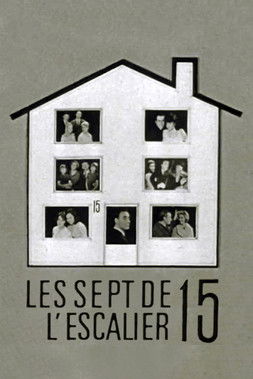
Les Sept de l'escalier 15
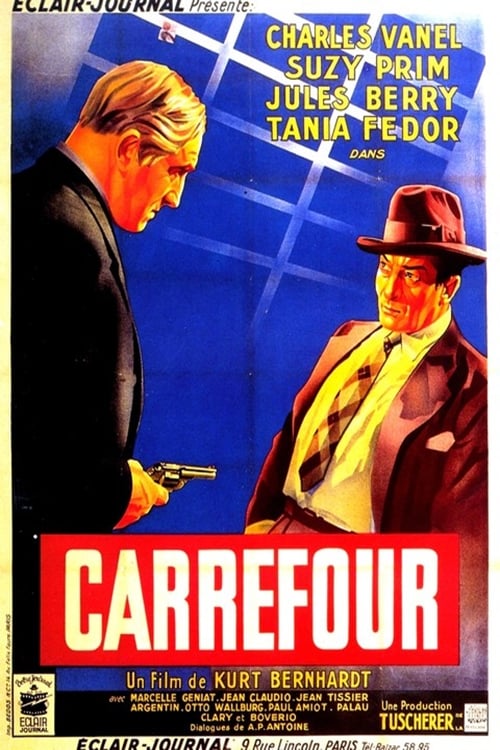
A wealthy industrialist, Roger de Vetheuil, married, feels assured of aging in peace. Then appears a blackmailer who accuses him of being a usurper, actually called Jean Pelletier, a mobster well known to police. Vetheuil, judging himself slandered, refuses to listen to his tormentor and goes to the police. The man speaks. The scandal is public soon ...
Crossroads
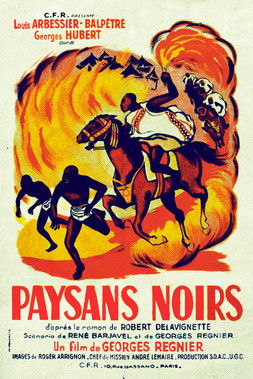
In Ivory Coast, an administrator is appointed to replace a colleague who has just been assassinated. The newly appointed administrator, Guillon, clashes with a powerful elite that extorts money from farmers who refuse to cultivate the land. A peanut processing plant, nearing completion, unfolds against a backdrop of ethnic rivalries and resistance from the rural population to the changes imposed by the colonial regime, which is striving to modernize traditional agriculture to demand increased production. Aided by a doctor and an engineer, Guillon succeeds in restoring the confidence of the Black farmers after thwarting the schemes of those who dared to stand in his way.
Paysans Noirs
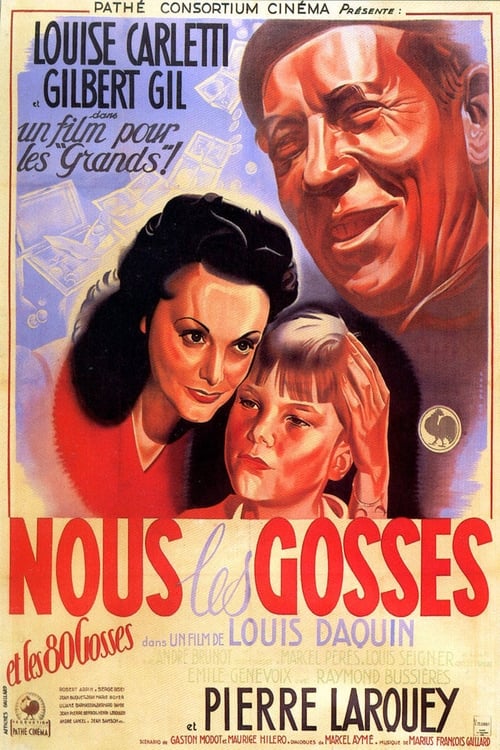
A student from an elementary school accidentally breaks the glass roof of his school. His comrades decide to support it by working during the summer holidays in order to pay for reconstruction.
Portrait of Innocence
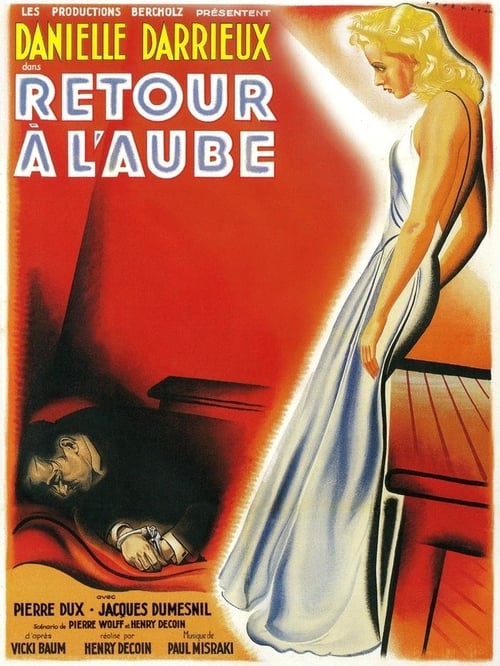
Married to Karl Ammer, the station master of Thaya, a Hungarian quiet village, Anita is a pretty young peasant who feels deeply bored. She dreams of another life while watching the daily express trains to Budapest. An incident will force her to leave her province: she has to go to Budapest to attend the funeral of an aunt and receive a share of the inheritance. After completing the formalities, Anita misses the train to go back home and then she finds herself alone in the capital.
Return at Dawn
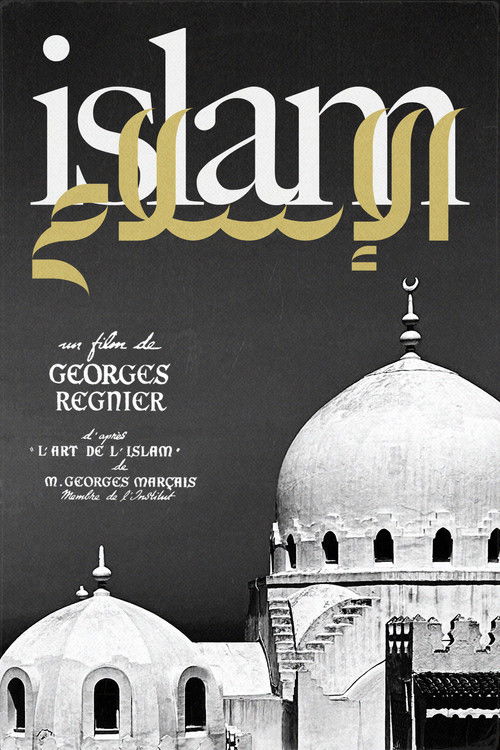
"Islam" by Georges Régnier (1949) is a documentary about Islamic art in Algeria, Tunisia, Morocco, and Spain. The documentary received a special mention at the Venice Film Festival in 1949. Georges Régnier, a French documentary filmmaker active in the post-war period, was interested in North African cultures and colonial issues. In this film, he traces the history of Islam and its architectural art across these regions, and describes the expansion of Islam from Arabia to the Maghreb and Andalusia, highlighting mosques, minarets, and palaces such as those in Kairouan, Algiers, and Marrakech, all accompanied by the sounds of the Arabic call to prayer.
Islam
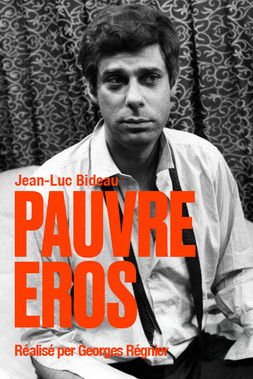
A man decides to use the classifieds to replace his mistress who left him.
Pauvre Eros
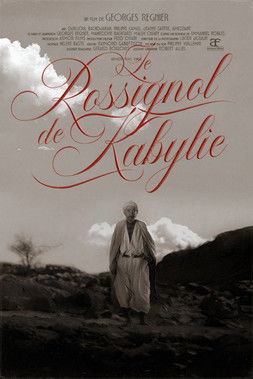
This story, set against the backdrop of the Algerian War, could be an oriental tale. The "Nightingale of Kabylia" is the nickname given to old Ahieddine, a poet who lives in a mountain village. Ahieddine receives a visit from a young French officer. What does the officer want? Information, no doubt. The lieutenant, who once studied the Kabyle language, simply wants to visit a renowned poet, speak with him, and hear him recite a poem. Such a visit will be difficult to justify to the men of the maquis. That very evening, Ahieddine is summoned to appear before a tribunal of maquisards. He is condemned to death for treason. Does he have a wish before he dies? Yes, to compose one last poem, the poem of his death. He improvises a poem; the men listen, moved by the words of their own language, which express the poetry of their people. They pardon old Ahieddine and grant him his freedom. Destiny, however, awaited at the bend of a mountain path, the "Nightingale of Kabylia".
The Nightingale of Kabylia
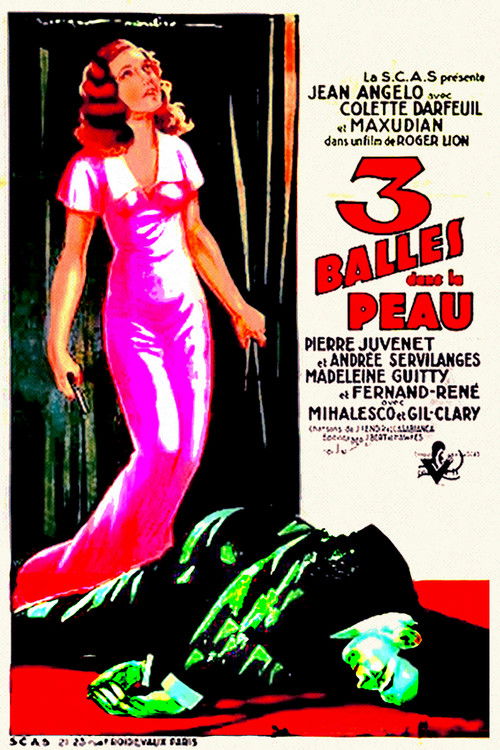
Open and shut case: Maxime Dartois, the painter, is found dead in his penthouse with three bullets in his body, but the pistol that killed him is still being held by the (fainted) young lady by his side. A detective will find a few odd notes, and the plot thickens when plenty of people are interviewed, and more than one could have the will, and the opportunity, to be the killer, and it is not clear what the relationship of the girl was with the deceased.
Trois Balles Dans La Peau
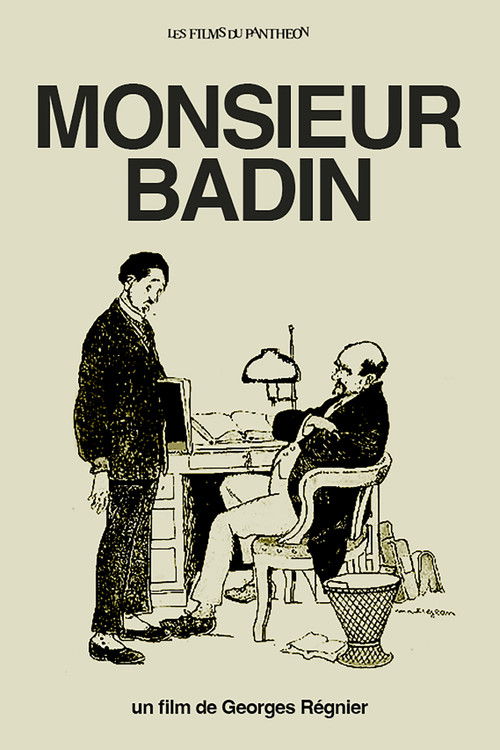
Based on the short story by Georges Courteline. The story of Monsieur Badin, a model employee who can't bring himself to go to the office and suffers as a result. He can no longer live under these conditions, and to better endure this tedious chore, he needs a raise.
Monsieur Badin
No description available.
Le Voyage d'Abdallah
Men of the Oasis is a short film by Georges Régnier, shot in Morocco and presented in competition at the Cannes Film Festival in 1951. From birth to death, the life of the oasis dweller is linked to that of the date palm, which he must plant, care for, and ensure is pollinated. Filmed in the Goulmina oasis, on the edge of the Tafillet region, this film tells the simple story of the life of Saïd, son of Ahmed.