Acting
Tatort is a long-running German/Austrian/Swiss crime television series set in various parts of these countries. The show is broadcast on the channels of ARD in Germany, ORF in Austria and SF1 in Switzerland.
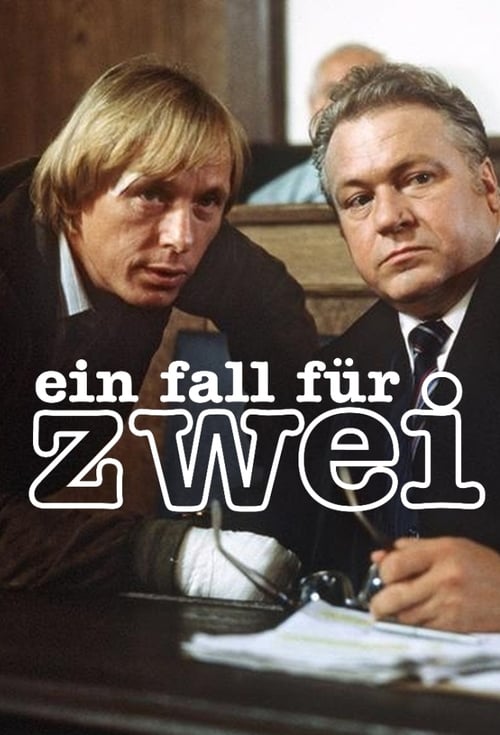
Ein Fall für zwei is a German television series, which premiered on September 11, 1981 on ZDF. The series, located in Frankfurt am Main, features two main characters who solve crimes: a defense attorney and a private investigator. Josef Matula, a former German police officer, has gone into private business. His method of investigation is very effective and direct, and he sometimes even resorts to dirty tricks. Claus Theo Gärtner has portrayed the role since the start of the series.
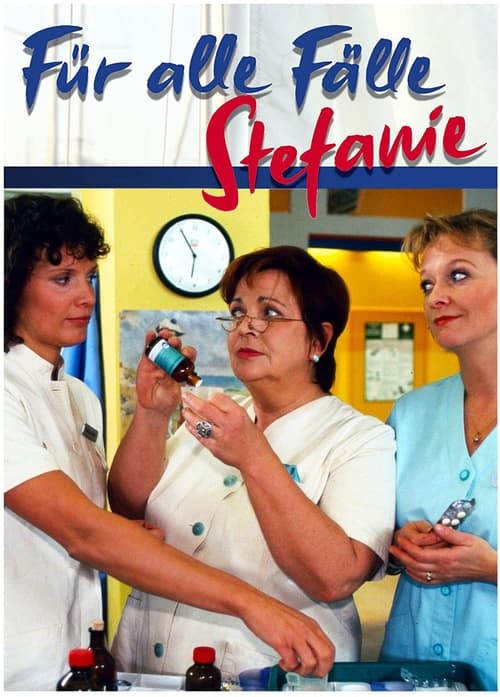
Für alle Fälle Stefanie is an German medical drama television series created by Werner Krämer that aired on Sat.1 from May 15, 2005 to August 29, 2005. It was produced by Novafilm Fernsehproduktion. Für alle Fälle Stefanie follows the professional and personal life of nurse Stefanie Engel, then Stephanie Wilde and for a short time Fanny 'Stephanie' Stephan. The show was a giant success for the network and had around seven, in later years, five million viewers on a weekly basis. It won the Goldene Kamera award in 1997 and the Bavarian TV Award in 1996.
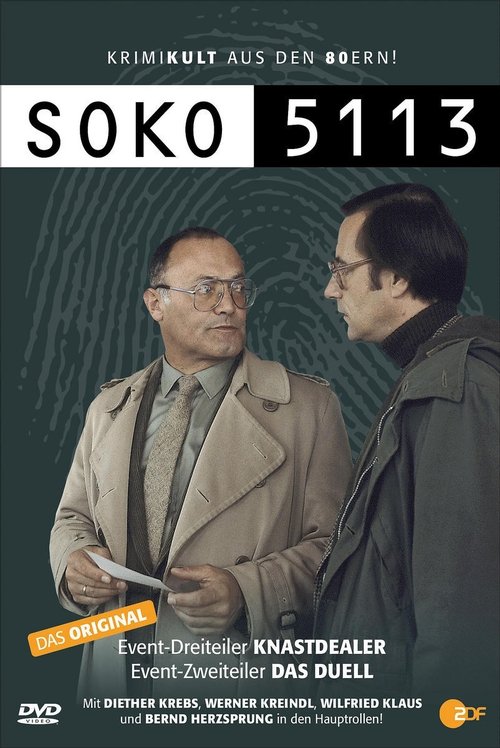
SOKO 5113 is a long-running German police procedural television series. It was first aired in 1978 on 2 January. SOKO is an abbreviation of the term "Sonderkommission" in German.
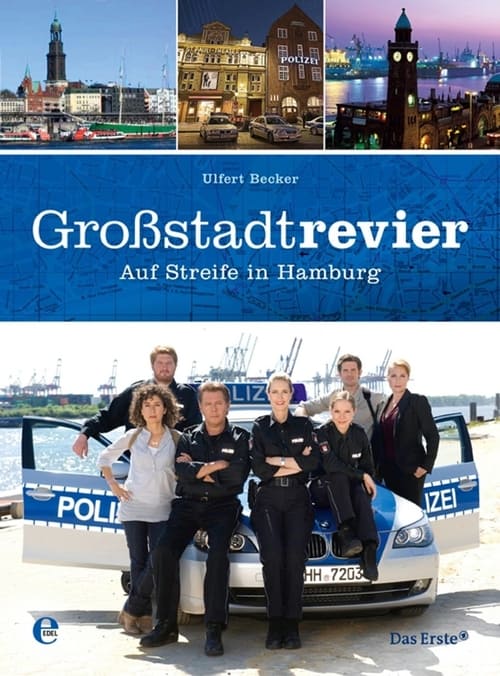
Follow the everyday work of a fictional police station on the Kiez of Hamburg.
No description available.
Café Meineid is a German courtroom comedy television series based on actual cases. The series aired 147 episodes from 1990 to 2003 and ended with the death of lead actor Erich Hallhuber.
Der Kommissar is a German television series about a group of detectives of the Munich homicide squad. All 97 episodes, which were shot in black-and-white and first broadcast between 1969 and 1976, were written by Herbert Reinecker and starred Erik Ode as Kommissar Herbert Keller. Keller's assistants were Walter Grabert, Robert Heines, and Harry Klein who, in 1974, was replaced by his younger brother Erwin Klein.
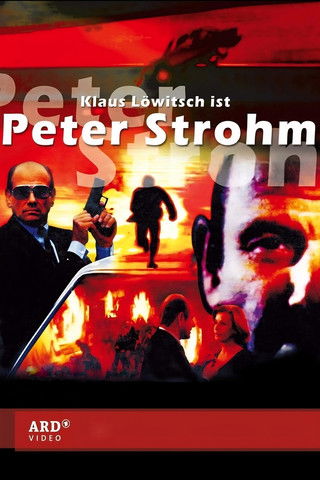
Peter Strohm is a private detective with radical methods. His work begins where police work ends; he takes on sensitive cases that require a certain scale, or explosive situations that can lead to international crises.
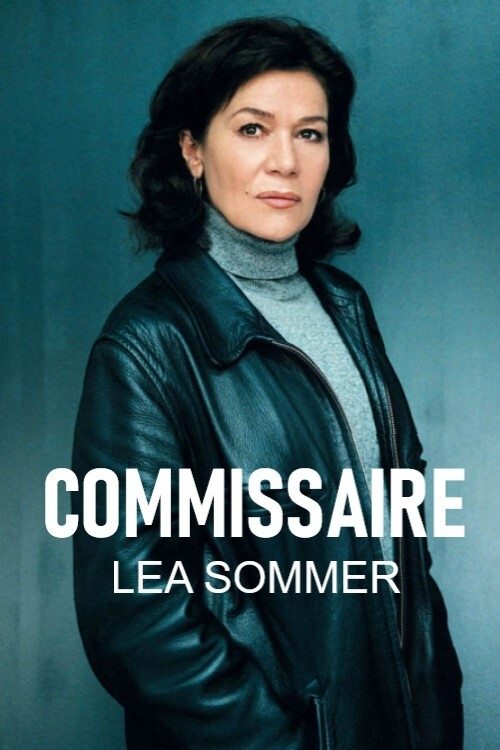
Die Kommissarin is a German police TV series which aired on Das Erste. Its 66 episodes ran from 1994 till 2006. The series, which takes place in Frankfurt am Main, Germany, is notable as being the first, and as yet one of the few commercially successful, German detective series to have a female lead character. The main character is Inspector Lea Sommer, played by Hannelore Elsner. Sommer is divorced with custody of her teenage son, Daniel. She is looking forward to a new relationship with her new boyfriend, Jonathan. Although Lea and Jonathan telephone each other frequently, he has never actually been seen or heard on screen. Sommer was originally paired with Nick Siegel, but in a 1996 episode, Siegel was shot to death by an escaping criminal. His last words were "Lea, ich fühle mich so kalt". Sommer's current partner officer is Jan Orlop. Die Kommissarin airs on the German Language channel German Kino Plus in the United States. In Finland it airs on YLE TV2 under the title Etsivä Lea Sommer.
Two women meet in a train.
The machine is introduced into the thousand-year-old garden, as a feudal Japan is modernized. American-Japanese relations are traced in 19th-century prints and 20th-century newsreels, which are scrolled, magnified, and submitted to electronic effects. The emperor is shown visiting an iron foundry in much the same way that he visits a grove in cherry blossom time. Lighting technology changes from candles to gas to electronics — now the empress can visit the rice fields under waves of computer graphics. Newsreels make much of the emperor's signature on articles of surrender at the end of World War II and of MacArthur's triumphant return to the United States. It is with utmost irony that we hear the emperor's admonishment to the coal industry (via an American newsreel voice collaged into this program for West German television): "So it is my hope, you will make your very best efforts..." The screen abruptly cuts to black. The series ends.
Short film about a woman and a man
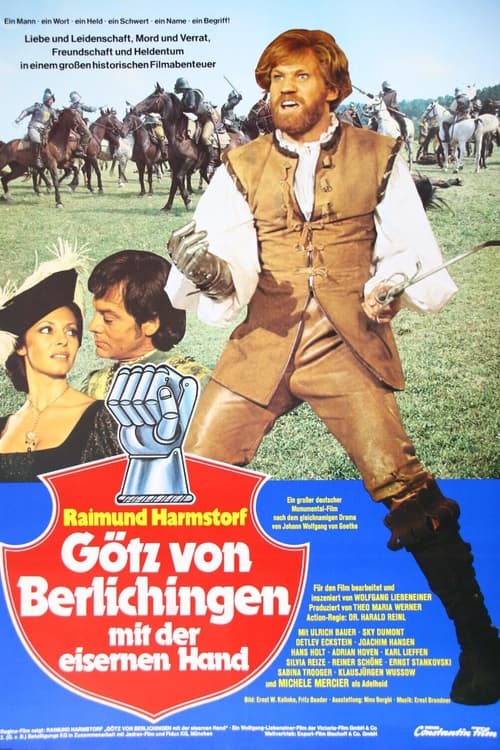
During the time of the Peasants' Wars, the free knight Götz von Berlichingen gets into all kinds of private and political entanglements when he defends the Bishop of Bamberg. He is declared an enemy of the empire and ostracized as a robber. Insurgent peasants, of whom he becomes the leader, also betray him by attacking a town against the condition that no violence be used.
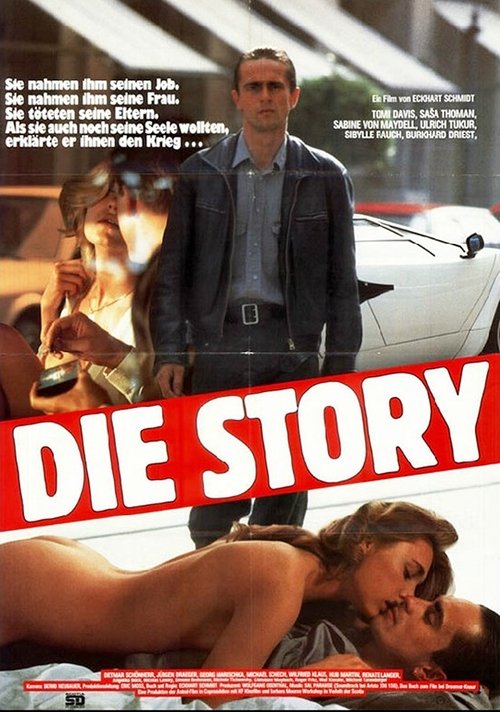
The young Munich sensational reporter Raoul Miller has attacked a lot of people in his cocaine report, who now take terrible revenge: they kill his girlfriend Raphaela and his parents. The drug mafia also ensures that Raoul loses his good reputation and becomes an outsider. But Raoul does not give up...
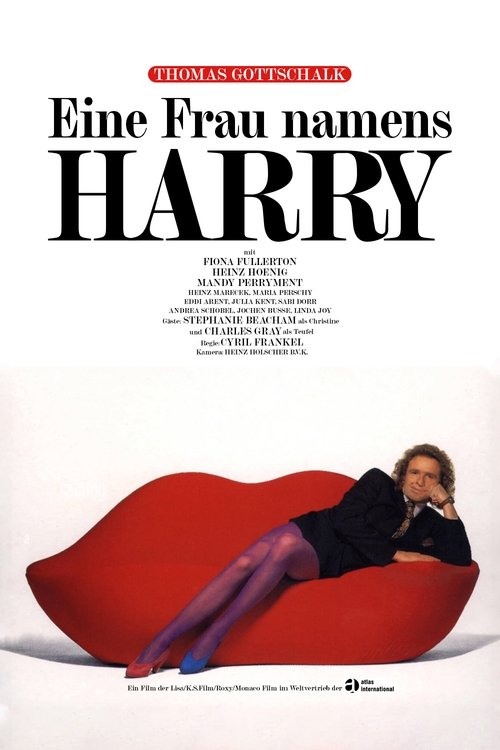
A quiet, offbeat German dramedy about self-reinvention and the messy ways we try to escape ourselves. When a middle-aged woman decides to shed her old life and adopt the name “Harry,” her transformation unsettles family, friends, and lovers who can’t quite keep up. Blurring gender identity, midlife crisis, and dark humour, the film plays like a bittersweet character study — deadpan, gently absurd, and tinged with melancholy.