FEEL IT.STREAM
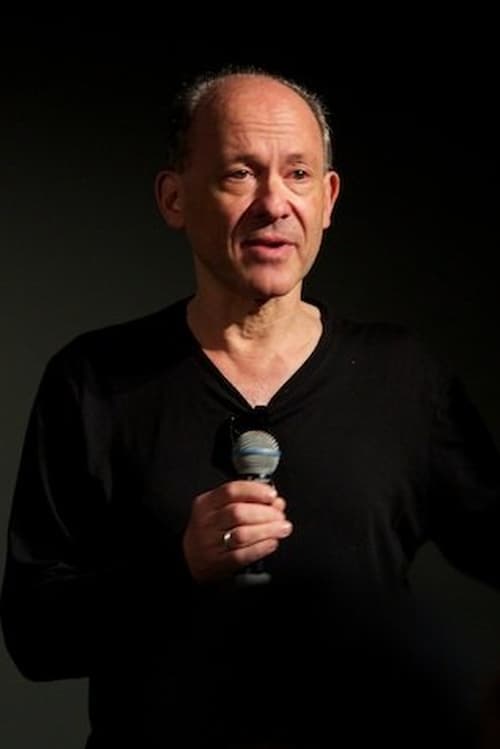
Peter Gidal

Peter Gidal

Directing

Biography

Born in 1946. Gidal studied theatre, psychology and literature at Brandeis University, Massachussets, 1964-68, and the University of Munich from 1966-7. He studied at the Royal College of Art from 1968-71 where he went on to teach Advanced Film Studies until 1984. He was an active member of the London Film-makers' Co-operative since 1969, and Cinema Programmer there from 1971-4. Co-founder of the Independent Film-makers' Association, 1975, he served as a member of the British Film Institute Production Board, 1978-81. His films have been screened nationally and internationally, including the Tate Gallery, the Hayward Gallery, and yearly since 1969 at the Edinburgh Film Festival and the National Film Theatre. Gidal has had retrospectives of his films at the Institute of Contemporary Arts in 1983, Centre George Pompidou, Beaubourg, Paris, 1996, amongst others. International screenings include several each at the Museum of Modern Art, New York, the Royal Belgium Film Archive and Cinematheque, Documenta, Arte Inglesi Oggi, X-Screen, etc. He is the recipient of the Prix de la Recherche, Toulon 1974. Gidal is renowned as a writer and theorist, in particular for his highly influential publication 'Structural Film Anthology' (BFI 1976), other books include 'Andy Warhol: Films and Paintings' (Studio Vista, 1971, Da Capo NY reprint. 1991) and 'Materialist Film' (Routledge, 1988). Gidal's writings have been published extensively in journals including Studio International, Screen, October and Undercut. He is also known for his research and writings on Samuel Beckett, including 'Understanding Beckett: Monologue and Gesture' (Macmillan, 1986).
Known For

Coda I
N/A

Peter Gidal’s starting point for his 16mm film was a soundtrack that consists of three lines from a 1,000 word story written by Gidal in 1971, read by William Burroughs.

Coda I

2013
No image
N/A

Includes 'portraits' of Marianne Faithfull, Thelonious Monk and 28 others, some known, some less so.

Heads

1969
No image
N/A

Clouds 1969 by the British filmmaker Peter Gidal is a film comprised of ten minutes of looped footage of the sky, shot with a handheld camera using a zoom to achieve close-up images. Aside from the amorphous shapes of the clouds, the only forms to appear in the film are an aeroplane flying overhead and the side of a building, and these only as fleeting glimpses. The formless image of the sky and the repetition of the footage on a loop prevent any clear narrative development within the film. The minimal soundtrack consists of a sustained oscillating sine wave, consistently audible throughout the film without progression or climax. The work is shown as a projection and was not produced in an edition. The subject of the film can be said to be the material qualities of film itself: the grain, the light, the shadow and inconsistencies in the print.

Clouds

1969
Home Movies 1971-81
N/A

Home movies shot on Super 8mm by W+B Hein over 10 years.

Home Movies 1971-81

1985
Volcano
N/A

Volcano, half hour, silent, shot on 16mm on a volcano in Hawaii, the film attempts to deal with those questions of representation that persist as problematic, for me, for the basic questions of aesthetics, what it is to view, how to view the unknown as to view the known is not possibly a viewing. The question of recognition, the impossibility of recognition or, better said, the impossibility o f a viewer viewing at all if it is predicated up on recognition... at that moment, you the viewer I the viewer am no longer part of a process, a material however metaphysical or not process of making meaning through the conflicts of perception of something...

Volcano

2002
Coda II
N/A

Gidal describes the film’s ‘so-called imagery’ as ‘a complex of barely visible cuts in space and time, the opposite of erasure, but nothing so much as visible’

Coda II

2013
Guilt
1.0

Objects in the world given luminousness, light, are here less apprehensible to knowledge than that which has less light.

Guilt

1988
No image
N/A

Peter Gidal’s starting point for his 16mm film was a soundtrack that consists of three lines from a 1,000 word story written by Gidal in 1971, read by William Burroughs. Gidal describes the film’s ‘so-called imagery’ as ‘a complex of barely visible cuts in space and time, the opposite of erasure, but nothing so much as visible’.

Coda I + Coda II

2013
Condition of Illusion
5.0

The practice of Structural/Materialist Film is defined in...process, construction, displaced reflexively...not displaced uniformly into the pattern of a narrative bound up for the stable subject-centred image. Structural/Materialist film has no place for the look, ceaselessly displaced, outphased, a problem of seeing, it is anti-voyeuristic.

Condition of Illusion

1975
Room Film 1973
4.3

"This film is a consequent continuation and contraction of my film work, research which began with Room (1967). The film is not a translation of anything, it is not a representation of anything, not even of consciousness."

Room Film 1973

1973
8mm Film Notes on 16mm
1.0

Structuralist film collage consisting of 8mm film "notes" printed directly on 16mm stock. The images include people and landscapes and the technical difference between the two film formats are emphasised by the presence of perforations, Kodak company marking, spacing, and leader.

8mm Film Notes on 16mm

1971
Film Print
N/A

The film deals with levels of reproduction. The repetitious camera movements over successive photographs are intended to function as distancing devices relatable to mechanical repetitions such as film loops. The 'subject' of the film is the material operation or, rather, it is a film in its own right and an explication of the mechanisms and technique inherent in its making. It is not a documentary of those mechanisms and techniques. Film as anonymous production, wherein (exhaustively) certain techniques are utilized, does combat with film that represents the (absent) subject, the filmmaker (forever repressed ever-present, ever-represented). Film as presentation, not re-presentation.

Film Print

1974
Focus
N/A

Early short by Peter Gidal.

Focus

1971
No image
N/A

A film by Peter Gidal

Epilogue

1978
No image
3.0

Loop ended up being a film that also 'ended' Upside Down Feature (1967-72) and was a negative upside down portrait as well....in negative, the person moving, or blinking, or smiling, or not smiling, become gestures distanced whilst simultaneously apprehendable perceptually...a kind of conscious objectification of the subject and subjectification of the object, the abstract as the real, and at the same time a dissolution through repetition, no more an identifyable 'it' after all due to both the reification and no less dissolution through repetition...

Loop

1968
No image
N/A

"first film in 5 years, tempted to say different yet the same, but not." peter gidal/london/2014

Not Far At All

2013
Hall
1.0

Demystified reaction by the viewer to a demystified situation; a cut in space and an interruption of duration, through (obvious) jumpcut editing within a strictly defined space. Manipulation of response and awareness thereof: through repetition and duration of image. Film situation as structured, as recorrective mechanism.

Hall

1968
No image
N/A

The most inclusive so far of my film preoccupations; zooming panning focussing to constantly redefine reality and the process of seeing/filming...also; demystification of the subject/object relationship and an attempt to create awareness of manipulation, rather than deny its filmic existence. A structured film in pre and post filming conceptualisation. The situation within the film is the process of making the film as such; the technical events of the filmmaking process are the film experience.

Bedroom

1971
No image
9.0

Assumption is a virtuosic personal tribute, a glimpse at history and a celebration of independent film culture. Gidal's short film was assembled round a recording of the voice of Mary Pat Leece, who worked at the London Filmmakers' Co-op in the mid-1970s, and later became a much loved lecturer at St Martins School of Art. She died suddenly in 1997. The film's rapid-fire montage of images and sounds encapsulates her politics, her Catholicism and her intellectual passion.

Assumption

1997
Untitled
N/A

Made from the same footage as Epilogue but in a different order: 1. pan, 2. dissolve-crossfade, 3.freeze.... as opposed topan, freeze, crossfade-dissolve......very different in terms of filmic expectation, recognition, assumptions of anti-narrativity, all whilst watching these small fragments (each film only a few minutes long, each made from the (repeated) opticals of the same very short fragments of several seconds each....)....P.G.

Untitled

1978