FEEL IT.STREAM
Jean-Paul Wenzel

Jean-Paul Wenzel

Acting

Biography

Jean-Paul Wenzel is a playwright, director, director, actor of French theater, born July 13, 1947 in Saint-Etienne, in the Loire, a German father and a French mother. He followed training at the School of Dramatic Art in Strasbourg from 1966 to 1969, then began his theatrical career under the direction of recognized directors such as Robert Gironès, Peter Brook, Philippe Goyard and Michel Raskine. He also plays in the cinema with directors like René Allio, Gisèle Cavali, Aki Kaurismäki and Gérard Blain. Wenzel then turned to dramatic writing and experienced national and international recognition with his play far from Hagondange (1974), translated into eighteen languages ​​and played in twenty countries, which receives the Critics' Prize in 1976 . He then wrote many other pieces, of which Marianne awaits marriage (1976), Vater Land (1984, Prize for the best French creation), Faire Bleu (1999), six miniature tragedies (2004) and Margot (2005). Its theater is recognized for its popular dimension and its ability to evoke everyday life in a universal way. In addition to his author activity, Jean-Paul Wenzel is a committed pedagogue. He taught at the Comédie de Saint-Étienne, heads the school of the National Theater of Brittany from 1995 to 2000, and intervenes in several schools and conservatories in France and abroad. He co-founded in 1976, with Jean-Louis Hourdin and Olivier Perrier, the theatrical meetings of Hérisson, then codirige with Olivier Perrier the Center Dramatique National Les Federés in Montluçon from 1985 to 2002. Since 2003, he has managed with the playwright Arlette Namiand the company now, with which he pursues the creation of shows and the adaptation of literary works for the scene. Jean-Paul Wenzel also staged texts of great authors like Bertolt Brecht, Rainer Werner Fassbinder, Jean Genet, Odön von Horvath, Enzo Cormann and Howard Barker, as well as theatrical adaptations of works by Maupassant, Primo Levi, Arthur Koestler and Sevene Ousmane. His cinematographic career includes roles in films such as common memory (1978), a doctor of the Enlightenment (1988), La Vie de Bohème (1992) and Bazar (2009). Jean-Paul Wenzel remains a major figure in the French contemporary theater, recognized for his artistic and educational commitment, as well as for the vitality and humanity of his work.

Known For

La Vie de Bohème
7.5

Three penniless artists become friends in modern-day Paris: Rodolfo, an Albanian painter with no visa, Marcel, a playwright and magazine editor with no publisher, and Schaunard, a post-modernist composer of execrable noise.

La Vie de Bohème

1992
Bazar
5.8

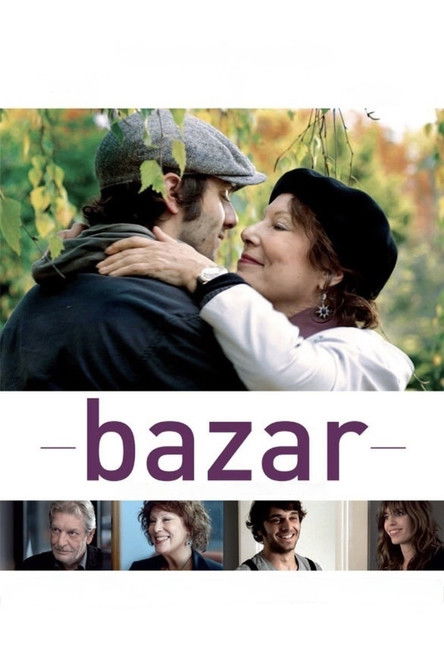
Gabrielle, a pleasant woman in her sixties, learns that she is about to be evicted from her second-hand shop...

Bazar

2009
No image
9.0

1776. Simon Bertiny settles in Hérisson-sur-Allier to practice medicine. He quickly runs into the peasants of the region who refuse the help of a doctor and continue to take care of themselves. When Simon discovers that an epidemic is spreading in the village, he tries to help the villagers fight against the disease.

Un médecin des lumières

1988
La Fortune de Gaspard
N/A

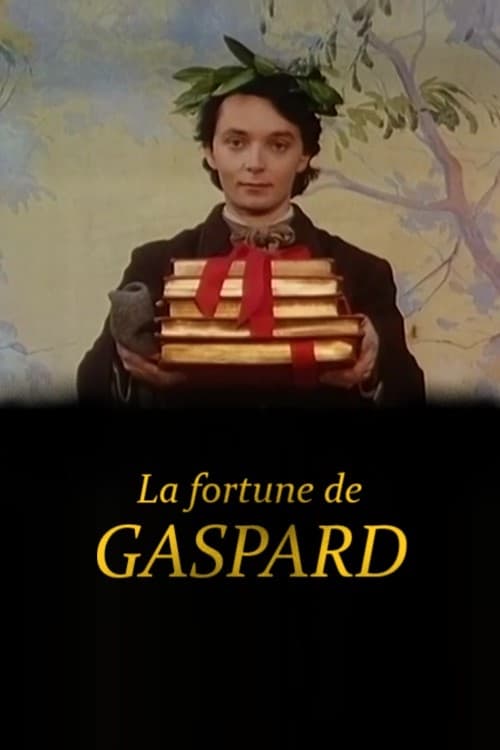
Gaspard is a brilliant pupil who makes a clean sweep of all the prizes every year. He despises his family, and do not want to remain a crude peasant like them. Two businessmen, Mister Fereor and Mister Frolichein, want him to work in their factories. The former wins the contest. Gaspard is a young Turk who wants to make his way of life at any cost. He steals ideas from other young men and becomes an occasional informer. He wins his boss over and, as this tycoon has no son, he is adopted by him even though his biological parents are still alive. But unfair competition threatens Fereor's business and Gaspard is forced to marry Frolichein's daughter, Mina.

La Fortune de Gaspard

1993
Mémoire Commune
10.0

A character, directly addressing the viewer, attempts, through his or her knowledge, a historical reflection on the Paris Commune of 1871. A series of five tableaux retraces the major phases of the events. First comes the analysis of the Second Empire. Then comes the fall of the Empire and the proclamation of the Republic on September 4, 1870. Based on texts by Jules Vallès, several actors evoke the event in the contemporary setting of the large housing estates of Bobigny. The third part deals with the period October-March 1871, during which the people of Paris felt, little by little, betrayed by the government. Finally, March 18 is the revolutionary day. Inspired by Bertold Brecht's "Days of the Commune," actors perform the episode "Madame Cabet's Canon." The fifth part, entitled "Two or Three Things I Know About Her," directly evokes the work of the Commune, building and imagining a better world...

Mémoire Commune

1978