Joan Jonas
Directing
Biography
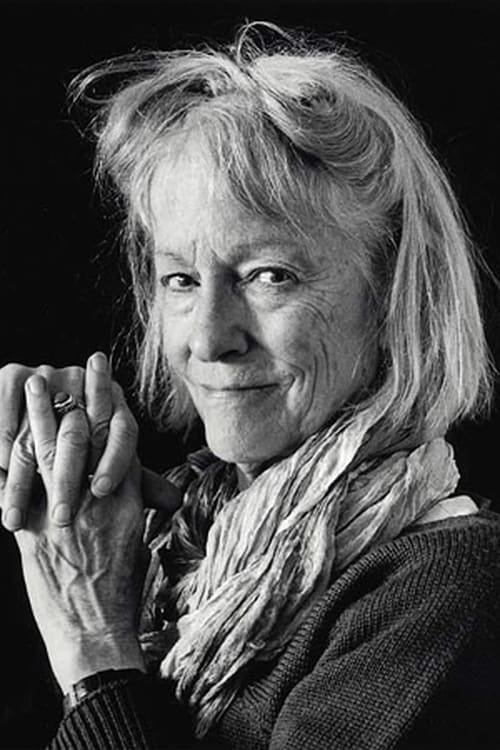
Joan Jonas is an American visual artist and a pioneer of video and performance art who is one of the most important female artists to emerge in the late 1960s and early 1970s.[1] Jonas' projects and experiments provided the foundation on which much video performance art would be based. Her influences also extended to conceptual art, theatre, performance art and other visual media. She lives and works in New York and Nova Scotia, Canada. From Wikipedia.
Known For

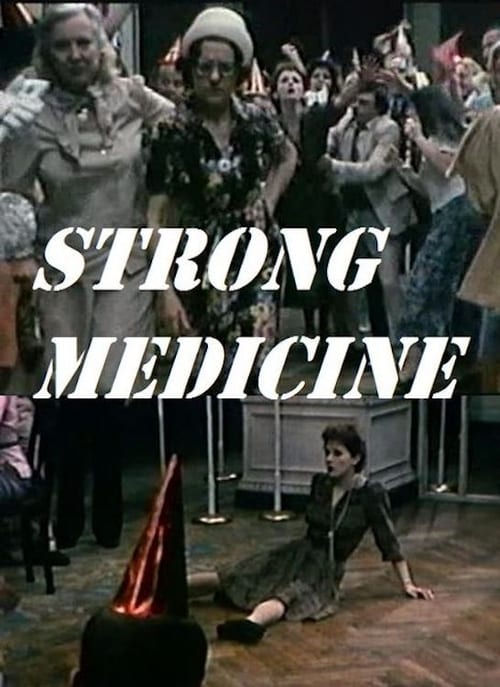
Adaptation of an avant-garde play about Rhoda, a hysterical heroine who feels oppressed by the people around her. She suffers through her birthday party, goes to see a doctor, plans a vacation, argues a lot and even breaks the fourth wall.
Strong Medicine

This short film shot in Iceland and New York, which is based on a thirteenth-century Icelandic Laxdeala Saga, features Tilda Swinton as a young woman whose dreams foretell the future.
Volcano Saga

The protagonists’ astounding verbal gymnastics and often incomprehensible interactions tend to descend into nonsense, and with the syncopated rhythm of its action and dialogue, this film is reminiscent of the playful and parodying elements of the Beat fantasy Pull My Daisy. The interweaving of documentary and fiction with the syncopated rhythm of its action and dialogue presents an absurd buzz of activity reminiscent of Beckett’s abstract comic grotesque.
Keep Busy

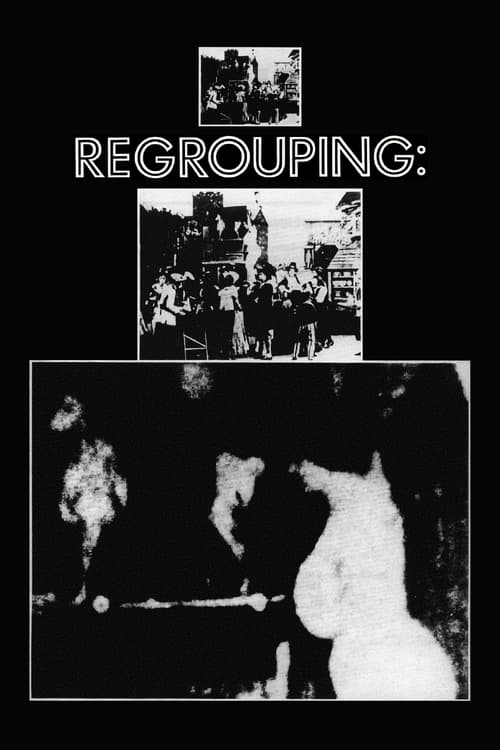
In this experimental film, Borden explores the dynamics among the members of a woman’s group. As she interviews people who know them, such as Joan Jonas, the group shoots ‘artistic’ scenes of themselves – but Borden feels they aren’t fully grappling with issues of sexuality and politics. Are they a serious group – or just friends? After showing an early edit of the film to the group, its members, upset, close ranks. Undeterred, Borden incorporates the group’s arguments into another edit, filming larger groups commenting both on the original one and on consciousness-raising groups in general. Uncredited voices include those of Barbara Kruger and Kathryn Bigelow.
Regrouping

Jonas's performance piece, an homage to 18th century French outdoor theater, incorporates mythology as well as spontaneously occurring events into the narrative.
Waltz

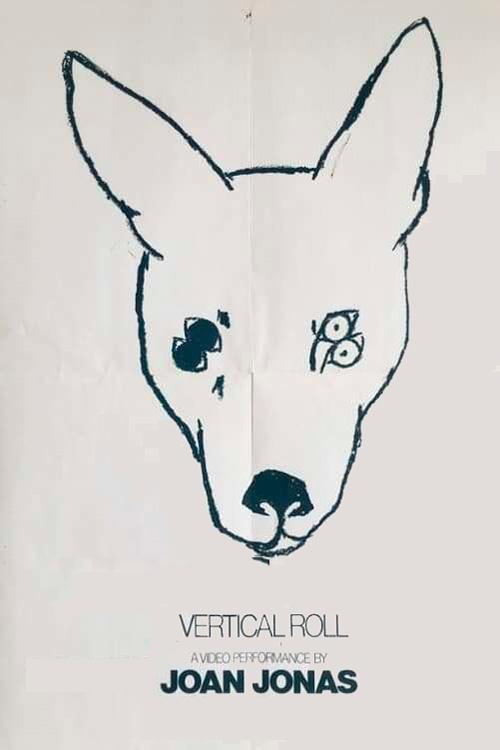
Cast as an “electronic erotic seductress,” the multiple costumes and roles performed by Jonas critically examine the ever-changing, but consistently unequal roles of women. The camera gazes at Jonas, implicating the viewer in the work and further, with her body. Her intentional de-synchronization of the monitor's receiving and transmitting frequencies results in the on-screen image's repeated vertical descent. Creating a sense of fragmentation, the vertical roll relentlessly pounds at the images of the artist as she moves through a series of performed identities. Characterized a "disjunctive self portrait" by the Electronic Arts Intermix, the image content of the work is strongly mediated by the mirror-like function of the camera, scrutinized by the lens and subjected to violence by the vertical roll.
Vertical Roll

Disturbances extends Jonas' investigation of mirrored surfaces and spaces, as she explores reflections of movement and images in water. The tape begins with Jonas, like Narcissus, leaning over a reflecting pool. Throughout this lyrical exercise, the viewer sees only reflected images and inversions, disturbances of the water's surface. Figures walking at the edge of the pool are seen as abstracted shimmers, upside down and backwards; shadowy figures move underwater and swim through the pool as in a choreographed dance. This simply rendered, evocative work is a phenomenological study of reflection, as Jonas draws a parallel between the spatial and mirroring effects of water and video.
Disturbances
"Commissioned by Dokumenta XI in 2002, Jonas' multimedia performance piece Lines in the Sand takes up two works by the poet H.D. (Hilda Doolittle)—Helen in Egypt (1955) and Tribute to Freud (1944)—as source material. Narrated by Jonas, Lines in the Sand transposes H.D.'s re-working of the story of Helen of Troy to present-day Las Vegas, with the Luxor Hotel as a key motif. This 47-minute video is a document of Jonas' layered theatrical performance, which features the artist and performers interacting with large-scale video projections, ritualized objects and a rich sound collage. An exploration of the liberation of the self, Lines in the Sand (created in 2002, just prior to the U.S. invasion of Iraq) also references contemporary political realities; the title echoes the first President Bush's declaration to Saddam Hussein at the start of the Gulf War. Work based on 'Helen in Egypt,' a poem by H.D. (Hilda Doolittle)." –KG
Lines in the Sand

Organic Honey's Visual Telepathy is based on Jonas' 1972 performance of the same name, the first in which she used video. In an enigmatic ritual of identity, Jonas performs as herself and as her masked double, Organic Honey. Dressed in a feathered headdress and costumes, Organic Honey is the embodiment of artifice, masquerade and narcissism — a female alter-ego whose guise is a frozen doll's face. This elliptical, nonlinear narrative performance explores themes that are emblematic of Jonas' early video work: The study of female gestures and archetypes, both personal and cultural; the use of disguise and masquerade, ritual objects and ritualized self-examination; and an inquiry into subjectivity and objectivity. The work's formal elements — the layering of mirrors and mirrored images, manipulations of reflective space and spatial ambiguity, and the use of drawing to add a further layering of meaning — are also Jonas' signatures.
Organic Honey's Visual Telepathy
1984 video art by Joan Jonas
Big Market

Frenetic silhouettes pass us by.
Shadows/Como

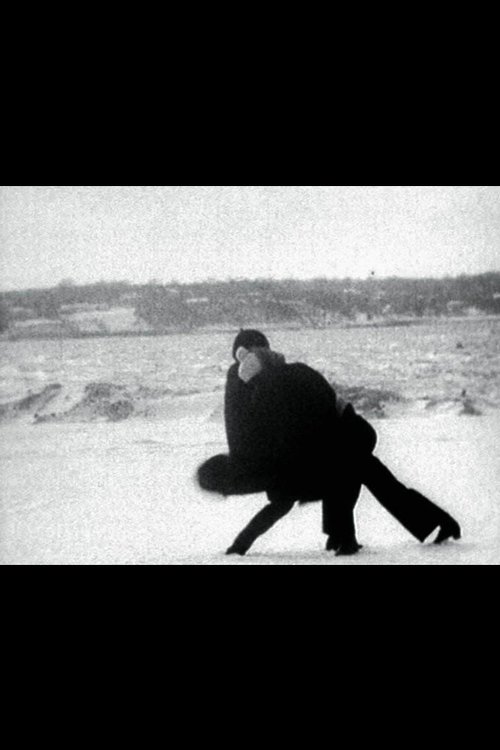
Cutting between snowy fields and a raw seashore, Jonas focuses on a group of performers moving through a stark, windswept landscape. The 16mm film — silent, black and white, jerky and sped-up — evokes early cinema, while its content locates it in the spare minimalism of the late 1960s.
Wind

Based on Robert Heinlein’s 1941 story “Universe,” Double Lunar Dogs presents a vision of post-apocalyptic survival aboard a “spacecraft,” travelling aimlessly through the universe, whose passengers have forgotten the purpose of their mission. As a metaphor for the nature and purpose of memory, the two main characters (portrayed by Jonas and Spalding Gray) play games with images of their past; but their efforts to restore their collective memories are futile, and they are reprimanded by the “Authority” for their attempts to recapture their past on a now-destroyed planet Earth.
Double Lunar Dogs
2015. USA. Directed by Joan Jonas. 4 min.
They Come to Us without a Word [“Wind Sequence” excerpt]

Jonas intercuts scenes of the Nova Scotia countryside with images of a studio set-up reminiscent of a di Chirico painting. The soundtrack includes both music and spoken excerpts from a journal Jonas kept while travelling in Nova Scotia. I Want to Live in the Country ultimately deals with observation and fantasy, living in the country, and the stifling aspects of the city and one's art.
I Want to Live in the Country (And Other Romances)

Wind and Songdelay are two of Joan Jonas’s early performances filmed in the open air, in either natural or industrial environments. Fourteen performers struck together pieces of wood, drew shapes on the ground with props, and used mirrors to refract sunlight while an audience watched them from afar.
Songdelay
from Point of View: An Anthology of the Moving Image (2003)
Waltz
Mirage was designed specifically for the screening room of Anthology Film Archives in New York's SoHo neighborhood, where Joan Jonas first performed the piece on several nights over a few weeks in 1976, for an audience of her friends: local artists, musicians, and dancers. In the first performances, Jonas projected images of herself drawing and erasing her marks on a chalkboard—some appropriated from her past works—as well as a five-minute documentary loop of volcanoes erupting and a film of a television turned on its side. She also stepped through a small wooden hoop and completed other live actions. Mirage was the last of a series of black and white video performances completed by Jonas; she would subsequently adopt color technologies. In 2001, Jonas made a new version of Mirage, consisting of a silent, approximately thirty-minute loop which, in the artist’s words, “is a combination of old performances, more chalk drawings and footage shot off the television at that time.”
Mirage

In Upsidedown and Backwards, two fairy tales — The Frog Prince and The Boy Who Went Out to Learn Fear — are told simultaneously, one backwards and one forwards, each interrupting the other. Jonas' ironic use of visual symbolism further inverts the structure and content of the fragmented fairy tale narratives, creating multiple, mirror-image reversals of the texts and their meaning. The inverted and mixed-up tales, which are intercut with Jonas' ritualistic performances, merge into a composition of transformation and sexuality that evokes the tangled subconscious of male and female desire. Jonas performs wearing a veiled doll face as she manipulates childlike objects or partners a skeleton in a danse macabre. Charged with the sublimated fears and fantasies of childhood, the tape's imagery mirrors the fairy tales in its fusion of innocence and horror, dream and nightmare.
Upsidedown and Backwards
"Shot vertically and intended to be shown on a video monitor turned on its side, the video May Windows (1976) is a component of the Mirage performance and installations, as well as the related installation Cones/May Windows (After Mirage) II (1976/2014). May Windows features two tall white cones, barely decipherable in the heightened contrast of the black-and-white video that examines changes in sound and light from Jonas’s home studio. Though the video is purposefully so overexposed that the picture plane becomes void of depth, Jonas nonetheless makes space legible through sound. Jonas whistles while walking around the space, and opens and closes the windows, modulating the sound of the street outside. At another point during the video, James Nares and Jonas vocalize into metal cones. [/] —BC and KP" —The Joan Jonas Knowledge Base