FEEL IT.STREAM
David Perlov

David Perlov

Directing

Biography

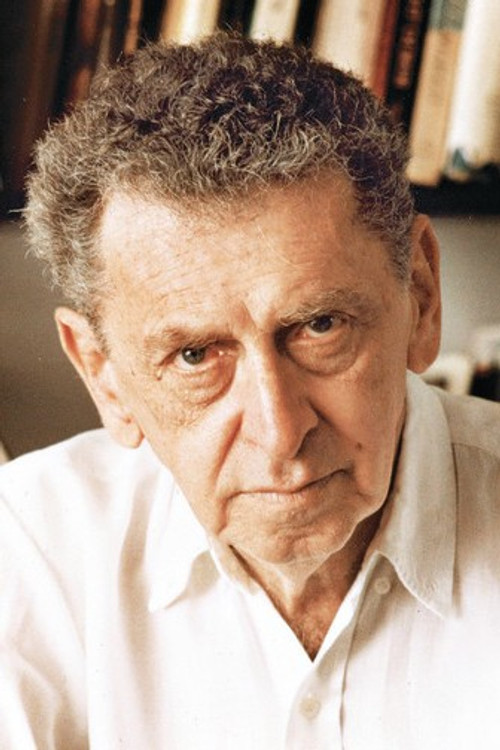
David Perlov (Hebrew: דוד פרלוב) (born 9 June 1930 in Rio de Janeiro, Brazil; died December 13, 2003, in Tel Aviv, Israel) was an Israeli documentary filmmaker. David Perlov was born in Rio de Janeiro and grew up in Belo Horizonte. At the age of 10, he went to live with his grandfather in São Paulo. At the age of 22, he moved to Paris and worked as a projectionist for the newly established Cinematheque. In 1957, he made his first short film, Tante chinoise (Old Aunt China), based on drawings of a 12-year-old girl of the French provincial bourgeoisie of 1890 which he found in the cellar of the Paris house in which he was living. In 1958, Perlov immigrated to Israel, settling with his wife Mira on Kibbutz Bror Hayil. The couple had two daughters, the twins Yael Perlov and Naomi Perlov. In 1963, Perlov made a 33-minute documentary In Jerusalem (בירושלים, Be-Yerushalayim). This film came to be one of the most important films of Israeli documentary cinema. Although Perlov made two feature films by 1972 (The Pill and 42:6), his film proposals were repeatedly rejected by the Israel Broadcasting Authority and Israeli film board, which found his work too lyrical. In May of the year 1973, Perlov bought a 16 mm camera and filmed his everyday life alongside dramatic events that took place in Israel at the time. He continued this work for 10 years, sometimes with almost no economic resources, until Channel 4 of British television expressed an interest in the project in 1983. Produced in association with Israel's largest television and film studio, Herzliya Studios (Ulpanei Herzliya), the result was Perlov's work Diary (יומן). From 1973 Perlov taught in the department of film and television at Tel Aviv University.
Known For

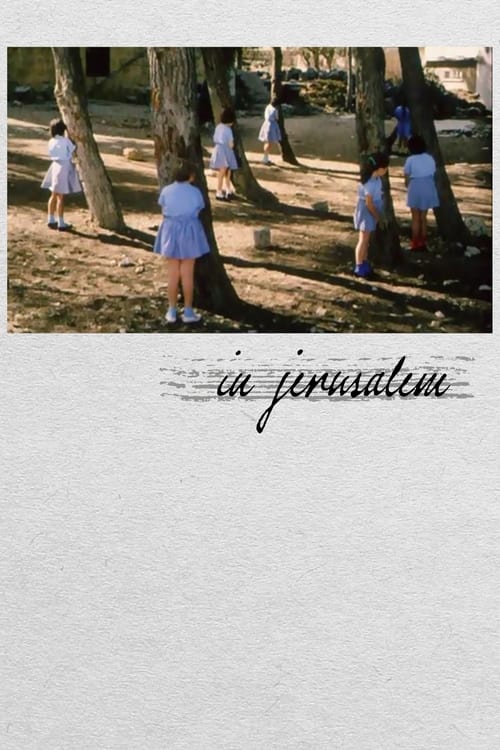
In Jerusalem
9.0

Ten engaged observations of the city, before it was united.

In Jerusalem

1963
My Conversations on Film
3.2

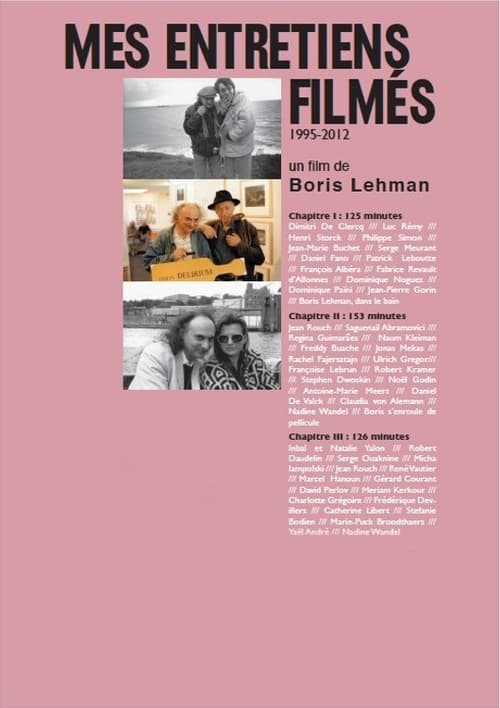
This distinctly personal journey into the artistic possibilities of independent film is not to be missed. Jonas Mekas, Jean-Pierre Gorin, Robert Kramer and many other visionaries and mavericks of the silver screen – as well as a book seller, a critic and a psychoanalyst – discuss what cinema has meant to them, what it is and what it could be and, implicitly, how it has changed over the 18 years in which this film was shot. Director Boris Lehman leads the charge, drawing in moments of absurdist humour and inventive camera work; he keeps things raw and spontaneous. His encounters with the now much-missed Jean Rouch and Stephen Dwoskin are particularly touching and stand testament to their personal playfulness and candour. An engaging, absorbing, epic odyssey of a movie.

My Conversations on Film

2013
The Pill
6.0

A burlesque fantasy about a fountain-of-youth pill and its effects on Getz, a down-and-out Tel Aviv night-club singer. After taking this much sought after pill, Getz becomes the epitome of youthful energy, and therefore a teen idol, a symbol of beauty and youth, up to the cathartic ending of the movie.

The Pill

1972
42:6 - Ben Gurion
8.0

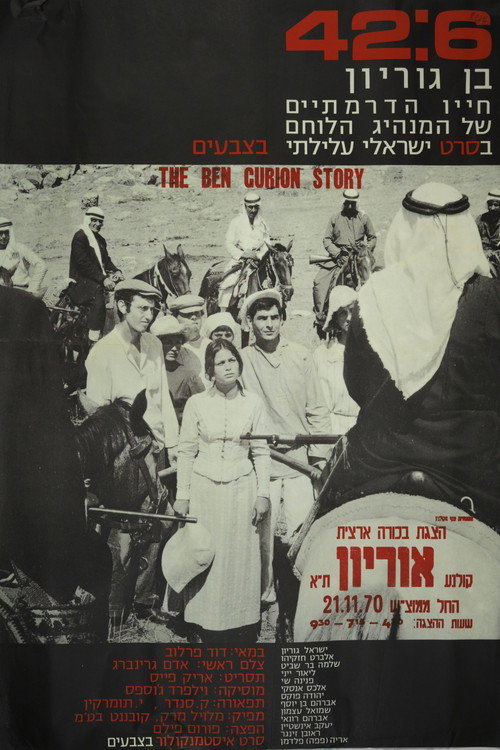
The title is a reference to the Book of Isaiah 42:6, “I, the LORD, have called thee in righteousness, and will hold thine hand, and will keep thee free, and give thee for a covenant of the people, for a light of the Gentiles.” The film is an episodic, cinematic biography of David Ben-Gurion, from his days as a youth in Poland when he met Herzl in the town of Plonsk, through his move to Palestine/Israel, becoming leader, the days of the Independence War and the establishing of the State of Israel, signing the reparations agreement with Germany, and all the way to the making of this film – in the aftermath of the Six-Day War. Perlov’s film highlights all the key milestones in the leader’s life which it goes about doing in the tradition of the reflexive documentary, through the creator’s subjective and artistic pov. The film goes back and forth between documentary and scripted scenes, black and white and technicolour, and even archival footage colourised in bold, artificial colours.

42:6 - Ben Gurion

1969
Tel Katzir
7.0

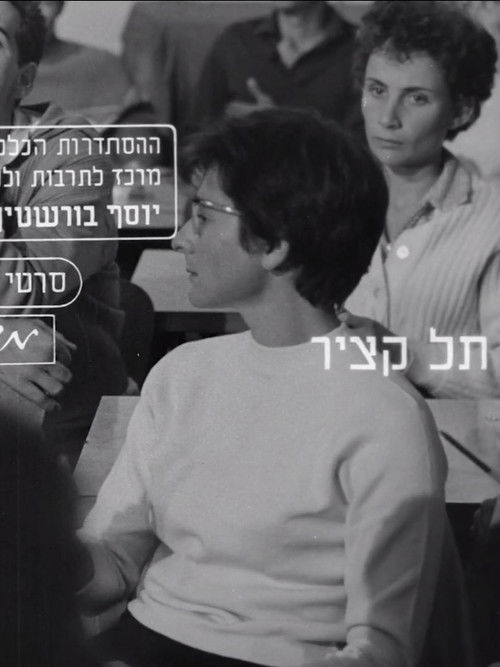
A documentary produced by Histadrut about Kibbutz Tel Katzir. Although modest in size, Tel Katzir stands in the center of a border conflict between Israel and Syria. The kibbutz, located in the demilitarized zone between the countries, is a frequent target of Syrian attacks. Between one attack and the next, Tel Katzir members lead their work, family, and cultural life.

Tel Katzir

1964
High Tension
N/A

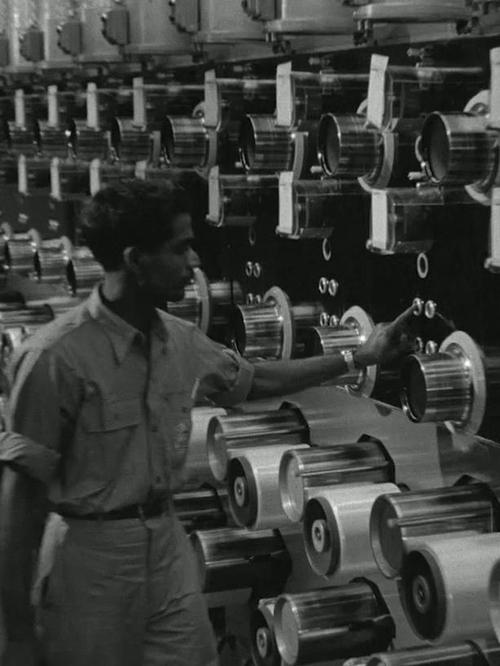
A film produced by the Hasbarah Authority and the Ministry of Development. A Somewhat avant-garde attempt to present the generation, distribution and use of electricity in Israel. The means of electric generation are presented against a backdrop of images related to the sectors the consume the electricity, in industry, water distribution and urban-commercial use. Contrasting with all of these are images of a “backwards” rural community, combining attributes of the local-Palestinian and the Mizrahi-Jewish.

High Tension

1961
Memories of the Eichmann Trial
N/A

Two decades after the Eichmann trial in Jerusalem in 1961, director David Perlov talks to trial witnesses, Holocaust survivors and their families about their memories of the trial. The documentary was only broadcast once in Israel in 1979 before it was restored in 2011.

Memories of the Eichmann Trial

1979
Theatre In Israel
8.0

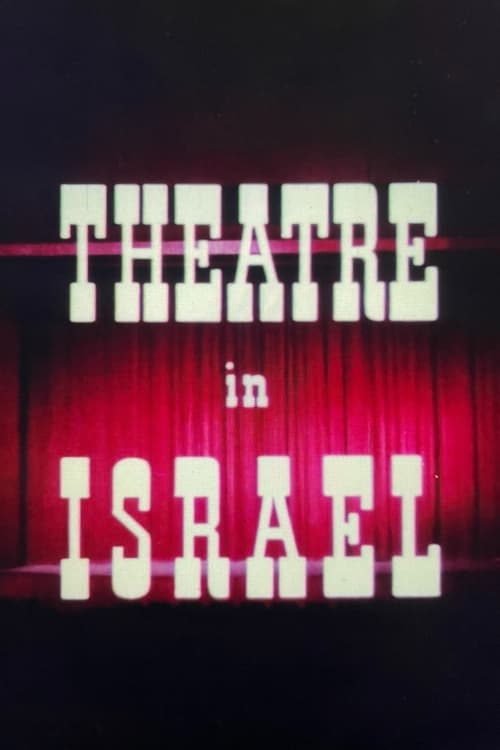
An English-speaking film produced on behalf of the Israeli Center of the International Theater Institute, providing international audience with an overview of modern Israeli theater, including scenes of renowned Israeli theater productions from the theater season of 1967. The film opens with excerpts from “The Dybbuk” at Habima Theater, and includes scenes from the successful musicals of the Cameri Theater “Utz Li Gutz Li” (Rumpelstiltskin) and “King Solomon and Shalmai The Shoemaker”. Other excerpts include scenes from the plays “The American Princess” by Nissim Aloni at the Seasons Theater, “He Walked Through the Fields” by Moshe Shamir at the Haifa Theater, Ibsen’s “Hedda Gabler”, “Who’s Afraid of Virginia Wolf”, and more.

Theatre In Israel

1967
The Invasion of the Arab Armies - May 1948
N/A

A documentary film which portrays the dramatic chain of events leading to the invasion of the Arab armies to Israel after the Israeli declaration of independence. The film includes original pictures from the war filmed by both sides, and documentation of the leaders of the Arab forces and the Yishuv in the crucial moments of Israel's "War of Independence".

The Invasion of the Arab Armies - May 1948

1973
Isaak Stern
N/A

A short documentary about the Jerusalem Foundation’s projects. The Jerusalem Foundation funds educational and cultural activities as well as development initiatives in the Israeli capital. This film reviews some of the foundation’s projects, including theater performances for children and adults, summer camps, activities in community centers, the inauguration of urban parks, the development of the Mishkenot Sha’ananim quarter, the planning of the Museum on the Seam, and even a masterclass by violinist Isaac Stern. Harvey Rothenberg, one of the Foundation’s donors, calls on other philanthropists to donate to it at the end of the film.

Isaak Stern

1984
Navy
N/A

A film produced by the Israeli Film Service, the IDF Spokesperson’s Unit and the Navy Headquarters, documenting a training routine of soldiers at the Israeli Navy who serve on submarines and missile boats. The film documents various military exercises such as diving and planting enemy ships with mines, a land raid of the Israeli naval commando unit, and more.

Navy

1971
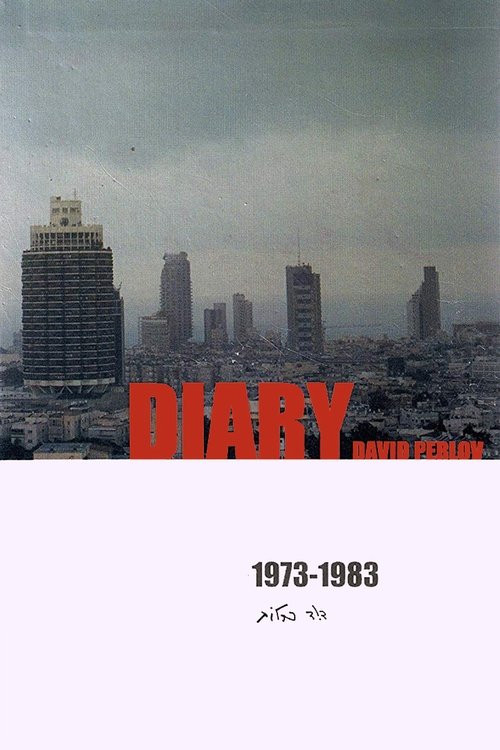
Diary
7.1

A film diary in which Perlov films the minutiae of his and his family's day-to-day life. From these small bits, he builds up a broad picture of life in Israel in the '70s and '80s.

Diary

1983
In Thy Blood, Live
N/A

Candles, tears of crying women, memories: that is how the film In Thy Blood Live begins. David Perlov's camera travels over photographs, focuses on faces that are no more, as in a gesture of parting. The history of the Holocaust is revealed in this film in a condensed, intensive way: first the memorials for the victims throughout Israel, and only then the beginning of it all - the rise of the Nazi regime, the Ghetto with its hunger and death, but with its music and theatre too, the uprising, the death camps; and it ends with the trial of Adolf Eichmann, one of the chief architects of the genocide. The music of Oedoen Partos, blending Jewish, Israeli and European motives, helps portray in sounds that lost world which now belongs to memory alone

In Thy Blood, Live

1961
The Oil Pipeline
N/A

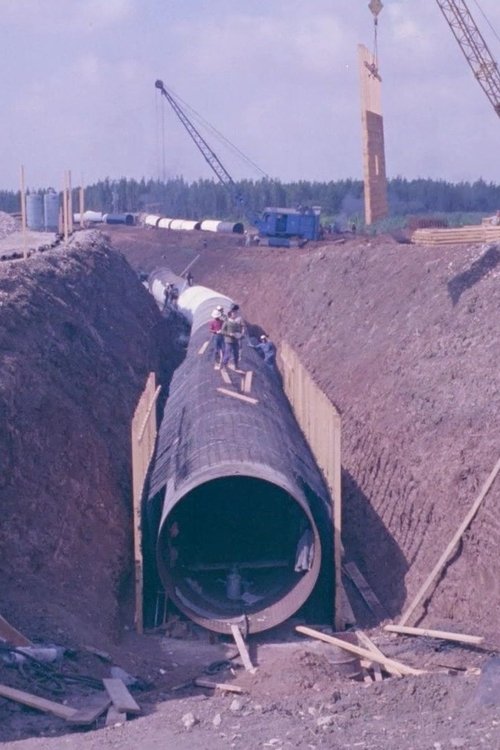
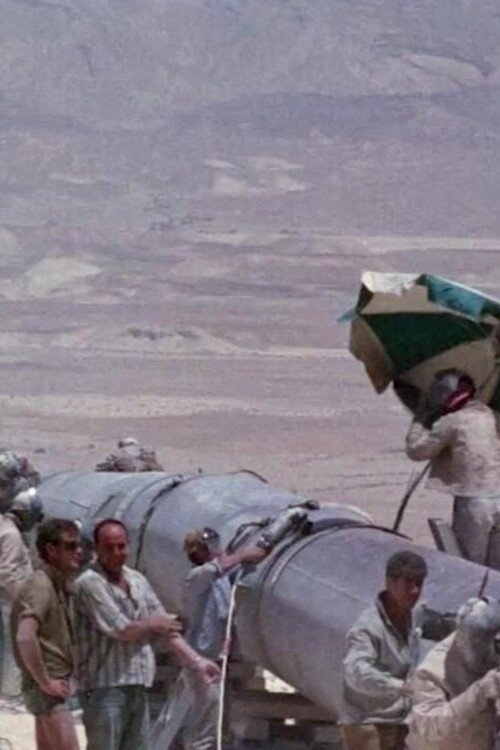
A short documentary, produced by the Israeli Film Service about the laying of the Trans Israel Pipeline. The film was produced under the auspices of the Eilat Ashkelon Pipeline Company and TAHAL. After 18 months of work, one of the most important engineering projects in the history of Israel comes to a close: the laying of a 254 kilometer long pipeline between the Port of Eilat and the oil port in Ashkelon. The purpose: creating a landbridge to transport oil from the Red Sea to the Mediterranean – independently of the Suez Canal. This film follows the complex undertaking, which took place both in the desert and at sea.

The Oil Pipeline

1971
my stills 1952-2002
N/A

My Stills, 1952-2002, David Perlov's last film, is based on his still photographs. It is formed as a triptych: the first part takes the viewer on a journey to the very roots of the image, the frame, the angle, the light, and the frozen movement of people, and contemplates stills and cinema photography. The second part revolves around three photographers whom Perlov deeply admired: David Seymore, Henri Lartigue, and Henri Roth (the latter's photographs served as evidence in the Eichmann Trial)

my stills 1952-2002

2002
The National Water Carrier
N/A

A film produced by the Hasbarah Center in collaboration with Mekorot, Israel’s national water company. Two million work days, of engineers, contractors and of course laborers, allowed the completion of the first part of Israel’s National Water Carrier, an ambitious aquaduct carrying water from the sea of Galilee to population centers and arid regions. The film outlines challenges that faces the builders of the aqueduct: the paving of canals, the creation of a dramatic siphon, allowing the water to cross the Canyon of Nahal Ammoud, the creation of a reservoir at Nahal Tzalmon, etc.

The National Water Carrier

1964
Fisherman In Jaffa
N/A

A lyrical documentation of the world of Jaffa's fishermen. The influence of British documentary tradition - as well as the films of directors like Joris Ivens or Georges Franju - is evident in Fishermen in Jaffa. In a carefully-planned frail structure of narrative, the film progresses from daylight to night. In it Perlov creates at the same time a vast, panoramic view, and an intimate, private one - whether he films a lone cat wandering on the dock, or the glowing faces of the fishermen. This early film already depicts Perlov's unique style.

Fisherman In Jaffa

1962
In Search of Ladino
N/A

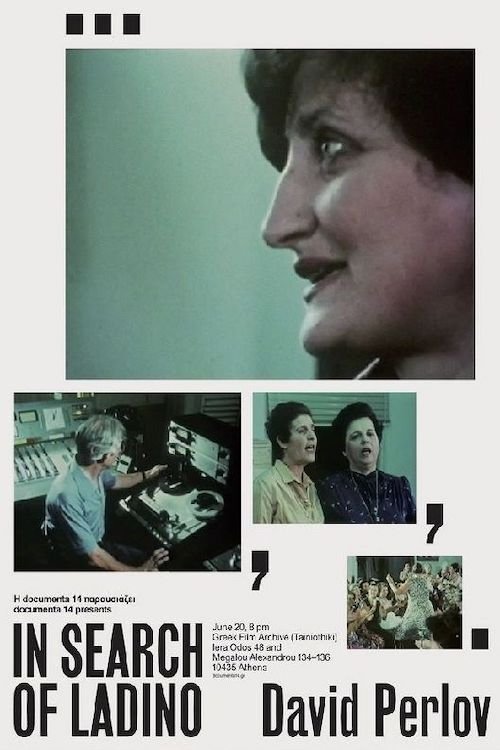
In Search of Ladino follows Ladino speakers, their culture, their memories and hopes for their mother tongue. This unique film is one of the earliest works presenting Ladino-speaking Holocaust survivors in Israel, and it provides rare documentation of their testimonies and songs. Filmmaker David Perlov’s camera glances on the faces of the people, as he listens carefully to their stories and songs. The film was meant to be part of a trilogy about languages: Hebrew, Yiddish and Ladino, but Perlov only managed to make the first film.

In Search of Ladino

1981
On a New Track
N/A

A video produced by the Israeli Film Service in cooperation with Israel Railways. “So much for rattling; from now on: one continuous welded rail!” Israel Railways changes the tracks and the ties along the Haifa-Tel Aviv route. This short film follows all of the project’s stages, from the production of the concrete railroad ties at the “Yuval Gad” factory in Ashkelon through the welding of the new rails to form one continuous rail.

On a New Track

1966
Updated Diary 1990-1999
6.0

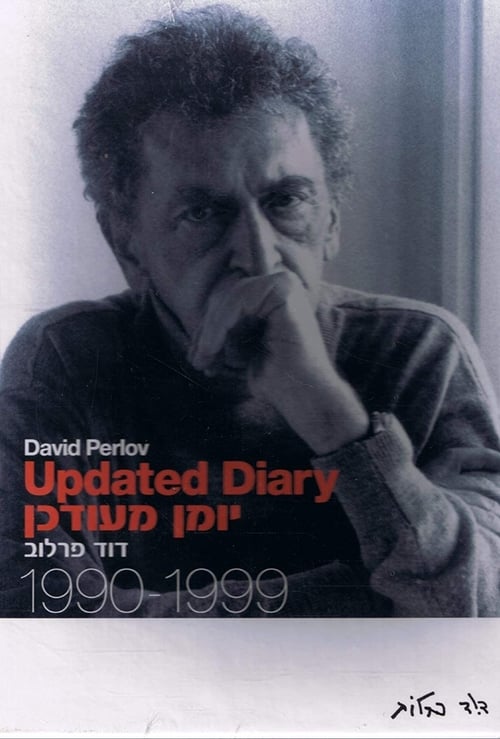
Updated Diary (Revised Diary): 1990 - 1999, is a continuation of the director's series Diary: 1973-1983, which deals with the director's family, Israel, and his country of origin, Brazil.

Updated Diary 1990-1999

2001