Robert Cahen
Directing
Biography
"Since the 1970s, Robert Cahen's research is haunted by the notion of passing: passing from fix imaged to moving image, passing from a place – and a time-to another, transformation of filmed reality and eye, exploration of sound related to the image. His approach is part of an always renewed dialogue between visible and invisible, narration and poetry, confronting another world, a world made different—beautiful, disturbing-by metamorphoses of time and space." (Sandra Lischi)
Known For

Cinématon is a 156-hour long experimental film by French director Gérard Courant. It was the longest film ever released until 2011. Composed over 36 years from 1978 until 2006, it consists of a series of over 2,821 silent vignettes (cinématons), each 3 minutes and 25 seconds long, of various celebrities, artists, journalists and friends of the director, each doing whatever they want for the allotted time. Subjects of the film include directors Barbet Schroeder, Nagisa Oshima, Volker Schlöndorff, Ken Loach, Benjamin Cuq, Youssef Chahine, Wim Wenders, Joseph Losey, Jean-Luc Godard, Samuel Fuller and Terry Gilliam, chess grandmaster Joël Lautier, and actors Roberto Benigni, Stéphane Audran, Julie Delpy and Lesley Chatterley. Gilliam is featured eating a 100-franc note, while Fuller smokes a cigar. Courant's favourite subject was a 7-month-old baby. The film was screened in its then-entirety in Avignon in November 2009 and was screened in Redondo Beach, CA on April 9, 2010.
Cinématon

"It's in the idea of movement where, for me, something essential comes together/ combines-- Seven short poems write to each other in images, fleeting visions of China glimpsed through sights, through sounds, always moving." -Robert Cahen.
Seven Fugitive Images

About “Four Doors” André Bon writes : these doors open onto four soundscapes which express in the order : tension, relaxation, expectation, ecstasy. We say : Sign. Symphonic breathing in four movements where music and sensuality of the images are offered in counterpoint, by subtle shifts. Small story of an encounter to decipher.
sign

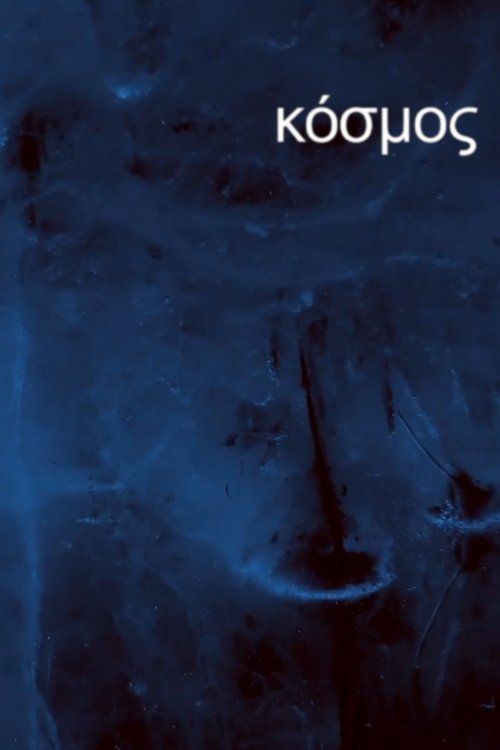
Twins still in their amniotic fluid announce our human condition, our compulsion to walk, move forward, run. When everything moves, we go through the forest of emotions in a dreamlike way. But it is thanks to water and its light reflections, to its transforming power that the infinite “Kosmos” plays with our uncertainty.
Kosmos

Temporary landscape; visual and sonic messages; blended; the city. Part of the "New Spaces" project, the film is an exploration of the landscapes and sounds of Hong Kong, seeking its identity between the old China and the new.
Hong Kong Song

In this vivid transposition of contemporary music for television, Cahen "responds" to the complex musical transitions of Répons, a work by French composer Pierre Boulez. Performed by the Ensemble InterContemporain and conducted by Boulez, the intricate Répons was designed for an ensemble of twenty-four musicians, six soloists and a "real-time" digital processor. In Cahen's re-composed interpretation, he responds with visual and temporal transformations, "opening" the images in space and time and applying electronic techniques to engulf the instrumentalists in ocean, sky, and trees. Mirage-like superimpositions, temporal shifts, mirroring effects and de-synchronization result in a rhythmic confluence of the illusory and the real. Immersing the viewer in image and sound, Cahen mirrors the transformative process of Boulez's music.
Boulez-Répons
Cahen surveys a New York in transition, in transit, in smog, in chaos and in peace.
Le deuxième jour

From "That was..." to "...Did we go there?" The Antarctic approached, observed, scrutinised, analysed, displaced. Questions about reading the landscape, reading motion; A slow motion journey through memory, as if "to have the time at last to know."
Winter Journey
A film by Robert Cahen
God Sees All

A pivotal work for video art of the 1980s. Fragments of time during a journey where the changing landscapes become full players in a story shown in shadowy backplay, which relates the imagined encounter of two passengers.
Just Enough Time
A Japan where time stands still; Men and women bound to their land and their work; Bodies floating in thermal springs, shown through the eyes of a painter. The traveller has understood that "everywhere it is difficult to live" and tries to make a picture from real things, so that, through the act of painting, he no longer suffers. Inspired by the characters in Sôseki's novel "Pillow of Herbs", these references give a free interpretation to the images, so that we make the journey in search of temporary solace.
Floating Bodies

Legendary characters in medieval and oriental costumes meet near a well. A slow ritual punctuated by races that the shot transforms and expands through slow motion. Choreographic tale by Ma Danse Rituel Théâtre, based on the show Le Puits de l'épervier by Hideyuki Yano. Legendary characters in medieval and oriental costumes meet near a well. Slow ritual punctuated by races that the shot transforms and expands through slow motion.
The Dance of the Hawk
Hanoi 2003. A woman does her hair at night. A train passes between the houses. A crowd rushes by jostling, working. A forgotten child waits.
Beyond the Night

The concept of "things half seen" determined the meaning of this film. Hidden scenes, barely revealed, follow one another as living and significant views affecting our wish to see and understand what we see only as glimpses, but might see in its totality. Made as a video-short principally through a succession of quick sequences, "Glimpses" shows the maintenance of mystery between two "masked" people in a world where the curtains remain closed.
Glimpses
J.M. Tringaud photographed the sea. On the day of the summer solstice 1990, 12 bottles, each containing an original photo are cast into 12 seas and oceans around the globe. In a kind of melancholy chant, Robert Cahen takes us across the solitude of these giant oceans where occasionally a lighthouse provides a human dimension.
The Last Goodbye
A contemporary dance video and a tribute to Patrick Bokanowski. The choreography of Bernardo Montet, conceived and created to be filmed by Robert Cahen, is based on the music of Michèle Bokanowski. It speaks of the loneliness of the dancer in the centre of the stage.
Solo
A film by Robert Cahen.
Horizontal Colors
No description available.
Buvards

No description available.
Artmatic

With a musical montage created by Christian Zanessi, Compositeurs à l’écoute provides insight into 18 composers and excerpts from 18 works spanning 50 years of music selected from the repertoire of GRM.