Acting
Peter Olsen, a young social outcast who lives alone on a rundown farm and raises vegetables for a living, finds his only consolation in liquor, though Dorcas Chatham, daughter of the general store owner, begs him to forego this indulgence. Returning from town, he finds a dog by the roadside, apparently injured by a car, and takes it home. Later, on a drunken spree, Peter is attacked by robbers, but the dog comes to his rescue and frightens the assailants away. Stirred by the unselfish devotion of his dog, Peter gradually regains his self-respect, and Dorcas falls in love with him and accepts his proposal, though she fears the dog. When Peter enters the dog in a show, another exhibitor proves to be its owner, and Peter is first parted from, then reunited with, "his" dog. Dorcas overcomes her fear and is united with Peter.
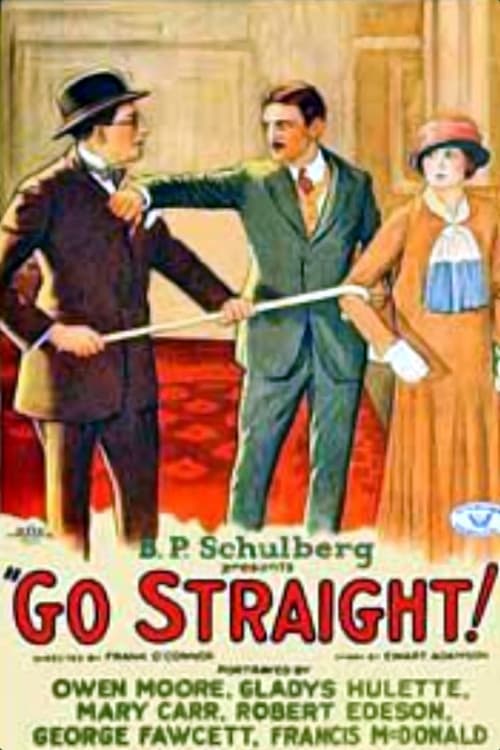
Gilda is a crook who wants to go straight, but her pals keep holding her back. She moves to Hollywood to begin anew but the old gang follows behind. Can she stop them from ruining her new life?
The King of Kings is the Greatest Story Ever Told as only Cecil B. DeMille could tell it. In 1927, working with one of the biggest budgets in Hollywood history, DeMille spun the life and Passion of Christ into a silent-era blockbuster. Featuring text drawn directly from the Bible, a cast of thousands, and the great showman’s singular cinematic bag of tricks, The King of Kings is at once spectacular and deeply reverent—part Gospel, part Technicolor epic.
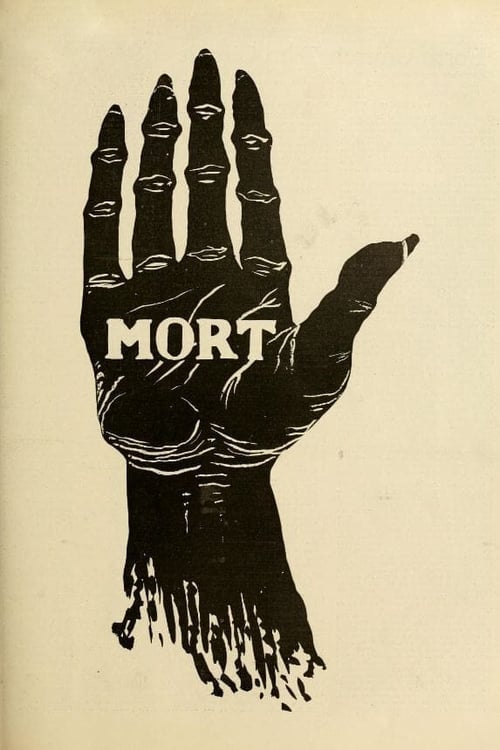
Surgeon Crisp announces to his student doctors and friends that he has solved the problem of limb-grafting, and shows proofs. Among those deeply interested is Mortmain, a musician and a friend of the surgeon.
The marriage of Jim and Esther spirals downhill rapidly when Esther purchases a sable coat for herself. Hoping to live up to her expensive accessory, Esther soon is keeping company with caddish Morrell. Jim brings his wife's galavanting to an abrupt end by committing suicide. Esther as an object lesson for young Alice Kendall, returns the fur coat that she's bought on impulse.
The first part tells the story of Moses leading the Jews from Egypt to the Promised Land, his receipt of the tablets and the worship of the golden calf. The second part shows the efficacy of the commandments in modern life through a story set in San Francisco. Two brothers, rivals for the love of Mary, also come into conflict when John discovers Dan used shoddy materials to construct a cathedral.
Chief Standing Rock's tribe has a treaty protecting their fishing grounds, but a canning corporation is violating the treaty through intimidation and force. The tribe is divided as to how to handle the threat. Standing Rock's son, Braveheart, is sent to college to study law so that he can protect their rights, but others in the tribe, led by the hot-tempered Ki-Yote, want to provoke a more violent confrontation.
A con artist masquerades as Russian nobility and attempts to seduce the wife of an American diplomat.
While Jim Barlow is hiding from the cops, his wife Ann goes to a mission The minister, Reverend John Matthews, gives her the address of a good Samaritan, Dr. LeRoy Clifford . When her child is hit by an automobile, she takes him to Clifford, who proceeds to operate right at his house. Meanwhile, one of Barlow's former associates, known as the Weasel tracks him down and convinces him to come on a job. The home they break into is Clifford's, while he is in the middle of working on Barlow's little boy. Barlow helps the doctor by holding a spotlight so he can complete the operation. The Library of Congress holds a 35 mm shortened version.
A go-getting bank messenger falls in with unsuccessful gambler.
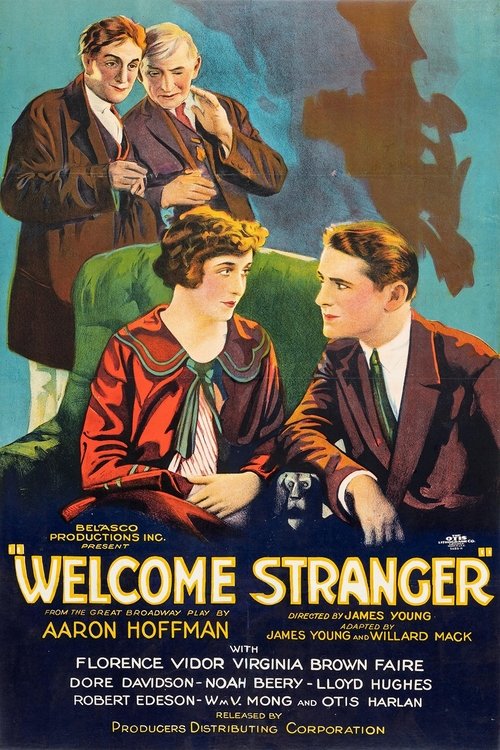
Stereotypical Jewish man Isadore Solomon (Dore Davidson) arrives with his daughter Essie (Virginia Brown Faire) in a small, predominantly-Christian New England town. The discriminating viewpoints of the populace, including the Mayor, drive them to try to get rid of the newcomers. Solomon is persuaded by Clem (William V. Mong) to invest in an electric-light plant. The town is brought prosperity and the Solomons' former adversaries honor him.
A young woman hits Hollywood, determined to become a star.
A recently widowed and destitute young mother (Jane Novak) appeals to her wealthy and heartless father-in-law (Robert Edeson) for financial aid. Instead, he convinces her to hand over her new baby to his care so that the child will be brought up with "everything money can buy." Unbeknownst to the grandfather, we learn that there are twin sons and our heroine keeps one baby to raise herself. The narrative jumps ahead to the boy's twenty-first birthday and we see what's become of them. Not surprisingly, the wealthy son has grown up spoiled and greedy while the poor one works hard and loves his mother.
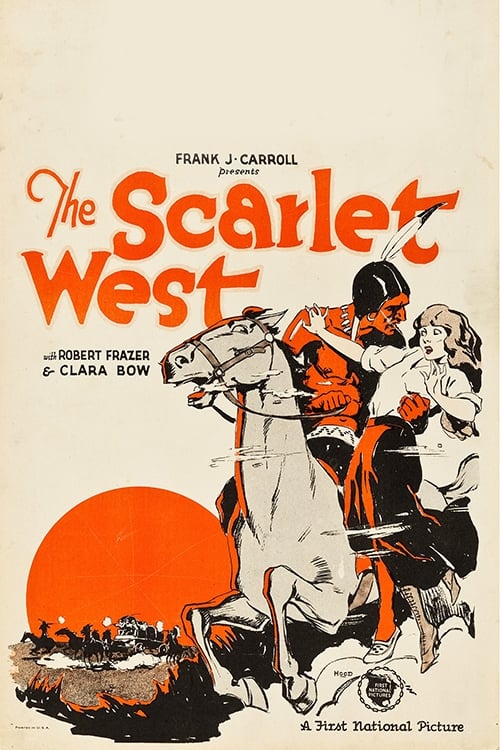
Cardelanche, the son of an Indian chief, returns from the East to find himself rejected by his own people. He is made captain of the U.S. army when he saves a detachment of cavalry from a group of renegade Indians, and further removes himself from his race when he develops a relationship with Miriam, the daughter of the Fort Remmington commandant. Lieutenant Parkman (Walker) gets into a fight with Cardelanche when Parkman is demoted, while General Custer's troops are slaughtered by Cardelanche's people. Cardelanche decides that his true allegiance is to his own race, and gives up Miriam to return to them.
Fox's immediate follow-up to its successful early-talkie western In Old Arizona was 1929's Romance of the Rio Grande. The story focuses on the Alvarez family of Mexico, specifically fabulously wealthy Don Fernando. Intending to bequeath his vast fortune and estate to his long-estranged grandson Pancho, Don Fernando must contend with his ne'er-do-well nephew Juan.
Cleo lives in Marseilles and works as a waitress in a waterfront dive. A stranger entices her into coming to Paris to take dancing lessons, but instead she is taken to a baron, who betrays her. In spite of this inauspicious start, Cleo becomes a successful and renowned actress, but her feelings about men have never recovered. She loathes them and uses them only for the money they offer her, which she then hands over to a penniless girl.
At the conclusion of World War I, a French girl is romanced by an American doughboy even though she is promised to a French soldier who was sent to the front.
Jeffrey (Matt More), a jewelry store clerk prevents a robbery and, as a reward, given a vacation in Honolulu, provided that he transports a valuable emerald to the Hawaiian Islands. On the boat he meets a blonde named Mary (Dorothy Revier) whom he mistakes for a jewel thief called Blonde Mary (Hazel Howell).
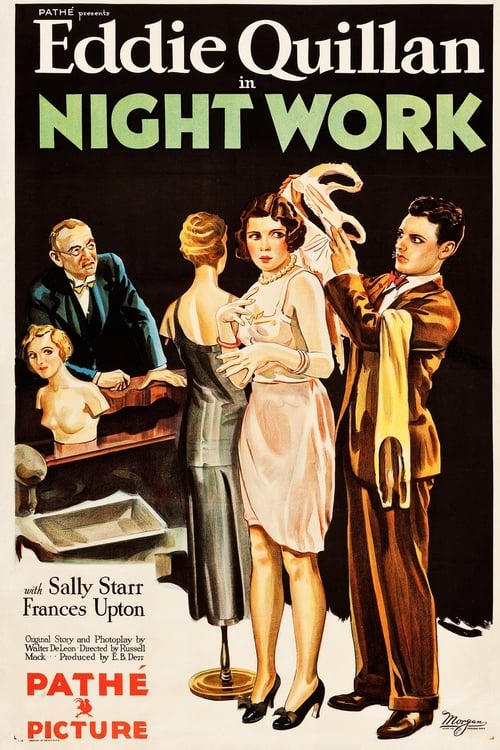
Willie, as an assistant window-dresser, is the lowest man on the totem pole at a department store. To add insult-to-injury Willie is also the store's designated 'Fired Man."; when a disgruntled customer demands that somebody-must-be-fired, Willie is summoned and summarily fired, only to be rehired when the now-satisfied customer has departed. Willie inadvertently adopts a four-year-old orphan at a cost of ten-dollars a week, and things go from bad to worse since Willie doesn't make ten-dollars a week. But, with the help of Mary, a beautiful young nurse, Willie manages to turn some corners and improve his lot in life, albeit with some skids along the way.
Wall Street clerk George Coburn leaves the employ of broker Ralph Coombes to become an independent speculator. Although she disapproves, George's wife, Lisa, insists on being his "silent partner" with a fifty percent share of the profits. Lisa avoids spending lavishly and saves her share of the money. Later, Ralph, who is in love with Lisa, conspires with brokers Jim Harker and Charles Nesbit to involve George in a stock deal that will likely ruin his business and his marriage. George loses his fortune and leaves his wife. Ralph conspires with his friend, Gertie Page, to lure Lisa on a voyage to Europe. Soon after boarding the ship, Lisa learns of the plot and disembarks. She reunites with George and assures him that they are not destitute. (Source: AFI)