
Fred Worden
Directing
Biography
Fred Worden, filmmaker, has been involved in experimental cinema since the 1970s. His work has been screened at The Museum of Modern Art, in the 2002 Whitney Biennial, The Centre Pompidou, in Paris, The Pacific Film Archive, The New York Film Festival, The London Film Festival, The Rotterdam International Film Festival, The Toronto Film Festival, and The Hong Kong International Film Festival. He was an editor for Criss-Cross Art Communications from the '70s through the '80s and his writings have appeared in Cinematograph. His work is included in the Stan Brakhage Collection, the Austrian Museum, The Centre Pompidou and others. Worden's work develops out of his interest in intermittent projection as the source of cinema's primordial powers: how a stream of still pictures passing through a projector at a speed meant to overwhelm the eyes might be harnessed to purposes other than representation or naturalism.
Known For
A young woman stands by a car while scenes from metropolitan life flash by.
Cyclopean 3D: Life with a Beautiful Woman
The story of Willard from Ashley's opera Atalanta, recounted in 3 parts.
Atalanta Strategy
I had a strong, slightly illicit, urge to commandeer the original train sequence from the 1931 film Possessed and make it move in such a way as to give the girl (Joan Crawford) what she thought she wanted: a position on the inside. To do that, I had to create my own (all encompassing) vehicle. By my count, the original sequence provides three orders of motion: the motion (and stillness) of the passengers on the train, the motion of the train itself, and finally the motion of the girl (Joan) outside of the train.
Possessed
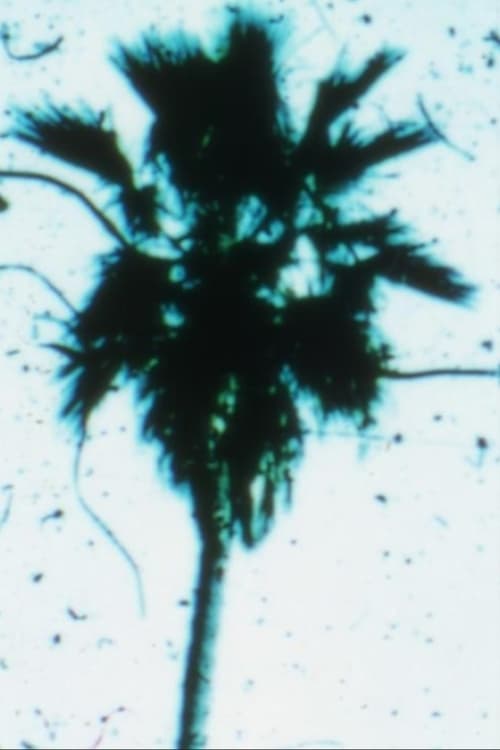
No montage, no human subjects, minimal visual content, and the artists basically pissing on the fourth wall by calling attention in every way possible to the artifice of what they’re doing. Preserved by the Academy Film Archive in 2009.
Venusville
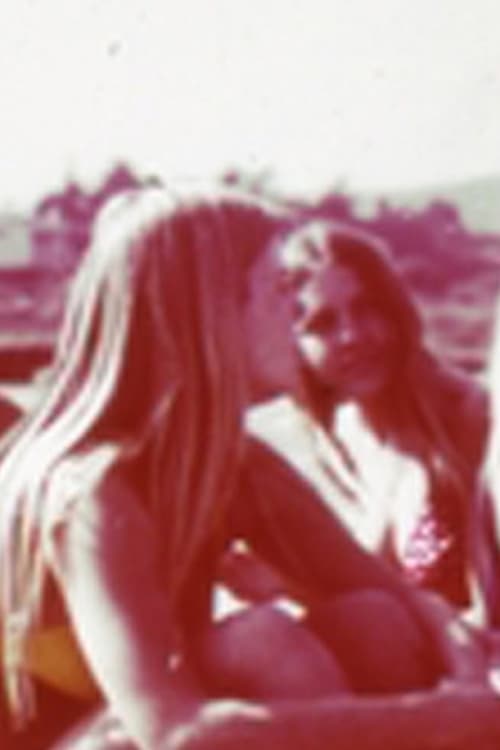
A day at the beach in Malibu, at the northwestern edge of what Reyner Banham calls 'Surfurbia.'
Now, You Can Do Anything
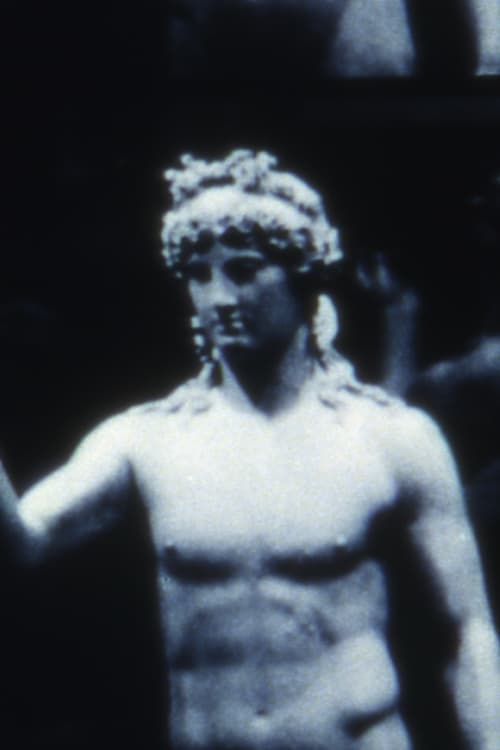
A half-baked, but tenderized world view offered up for the new arrivals. An abstracted experimental narrative based on three images: face, figure, and crowd. A collage film of representational images of the human figure without being portraiture or performance.
Introduction to the Secret Society

"A more or less true story from my days as an art handler in 1980s New York City." (FW)
How The Hell I Ripped Jack Goldstein's Painting In The Elevator
I made this film in 1976 as an attempt to consider the flow of the scrolling frames in the spotlight as a field of experience of continuity, if the representation and naturalism were rejected. I have not shown this film since the early 80s. But while I finished One, I realized that some of the questions I was trying to solve at that time came from this film, and that is how I rediscovered.
Vudoo
LSD is illegal. 1859 is not.
1859

Two simple and progressive accumulations mingle with the confines of the Moffit Tunnel in the Rockies.
Here, There Now, Later

“This little-seen abstract work of Worden’s began with short expressionistic/biomorphic color sequences he generated from scratched and abraded film strips made via a liberal application of the titular cleaning agent. These passages were then spun into an elusive, experiential coherence via Fred’s analytic and poetic optical printing, resulting in an evolving cascade of loops and rhythms.” —Mark Toscano
Bon Ami

"Color/form, light/shadow, flatness/depth, figuration/abstraction, landscape/paint, all collaging and colliding in an exploratory, arrhythmic, kinetic dance constructed a frame at a time by Fred Worden on his optical printer. This early film now reveals itself as a revelatory early warning sign of Worden's filmmaking to come, comprising ten minutes extrapolated from only four frames of source imagery." (Mark Toscano) Preserved by the Academy Film Archive in 2009.
Four Frames
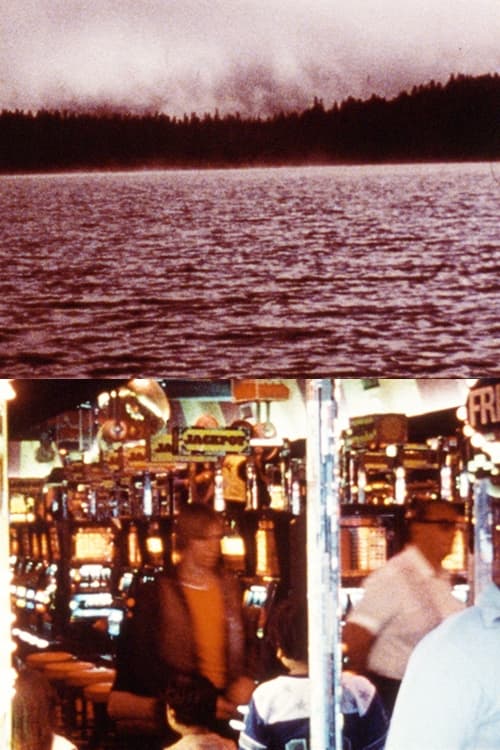
An accident on a frozen lake. A story told in a visual matrix paralleled by the spread of melting ice.
Lure
The human susceptibility to delusional thinking has, at least, this defining characteristic: easy to spot in others, hard to see in oneself. The filmmaker, racked by the inescapable observation that it is delusional thinking that is the common denominator driver of so many contemporary man-made disasters gins up a vehicle meant to ruthlessly uncover and expose his own particular brand of pathological believing. This film is about us. I believe its true. See the iron jaws of the mechanism at work as the filmmaker falls into the biggest and most obvious delusion of all: the belief that he can master his own delusions by making a film about them.
Amongst the Persuaded
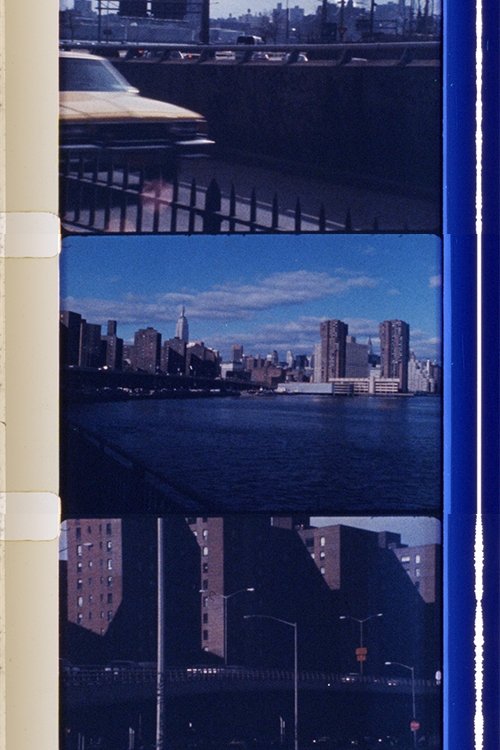
The camera is spinning. The points accumulate to form a line, a line of horizon, which like any line draws a hidden curve. The traffic disengages from its components - water, bridges, cars, smoke, facade - to become an endless trajectory. The current of energy, which wanders over the various objects: the photographed thing of an immediate familiar reality, a chain of points of inertia.
Breakout
Coming in the wake of a whole movement of wild, ecstatic, psychedelic films loaded with unchecked energy and abandon, Throbs demonstrates a remarkable subtlety and restraint, as Fred explores variations in loops and cycles, weaving unlikely combinations of found and original footage to envelop us in a free associative dream world. —Mark Toscano. Preserved by the Academy Film Archive in 2008.
Throbs

“INSOMNIA is the most minimal and self-referential of Worden’s films. It consists entirely of punched holes in black leader. The fractal reference is secured spatially by using punches of two different sizes, and temporally by the distribution of the punches along the strip of leader. In some ways this is Worden’s purest pattern film. We are presented only with a pattern of black and white. There is no imagery to compete for our attention. But somehow we see the film as representational. The white struggles against the black in an attempt to pour into the foreground. It is as if the ancient cosmology were true: The stars are holes in the canopy that shrouds the earth. We yearn to leave the world of darkness and appearance for the world of reality and light on the other side.” —Dale Jamieson
Insomnia

“Conceived as a homage and an answer to Len Lye’s hand-processed FREE RADICALS. Lye’s film consists of direct, non-photographic markings on the emulsion, accompanied by a soundtrack of African percussion (surely exotic for the time). Lye’s choice, after a long career in both commercial and experimental cinema, to turn to such bare and primitive material (“aboriginal” was his chosen term) fits with my own obsession with sticking as closely as possible to the primary elements of the film in order to invoke the underlying and real power of cinema.” —Fred Worden
Boulevard
A short by Fred Worden
Panovision

“Out on my freeway, directionality is elusive. The faces in the windows appear and then disappear, some moving out ahead, some falling behind, some moving so fast as to be beyond registering, others sliding by so languidly you’d think they want something from you. What’s irreversible is the plain fact that once they disappear from view, they’re gone forever. No amount of freeway jostling is ever likely to bring them by again. Each time I think to myself: one more person I’ll never know.” (FW)