Directing
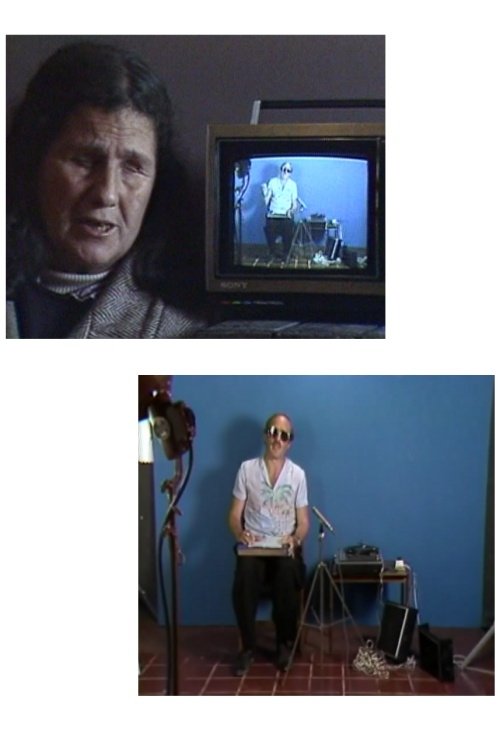
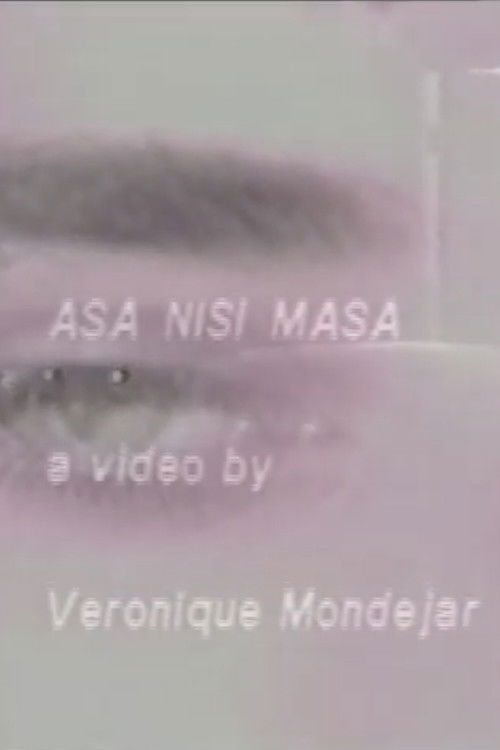
Exchange of nine video letters sent between New York and Santiago since 1982. Fragments that employ associations and reiterations to examine the influence of experience on the creative act.
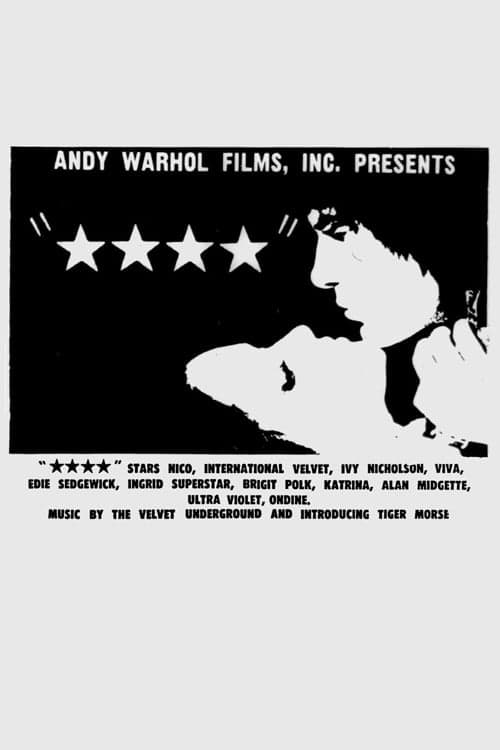
Photographed entirely in color, Four Stars was projected in its complete length of nearly 25 hours (allowing for projection overlap of the 35-minute reels) only once, at the Film-Makers' Cinematheque in New York City. The imagery in the film is dense, wearying and beautiful, but ultimately hard to decipher, for, in contrast to his earlier, and more famous film Chelsea Girls, made in 1966, Warhol insisted that two reels be screened simultaneously on top of each other on a single screen, rather than side-by-side. The film's title is a pun on the rating system used by critics to rank films, with "four stars" being the highest rating. From Wikipedia.
Ondine is a gay man attempting to re-adjust his sexuality via various encounters with different women. After trying his luck with three women, Ondine becomes a background character in a sequence in which a group of Latin American men, calling themselves The Bananas, engage in a food fight. Ondine then engages in a wrestling match with Joe Dallesandro, who is married to Brigid Berlin.
Las Meninas is a brilliant essay on illusionism, mirrors and perception in art, life and video, articulated by Downey as a subjective interpretation of Velasquez's eponymous Baroque masterpiece. Through a theatrical reenactment of the painting's pictorial tableau and a re-articulation of its complex perspectival structure, Downey brings to life the spatial dynamics, illustrating the psychological tension of the relationship between viewer and subject. Placing Las Meninas in a historical context, Downey relates the painting's thematics to Spain's economic and political systems of the late 17th century.
Much of Juan Downey’s pioneering video work critiques the purported objectivity of ethnographic observation and documentation. To produce The Circle of Fires, the artist lived with his wife and stepdaughter among the Yanomami indigenous group in the Venezuelan Amazon for seven months; inviting the Yanomami to both make and watch videos of themselves, Downey inverted the conventional roles of observer and observed. Likely seeing themselves in this medium for the first time, the subjects are presented with a new vision of themselves through the screen’s alternate reality.
Essay film about surfaces.
An exploration of the televisual through interviews and film clips.
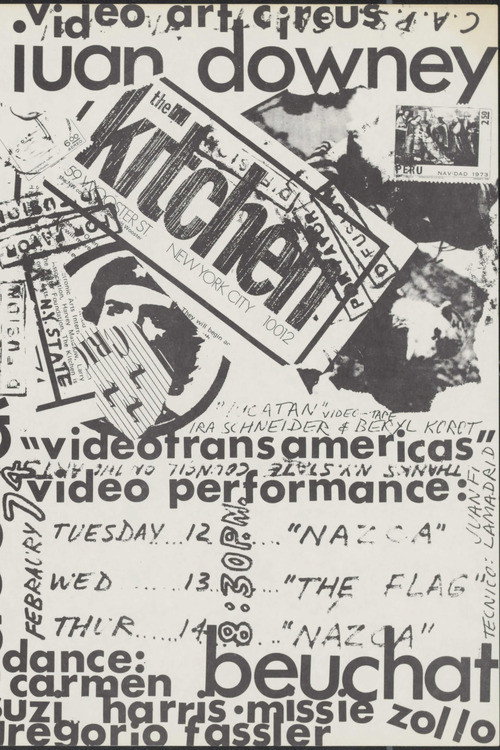
Video Trans Americas comprises footage from Mexico, Guatemala, Peru, Bolivia, and Chile, where Downey documented native cultures. He challenged the power dynamics of traditional ethnographic documentary by sharing his recordings with his subjects, whom he considered to be his collaborators, involving them in the production process and questioning his own position as an outsider. - MOMA
The Motherland is an ironic parable of Downey's native Chile. Returning to Santiago, he finds a society in the grips of the military dictatorship of General August Pinochet. In a scenario that suggests the "magic realism" of Latin American fiction, Downey visits the suburban house of his youth and stages a surreal re-enactment of the Motherland "giving birth" to a duck, while the crucified Prophet looks on. This overtly symbolic scene is intercut with the spectacle of General Pinochet and his troops in full regalia. In an unsparing indictment of the economic and political reality of the dictatorship, The Motherland offers the Prophet as a sacrifice to the goose-stepping ranks of Pinochet's junta. This savage allegory, in which church and state conspire to oppress society and the individual, merges the subjective and the cultural, the autobiographical and the political.
No description available.
Featuring a vehicle equipped with tanks of oxygen, Fresh Air was an interactive performance that allowed people on the streets of New York to breathe clean air free of charge. This guerilla act, done under the pseudonym George Smudge, was a comment on the declining air quality in 1970s New York.
Downey examines meanings and interpretations of signs, symbols and systems of representation in Western cultural history in the third part of The Thinking Eye series. Employing linguistic and semiotic analyses as interpretative systems, Downey weaves literary, musical, art historical and personal references in his study of cultural icons and symbols. Using video effects and nonlinear narrative modes, Downey creates an associative "hall of mirrors" of meanings and representations that echoes the elusiveness of his subject. Shifters takes its title from the theories of Jacques Lacan — "[a shifter] designates the subject of an enunciation, but it does not signify it." In this fascinating essay, Downey plays with the subjectivity of what Leo Steinberg terms the "meaningfully ambiguous" gestures and signs of art and culture.
Information Withheld is a complex investigation of signs and symbols in Western culture. Applying linguistic, semiotic and iconographic analysis as systems of interpretation, Downey decodes signs from everyday traffic signals to Michelangelo's paintings, drawing on Leo Steinberg's statement that the sign — "simple, unambiguous and universally understood" — contrasts with art's essential premise of "information withheld." Using electronic imaging techniques to create metaphorical meaning, he draws parallels between ancient icons and hieroglyphs and contemporary signs and symbols. Downey interweaves subjective associations with intellectual analysis: A trip to the barbershop recalls a personal childhood trauma, which in turn alludes to the semiotic origin (blood and bandages) of the red-and-white barber pole. In another, typically ironic chain of cultural associations, he juxtaposes images of Egyptian nomads with a fashion show inspired by "nomadic" motifs.
Merging the subjective and the objective, the autobiographical and the anthropological, The Laughing Alligator is a highly personal observation of an indigenous South American culture. Recorded while he and his family were living among the Yanomami of Venezuela, this compelling work distills Downey's search for his own cultural identity and heritage through the encounter between the Western family and the so-called "primitive" tribe. Challenging the anthropological view of the Yanomami as violent cannibals, Downey focuses on the tribe's myths, rituals and ceremonies, documenting funerary rites in which tribal members eat the pulverized ashes of their dead to insure their immortality. Subverting conventional modes of ethnographic documentary, Downey participates as an active presence, "shooting" with his video camera as a means of creating an interactive dialogue between artist and subject and addressing his own "yearning for a purer existence."
Resonating with a melancholy poetry, J.S. Bach is a subjective essay that merges a reflection on identity and the creative process with a lyrical documentary on the life of Johann Sebastian Bach. Shot in the wintry landscapes of Bach's native East Germany, this densely layered, nuanced work intertwines biography with Downey's personal visual and verbal commentary. Three nonlinear narrative strands function as a spoken fugue, while three compositions provide the musical "voice" of Bach. The tripartite structure — Death, Flashback, and Counterpoint — and complex, associative visual strategies function as a compositional analogy to Bach's own musical principles of equal temperament and counterpoint — the "organization of multiple melodies into a clear, rhythmic and harmonic relation." This fourth part of The Thinking Eye series was termed a "stunningly beautiful video... a profound vision under masterful technical control," by the L.A. Weekly.
In "Bachdisc", Downey constructs a sophisticated fusion of the classical and the technological, merging the labyrinthine technology of the interactive laserdisc with the intricate, delicately intertwined structure of a Bach fugue and his own nonlinear compositional strategies. Using a performance of Bach's Fugue #24 in B Minor by harpsichordist Elaine Camparone as the work's structural foundation, he manipulates the initial musical theme in twelve successive "chapters" that distill the fugue into its elemental parts. Choosing from the twelve chapters, the viewer can access and recompose his/her own fugue in a real-time manifestation of Bach's musical form. Digital effects such as split screens and inserts, which isolate specific visual elements, allow the viewer to deconstruct - and reconstruct - Bach's serpentine language of counterpoint and theme and variations.