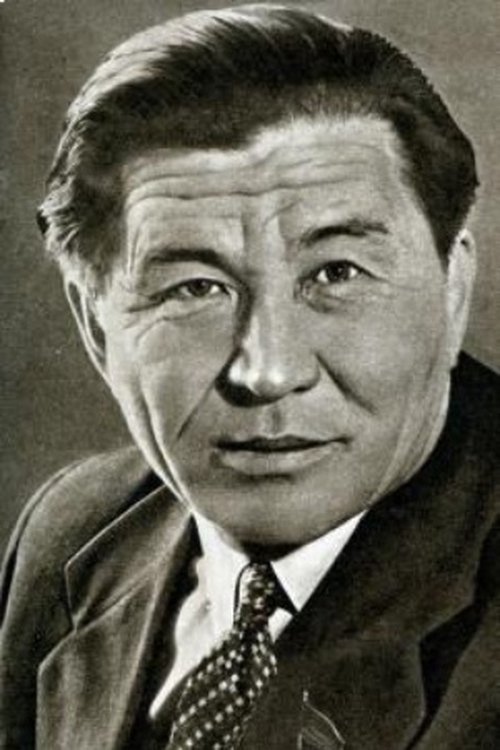
Shaken Aimanov
Directing
Biography
Shaken Kenzhetaevich Aimanov (Kazakh: Шәкен Кенжетайұлы Айманов; born 15 October 1914 – 23 December 1970; Bayanaul) was a Soviet (Kazakh) film director, screenwriter, actor. He is considered to be the father of Kazakh cinematography, as well as an iconic film director and actor. He directed eleven films between 1954 and 1970. Aimanov was born in Bayanaul, Russian Empire (now Kazakhstan) in 1914. He studied at the Kazakh Institute of Education in Semipalatinsk (now Semey) from 1931 to 1933. He began his acting career at the Kazakh Theater of Drama in Alma-Ata in 1933. Vivid social and psychological characteristics are inherent in his art. His best roles include Akhan Seri in Akhan Seri and Aktokty by Gabit Musirepov, Isatai in Isatai and Makhambet by Akhinzhanov, Kobylandy Batyr in Kobylandy by Mukhtar Auezov, Kodar in Kozy Korpesh and Bayan Sulu by Gabit Musirepov, Petruchio in The Taming of the Shrew by William Shakespeare, and Tikhon in The Storm by Alexander Ostrovsky. He also worked as a director and from 1947 to 1951 was chief director at the Kazakh Theater of Drama. Working in films since 1940, as both an actor and a director, Aimanov played Zhambyl in the film of the same name and directed the 1958 film Our Dear Doctor, among others. He was a deputy of the fourth and seventh convocations of the Supreme Soviet of the Kazakh SSR. In 1963 he was a member of the jury at the 3rd Moscow International Film Festival.[5] In 1952, he received the Stalin Prize for his work in the theater, and in 1968 he received the State Prize of the Kazakh SSR. He has been awarded the Order of Lenin and the Order of the Red Banner of Labour. The Kazakhfilm, where Aimanov worked as a film director, was named after him in 1984. The Shaken's Stars International Film Festival was held in 2013 to support and help young artists and filmmakers.
Known For
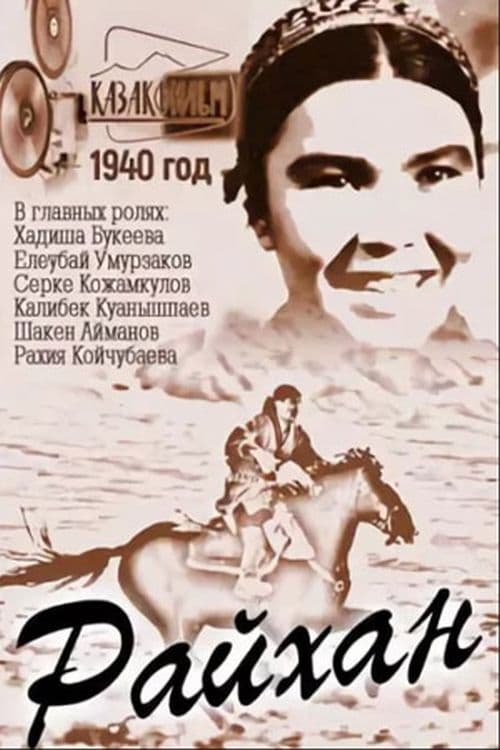
About the emancipation of Kazakh women under Soviet rule.
Rajchan

Taylak is a kind teacher of geography. People call him "Angel in a tubeteika, a traditional Central Asian skull cap," for his kind caring personality and also because he never parts with his traditional skull cap. One day his mother comes to Almaty to visit him. She decides that it's time her son got married and she starts to look for a bride for Taylak.
Angel Wearing Tubeteika
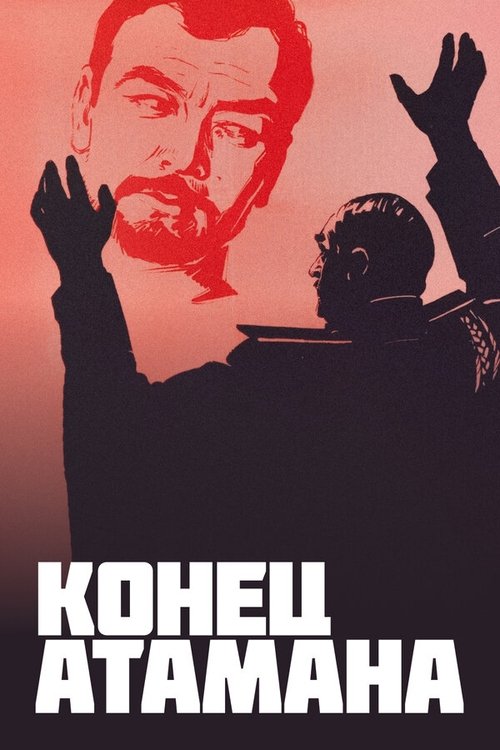
A Kazakh spy thriller: In 1921, at the height of the civil war, a Soviet officer is assigned to kill the ataman Dutov, a White collaborator. In order to get close to the ataman he infiltrates his gang.
The End of Ataman
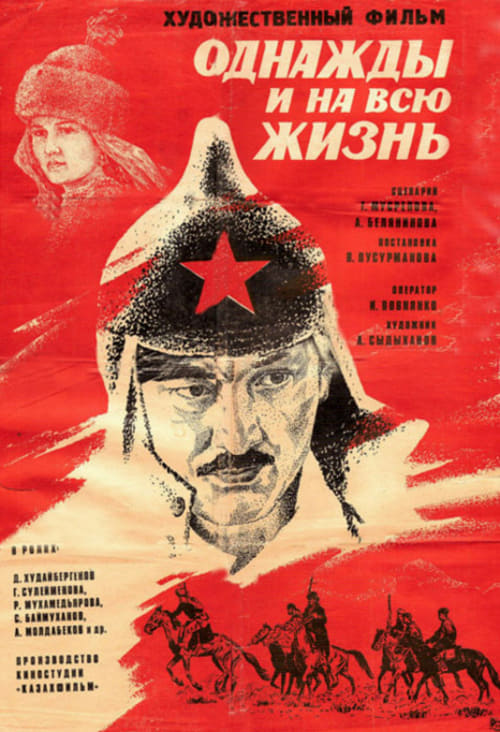
The first post-revolutionary years in Kazakhstan, the period of formation of Soviet power. More than once, the bandits tried to deal with the singer of the people, the poet Erken, but could not silence him. It seemed that the earth itself kept him safe — he found shelter and help in the homes of the poor, escaped from prison, on the instructions of the Bolshevik committee, under the guise of a tramp, made his way to the south, explaining everywhere the advantages of Soviet power for the people. Erken carried his love for Aklima through his whole life. Having met her once in one of the villages, he could not forget a young woman whose fate was tragic.
Once and for a Lifetime
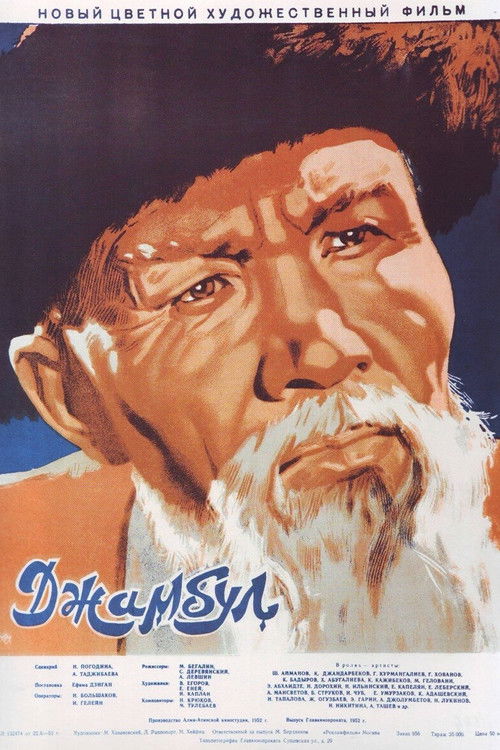
The film tells about the life and work of the famous singer of the Kazakh people akyn Dzhambul Dzhabayev.
Zhambyl
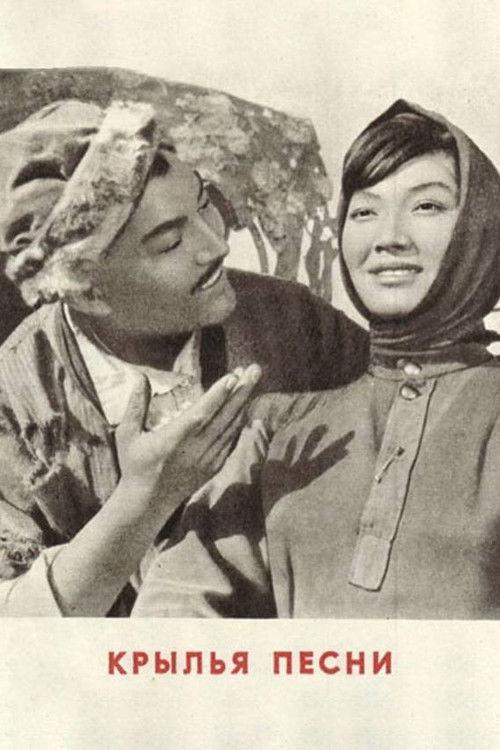
Bai Nurtaza hopes to find in the young poet, ambitious and not indifferent to female beauty, a loyal ally in the fight against the Soviet government. Taking advantage of Musa's weakness, unable to resist temptations, he completely subordinates him to his influence...
Wings of Song
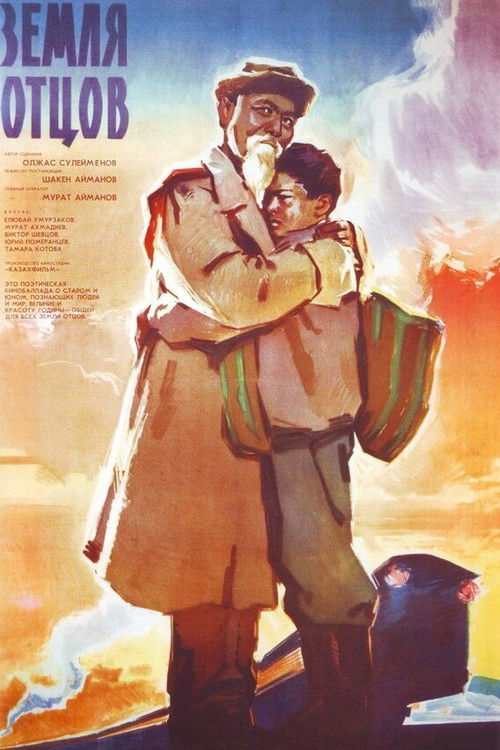
An old man decides to find the body of his son, a Kazakh soldier who died fighting somewhere in Russia, to bury him in the land of his ancestors. Travelling across the land with his grandson, they discover the harsh reality of war. And when they finally find the coveted grave, they realise that many brothers-in-arms are buried with the soldier. Every inch of the great homeland becomes the land of our fathers, the land of the ancestors...
The Land of Our Fathers
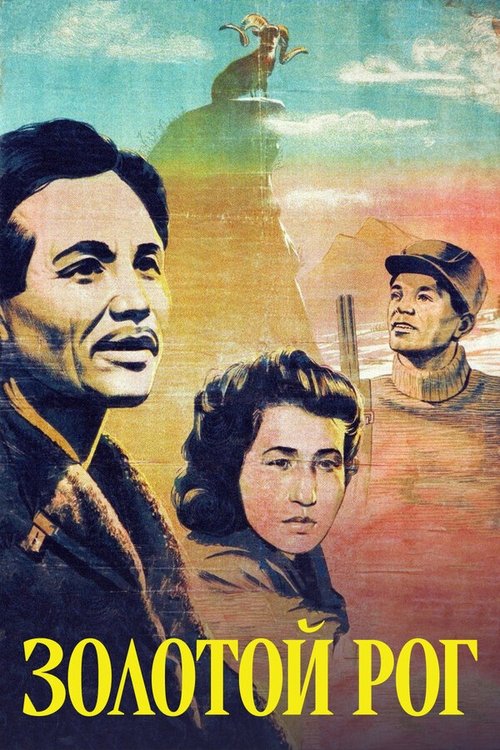
High in the mountains of the Trans-Ili Alatau there is an experimental station of the Kazakh Institute of Animal Husbandry. A young scientist, Jacques Dosanov (Shaken Aimanov), is working on breeding a new breed of sheep, trying to cross a merino sheep and a wild argali ram. With great difficulty, he manages to catch argali in the mountains. Datsanov and his assistant Saule take care of five sheep fertilized by a wild ram. But in difficult mountain conditions, four queens died, and the only lamb born from the fifth sheep was killed by an accidental shot by a hunter. However, Hasanov does not give up. He undertakes to repeat his experience, this time on an immeasurably large scale. A few years later, the scientist managed to grow a whole flock of archaromerinos.
Golden Horn
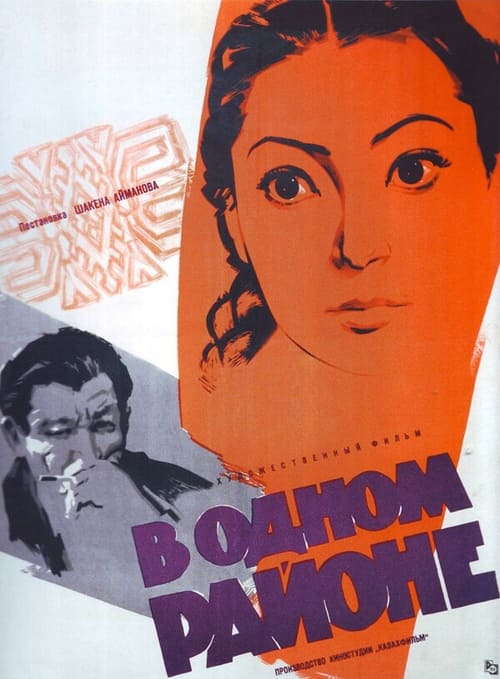
About the secretary of the district committee of the party, Sabyr Bayanov, who at the beginning of his work deservedly won the authority and respect of people, and then, having become arrogant, he lost his sense of responsibility and turned into a bureaucrat.
In One District
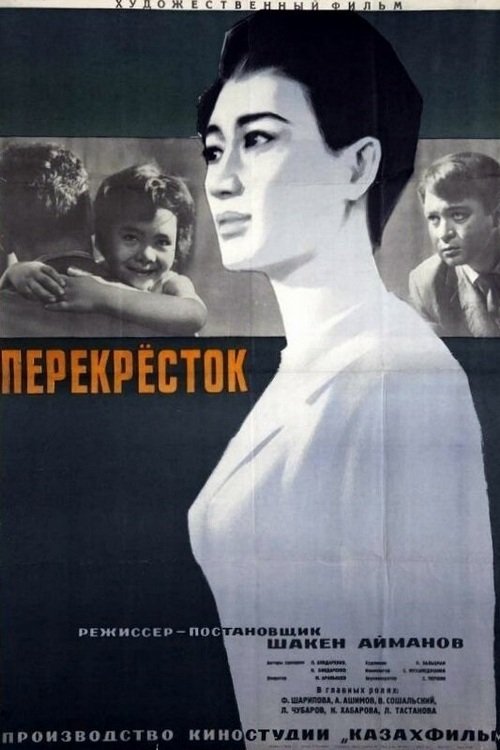
The film tells about the ambulance doctor Galia Ismailova, her worries and joys.
Crossroads
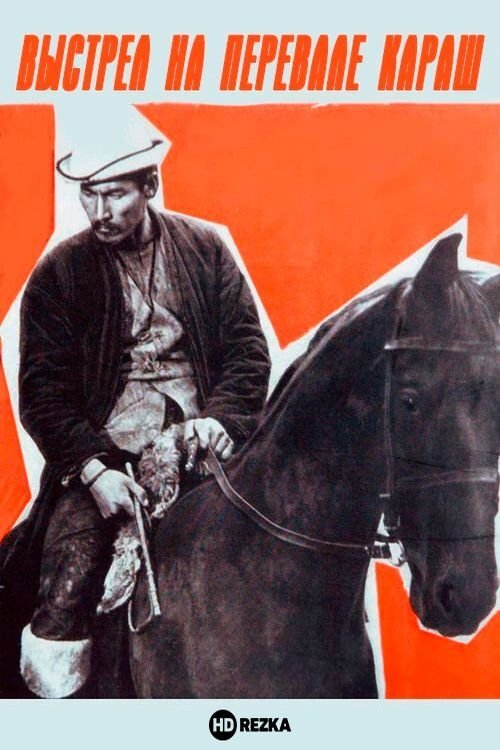
About the Kirghiz aristocracy's attempt to battle the influx of Russian merchants in pre-Revolution days.
Gunshot at the Mountain Pass

1954. The first detachment of young virgin lands arrives in the remote Kazakh steppe. The old forester Bulanbai warns the guys about the difficulties, but the youth boldly gets to work. We have to fight not only with the harsh nature, but also with the inertia of the director of the trust of state farms Kuanysh Korkutov. Contrary to his instructions, the director of the Komsomolsky state farm Kudryash prefers to process heavy, but more promising land masses. The secretary of the regional committee Beisov supports Kudryash. Korkunov is being removed from office. Soon a new group of young people arrives at the state farm...
Here We Live
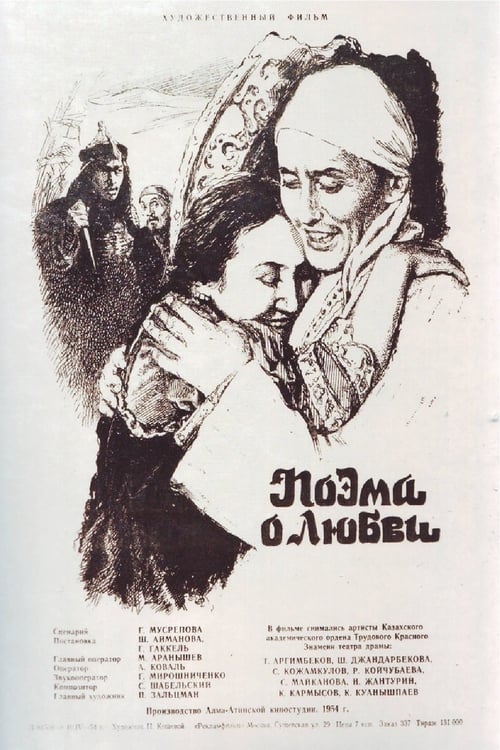
A film based on the Kazakh epic poem of the XIII-XIV century. The film tells about the founders of Sarybay and Karabay, who, due to circumstances, violate the oath given to each other to seal their blood-tied friendship. However, their children Kozy Korpesh and Bayan Sulu develop mutual feelings.
A Poem About Love
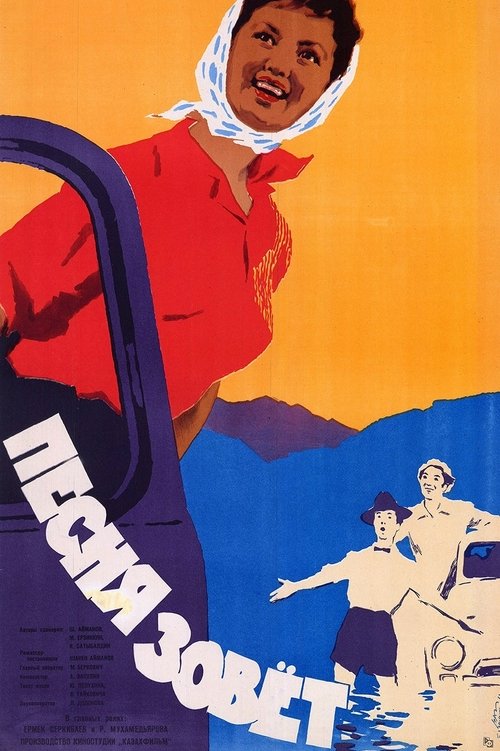
In the center of the plot of the film is the fate of a young girl Aigul. She works well in the collective farm fields, acts as a leader of the youth, dreams of creating her own folk theater in her native collective farm. The famous singer Dosai Nurlanov, by a misunderstanding, gets into the "Singing village" (this is the playful name of the collective farm) and becomes a witness to the growing culture of the village. This inspires him to become the head of the people's theater...
Song Calls
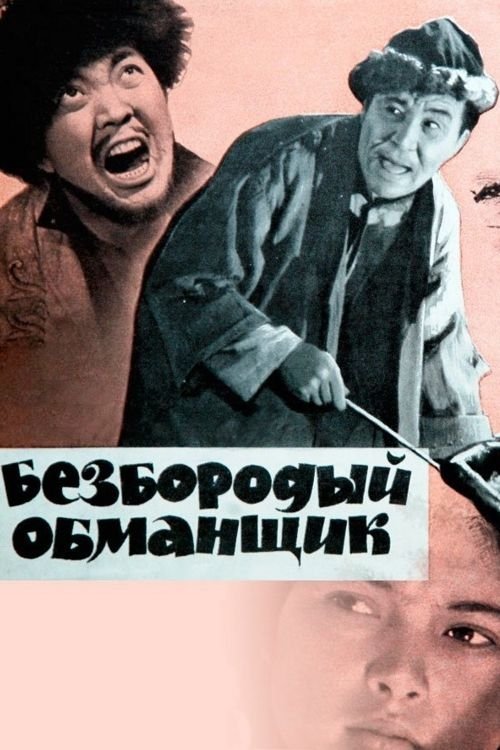
Aldar Kose is not a name, but a nickname. Aldar means deceiver, Kos - beardless. And what was the name of this man in fact, and whether he lived at all, no one will say for sure. But in every Kazakh village, in every yurt in the mountainous Dzhailau, they talk about Aldar Kos as their good friend. He tells about him in different ways, but everything converges on the fact that he was poor and kind, hated the oppressors of the people, fought against injustice and helped the offended... Like a tumbleweed bush, Aldar Koshe, who was forever wandering through the boundless Kazakh steppes, once met a beautiful woman and fell in love with her. But the girl loves another — a brave, honest and kind poor man, herding the herds of a rich man.
Beardless Deceiver
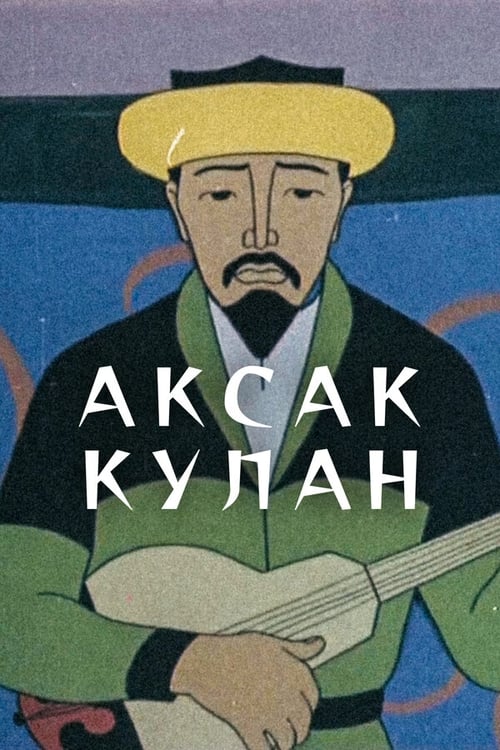
This film is based on a Kazakh legend which tells about the story of dombra
Aksak Kulan

Doctor Lavrov is a head physician at one of the health resorts in Kazakhstan. He is known for his kindness and compassion towards his patients. When it comes to his 60th birthday, his colleagues put in extra effort to surprise him.
Our Kind Doctor

The granddaughter of the old man Jagpara Sabira is beautiful, spoiled, cunning. Several young men immediately fall in love with her. They all hope to get a positive response from her and calmly go to the front. Sabira does not openly deny reciprocity to any of them. As a sign of respect, she gives a white rose to the lovers of the horseman. Every horseman, not knowing that Sabira gave the same white rose to everyone else, hopes for her love. But she sends all the horsemen to her grandfather for a final answer.
White Rose
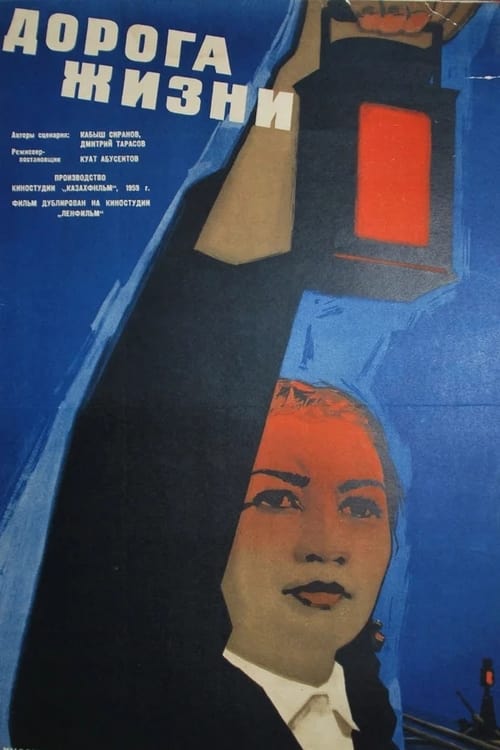
The train goes to Moscow. In the same carriage with the railway workers who are going to the meeting, there is a Chinese writer collecting material for his future novel about the people of Soviet Kazakhstan. He discovers an old newspaper in his archive. The newspaper contains photos of the best drummers — builders of Turksib: Ospan, Hakim, Boris, Hadisha and others. They turn out to be the writer's neighbors on the car — yesterday's ordinary workers, builders, now the most prominent statesmen, heads of railways. At the request of the writer, Ospan tells a touching story of their life and love.
The Road of Life

The prototypes of the heroes of this TV movie were the residents of the state farm named after him. Toraighyrova.