Writing
No description available.
The story of Padre Pio (1887-1968) from the onset of the stigmata during World War I, when he prayed that soldiers' suffering be his, until his death. The story is told by Emilia, Pio's friend, to a Vatican official reviewing Padre Pio's potential canonization. We watch local people venerate the humble Capuchin monk, we see petty jealousies within the Church almost bring him down, and we experience his decision to build a Home for the Relief of Suffering, a labor of love begun just after World War II. Emilia and her husband Dr. Sanguineti work tirelessly beside the humble but sensible Pio.
Michele is an MP for the Italian Communist Party who loses his memory in a car crash, though hardly anyone around him seems to notice. During a crucial water polo match on the eve of election day, he gradually begins to remember his past life, revealing a man whose personal and political identity crisis mirrors that of Italian communism itself.
Italian Made-for-TV film by Alberto Negrin.
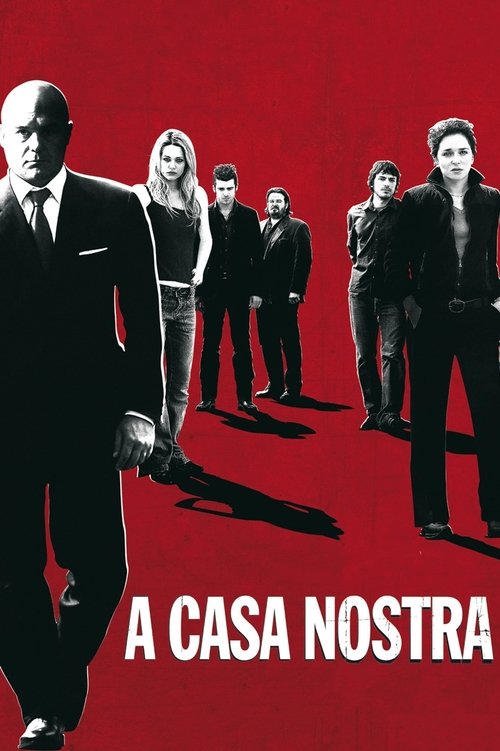
Cesare Botero, an ambitious and corrupt young minister, hires a new spokesman, honest and polite high school professor Luciano Sandulli.
Adriana, a working-class girl living in Rome during the fascist period, has her difficult relationship with her mother, with men and with love.
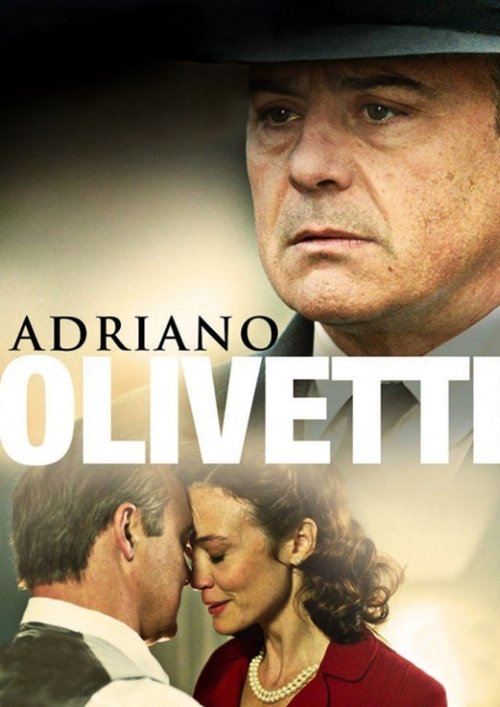
In post–World War II Italy, genius industrialist Adriano Olivetti oversees the creation of the first all-Italian electronic calculator while theorizing a revolutionary business model based on the idea that profit should be reinvested for the benefits of the whole society. His vision catches the attention of powerful interests...
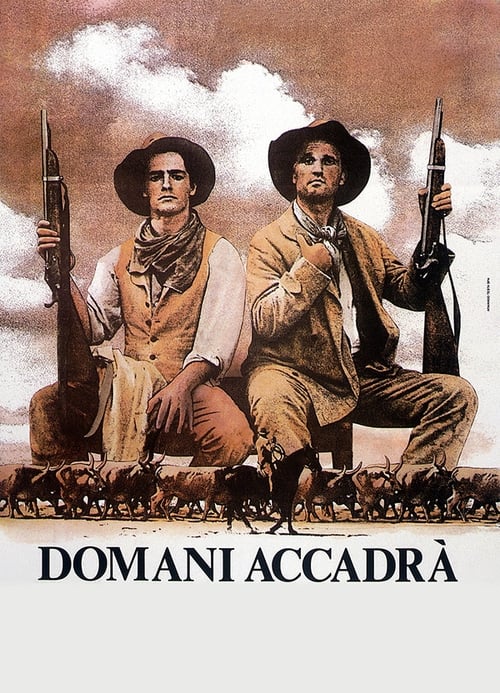
1848, Tuscan countryside. Edo and Lupo are two peasants running away after having robbed their boss. Chased by mercenaries, they'll meet bandits, damsels in distress, eccentric nobles, and revolutionaries along the way.
It is 1945. Enrico Piaggio’s Pontedera factory is in ruins and the 12,000 people who worked there are condemned to unemployment and misery. Piaggio feels the enormous responsibility resting on his shoulders: the lives of so many families depend on his ability to create new jobs. A project is born in the mind of the entrepreneur: a small, robust, agile and affordable means of transport, capable of relaunching mobility, giving impetus to the recovery of the country’s economic and civil life. To make this dream come true, Piaggio turns to engineer Corradino D’Ascanio, a brilliant designer who uses the experience gained in the field of aeronautics to create the scooter that remains today the symbol of Italian creativity and design: the Vespa!
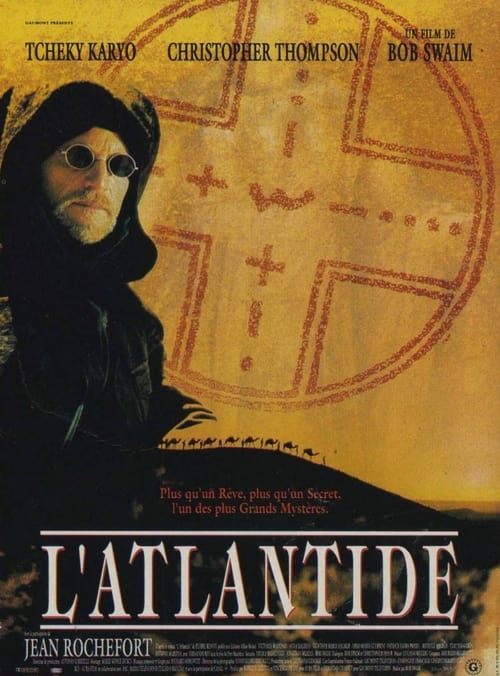
A mythical land who must be discover. Or invented. In an impressive library, two old men. One is a great Polish archaeologist at the end of his work. The second- his best friend. They are masters of a substantial slice of human history: legendary Atlantis. It is refuge and masterpiece, propriety and treasure.
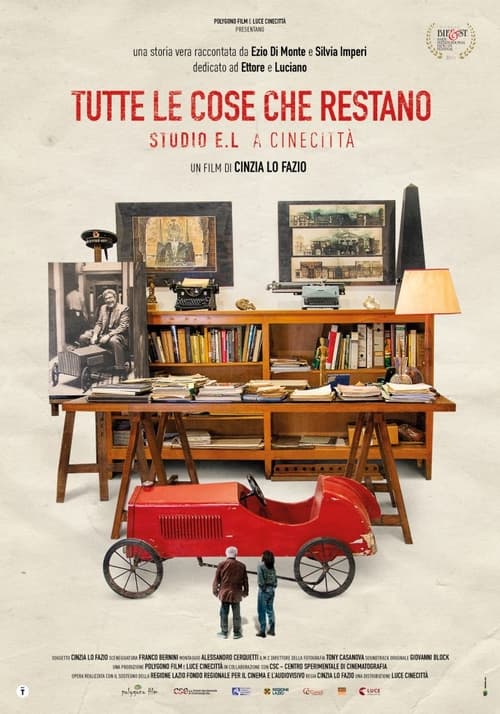
In a hidden corner of Cinecittà there is a magical place that no one knows about and that was about to disappear. It is STUDIO EL founded in 1983 by Ettore Scola and Luciano Ricceri. A creative space, a sort of Renaissance workshop, a factory. A place where the two great friends prepared their great films in Cinecittà, but where they gave the opportunity to many young people to grow and improve their professionalism. After the passing of Ettore Scola and Luciano Ricceri, time at Studio E.L stopped along with many objects that are the memory of almost 40 years of history of our cinema. Before Studio EL closes forever, becoming a museum space inside Cinecittà, we would like to give the objects it contains the value they deserve and tell their stories.
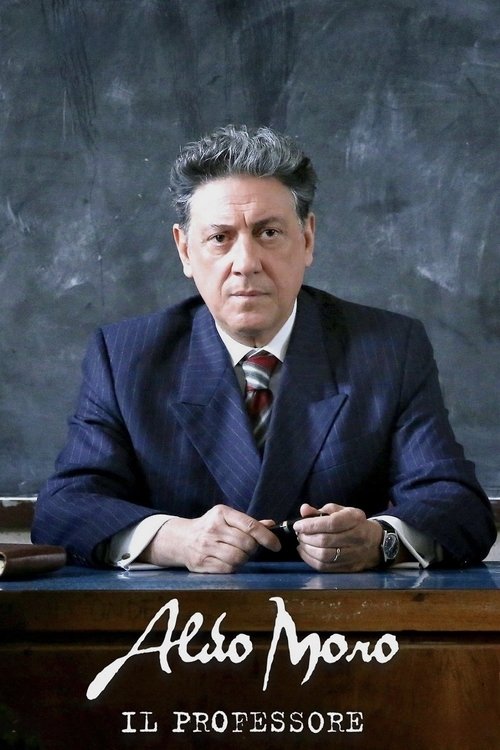
The story of the last 55 days of Aldo Moro, seen from the point of view of his students.
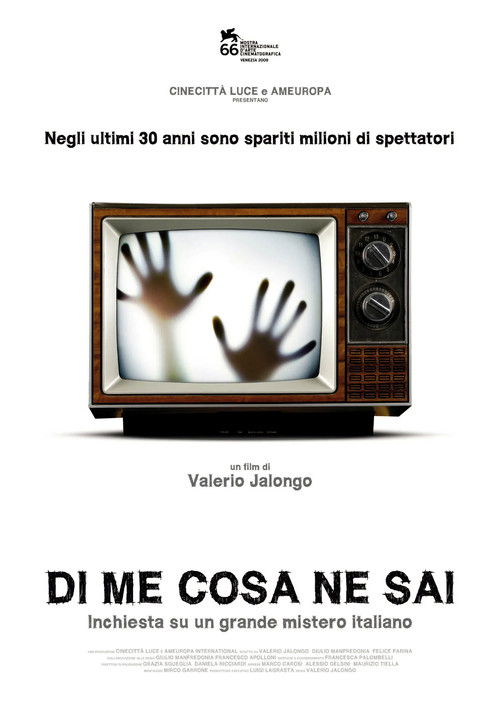
Until the 1970s, Italian cinema dominated the international scene, even competing with Hollywood. Then, in just a few years, came its rapid decline, the flight of our greatest producers, a crisis among the best writer-directors, the collapse of production. But what are the true causes and circumstances of this decline? In an attempt to provide an answer to this question, Di Me Cosa Ne Sai strives to depict this great cultural change. Begun as a loving examination of Italian cinema, the film transformed into a docu-drama that alternates between interviews with the great names of the past and fragments of cultural and political life of the last 30 years. It is a travel diary that shows Italy from north to south, through movie theatres; television-addicted kids; Berlusconi and Fellini; shopping centers; TV news editors; stories of impassioned film exhibitors and directors who fight for their films; and interviews with itinerant projectionists and great European directors.
The film is freely inspired by the great actress Monica Vitti, but it is in no way a biopic. It is the story of a woman named Monica, who loses her memory and regains meaning in her life.
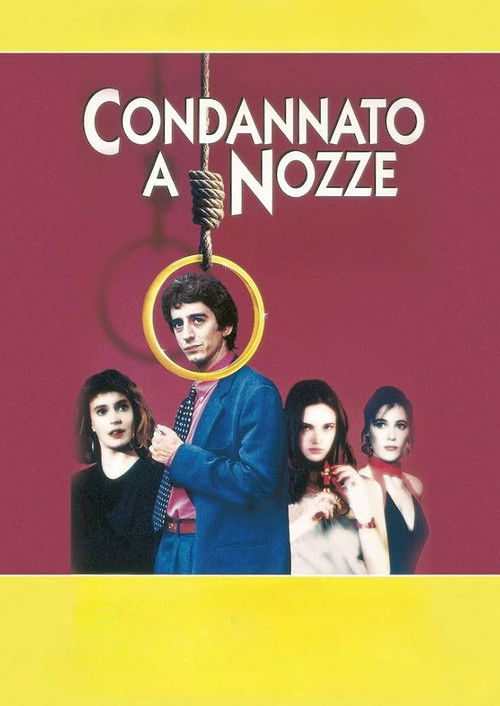
A neurotic lawyer is split between the desire to stay faithful to his fiancée and the one to cheat on her. Things take a turn for the literal when one night he splits into two different versions of himself, a soon-to-be-married one and a confirmed bachelor one.
Set in Milan, where people's lives are invisibly lead by money in its different shapes: too much, too little, stolen, earned, visible and even impalpable. The money flows from one story to the next, from one person to the other, becoming the engine of the film.Everything moves around two antagonist characters: Ugo and Rita. Ugo is a banker involved in a not really clean business. Rita, the Finance Police officer, is a strong and obstinate woman in charge of capturing Ugo. Other characters wander around them, with their weaknesses and fragility, their goodness, their evil and their contradictions. Characters meet, clash, love and hate each other, their lust for money becomes intense feelings.
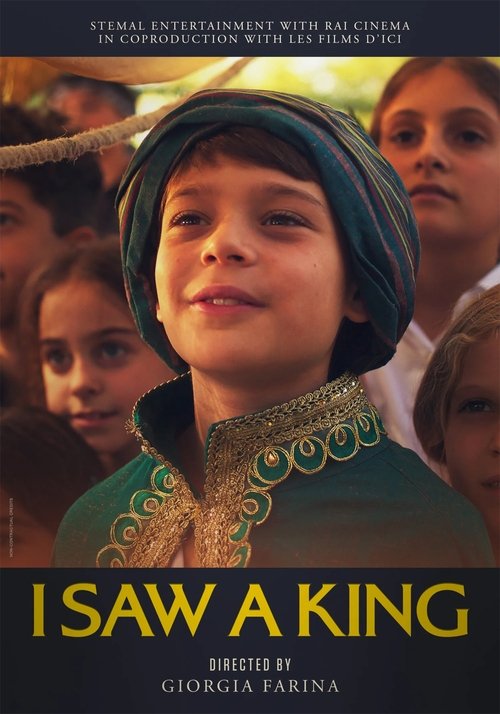
1936, in the aftermath of the Ethiopian occupation by Fascist Italy, under the incredulous gaze of the inhabitants of the small town in the Italian province Abraham Imirrù, an ethiopian prince and guerrila fighter is being held prisoner in the local Podesta garden's aviary. But for little Emilio, local recently force enlisted and reality-dissociated Balilla, he is Sandokan, the literal Salgari's character ...and he will be his hero.
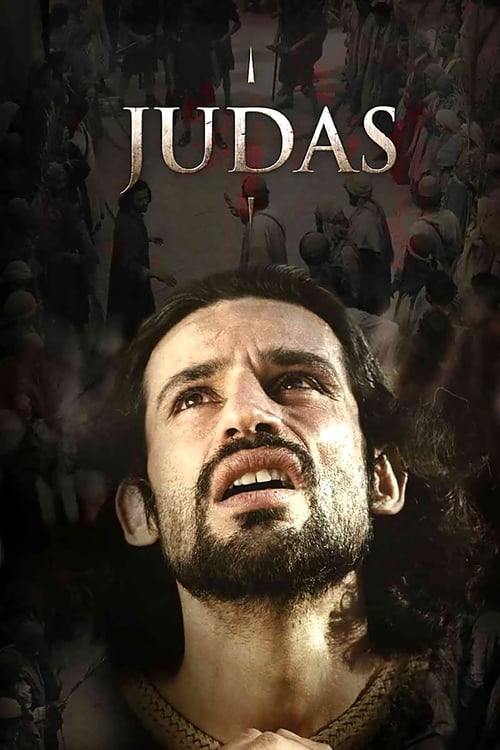
Pilate and the Roman legate Veturius look on worriedly as Jesus is celebrated as the new messiah in Jerusalem, fearing an uprising. Veturius decides to have Jesus arrested as soon as a suitable opportunity presents itself. Judas is delighted by the reception Jesus is receiving, and quickly wants to win over the influential merchants to the cause which would make him the king and the liberator of the Jews.