Writing
Karol Plicka was an important musician and composer. He recorded folk songs immediately after hearing them in musical notation to preserve them for future generations. Similarly, he records and interprets traditions associated with dance, folk song and local stories that vary from region to region in his film The Eternal Song. The short documentary presents merry-making in Slovak and Czech regions that are changing with the coming modernization and transformation of musical records.
No description available.
A cinematic poem with an impressive soundtrack that complements and completes the cinematic sketches of the folk culture of the Slovak nation previously made by ethno-photographer and director Karel Plicka. With its perfectly constructed dramaturgy, the documentary follows the beauty of the natural cycle of the seasons and shows peasant life in an isolated village in the Carpathian mountains of Slovakia from the end of winter through spring and summer to the traditional harvesting methods of autumn. This creates a tribute to traditional culture and the secular connection between man and nature. The aesthetically extraordinary visual representation of folklore comes to life through the editing technique influenced by the Soviet avant-garde and is complemented by poetic intertitles by the Slovak poet Ján Smrek.
Plicka's work is an extreme case of the multilingual version and its war and post-war form recalls many period cultural and political contexts. After the war the original version was supplemented by Czech commentary and the soundtrack was replaced by new music consisting of pieces by Baroque Czech composers.
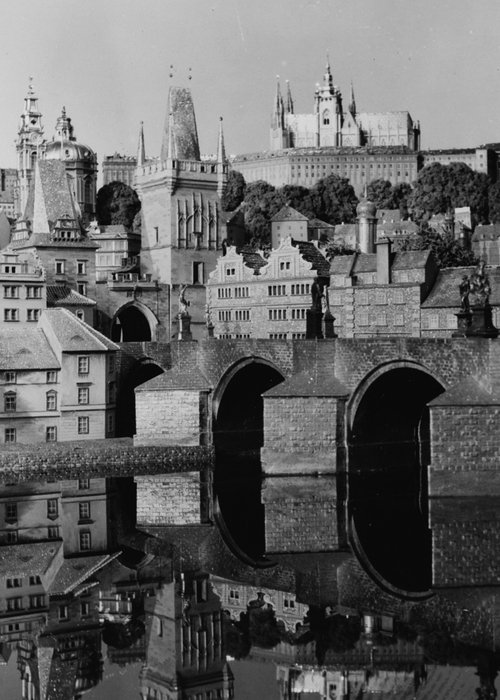
Kulturfilm about the architecture of the city of Prague.
A Czech folklorist who received a prize for a visual myth about Slovakia The Earth Sings (1933) at the Venice Biennale, made for Prag-Film a film about the culture and traditions of the Cheb district (The Egerland, practically uninhabited by Czechs by then), for which a propagandistic prologue and epilogue was shot by F. B. Nier.
A perfect marketing film from the 1930s. The short film is an advertisement for Baťa's new products, presented through the traditional celebration of the end of winter – the carrying of a lighted Marzanna into a stream. Plicka once again stylistically outdoes himself in his search for perfection in natural compositions, Moravian costumes, and traditional songs.
Karel Plicka was also cinematographer of this short movie. Editor in charge was Alexander Hackenschmied. There is an extraordinary emotional charge, every shot is working on its own, such as photographs, paintings and poetic complement intertitles in this short. From the perspective of nature and the perspective is shifting to the people and their habits, work and clothes. Peculiar documentary shots underscore Ruthenians (men, women and children) who are interested in looking into the camera and the curious "eye" showing off their habits.
Having finished his film Jánošík (1935), Plicka embarks on the journey of a lifetime. Accompanied by a Slovak-Czech delegation of politicians, inventors, and cultural representatives, he is particularly interested in the life of Slovaks in America. He observes the towns and the architecture, and remarkably documents their old as well as new customs and skills. During his trip, he visited nearly more than eighteen major American cities, as well as Lake Ontario and Niagara Falls.
A short reportage from post-war Slovakia. President Edvard Beneš came to Banská Bystrica to celebrate the first anniversary of the Slovak National Uprising. His journey through Central Slovakia was a motivating and celebratory moment for the people and the compatriots from the areas of partisan fighting.
A record of the trip of the President of the Czechoslovak Republic Edvard Beneš to Slovakia. The footage maps the journey from Bratislava to central Slovakia, to the towns of Trenčianske Teplice and Mošovce.
A film portrait about Professor Karol Plicka, focusing on his films, photography and folklore work.
The Matica slovenská (a mostly government-sponsored cultural, academic, and archival institution) employed Karol Plicka (1894-1987) as its ethnographer, who was able to make documentary shorts from about 1926. He obtained funding from the President’s Office in 1928 to produce an hour-long documentary about village life, Through Mountains and Valleys (Po horách, po dolách). It was awarded a Gold Medal at the International Exposition of Photographic Art in Florence and received an Honorable Mention at the International Venice Film Festival in 1932.
Folk architecture, costumes, work, customs and traditions, dances, and other expressions of traditional life in Slovak villages.
The original introductory part of Karol Plicka’s film The Earth Sings (1933), which was replaced with a sequence of shots of Bratislava during the era of the First Slovak Republic. Spring in Prague is a short film, a poem dedicated to Prague – a city of baroque churches, modern houses of Wenceslas Square, or Wilson Station. Capturing the details of the streets in a modern way, this film by Plicka complements his extensive collection of photographic books about Prague and its architecture.
The news film, shot by Karol Plicka, shows the first Czechoslovak President Tomáš Garrigue Masaryk on holiday in the Czech countryside. Plicka was often called upon by Masaryk to photograph portraits and family and state gatherings. The film material proves that Plicka was able to get unusually close to the president and thus capture his joys in an unusual setting.
This short ethnographic film is the first part of the series Through the Agricultural World intended to promote village life and the work of the peasants to the townspeople. Plicka chooses stylistically significant and aesthetically impressive shots of sowing grain, Easter celebrations, and children playing in the meadow.
Slovak folklore presents its beauty not only in celebratory customs and children’s games. The short documentary proves that Plicka perceived poetry also in the everyday work of the people, in their determination and their diligence with which they were able to create a legacy for the next generation in a unique connection with traditions and Slovak nature.
Martin Slivka's documentary film about Karol Plicka (1894-1987), the founder of Slovak cinematography.