Marie-Claire Blais
Writing
Biography
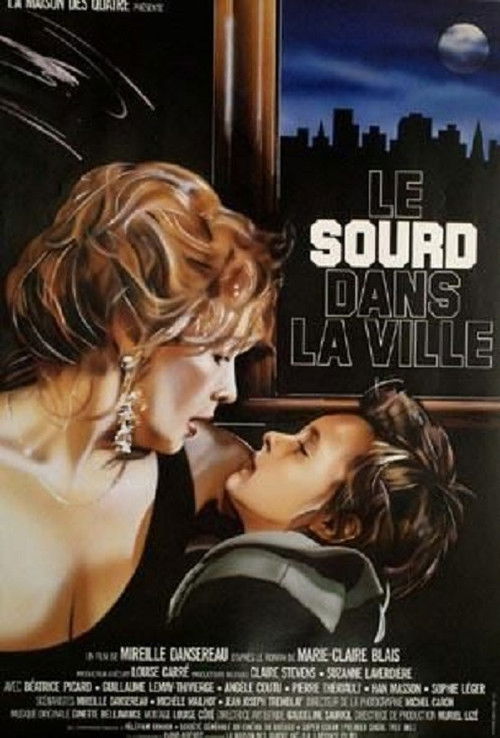
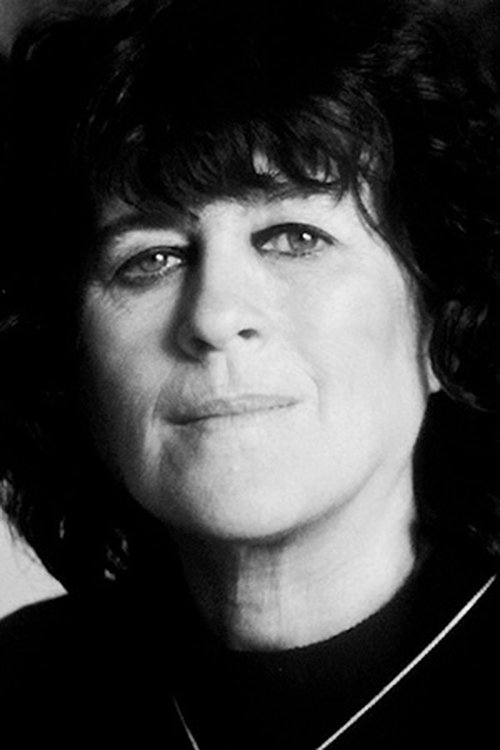
Marie-Claire Blais CC OQ MSRC (5 October 1939 – 30 November 2021) was a Canadian writer, novelist, poet, and playwright from the province of Québec. In a career spanning seventy years, she wrote novels, plays, collections of poetry and fiction, newspaper articles, radio dramas, and scripts for television. She was a four-time recipient of the Governor General’s literary prize for French-Canadian literature, and was also a recipient of the Guggenheim Fellowship for creative arts. Some of her works included La Belle Bête (1959), The Manuscripts of Pauline Archange (1968), Deaf to the City (1979), and a ten-volume series Soifs written between 1995 and 2018. Blais was born on 5 October 1939 into a blue collar family in Québec, the daughter of Fernando and Véronique (Nolin) Blais. She was the eldest in a family of five children. She studied at a convent school, but had to interrupt her education at the age of 15 to seek employment as a clerk and later as a typist. At the age of seventeen, she enrolled in a few classes at Université Laval, where she met professor and literary critic Jeanne Lapointe and priest and sociologist Georges-Henri Lévesque, both of whom encouraged her to write. Blais published her first novel La Belle Bête (translated as Mad Shadows) in 1959, when she turned 20. She received a grant from the Canada Council of Arts which allowed her to begin writing full-time. She first moved to Paris and later moved to the United States in 1963 initially living in Cambridge, Massachusetts, then in Wellfleet, Massachusetts. She was also helped by American literary critic Edmund Wilson who introduced her to artists and writers in Cape Cod including feminist Barbara Deming and writer and painter Mary Meigs. The three lived together in Wellfleet for six years. Blais remained a longtime partner of Mary Meigs until Meigs' death in 2002. During this time, Blais was awarded two Guggenheim Fellowships. In 1975, after two years of living in Brittany, France, she moved back to Québec. For about twenty years she divided her time between Montréal, the Eastern Townships of Québec and Key West, Florida, where she maintained her permanent home. In 1972, she became a Companion of the Order of Canada. Many of her works have been adapted for other formats: La belle bête was made into a ballet by the National Ballet of Canada in 1977. The same book was made into a movie by Karim Hussain in 1976. Hussain won the Director's Award at the Boston Underground Film Festival for his work. Some of Blais' other works that were made into movies included Une saison dans la vie d'Emmanuel (Claude Weisz, 1973), which won the Prix de la Quinzaine des jeunes réalisateurs at the Cannes Film Festival, Le sourd dans la ville (Mireille Dansereau, 1987), which won an award at the Venice Film Festival, and L'océan (Jean Feuchère, 1971). ... Source: Article "Marie-Claire Blais" from Wikipedia in English, licensed under CC-BY-SA 3.0.