Luiz Rosemberg Filho
Directing
Biography
A Brazilian filmmaker, visual artist and essayist who worked extensively in film and video, Luiz Rosemberg Filho (1943 - 2019) is best kown for his features "O Jardim das Espumas" (1971), "A$$untina das Amérikas" (1976), "Crônica de um Industrial" (1978) and "Guerra do Paraguay" (2017). Rosemberg began his work with the arts as a painter during his teenage years, having his first contact with cinema during the early 1960s. His first film, "Balada da Página 3", is now lost. After releasing "O Jardim das Espumas" in the early 1970s, he moved to Paris, where he stayed until 1974 and became a close friend to fellow Brazilian director Glauber Rocha. By the late 1980s, Rosemberg was already transitioning his medium from film to video, with his works assuming an even more experimental, essayist nature. In the 2000s, he embraced the digital medium. He was commonly paired with the Brazilian Cinema Marginal movement, even though he rejected this framing for his work. His films "O Jardim das Espumas" and "Crônica de um Industrial" were censored by his country's then ruling military dictatorship. After "O Santo e a Vedete" (1982), he did'nt release a feature until "Dois Casamentos" (2014). Through all of this period (and after it), though, he continued to make short films and produced a number of collages, many of which have film as a subject. At December 2017, then aged 74, Rosemberg began publishing a series of Facebook posts containing his memories and thoughts on film, his friends, travels, politics, women, censorship, war, love, sex and the passing of time. He published those texts until February 2019, with a total of 404 posts that were later compiled into selected writings by his longtime colaborator, DoP Renaud Leenhardt. Shortly after releasing "Os Príncipes" (2018), Rosemberg was hospitalized and submited to a surgery that would remove an hernia. He passed away in 2019, having finished the editing process of "Bobo da Corte" (2019), his last film, just before his death.

Known For

An accident at a construction site, resulting in one death, sets one worker off on a struggle for justice that exposes the mechanisms of exploitation and the class relations of a country that had undergone one decade of fast-paced ‘conservative modernisation’ at the hands of the military. As a sort of sequel to the classic The Guns (1964), following the fate of those characters as they move from enforcers of exploitation to exploited, it offers more than a snapshot of the period: the correspondent time lapses in fiction and reality capture the passage of a chunk of Brazilian history between the two films, and, therefore, also the transformations in cinematographic approaches to the social and political between the two moments. Equally daring in content and form, and in the originality of the adequacy of one to the other, it won the Silver Bear at Berlin.
The Fall

No description available.
Patrícia

The story of a poor woman living in the backwoods of Brazil and working as a maid. One day she is unfairly fired from the house where she was working and goes to the big city, facing a cruel and hostile world, working in factories, bars and bordellos.
A Lost Woman
After a life of richness, a conservative industrialist blames himself for abandoning his youth's left values. In existential misery, he keeps looking for a possible personal redemption after a foreign company buys his business. His life breaks into pieces.
Chronicle of an Industrial

An ambassador from an outer (and rich) space comes to visit a poor planet, where he ends up being kidnapped.
The Garden of Foams

No description available.
Ossos
Film in four segments: "Colagem", "Balanço", "Bandeira Zero" and "Sexta-Feira da Paixão, Sábado de Aleluia", having in common a strongly allegorical and gross protest tone in the approach of its subjects.
América do Sexo

A$$untina of the Amerikas is a musical comedy of a prostitute that, in 24 hours, wakes up, fights her mother, puts her son in anarchy, has a date with Santa Claus, a blue bear and two girlfriends. Then she finally meets her old millionaire lover. They spend their time to talk about everyday life and make love. Based on the novels of Fernando Henrique Cardoso and Wilhelm Reich.
A$$untina of the Amerikas

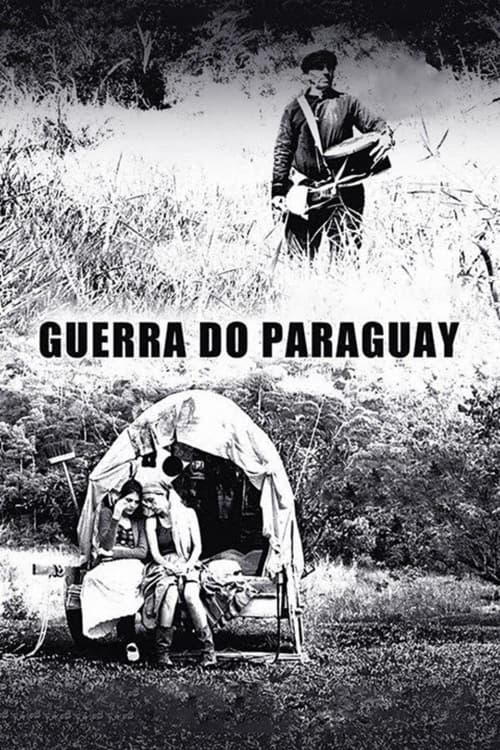
A soldier coming home after the Paraguay War meets a theater group. A shock between war and art.
Guerra do Paraguay
Successful businessman, Paulo Chupadinha send his wife to a convent every year to really enjoy Brazil’s carnival. He meets a cabaret woman that wants to make a show in his little nd peaceful village. For that, however, she will have to seduce every important man of the city: the police chief, the priest and the mayor.
The Saint and the Star

A documentary about the life and work of poet and visual artist Moacy Cirne.
Agit-Prop

In a world troubled between capital and hunger, free thinking about the importance of enjoyment and enjoyment as an act of resistance. No longer representation as a metaphor for the relationships sold by American cinema, but life lived as a metaphor for resistance to bad politics lived in the world.
Gozo/Gozar

This monologue is the last film by Brazilian underground filmmaker Luiz Rosemberg Filho.
Bobo da Corte

No description available.
Barbárie

Documentary about Waldemar Iglésias, a man living in Sorocaba, Brazil, who has been to the movies on a daily basis for 58 years. He talks about his childhood, his dreams, his favorite actors and actresses and the classic movies and cartoons.
O Espectador que o Cinema Esqueceu

No description available.
Vigário Geral

No description available.
Ana Terra
No description available.
Fragmentos de um Discurso Amoroso

No description available.
Azougue

An experimental essay shot by Luiz Rosemberg Filho on video.