Robert Verrall
Production
Biography
Robert Verrall (born January 13, 1928, in Toronto, Ontario) is a Canadian animator, director and film producer who worked for the National Film Board of Canada (NFB) from 1945 to 1987. Over the course of his career, his films garnered a BAFTA Award, prizes at the Cannes Film Festival and Venice Film Festival, and six Academy Award nominations. One of the first to join the NFB's fledgling animation unit, under Norman McLaren, Verrall would work as animator on such notable NFB animated shorts as The Romance of Transportation in Canada and produce such shorts as Cosmic Zoom, Hot Stuff as well as the Academy Award-nominees The Drag and What on Earth!. His NFB animation credits as executive producer included The Family That Dwelt Apart and Evolution, also Oscar nominees.[1][2][3][4] Verrall was named director of English-language NFB animation in 1967, and director of NFB's English-language production overall, in 1972. In the 1980s he acted as executive producer on a number of NFB co-productions, including the film adaption of The Wars, and The Tin Flute. His documentary production credits include Alanis Obomsawin's 1986 Richard Cardinal: Cry from a Diary of a Métis Child. He is the father of David Verrall, who would himself go on to head the NFB's English-language animation unit.
Known For

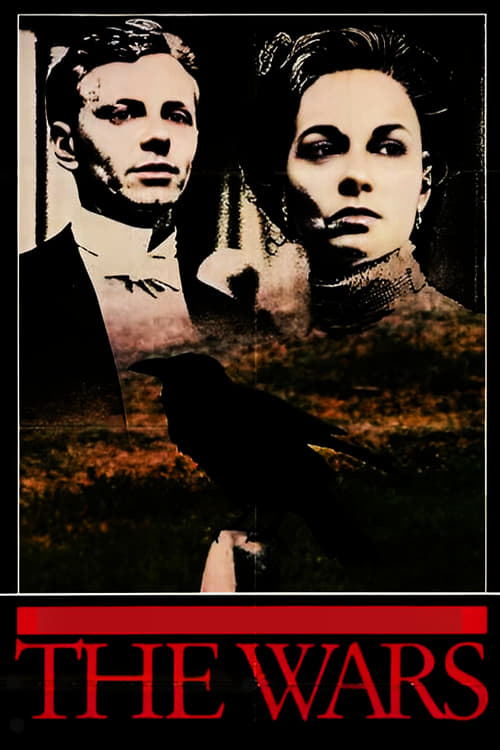
Robert Ross (Brent Carver) lives a protected adolescence in a well-off Toronto suburb. Secretive and withdrawn, he shares his thoughts only with his sister Rowena (Anne-Marie MacDonald) who is mentally disabled. He feels compassion for his weak and conventional father. He avoids any confrontation with his mother (Martha Henry), a dominating woman whose despondency at having given birth to a handicapped child has turned to bitterness. Rowena occupies a central position in Robert's existence of daydreams and make-believe. When she dies, Robert clashes openly with his family, and decides to take himself in hand. It's 1914. He enrolls in the Canadian army, and, after training in Alberta and Montreal, he finds himself in England and France. The war becomes another way for him to resolve his conflicts, his dramas, his passions--his wars.
The Wars

A group of actors in the East Village of New York City have been rehearsing for a play when the lead actress in the play turns up dead.
The Way It Is

A cartoon film about the whole heterogeneous mixture of Canada and Canadians, and the way the invisible adhesive called federalism makes it all cling together. That the dissenting voices are many is made amply evident, in English and French. But this animated message also shows that Canadians can laugh at themselves and work out their problems objectively.
Propaganda Message

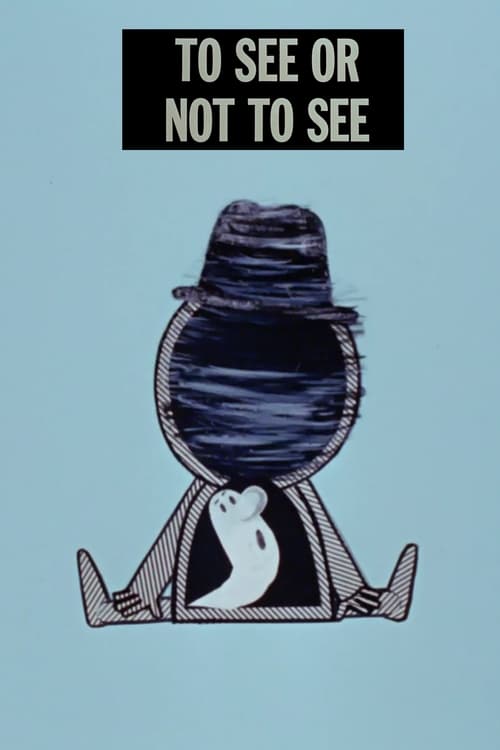
A scientist develops an unusual pair of eyeglasses which allows the wearer's mind to see things objectively rather than the usual subjective manner.
To See or Not to See
The life and work of the documentary pioneer.
Documenting John Grierson

A collection of one-minute cartoons produced by the National Film Board of Canada animators for government sponsors. Showcasing a playful selection of animation techniques, the clips include reminders about t4levision programs, traffic safety rules, and admonition from the Department of Labour.
Appetizers

Animated images showing the variety of people who live in Canada.
Canada Vignettes: Faces

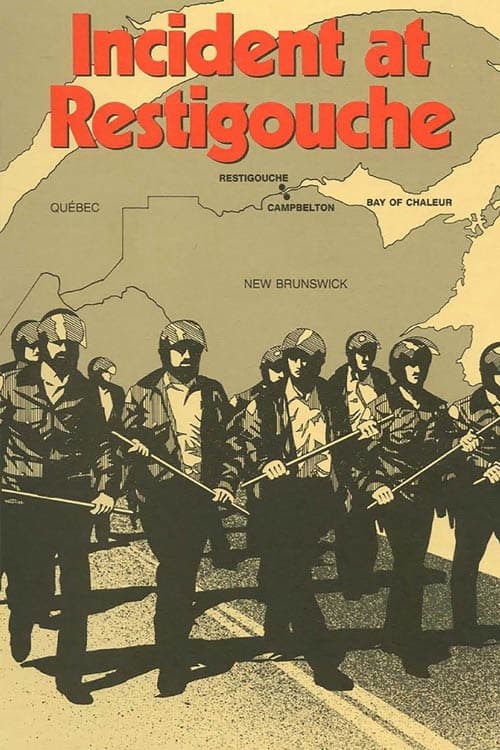
Incident at Restigouche is a 1984 documentary film by Alanis Obomsawin, chronicling a series of two raids on the Listuguj Mi'gmaq First Nation (Restigouche) by the Sûreté du Québec in 1981, as part of the efforts of the Quebec government to impose new restrictions on Native salmon fishermen. Incident at Restigouche delves into the history behind the Quebec Provincial Police (QPP) raids on the Restigouche Reserve on June 11 and 20, 1981. The Quebec government had decided to restrict fishing, resulting in anger among the Micmac Indians as salmon was traditionally an important source of food and income. Using a combination of documents, news clips, photographs and interviews, this powerful film provides an in-depth investigation into the history-making raids that put justice on trial.
Incident at Restigouche

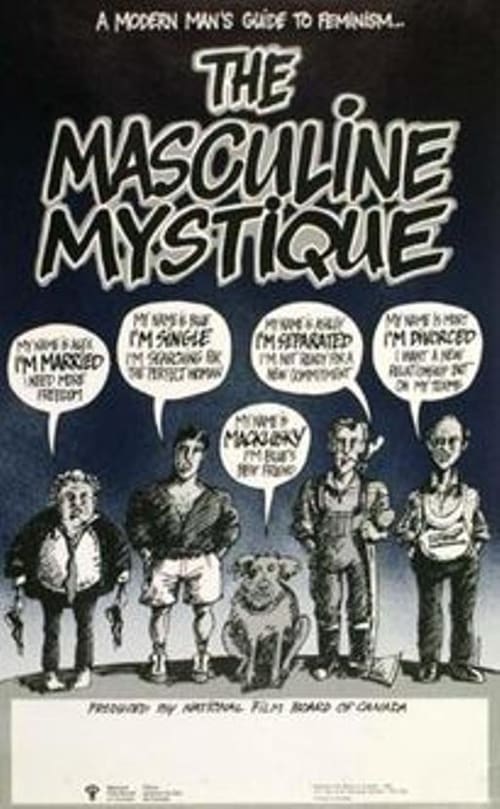
This feature-length drama explores the changing role of men in today's society by delving into the stories of 4 men and their relationships with women.
The Masculine Mystique
This short animated film is about Wop May, one of Canada's leading bush pilots in the 1920s.
Canada Vignettes: Wop May
This film provides a brief history of the fur trade in Canada, showing its effects on exploration and settlement. Engravings and paintings from the periods represented convey the romance, the adventures and the hardships of traders, Indigenous People and coureurs des bois. Animated maps indicate the old fur trade routes.
Age of the Beaver
Millions of years scroll by in 10 minutes, illustrated by ingenious designers: this is the geological history of Canada.
Time and Terrain

This short documentary is a moving tribute to Richard Cardinal, a Métis adolescent who committed suicide in 1984. Taken from his home at the age of 4 due to family problems, he spent the rest of his 17 short years moving in and out of 28 foster homes, group homes and shelters in Alberta. A sensitive, articulate young man, Richard Cardinal left behind a diary upon which this film is based.
Richard Cardinal: Cry from a Diary of a Métis Child

This quirky little short by Gilles Carle was filmed on the pierced rock that stands near Quebec’s Gaspé peninsula. It is perhaps the most photographed natural phenomenon on Canada’s East Coast. Shot in the 1960s, the film has a very psychedelic feel to it, with animation, special effects, and a trio of women to guide us through.
Percé on the Rocks

A study of life at Christmastime in Moose Factory, an old settlement mainly composed of Cree families on the shore of James Bay, composed entirely of children's crayon drawings and narrated by children.
Christmas at Moose Factory
This short documentary offers a panorama of ancient cities, palaces and temples whose splendor has awed mankind. The film moves from one tradition to another, illustrating how each reflects the sentiments and values of its time, from the massive temples of the pharaohs to the soaring skyscrapers of today.
A is for Architecture

This animated short tells a humourous Hebrew folk tale about a man's venture to introduce onions to a far away kingdom and a disreputable man's attempt to exploit that.
Canada Vignettes: Onions and Garlic: A Hebrew Fable

Bill Miner was a train robber in British Columbia at the turn of the century. This animated film depicts a disastrous episode in his career.
Canada Vignettes: Bill Miner

A baseball crazed 12 year old gets, and loses, a prized cap. A father struggles for dignity in his son's eyes. Based on Morley Callaghan's short story "A Cap for Steve."
The Cap

An engaging illustration, by animation artist Rhoda Leyer, of the fable in which the warm sun proves to the cold wind that persuasion is better than force when it comes to making a man take off his coat.