Manfred Blank
Directing
Known For
A young man, recently arrived in New York from Europe, becomes swept up in a series of events that are beyond his knowledge or control.
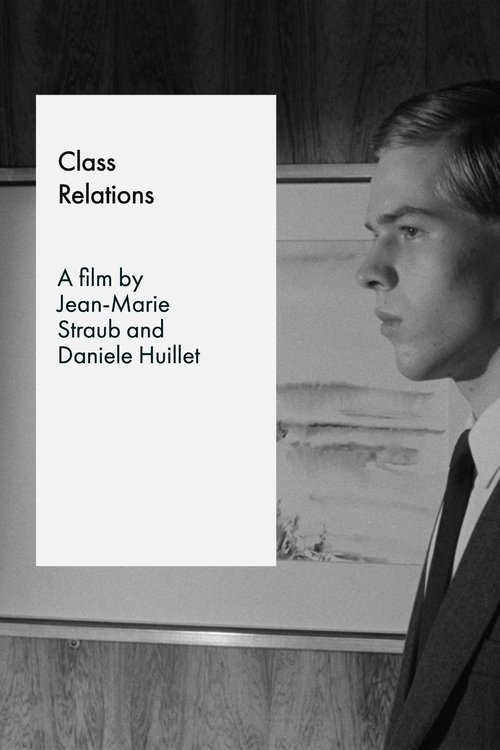
Class Relations
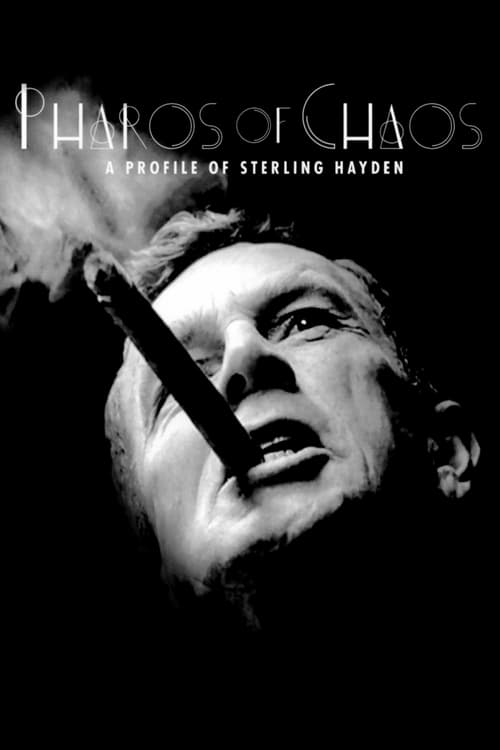
A superb, moving and thrilling interview with American actor Sterling Hayden (1916-86), held in Besançon, France, on board a dilapidated barge, when he was 65 years old. An unparalleled portrait, in his own words and without any qualms, of a legendary Hollywood star, icon of film noir and the western, who was also a marine, an OSS agent, an anti-communist informer, a writer and a wandering sailor: the hero of his own life.
Pharos of Chaos

Stuck in the German lands of “Yodelburg,” our hero Kidlat dreams of space and muses on humanity’s endless capacity for creativity, whether on the moon or at home in the Philippines. A delightful, self-proclaimed “third-world space spectacle.”
Who Invented The Yoyo? Who Invented The Moon Buggy?
The child Ernesto doesn't want to go to school any more because, as he says, all he is taught there is things he doesn't know.
En rachâchant
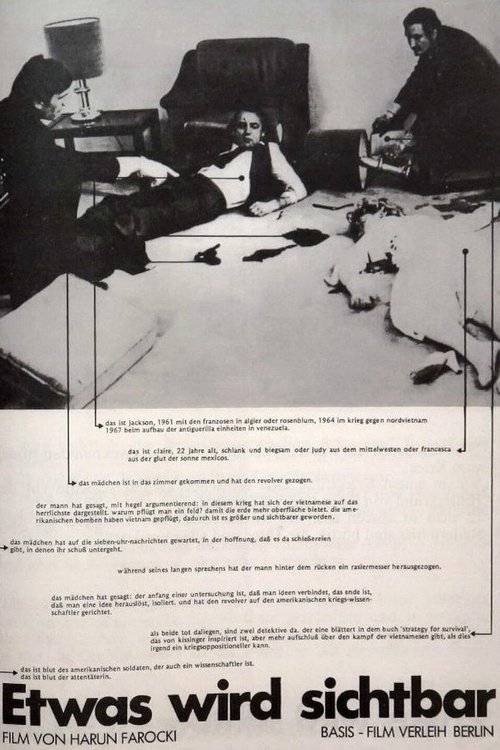
An unconventional essay film that interrogates the visual and ideological legacy of the Vietnam War. Blending staged scenes, archival footage, photographs, and philosophical dialogue, the film follows various characters — including an American soldier captured by North Vietnamese villagers — as they reflect on violence, memory, and image-making. Set partly in West Berlin and partly in reconstructed spaces representing Vietnam, the film avoids traditional dramatic narrative in favor of a fragmented montage of voices, documents, and reenactments. Interweaving love stories, political debate, and historical commentary, Farocki creates a critical reflection on how war is represented, seen, and imagined, both in cinema and in public consciousness. The result is a complex meditation on images as weapons and instruments of perception.
Before Your Eyes - Vietnam

Inspired by a letter by Friedrich Engels and a 1974 account of two militant Marxist writers who had been imprisoned by the Nasser regime, Straub-Huillet filmed this film in France and Egypt during 1980. They reflect on Egypt’s history of peasant struggle and liberation from Western colonization, and link it to class tensions in France shortly before the Revolution of 1789, quoting texts by Engels as well as the pioneering nonfiction film Workers Leaving the Lumière Factory (1895).
Too Early / Too Late
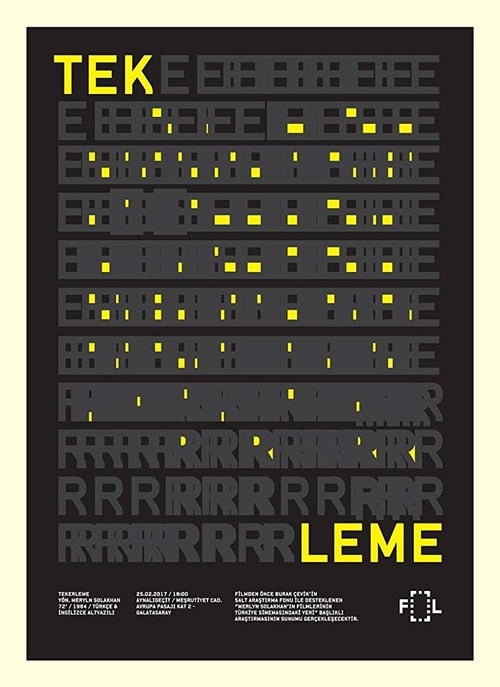
A woman meanders through the streets of Istanbul five years after the military coup. Something is amiss, and the air is filled with a strangeness that seems to plague everyone. Friendship, conversation, boredom, wonder and hopelessness lead the woman to head to the island in the hope of change. What is left after all these?
Tongue Twister
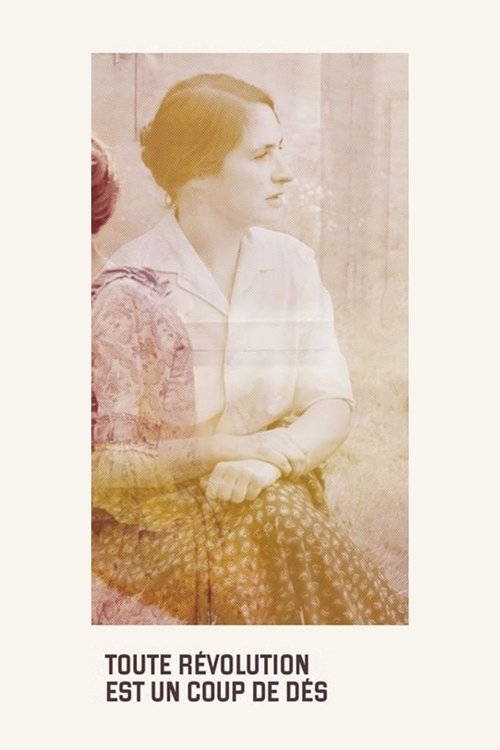
A tribute to Mallarmé that not only asserts the continuing relevance of his work but also confronts its literary ambiguities with political and cinematic ambiguities of its own. In outline, the film could not be more straightforward: it offers a recitation of one of Mallarmé’s most celebrated and complex poems (it was his last published work in his own lifetime, appearing in 1897, a year before his death) and proposes a cinematic equivalent for the author’s original experiment with typography and layout by assigning the words to nine different speakers, separating each speaker from the other as she or he speaks, and using slight pauses to correspond with white spaces on the original page.
Every Revolution Is a Throw of the Dice
A portrait cut for television using takes not used for the film “Leuchtturm des Chaos“. According to Bühler, the film was considered unsuitable: “A two-hour film with a drunk who constantly drinks and smokes in front of the camera and smokes hashish and speaks obscene words.”
At Anchor / Land Under: A Film With Sterling Hayden
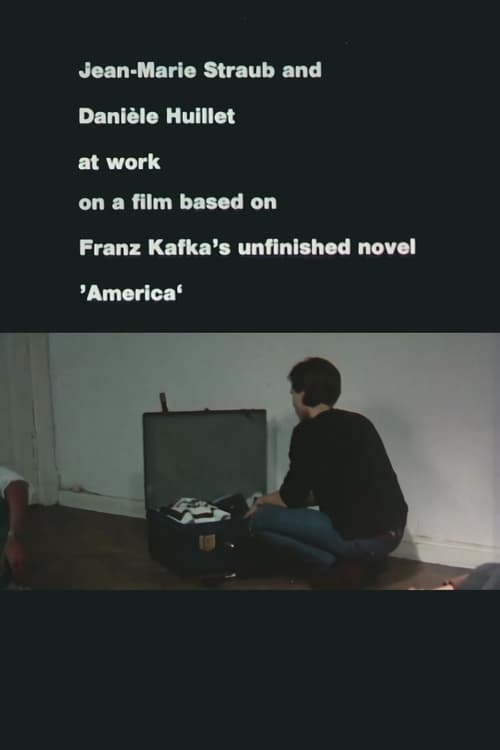
This film is at once a self-portrait and an homage to Jean-Marie Straub, Farocki's role model and former teacher at the Film Academy.
Jean-Marie Straub and Danièle Huillet at Work on a Film Based on Franz Kafka’s Amerika
An issue of the magazine Kino 81, designed for the film department of WDR by staff of FILMKRITIK
"Kino 81" - Stillness, a film magazine by film critics
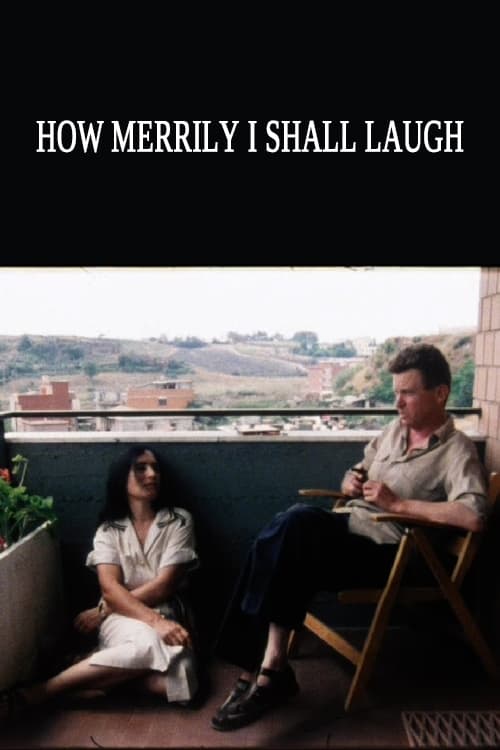
Filmmaker Manfred Blank (director of the excellent Pharos of Chaos) interviews Danièle Huillet and Jean-Marie Straub at some length about their then-current production, Klassenverhältnisse (Class Relations), in which he, himself, performed as an actor.
How Merrily I Shall Laugh: Danièle Huillet and Jean-Marie Straub on Their Film Class Relations
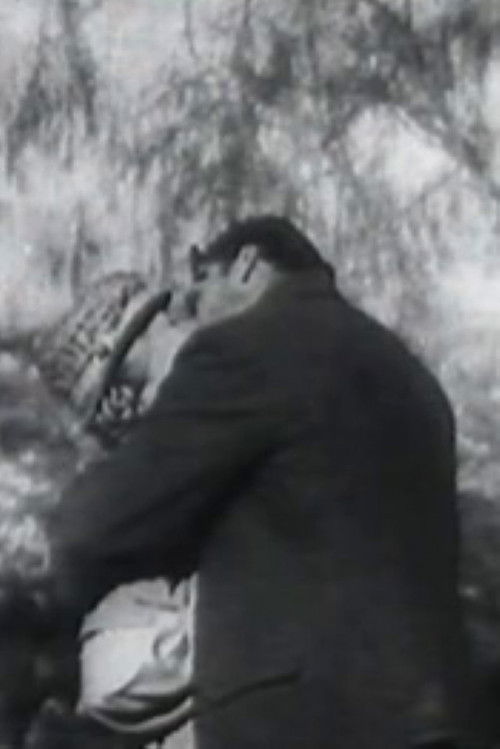
Sunrise is an educational “tips film” that analyzes F. W. Murnau’s Sunrise: A Song of Two Humans. Through selected excerpts and commentary, it draws attention to Murnau’s use of framing, movement, and light, offering viewers guidance on how meaning and emotion are constructed in silent cinema.
Murnaus Sunrise
A documentary about the last Turkish shadow players and the German orientalist Hellmut Ritter
Hayal
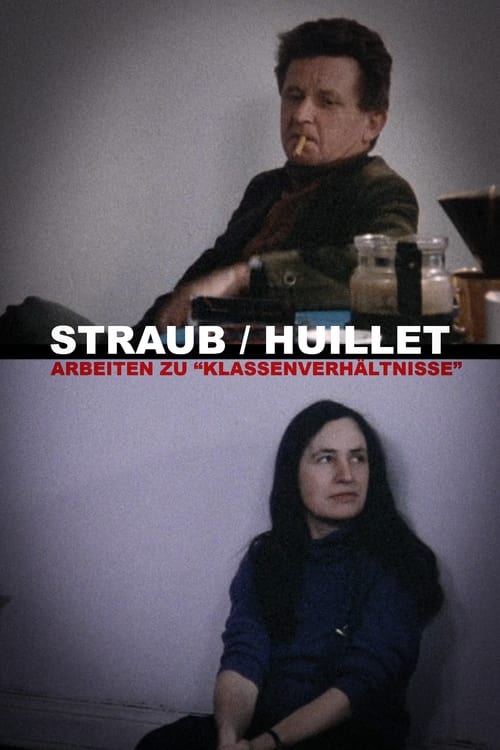
A behind the scenes film of Class Relations.
Straub/Huillet: Work on "Class Relations"
1. A modern Bavarian brewer, Emanuel Holzbauer, faces a sales crisis and targets his competitors to save his brewery. 2. In 1567, Protestant merchant Johann Christof Paumgartner—outlawed by church and state—compassionately aids the poorest in his town. 3. A fairy-tale rivalry: peasant boy Franz Niederholzer learns a harsh lesson about greed when he mistakes ordinary metal for gold. 4. A Moritat set during hyperinflation, as shopkeeper Max Geiger is forced to desperate measures to survive. 5. April 9, 1865: In her diary entry on the Confederacy’s surrender, Missis Marilyn Haley-Care confronts the illusion of freedom that costs the enslaved Ben his life. 6. A musical conversation piece finds Laura Wohlbrück passionately campaigning to humanize industrial labor, earning unexpected acclaim. 7. At displaced Walter Gladek’s wedding, a friend’s song about a hunter’s horn rekindles memories of building an industrial enterprise in their homeland.
Sieben Erzählungen aus der Vorgeschichte der Menschheit
Blank's TV documentary on Straub-Huillet.
The Persistence of Vision
Short documentary vignettes and interviews revolving around cinephile life in Paris.
Kinostadt Paris
Presentation of Giono's book
Bookstore: Giono - Stay, my joy
Presentation of Marguerite Yourcenar's book about the famous Loire water castle Chenonceau as the "Castle of Women"