FEEL IT.STREAM
Herbert von Karajan

Herbert von Karajan

Acting

Biography

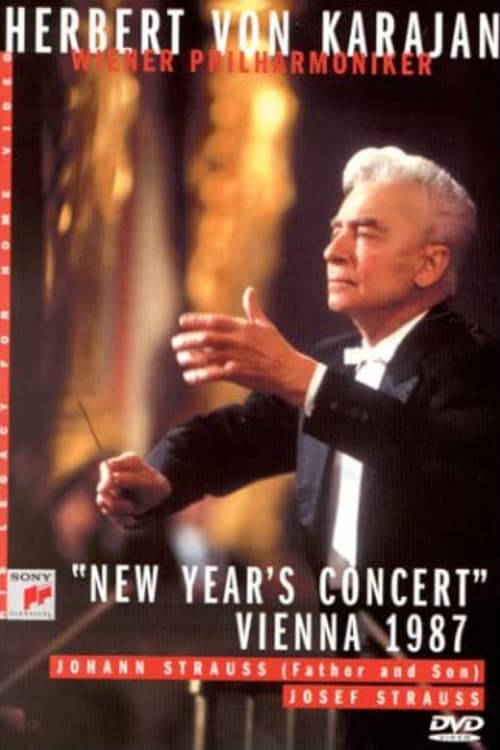
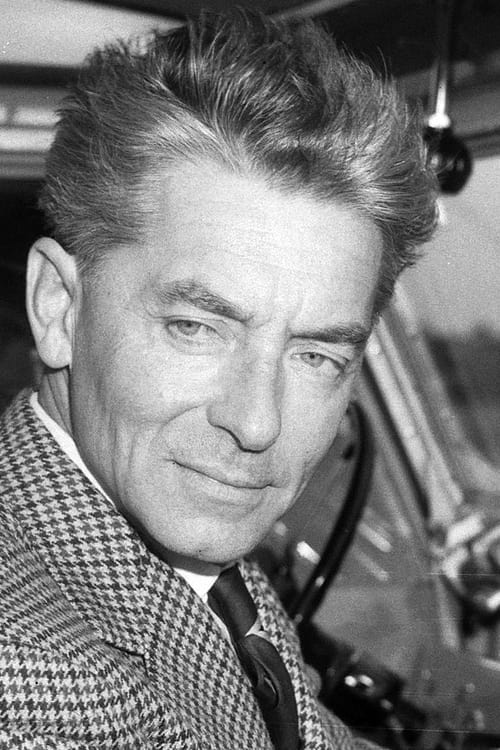
Herbert von Karajan (born Heribert Ritter[a] von Karajan; 5 April 1908 – 16 July 1989) was an Austrian conductor. He was principal conductor of the Berlin Philharmonic for 34 years. During the Nazi era, he debuted at the Salzburg Festival, with the Vienna Philharmonic, the Berlin Philharmonic, and during the Second World War he conducted at the Berlin State Opera. Generally regarded as one of the greatest conductors of the 20th century, he was a controversial but dominant figure in European classical music from the mid-1950s until his death. Part of the reason for this was the large number of recordings he made and their prominence during his lifetime. By one estimate, he was the top-selling classical music recording artist of all time, having sold an estimated 200 million records. The Karajans were of Macedonian Greek ancestry. Herbert's great-great-grandfather, Georg Karajan (Geórgios Karajánnis, Greek: Γεώργιος Καραγιάννης), was born in Kozani, in the Ottoman province of Rumelia (now in Greece), leaving for Vienna in 1767, and eventually Chemnitz, Electorate of Saxony. His last name, like several other Ottoman-era ones, contains the Turkish language prefix "kara", which means "black". He and his brother participated in the establishment of Saxony's cloth industry, and both were ennobled for their services by Frederick Augustus III on 1 June 1792, thus adding the prefix "von" to the family name. This usage disappeared with the abolition of Austrian nobility after World War I. The surname Karajánnis became Karajan. Although traditional biographers ascribed a Slovak and Serbian or simply a Slavic origin to his mother, Karajan's family from the maternal side, through his grandfather who was born in the village of Mojstrana, Duchy of Carniola (today in Slovenia), was Slovene. Aromanian heritage has also been claimed. Through the Slovene line, Karajan was related to the Slovenian-Austrian composer Hugo Wolf. He also seems to have known some Slovene. Heribert Ritter von Karajan was born in Salzburg, Austria-Hungary, the second son of senior consultant Ernst von Karajan (1868–1951) and Marta (née Martha Kosmač; 1881–1954) (married 1905). He was a child prodigy at the piano. From 1916 to 1926, he studied at the Mozarteum in Salzburg with Franz Ledwinka (piano), Franz Zauer (harmony), and Bernhard Paumgartner (composition and chamber music). He was encouraged to concentrate on conducting by Paumgartner, who detected his exceptional promise in that regard. In 1926 Karajan graduated from the conservatory and continued his studies at the Vienna Academy, studying piano with Josef Hofmann (a teacher with the same name as the pianist) and conducting with Alexander Wunderer and Franz Schalk. Karajan made his debut as a conductor in Salzburg on 22 January 1929. The performance got the attention of the general manager of the Stadttheater in Ulm and led to Karajan's first appointment as assistant Kapellmeister of the theater. His senior colleague in Ulm was Otto Schulmann. After Schulmann was forced to leave Germany in 1933 with the NSDAP takeover, Karajan was promoted to first Kapellmeister. ... Source: Article "Herbert von Karajan" from Wikipedia in English, licensed under CC-BY-SA 3.0.

Known For

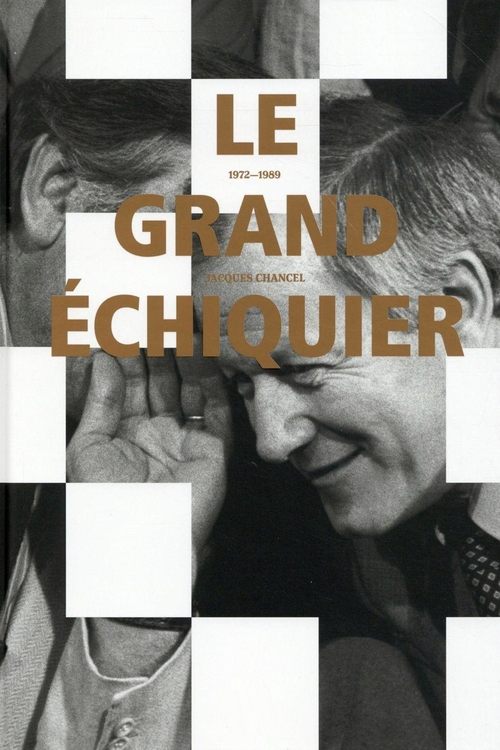
Le Grand Échiquier
8.0

Le Grand Échiquier is a French variety television program created and presented by Jacques Chancel. It aired at 8:30 pm on the first channel of the ORTF from January 12, 1972 to July 12, 1972, then on the second color channel of the ORTF from September 1972 to December 1974, and finally on Antenne 2 from January 1975 to December 21, 1989. The program returned to France 2 on December 20, 2018 and is hosted by Anne-Sophie Lapix.

Le Grand Échiquier

1972
No image
8.5

A 30-minute weekly cultural magazine program. The head of aspekte, Wolgang Herles, describes the program as follows: "For 40 years, "aspekte" has repeatedly set out to enrich television with cultural contrasts. "aspekte" understands culture not as the sum of facts and events, but as the taste, the sound, the rhythms of the times. It has proven itself as a journal of true luxury and fashions as well as an instrument of public education and information."

aspekte

1965
No image
6.0

No description available.

Der Sport-Spiegel

1963
Zeugen des Jahrhunderts
N/A

No description available.

Zeugen des Jahrhunderts

1979
No image
N/A

No description available.

Zeichen der Zeit

1957
No image
8.0

A weekly sit-down with Hermann Schreiber and Peter W. Jansen with a figure of German cinema.

Biographies

1978
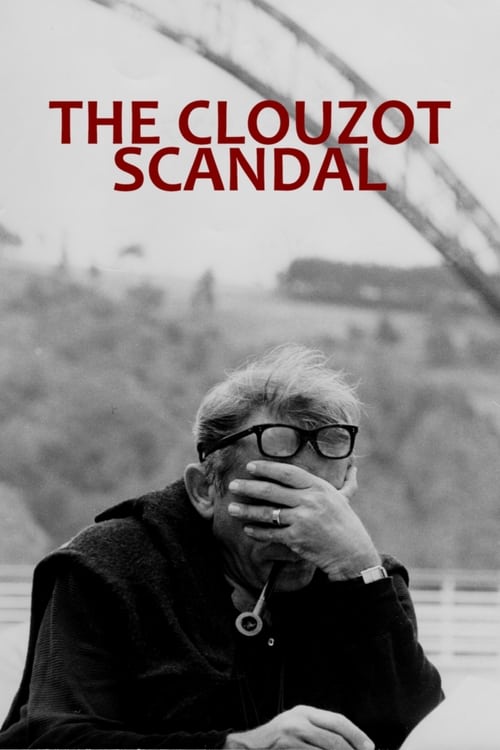
The Clouzot Scandal
6.5

Great filmmakers claim the artistic influence of French director Henri-Georges Clouzot (1907-1977), a master of suspense, with a unique vision of the world, who knew how to offer both great shows and subtle studies of characters. Beyond the myth of the tyrannical director, a contrasting portrait of a visionary, an agitator, an artist against the system.

The Clouzot Scandal

2017
Puccini's Madama Butterfly
9.5

Mirella Freni, Placido Domingo, Christa Ludwig, and Robert Kerns star in this Jean-Pierre Ponnelle-directed version of the Puccini opera, with Herbert von Karajan conducting the Vienna Philharmonic. Madama Butterfly is a staple of the standard operatic repertoire for companies around the world, ranking 7th in the Operabase list of the most-performed operas worldwide.

Puccini's Madama Butterfly

1974
Rostropovich: L'archet Indomptable
10.0

The Indomitable Bow is a unique portrait of Mstislav Rostropovich, a formidable personality as well as a complex, deeply political musician constantly engaged in a whirlwind of activities. Including unreleased documents, archive films, interviews and concert performances from this key figure of the 20th century, The Indomitable Bow is a remarkable testimony of the life and work of the legendary Slava

Rostropovich: L'archet Indomptable

2019
La Bohème
7.7

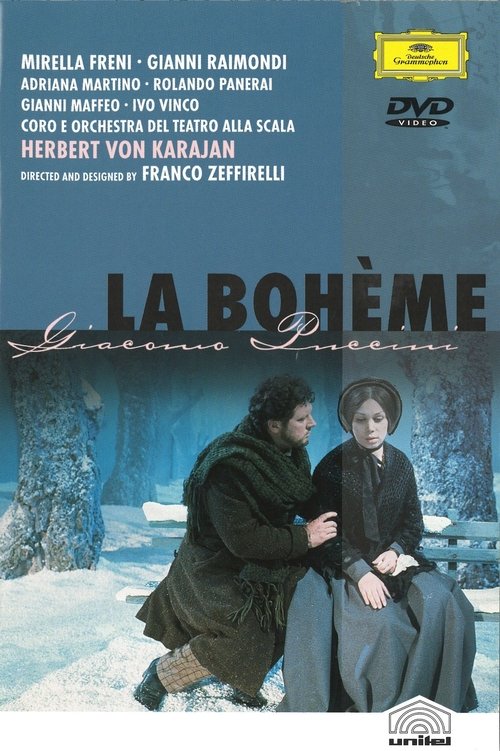
In the early 1960s two artistic giants, conductor Herbert von Karajan and director Franco Zeffirelli, joined forces to create this milestone production of Puccini’s masterpiece at Milan’s Teatro alla Scala. Filmed in that legendary opera house in 1965, with Zeffireli himself directing for the cameras, this “Bohème” has been acclaimed universally for its unique theatrical impact and visual splendour. Starring the young Mirella Freni in her carreer-making performance. – For the first time the full dimension of opera on film.

La Bohème

1965
Karajan: Wolfgang Amadeus Mozart: Requiem
10.0

No description available.

Karajan: Wolfgang Amadeus Mozart: Requiem

1986
Bizet Carmen
7.3

This spectacular opera film was taped in 1967 and is based on the 1966 Salzburg Festival production directed by Herbert von Karajan himself, who also conducts the fabulous Vienna Philharmonic Orchestra. The production features the three greatest exponents of their respective roles at the time: Grace Bumbry’s magnificently seductive-toned Carmen, Mirella Freni’s ineffably lovely, touching Micaëla and Jon Vickers’s thrillingly manic-depressive Don José. On its release the film was hailed by Die Presse, (Vienna) as a “unique artistic event”, while Le Monde felt that Karajan’s production brought “a whole new dimension” to the opera, “combined with a magisterial interpretation”. A classical and utterly dramatic approach to probably the world's most beloved opera – Karajan’s Carmen is as much a delicacy for opera fans as it is a perfect starter for newcomers.

Bizet Carmen

1967
Beethoven Symphony No. 9
9.0

Karajan's very best video Beethoven 9th Symphony, recorded December 31, 1977. The Quartet of vocal soloists and Chorus in IV are superb. This is much better than Karajan's 1968 Berlin Philharmonic Beethoven 9 video (DG), filmed in the Philharmonie with no live audience present.

Beethoven Symphony No. 9

1977
Karajan: Beauty As I See It
N/A

With a career that includes a 35-year tenure as composer of the Berlin Philharmonic and record sales topping 200 million, Herbert von Karajan is one of the most legendary figures in 20th-century classical music. Comprised of archival footage, performance highlights and interviews with the likes of Anne-Sophie Mutter, Christa Ludwig and Seiji Ozawa, this retrospective chronicles the life and times of the iconic Austrian maestro.

Karajan: Beauty As I See It

2008
Wagner: Das Rheingold
2.0

This 1978 studio production of the prologue to Wagner's masterpiece is the only segment of the famous Salzburg Festival/Metropolitan Opera productions, first seen in the 1960s, that made it to film. Based on one of those original productions, Georges Wakhevitch produced stage settings and transformations that supported Karajan's concept with every possible means. Herbert Von Karajan's staging is in the epic style of another age, emphasizing the dignity of the gods rather than their all too human failings. With the singers - foremost among them Peter Schreier - Karajan had an ensemble that fully conformed to his intentions.

Wagner: Das Rheingold

1978
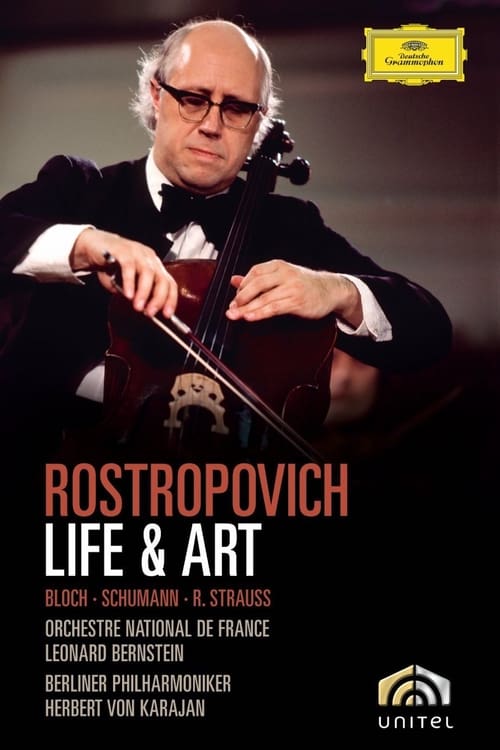
Rostropovich Life & Art
7.0

Released as a memorial for the great Russian cellist Mstislav Rostropovich, who passed away on 27 April 2007, this DVD contains one bonafide cello concerto, the Schumann Cello Concerto in A minor, and two tone poems with prominent cello parts, Ernest Bloch's Schelomo and Richard Strauss' Don Quixote. Rostropovich mastered the Schumann in several famous recordings. Here, conducted by Leonard Bernstein, he provides a splendid performance. Featuring his trademark powerful technique, smooth legato and crisp vibrato, the Romantic roots of the concerto are never hidden for long, despite the relatively cool playing of the Orchestre National de France.

Rostropovich Life & Art

2007
Vivaldi - The Four Seasons / Von Karajan, Mutter, Berlin Philharmonic
N/A

Famed conductor Herbert Von Karajan leads the Berlin Philharmonic in a performance of what may be Vivaldi's best-known composition -- "The Four Seasons" -- in this sparkling video. Recorded in 1987 at the Chamber Music Hall, this concert features Anne-Sophie Mutter as a guest violin soloist.

Vivaldi - The Four Seasons / Von Karajan, Mutter, Berlin Philharmonic

1990
Eroica
10.0

A concert-film using innovative cinematic techniques to set music to images. As conductor Herbert von Karajan didn't like the experimental style, he had the film re-edited severely before release.

Eroica

1972
No image
N/A

No description available.

Herbert von Karajan, Symphonie n°5 Beethoven

1967
No image
N/A

The legendary Berlin Philharmonic conductor Herbert von Karajan is chronicled as he conducts two important classical pieces. Music director Von Karajan led the orchestra from 1956 until his death in 1989, creating a legacy of outstanding performances. In 1984, Von Karajan agreed to have a camera crew record a Berlin Philharmonic performance of Ludwig van Beethoven's Symphonies 1 and 8, two of the composer's finest.

Karajan: Beethoven: Symphony 1 & 8

1984