Jean Palardy
Directing
Biography
Canadian artist and documentary filmmaker.
Known For

This colorful archival record of Québec City's Winter Carnival shows that many popular events of today—pageants, parades, boat races, folk dancing, fireworks, and torchlight skiing—were also favorites many years ago.
Carnival in Québec
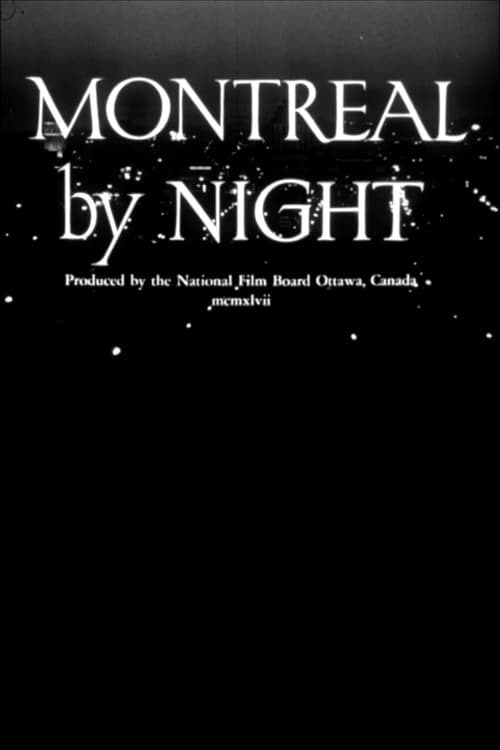
This short film showcases the city of Montreal on a summer's night. What was once a small Indian village is presented as a pot-pourri of contrasting sights and sounds. It is North America's second largest port and, after Paris, the world's largest French-speaking city. With its warehouses, offices, homes, clubs and amusement parks, the city serves as a bright backdrop for a happy couple out on the town.
Montreal by Night
This short documentary visits the 3 Quebec border towns of Rock Island, Stanstead and Beebe, and the Vermont town of Derby Line to see how residents and officials cope with a civic life that is cut down the middle by an international boundary.
Two Countries, One Street
This is a story of men against the sea. On the edge of the great sea lanes in the Gulf of St. Lawrence lies a tiny archipelago which is gradually shrinking from the ceaseless nibbling of the tides. Here, on the Magdalen Islands, live 10 000 sturdy fisherfolk, descended from fifteen Acadian families who, two hundred years ago, fled the threat of deportation. The film portrays the frugal but independent existence of these people and their relentless struggle to wrest a livelihood from a sea which reaches almost to their doors.
The Wind-Swept Isles
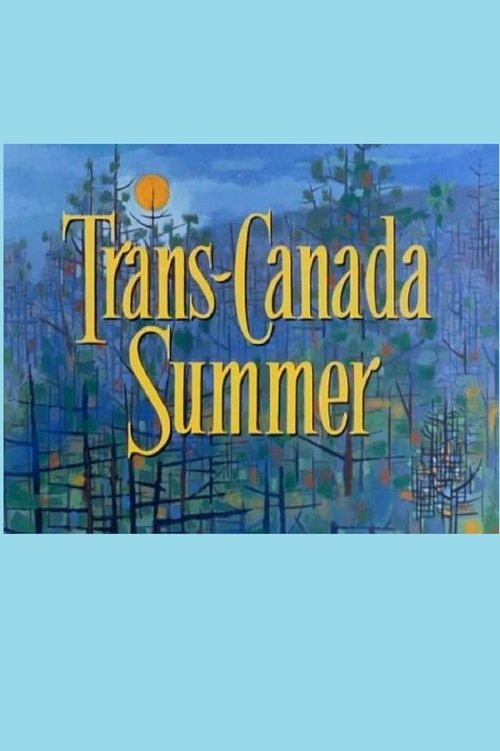
The camera traces the Trans-Canada Highway, unveiling Canada's people, resources, and diverse geography from east to west. It showcases remarkable engineering accomplishments integral to constructing the highway.
Trans Canada Summer
This short film introduces us to the "automatistes," followers of an abstract art form that developed in Montreal. The movement, initiated by Paul-Émile Borduas, is explained by the artists themselves when narrator Bruce Ruddick drops in at their cooperative studio. The film also captures painter Paterson Ewen at his home and joins the crowd at L'Échouerie, the artists' rendezvous spot. Dr. Robert Hubbard, chief curator of the National Gallery of Canada, comments on non-objective art in general and automatism in particular.
Artist in Montreal
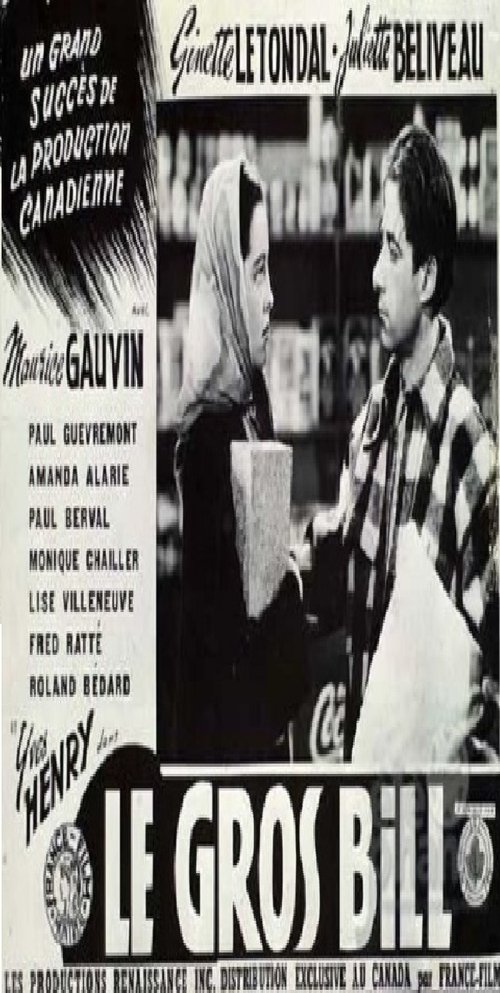
A tiny Quebec community is thrown into an uproar when a tall young Texan named Bill arrives to claim a farm he has inherited. Bill's inability to speak French, and his apparent unwillingness to learn the language, foments plenty of ill will in the community. The story is resolved with an abundance of warmth and humor, sometimes hokey, sometimes hilarious.
Le gros Bill
Ten-year-old Ti-Jean's feats dwarf those of even the strongest lumberjack as he fells timber, cuts, carries and piles heavy logs, and comes out the victor in every contest. This short French-Canadian folk tale portrays typical life and work in a winter logging camp.
Ti-Jean Goes Lumbering
Staged in old Québec City, this film is about a rebel against the time-clock, whose hobby was snaring birds but whose dream was to escape the bonds of domesticity. A kindly satire of the dreamer in every man, the film is also a memorable portrait of Québec, the "Grande Dame" of Canadian cities.
L'Homme aux oiseaux
No description available.
Bush Doctor
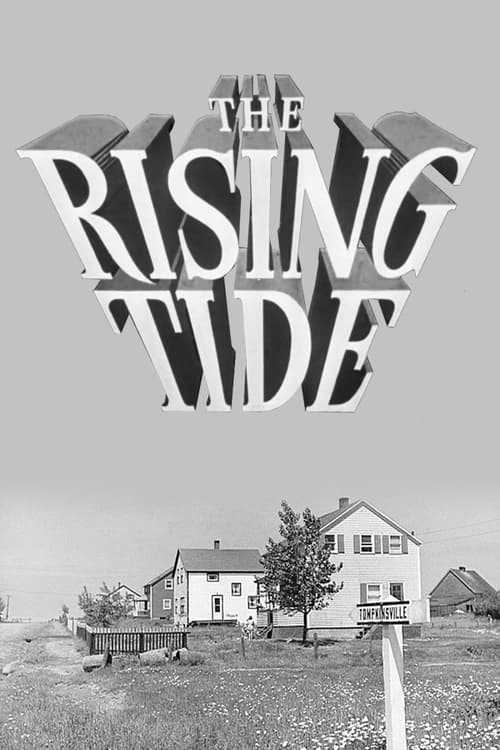
This film shows the growth of cooperatives in the Maritime provinces and how they brought new life and hope to poverty-stricken fishermen. The Rising Tide is a 1949 Canadian short documentary film directed by Jean Palardy. It was nominated for an Academy Award for Best Documentary Short.
The Rising Tide
This short film is an introduction to oyster farming in the Gulf of St. Lawrence. Showing the various stages of oyster cultivation, the film highlights the sampling of larvae by Department of Fisheries biologists, the staking of oyster beds by farmers, the nurturing of spat, and underwater scenes showing the dragging of the seabed with cotton mops to ensnare starfish, which prey upon the oyster. Final sequences show the grading and shipping of oysters and their arrival at the seafood restaurant or family dinner table.
The Oyster-Man
A look at contemporary art in Québec.
Primitive Painters of Charlevoix
The Singing Pipes is a film produced in 1945 by the Canadian Film Board. Much of this was filmed inside the organ building factory of Casavant Frères in Saint-Hyacinthe, Quebec.
The Singing Pipes
How a scientist helped the fishermen in a Gaspe fishing village.