Chris Welsby
Directing
Biography
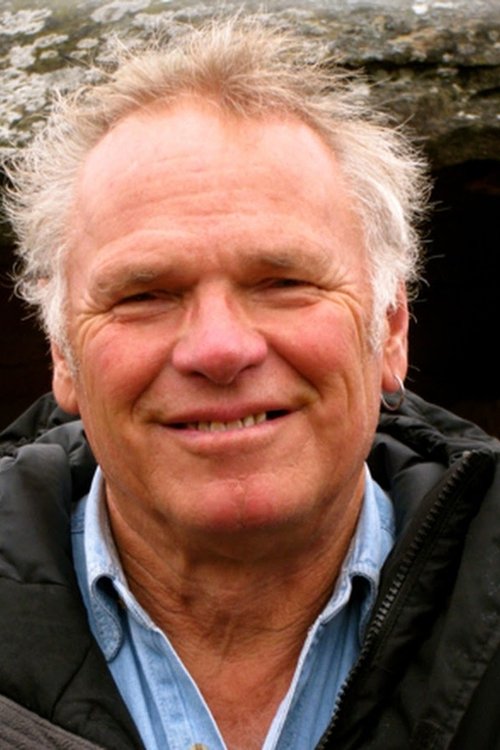
Chris Welsby is a British/Canadian experimental filmmaker, digital media and installation artist. In the 1970s he was a member of the London Film-Makers' Co-op (now LUX film distributors), and co-founder of the Digital Media Studio (now Slade Centre for Electronic Media in Fine Art) at the Slade School of Fine Arts, UCL, London. He is considered one of the pioneers of expanded cinema and moving image installation and was one of the first artists to exhibit film installations at the Tate and Hayward galleries London. His expanded cinema works and installations have since continued to break new conceptual ground and attract critical attention. A. L. Reece, in British Film Institute's A History of Experimental Film and Video, wrote: "Twenty-five years ago, when he made his first projections for large spaces, film and art rarely met in the gallery; now it is common and installation art is a distinct practice."
Known For

The camera was placed on the flexible branch of a tree in a strong wind. The composition included both stationary and moving trees (a wooded landscape). The relationship of this landscape to the vertical and horizontal plane was maintained as much as possible. The camera ran continuously until all the film was exposed. The world is seen from the point of view of a tree as its branches sway to the rhythm of the wind.
Tree
The film was shot in one continuous 400 foot take. The camera looks through the blades of the windmill, recording either what is behind or in front of the windmill blades. A rhythm determined by the speed and direction of the wind.
Windmill III
A camera recorded one frame every minute (day and night) for two separate three-week periods in autumn and spring. The film is shown on two adjacent screens, each having a soundtrack that was recorded on a sampling basis. The left hand screen was shot at the autumn equinox and the right-hand screen at the spring equinox. The structure of the film is based on the rotation and tilting of the earth as we pass from summer to winter and back. The centre of the film coincides with the equinox and is the point at which day and night are the same length on both the left and the right screen.
River Yar
The film is a continuous, "real time" tracking shot of a stream bed. The length of the track was ten yards. The camera was suspended in a motorized carriage running on steel cables three feet above the water surface. The camera pointed vertically downwards recording the contours of the stream bed and the flow of water along its course. The sound of the water was recorded synchronously from the moving carriage.
Stream Line
Seven Days invites the viewer to contemplate the complex relationship between the structures we invent in order to observe the natural world and the structure we perceive as a result of those observations. The resulting sequences of images suggest a relationship between technology and nature based on principles other than exploitation and domination.
Seven Days

WHITE OUT was recorded and edited one cold morning in February 2021. It’s about how light looks when it’s falling on snow and how snow can make white light visible even in the darkness of winter. I used a recording of white noise to replace the sound of snow falling. I was thinking about what it feels like to look at snow falling.
White Out

Estuary was made during the three weeks between December 17th 1979 and January 6th 1980. The film was shot from a small cabin boat moored near the mouth of the Keyhaven river. This is a place known to me since my childhood and the location for several paintings, films and photographic pieces. The camera was fixed relative to the motion of the boat as it responded to the action of wind and tide. This resulted in an intermittent scanning of 360 degrees about the central axis provided by the mooring, and a periodic vertical motion of about eight feet due to the rise and fall of the tide. A four second section of the film was exposed every fifteen minutes between dawn and dusk.
Estuary

Two cameras mounted on tripods with wind vane attachments were positioned about 50 feet apart along an axis of 45 degrees to the direction of the wind. Both cameras were free to pan through 360 degrees in the horizontal plane. There are three continuous 100 foot takes for each screen. The movements of the two cameras, which were filming simultaneously, were controlled by the wind strength and direction.
Wind Vane
Shot in the Sonora desert, Mexico in March 2017 "Desert Spring" is a joyful little dance between camera (autofocus), the wind and some flowering foliage I found high on the shady side of a mountain. There is hope in this movie ; hope prompted in part by the surprize of finding such a delicate beauty in the midst of such harsh climatic conditions. The movie is intimate in it's close up detail of flowers and leaves and this fragile beauty is made the more poignant by the sound mix which, foregrounds the vast and hostile expanses of the burning desert winds.
Desert Spring

My intention was to make a video in ironic celebration of the increasingly inexplicable human obsession with the automobile, while simultaneously paying tribute to the transformative power of nature. Set in the temperate rain forest of North America’s Pacific West Coast the video, may perhaps, remind us that it was hereabouts that the V8 Mercury was once the ambassador of the Ford Motor Corporation, the family vehicle of choice, and an essential player in the ritual of courtship and romantic love.
Mercury

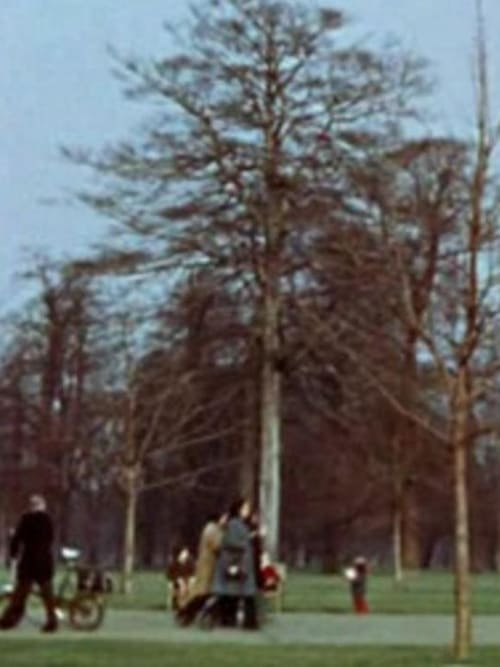
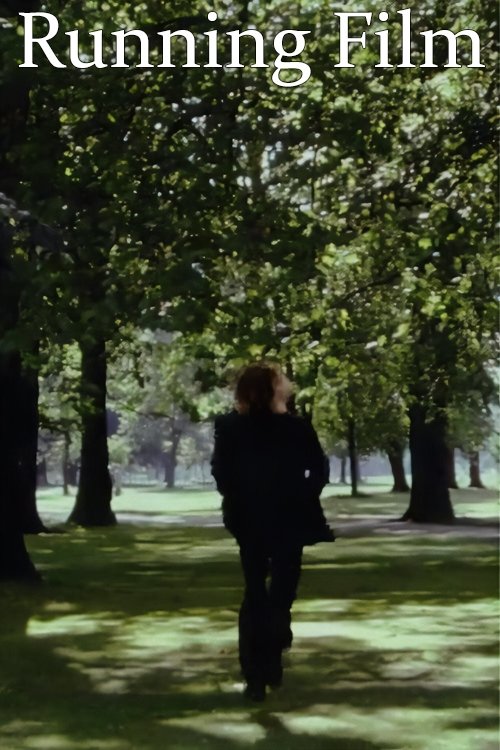
A London park and artist Chris Welsby runs repeatedly into frame and off into the distance; his actions contrast with the more leisurely activities of others passing by. The camera remained stationary at shooting and a hand-clap to synchronise sound at the start of each take is not edited out. The piece has the appearance of a film loop but it becomes clear that it is a series of different takes.
Running Film

An idyllic river flows through a forest, flashes of light and colour threaten to erase the image, bursts of short wave radio and static invade the tranquillity of the natural sound. The camera searches amongst the craggy rocks and ruined buildings of a bleak and windswept snowscape, a Geiger counter chatters ominously in the background. The sky is overcast at first but gradually clears to reveal a sky of unnatural cobalt blue.
Sky Light

Windmill II is one of a series of films (Wind Vane, Anemometer, Tree, Park, Estuary etc.) which uses an element present within the frame as a feedback device to control an aspect of the recording process. In this case it is the wind moving the leaves on the trees within the frame which also causes the windmill to rotate like a secondary shutter in front of the camera. This rotation of the mirrored windmill blades causes the image on the screen to alternate between the space in front of the camera, seen intermittently through the blades, and the space behind the camera, reflected in the blades. When the windmill reaches a particular speed, a third space is also created as the deep space of the picture plane fragments and becomes a two dimensional abstract surface of colour and light.
Windmill II

Gusts of wind on Hampstead Heath give shape to an exploratory film that seeks to present landscape in a different way.
Wind Vane II

The notion of a line which divides the land from the sea is a notion of convenience which is only valid in certain circumstances. If there is a line at all, it only exists for a second or so, and is never repeated again. This film was shot on this imaginary line, but the leading or trailing edge of the wave is never represented. The shore line is replaced by a frame line which divides each one-second "take" from its neighbour. The frame is either filled with water or littered with stones and sand exposed after the wave has receded. The image on the screen, the organic rhythm of the waves, is not destroyed by the violence of the structures imposed upon it. Nature emerges uninhibited, revealing yet further complexities of shape and form. The illusory shore line remains invisible, trapped on celluloid, hidden by the mechanics of the projector, and de-materialised by the illusion of cinematographic movement.
Sea/Shore

The location is a small bay in Wales, this bay faces due north over the Irish sea. It has high ground to the east and west and low ground to the south. At its mouth it measures about a quarter of a mile from one side to the other. From the mouth to the beach, at the southernmost point, it measures half of a mile. The distance between the high and low tide mark on the beach is about 100 yards during spring tide. The tripod was placed at an angle of 60 degrees to the horizontal plane midway between the two sides of the bay and at the waters edge. The camera panned through 360 degrees stopping every 45 degrees to take a predetermined number of frames. The shooting speed was one frame per second.
Fforest Bay

At this time of year, the ocean is still very cold from the long northern winter but the land is heating rapidly. The results is the formation of dense fog banks, which move uncharacteristically quickly with the wind. When I first arrived at the scene, the visibility was around ten meters, but at approximately 14.15 the tide turned and behind me, the fog began to clear a little over the land. I still couldn’t see a thing through the view-finder but the signs were favourable so I turned the camera on and walked away to take shelter from the cold wind. My work was done and from here on the combination of wind and fog and the heat of the spring sunlight did what they do best and 15minutes later I had a completed video.
Entrance Island

This is not so much a film about a park, or a record of the people passing through the park. Here the camera is not a passive observer, nor is it used as a surveillance device. Rather, the camera in Park Film, like the passers by who trigger its shutter, is an active participant in the interaction between a park and the city which surrounds it.
Park Film
The overall feel of Drift is sombre and mysterious; a study of winter light falling on the surface of water, metal and cloud. The dominant colour is grey; grey infused with a multitude of ocean blues and greens. There is little land in this film and very few landmarks from which to navigate from one space to the next. The picture plane is in continuous motion like the ocean which, on the surface at least, is the subject of Drift.
Drift

From LUX: "Welsby adopts a system of camera movements to chart the movement of tides, waves and sky".