FEEL IT.STREAM
Chris Welsby

Chris Welsby

Directing

Biography

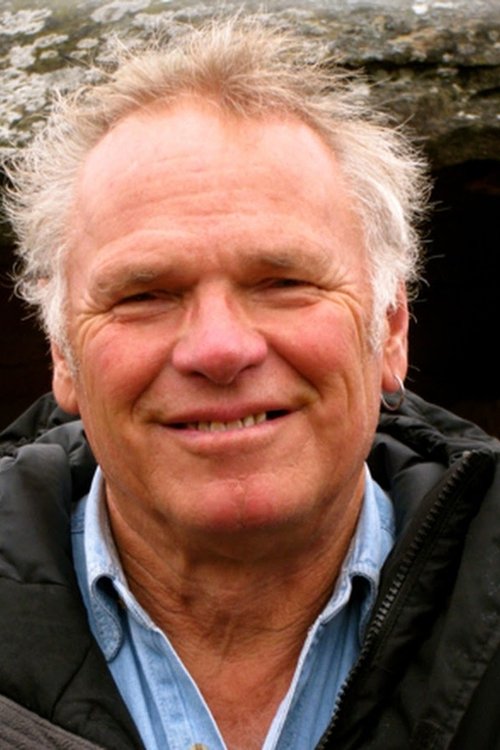
Chris Welsby is a British/Canadian experimental filmmaker, digital media and installation artist. In the 1970s he was a member of the London Film-Makers' Co-op (now LUX film distributors), and co-founder of the Digital Media Studio (now Slade Centre for Electronic Media in Fine Art) at the Slade School of Fine Arts, UCL, London. He is considered one of the pioneers of expanded cinema and moving image installation and was one of the first artists to exhibit film installations at the Tate and Hayward galleries London. His expanded cinema works and installations have since continued to break new conceptual ground and attract critical attention. A. L. Reece, in British Film Institute's A History of Experimental Film and Video, wrote: "Twenty-five years ago, when he made his first projections for large spaces, film and art rarely met in the gallery; now it is common and installation art is a distinct practice."
Known For

Crocodile Dreams

In the early afternoon a cool breeze raises white caps on the ocean before rushing busily inland. The palm trees respond with broad circular gestures and their lower branches echo this wave-like rhythm, by turns revealing and concealing the cool shade and patches of sunlight below the forest canopy. Light escaping from a perfect blue sky sends sharp shadows flickering from branch to branch as patches of ragged sunlight chase each other back and forth across this delicate web of tropical plant life. Meanwhile, a short distance away, a crocodile is dozing in the hot afternoon sun. She is completely still, but from time to time her heavily armoured eyelids blink open and just as quickly shut. In that instant, the light reflected from the precarious world about us is lost in a tunnel of reptilian darkness stretching from this moment back to the beginning of time.

Crocodile Dreams

2019Movie
Windmill II

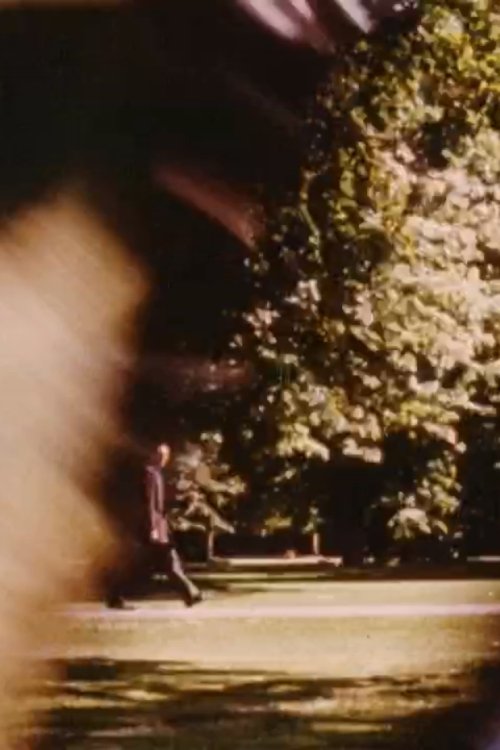
Windmill II is one of a series of films (Wind Vane, Anemometer, Tree, Park, Estuary etc.) which uses an element present within the frame as a feedback device to control an aspect of the recording process. In this case it is the wind moving the leaves on the trees within the frame which also causes the windmill to rotate like a secondary shutter in front of the camera. This rotation of the mirrored windmill blades causes the image on the screen to alternate between the space in front of the camera, seen intermittently through the blades, and the space behind the camera, reflected in the blades. When the windmill reaches a particular speed, a third space is also created as the deep space of the picture plane fragments and becomes a two dimensional abstract surface of colour and light.

Windmill II

1973Movie
Sea/Shore

The notion of a line which divides the land from the sea is a notion of convenience which is only valid in certain circumstances. If there is a line at all, it only exists for a second or so, and is never repeated again. This film was shot on this imaginary line, but the leading or trailing edge of the wave is never represented. The shore line is replaced by a frame line which divides each one-second "take" from its neighbour. The frame is either filled with water or littered with stones and sand exposed after the wave has receded. The image on the screen, the organic rhythm of the waves, is not destroyed by the violence of the structures imposed upon it. Nature emerges uninhibited, revealing yet further complexities of shape and form. The illusory shore line remains invisible, trapped on celluloid, hidden by the mechanics of the projector, and de-materialised by the illusion of cinematographic movement.

Sea/Shore

1979Movie
Casting Light

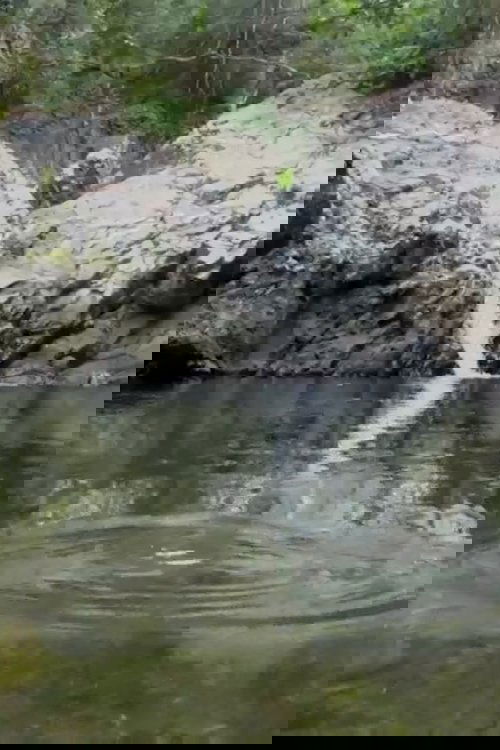
As the harsh reality of Climate Change takes hold in the public imagination, the idea of nature as landscape becomes increasingly inappropriate. Landscapeis more than something to be admired in our leisure time or an artifact to be hung on an art gallery wall. It is, as everyone is surely aware, the planet we live on and includes all biological life. The deepening uncertainty surrounding humanities future now makes it impossible to contemplate the beauty of this world without grieving for all that we have lost. This loss of innocence is accompanied by an ever- present foreboding for that which the future holds. Casting Light invites the viewer to take some time to contemplate their own relationship to the moving image and to the subtle intricacies of light falling on water.

Casting Light

2020Movie