Directing
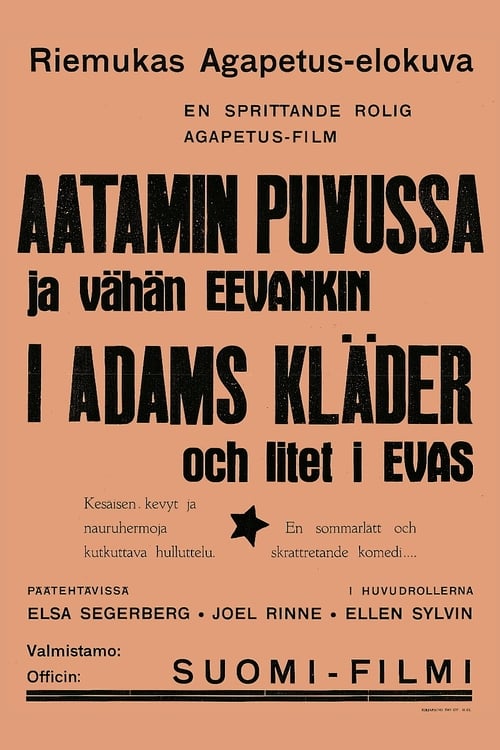
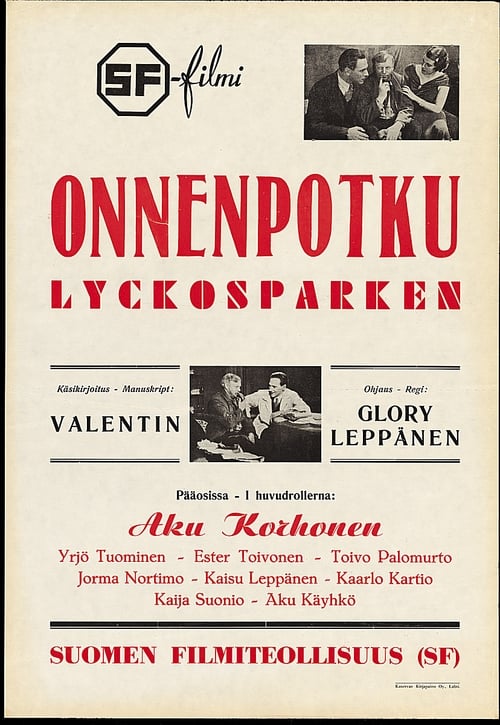
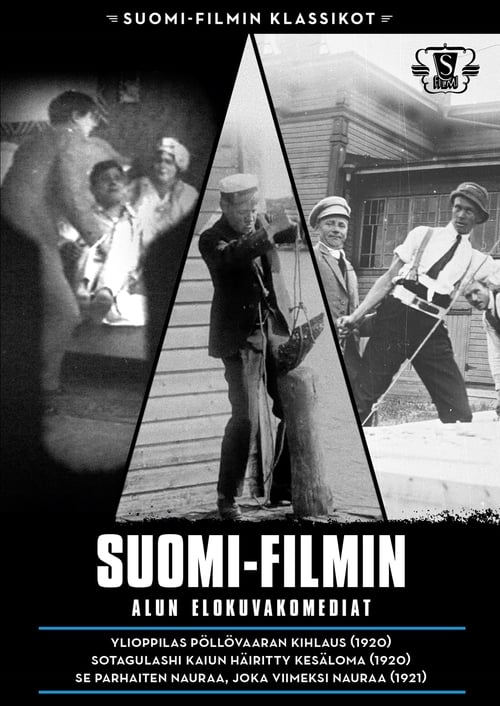
The film starts at the countryside, where station master Viirimäki is spending his summer holiday. He has gotten into the holiday mood to the extent that he wakes up from his stupor at the very moment he should already be getting back to work. Unfortunately the last ship from the island where he has been vacationing has already sailed, but as luck would have it, local residents Himanen and Kehkonen promise to help him out. Things turn out differently, however, and the attempt to help starts out an adventure filled with misunderstandings and plot twists.
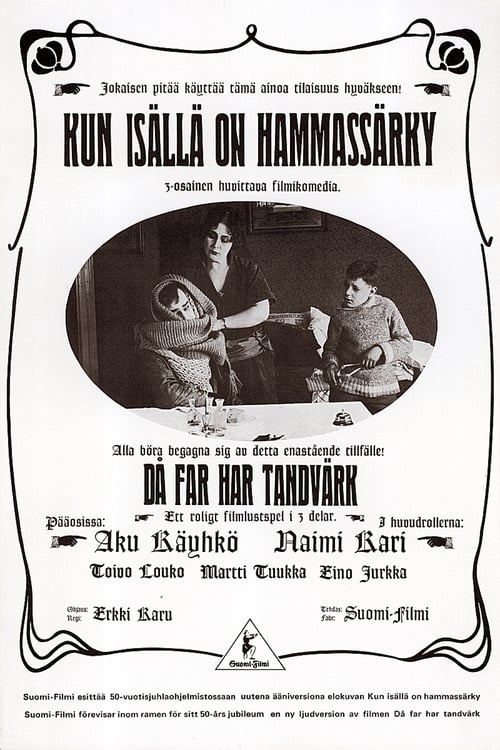
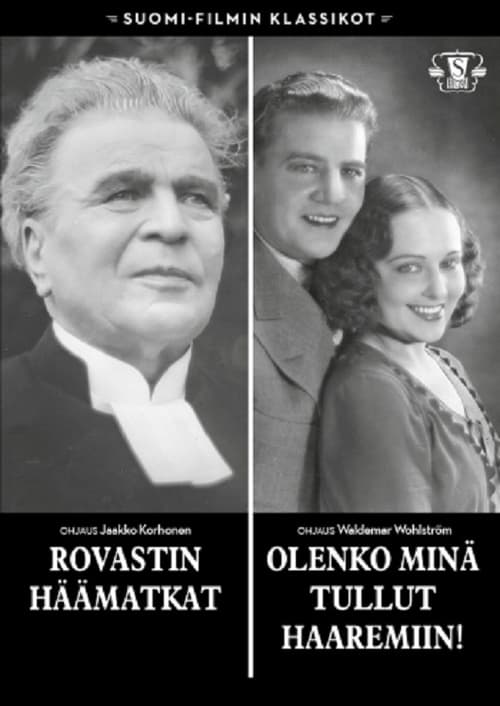
A man who has little compassion for his friend's and wife's toothache, soon learns how bad it can be when he gets one of his own.
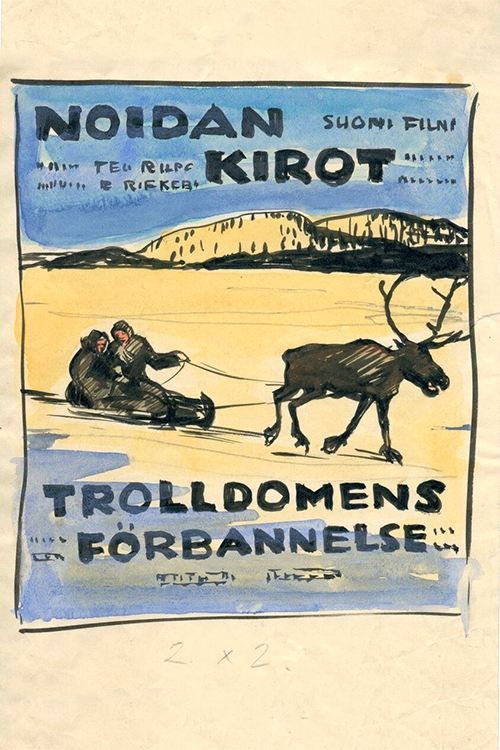
A couple move to an isolated house where – according to local legend – an ancient curse is rumoured to assail its inhabitants. Based on the novel by Väino Kataja (1914).
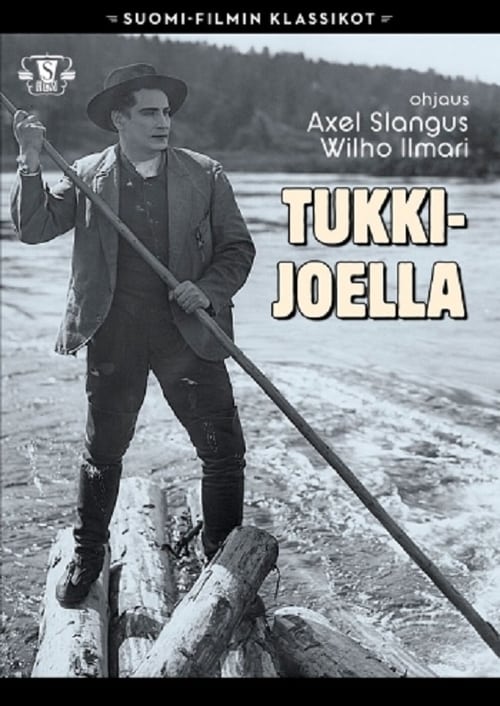
“Tukkijoella” (Log River – 1928). Films of this genre gave the Finnish cinema and the viewing public one of its most popular characters – the lumberjack (tukkijatka, tukkipoika, tukkilainen) who at his most heroic hour becomes the log-roller or the shooter of rapids (koskenlaskija). The significance of this character in Finnish film is comparable to that of the Cowboy on American cinema. He is the pioneer, the wanderer, the adventurer. He negotiates the frontier, he is an embodiment of the conflict between wilderness and civilization.
The heavily indebted baron Henrik von Hagen, who loves women and partying, learns that his former lover, Russian ballerina Madame Vera Vasiljevna, will be visiting Finland. They are reunited and sparks fly. But Vasiljevna's new hobby casts a shadow over their romance.
The main characters are the artist Bertel von Bjelke and Hilkka Kanno the adopted daughter of the town councilor. Bertel is in love with Hilka, who, however, behaves badly with the artist. This does not prevent the artist from asking for the girl's hand from the town councilor Kanno, who accepts his friend's request. Kanto stresses, however, that the final decision is up to his daughter.
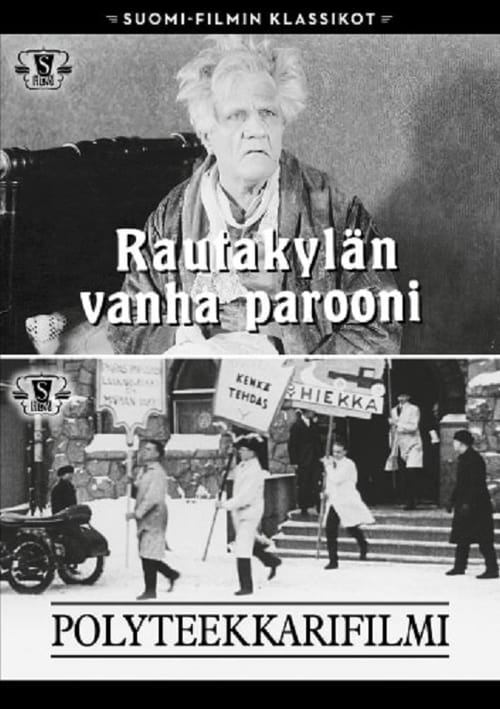
Polyteekkarifilmi (Polytekarfilmen) is a Finnish silent documentary film dating from 1924. The subtitle of the documentary is "The story of sport, polytheists and the gods of Olympia". The film aimed to raise travel funds for Finnish athletes traveling to the Paris Olympics.
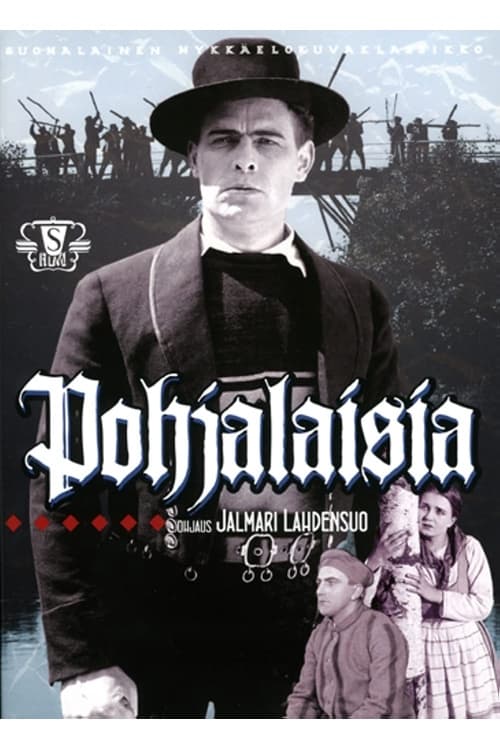
The story, set in the 19th century, revolves around the hot-blooded Jussi, a young farmer, and his friend Antti and their brushes with the local nimismies (sheriff) and the häjyt (badmen). The film, shot on location on the plains of Ostrobothnia, conveys a good sense of its unique landscape. Both Järviluoma and the director, Jalmari Lahdensuo were from Ostrobothnia and the film successfully expresses a feeling of the true spirit of the province.
Set during the recession of the early 1930s, Reino, an engineer who has been laid off from a shipyard, is not considered suitable as a son-in-law for a factory owner. Reino, who has lost his beloved Maire, finds happiness when he befriends Hillin-Jussi, an unemployed rogue.
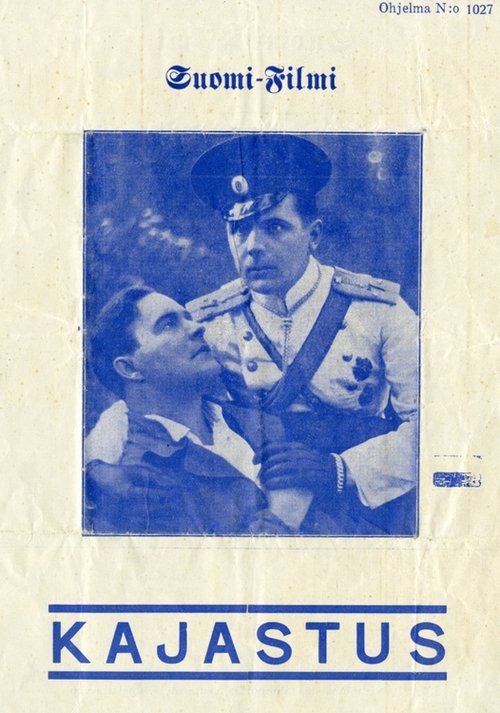
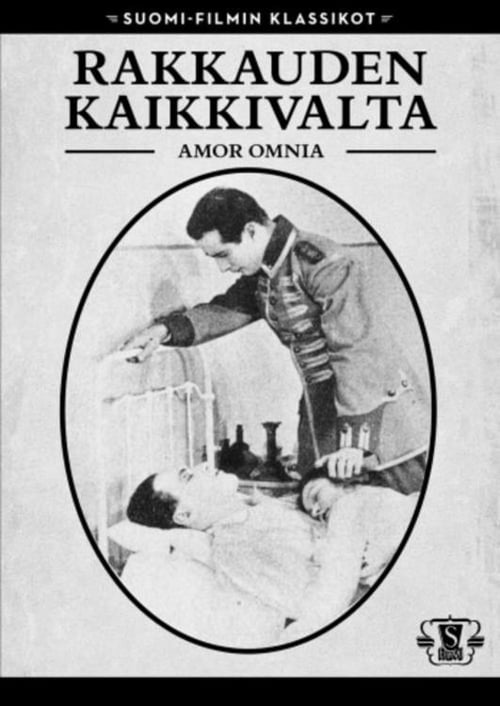
In northern Finland in the fall of 1916, Saima Niva rescues a man drifting in the river, who turns out to be a German lieutenant Braun. Braun and his six comrades have managed to escape the prisoner of war at the Muurmann railway station, but the lieutenant has had to get rid of the lost group. While Braun is recovering, under the good care of Saima, Niva's neighbor and henchman of the gendarmes, the greedy policeman Simpura, gets a tip about the refugees camped in the desert.
Jack Coski (Jaakko Koski) returns to Helsinki and gets impressed by co-op Elanto.
A historical drama depicting the Finnish struggle against Tsarist Russia. Opens at the Winter Palace in St. Petersburg in February 1899. Tsar Nicholas II signs the February Manifesto, the purpose of which is to abolish Finnish self-government. An act that arouse widespread opposition in Finland.
The Drakenhjelm family has lived in the Rautakylä manor for over 150 years. The current master of the house, elderly baron Magnus, has been living for a long time in an unregistered relationship with his housekeeper Lisette, with whom he also has a son, Sebastian. After the baron falls gravely ill Lisette starts getting worried about losing everything, so with Sebastian on her side she demands the baron to write a letter to the pastor and ask him to come over to perform a wedding ceremony. Right after Sebastian has left to fetch the pastor, a threesome seeking shelter from the storm comes to the manor and wreaks havoc on the marriage plans.
Without knowing about each other, bachelors Salomon, Arvi, and Martti each hire a domestic helper for their shared apartment. The job goes to the energetic professional Manta and the modern young women Helvi and Aili, who are looking for a position to prove their point about the issue of domestic service.
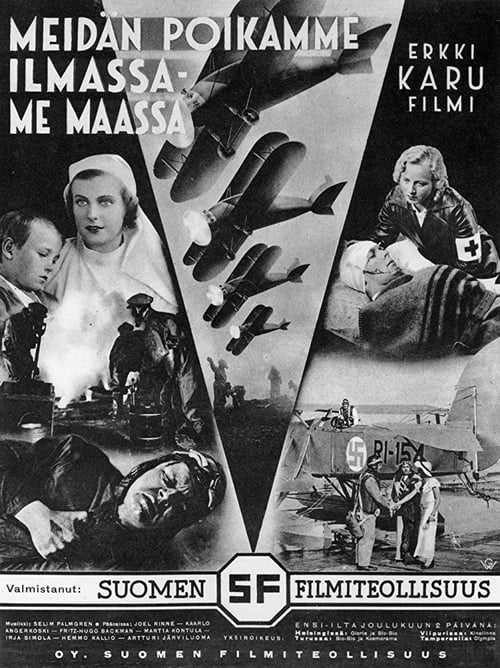
A documentary or rather a bulletin style movie about Finnish Air Forces in the 1930s.
A documentary from Erkki Karu, one of the earliest pioneers of Finnish cinema: This government-produced propaganda film introduces the nature, sports, military, agriculture and capital of Finland.
A suitor arrives at Kaiku's house, who has mistaken both the house and the person, and causes a series of commotions
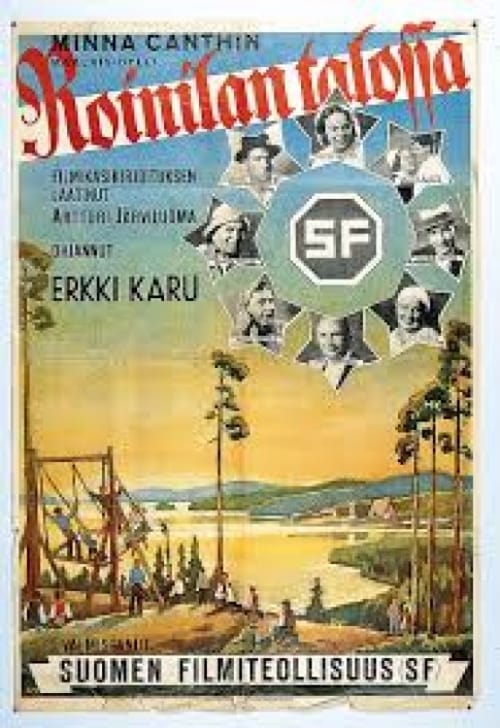
In the rural landscape of southern Häme, the lost will of the recently deceased Ojala is being sought. In its absence, Olli, the master's nephew, takes possession of the house. The devious Olli tries to win over Anna, the daughter of the Roinila family, who is fond of Mauno, the farmhand.
Örn, an aging countess, finds herself reminiscing about the tragic fate of the young lovers Carl-Johan Örn and Margareta by the family tombs.
Eetu, a wealthy homeowner, attempts to seduce Leena Kosken. But when austere log boy Erkki meets her at midsummer dances, Leena falls in love with him instead. Jealous, Eetu turns the men of the village against Erkki and the Tukki people.