Acting
No description available.
The cheerful and outgoing Jordana lived alongside Silas for 20 years, helping him become wealthy. Despite this, he abandons her to run away with the opportunistic Carla. After the separation, Jordana faces financial difficulties. She then meets Dona Mena, an eccentric and lonely old woman abandoned by her family. Jordana takes care of Dona Mena and, when she dies, inherits four bronze cupids containing a million dollars. The problem is that the cupids disappear without a trace. The cupids become the subject of a fight between Dona Mena's nephews, Loreta and Carlito. The two are the villains of the story. Jordana, however, ends up falling in love with Carlito. In the final chapters, Jordana manages to recover the cupids and rebuild her life. She has the help of her friend Vieira.
A widowed conductor rediscovers love when he meets a young woman from the countryside, but doubts about his music make him question his competence and distance himself from the woman he loves.
Saramandaia is a Brazilian telenovela originally written by Dias Gomes in 1976. It's considered remarkable because of the Magic Realism (used by the author to subtly criticize the Military Regime of the time) and had 160 chapters. The story centers on the name change that the city undergoes, promoted by the younger citizens and reviled by the older ones. It also focuses on the lives of the city's quirky residents.
Manoela is employed in the home of Donato, an employee at a cosmetics factory, and Carolina. After her boss's death, Carolina finds herself unprepared to deal with the serious financial difficulties and fires Manoela, who agrees to work for free, becoming a kind of guardian angel, advisor, and administrator of the house. To pay the mortgage on the property, she suggests that Carolina rent out two of the vacant rooms. The new tenants are four students who have recently arrived in Rio to take the university entrance exam. During their studies, the young men meet Marcelo, nicknamed Belo, who falls in love with Manoela. The relationship gives her the opportunity, for the first time, to forget about other people's problems and live her own life.
O Bem-Amado is a Brazilian telenovela that first aired on Rede Globo in 1973. It is based on a play by Dias Gomes called Odorico, o Bem-Amado ou Os Mistérios do Amor e da Morte, written in 1962. It was the first Brazilian color telenovela. It was shot in Rio de Janeiro. Broadcast by Rede Globo between January 22 and October 3, 1973.
The story follows the experiences of Marina, a young country bumpkin who marries the mysterious and charismatic widower Roberto Stein, a fabulously wealthy businessman living in 1920s Rio de Janeiro. As Marina attempts to acclimate to her new marriage and responsibilities, she discovers that Stein's late wife, Alice, still seems to have a strong hold over the household. Despite her new husband's affection for her, Marina is nonetheless threatened by Alice's presence, which is made conspicuous through her old maid Juliana's obsessions and her intimidating portrait.
A man is looking for a radio singer named "Dulcineia." For this, he goes through the biggest hassles and problems. The plot, in fact, is an excuse for the exhibition of the musical numbers of the greatest Brazilian Radio artists.
The story takes place in São Paulo, in the late 1920s, and has Mariano's memories as its starting point. Orphaned, he loses the aunt who raised him and ends up in Madame Iara's brothel, where he meets two people who transform his life: Esmeraldo, a gigolo who loves the good life who becomes his master; and the prostitute Guadalupe, known as Lu, a sweet and extremely sensual woman. Esmeraldo is Lu's boyfriend, whom he loves unconditionally. Mariano enters the couple's lives and ends up falling in love with her, thus forming the love triangle that drives the entire narrative.
Taxi driver gets in a jam when he receives a lot of money as inheritance from a distant family member when in fact, the money came from a bank robbery.
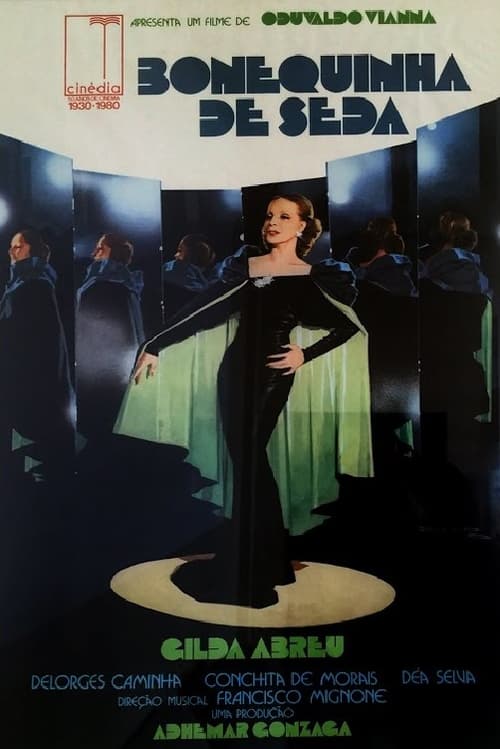
A poor woman passes herself as singer that just arrives from Frances and becames a sensation on Rio de Janeiro's high society.
Professor Leônidas Jau is an enemy of football, and in conferences and articles he throws all his hatred against the sport. Friendenreich, his son, however, loves the sport. Leonidas then has a falling out with his son, which may be saved.
An elderly head of the family, unlike his family—wife, daughters, future son-in-law, and servants—horrifies Carnaval, forming a humorous contrast. But, in need of money, he finds himself forced to accept the demands of an old Luzitano, who will only lend him money if he joins his group and joins the revelry.