Directing
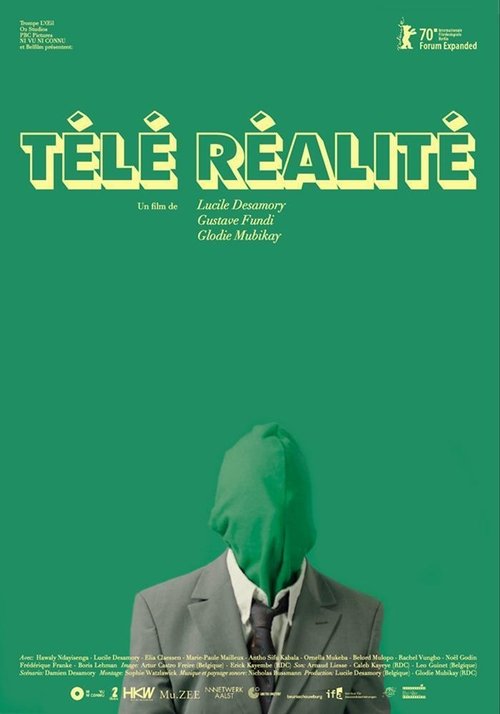
Three Congolese producers are planning a reality TV show about the carnival in Belgium. Hawaly, their Burundian show-runner, is supposed to prepare the shooting in Belgium effectively, but her Belgian colleague is too busy with the supernatural.
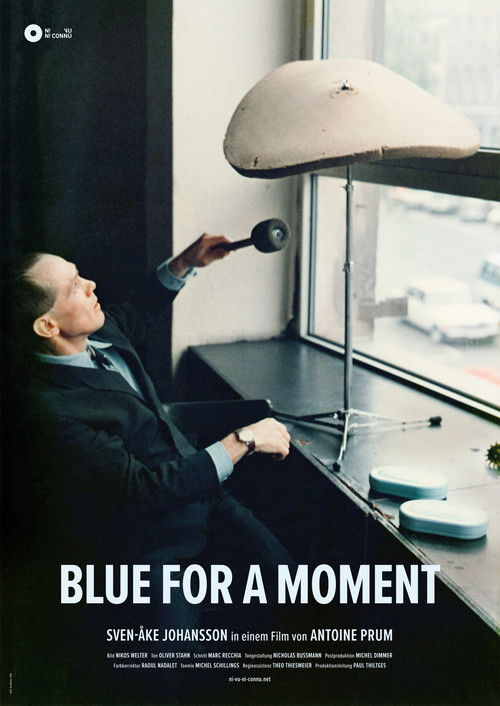
Blue for a Moment is a documentary portrait of Swedish-born, Berlin-based musician Sven-Åke Johansson, a key figure in European improvised and experimental music. Active as a jazz drummer, composer, poet and visual artist, Johansson has spent decades challenging artistic conventions and genre boundaries. Born in 1943, he moved to Berlin in the late 1960s and became involved in the city’s experimental scene, including the Zodiak Free Arts Lab. During the 1970s and 1980s he played an important role in the West Berlin free jazz movement around the FMP/SÅJ label, collaborating with musicians such as Alexander von Schlippenbach and Rüdiger Carl. Influenced by Fluxus and modernist traditions, Johansson developed a distinctive approach based on noise, reduction and the use of everyday materials, anticipating the Echtzeitmusik scene that emerged in Berlin after 1990. The film explores his creative process, artistic philosophy and lasting impact on contemporary experimental music.
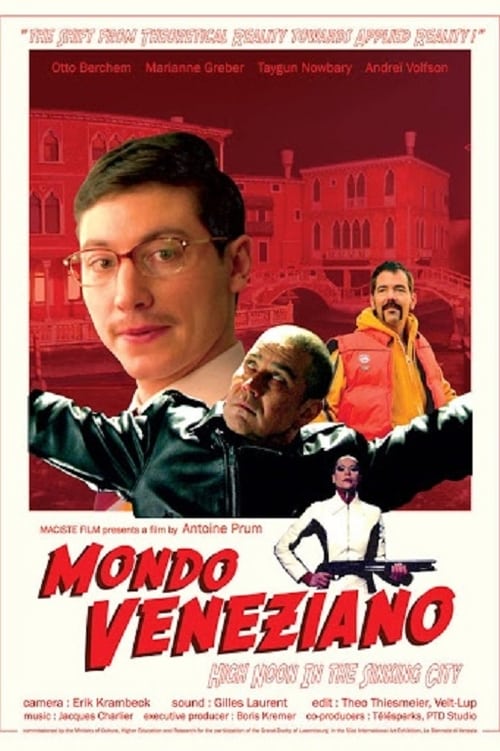
Merging the traditions of art house and splatter, Mondo Veneziano: High Noon in the Sinking City pokes fun at the bloated importance of discursive theories in contemporary art. Cast in an abandoned Venice – a derelict film set in Luxembourg, as it turns out – this short fiction relates a meeting of a curator, a theorist, a painter and a “relational” artist who appear to engage in complex theoretical debates. Their verbal confrontation – a grotesque patchwork of quotes that mocks the art world’s infatuation with sampling and referencing – is punctuated by a string of dreamlike sequences in which the stereotypical characters are seen killing each other in the best tradition of mondo films.
After Sunny's time now, his portrait of the American Free jazz drumming legend Sunny Murray, filmmaker Antoine Prum turns his attention to the British Free Improvised Music scene in this new music documentary. Following the leads of artistic advisor Tony Bevan, it retraces the road that leads from its emergence and emancipation from the various free music movements of the 1960s to the recent surge in popularity as talented new players are coming to the fore. In his search for the Britishness of British Free Improvised Music, Prum and Bevan are assisted by stand-up comedian and Derek Bailey expert Stewart Lee, who converses with musicians from different generations and backgrounds to uncover the specifics of a genre that refutes the very notion of genre.
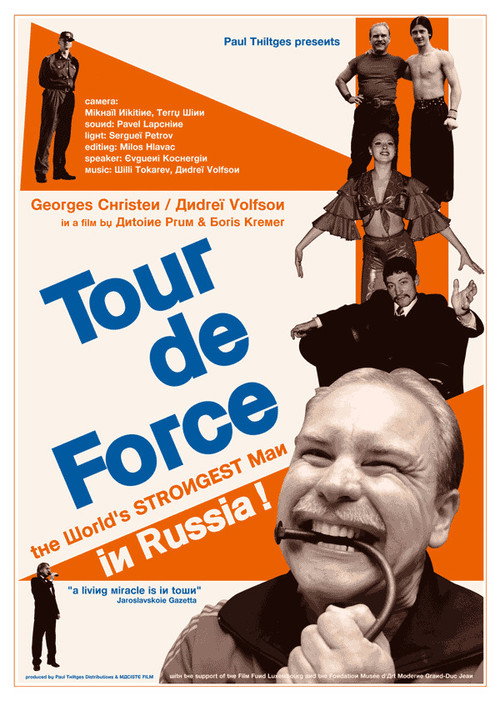
The world's strongest man is restless. Georges Christen has won 23 World Records for feats like towing planes with his teeth or bending iron bars. But his medals no longer bring him satisfaction.
Retracing the longstanding career of avant-garde drummer Sunny Murray, one of the most influential figures of the Free jazz revolution. Through a series of interviews with key time witnesses as well as historic and contemporary concert footage, it reassesses the relationship between the libertarian music movement and the political events of the 1960s, whose social claims it so intimately reflected. By doing so, it also recounts how the most radical forms of musical expression were excluded from the major production and distribution networks as the libertarian ideal went out of fashion. Beyond its historical approach, the film follows Sunny Murray on current gigs, showing his daily struggle to perpetuate a musical genre which is still widely ignored by the general public. In doing so, Sunny's time now also dwells on the near-clandestine community of aficionados who continue to worship the gods of their musical coming of age, and whose unfaltering support has permitted free ...